XHLUX
XHLUX
A ceiling-recessed linear light makes sense when the lighting should feel like part of the ceiling architecture—not simply another fixture attached to it.
Recessed is not automatically “more premium.” It earns its place when visual integration matters, the ceiling can take the detail, and the project will carry the coordination that comes with it.
We often see briefs jump to recessed because a catalogue photo looks clean—then discover the void, access and finish tolerance were never priced. Recessed linear lighting is valuable when ceiling integration is part of the design—not simply because recessed looks cleaner.
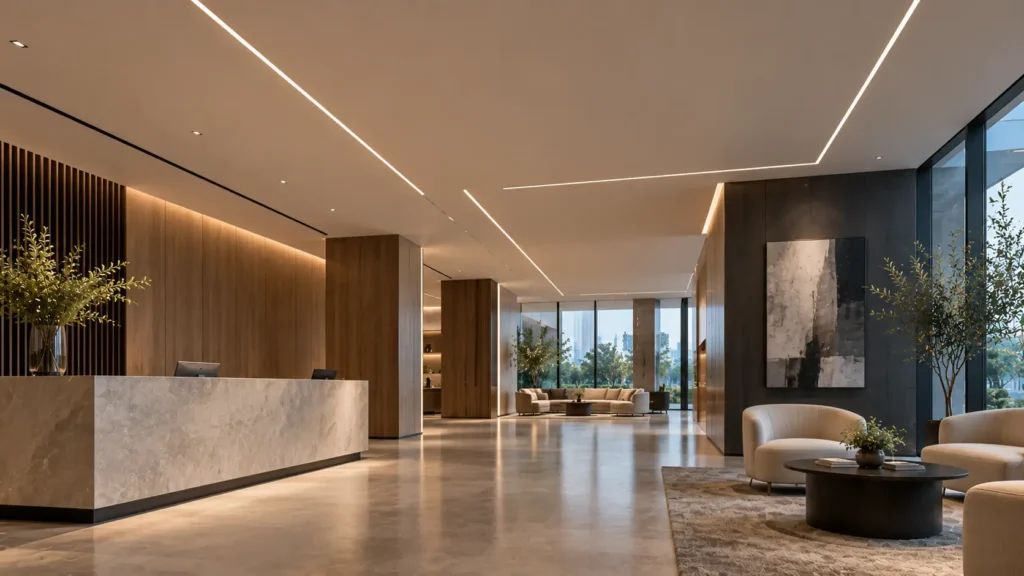
TL;DR: Choose recessed when the light should merge with the ceiling plane or carry continuous architectural lines—and only when build-up, access and finish coordination can support that intent. Skip it when the ceiling should stay closed, fixtures should stay expressive, or future moves matter more than integration.
Table of contents
- 💡 1. What does a ceiling-recessed linear light actually change?
- 🫥 2. It makes sense when the light should disappear into the ceiling
- 📐 3. It makes sense when continuous lines are part of the architecture
- 🏗️ 4. It only makes sense when the ceiling can support the detail
- ✨ 5. When does plaster-in linear lighting make sense?
- 🚫 6. When does a recessed linear light NOT make sense?
- What to do next
- 🏁 Conclusion
- FAQ
💡 1. What does a ceiling-recessed linear light actually change?
Recessed changes the relationship to the ceiling plane—not the marketing label on the bar.
In a recessed linear ceiling fixture, the luminaire or profile sits within the ceiling build-up. The visible light line can sit flush or nearly flush with the ceiling plane. The fixture body is visually reduced, so lighting reads as part of ceiling geometry rather than a separate object below it.
That shift is the point. Recessed does not mean “the lamp got thinner.” It means the eye meets a ceiling-integrated line instead of a hanging or face-mounted body.
When that path fits the brief, shortlist recessed linear lighting families that publish how the line sits in the ceiling plane.
🎯 What does recessed actually change?
It changes how the fixture relates to the ceiling plane—not merely how thin the product looks.
🫥 2. It makes sense when the light should disappear into the ceiling
The first strong case for recessed is visual quiet.
Designers often want the fixture body out of the starring role. The ceiling plane should stay clean. The goal is a glowing line—not a visible housing people notice first.
A flush linear light channel supports that intent by reducing the visual weight of fixture edges at the ceiling face. Flush is useful when boundary lines should fade. It is not automatically “better” than a surface bar just because the edge is quieter.
If the brief still wants the luminaire itself to read as a design object, recessed is usually the wrong tool for that look.
🎯 When should the light disappear into the ceiling?
When the design wants a glowing line and a quiet ceiling—not a visible fixture body as the hero.
📐 3. It makes sense when continuous lines are part of the architecture
The second strong case is composition: the project already relies on continuous light lines.
Corridors, reception and lobby ceiling geometry, retail circulation paths and office planning grids often use lines as axes—not only as lumen sources. Module continuity, visual alignment and how line breaks read all matter. A recessed linear LED profile can follow that geometry when the architectural drawing treats the light line as part of the ceiling composition.
The decision here is not “how do we cut the board.” It is whether the light line carries architectural weight. If breaks, offsets or random segment lengths would break the composition, recessed continuity has to be designed—not improvised late.
When you want to see how continuous recessed lines read in real rooms, browse our lighting projects.
🎯 Do continuous lines justify recessed?
Often yes when the light line itself is part of the ceiling composition—not only a lumen source.
🏗️ 4. It only makes sense when the ceiling can support the detail
Wanting recessed on a mood board does not mean the ceiling can host it.
Ask whether a coordinated ceiling build-up exists. Check whether structure and MEP leave room for the profile path. Ask whether access and maintenance can be solved without destroying the finish story. Ask whether the ceiling finish family allows that level of integration.
Before specifying recessed linear lighting, check that the ceiling build-up, structure, MEP coordination, access and finish can accommodate the proposed detail.
If those host conditions are weak, surface or suspended paths are often more practical.
🎯 Can every ceiling host recessed linear?
No. Build-up, conflicts, access and finish must support the detail before recessed is a real option.
✨ 5. When does plaster-in linear lighting make sense?
Plaster-in linear lighting is worth the extra coordination when the disappearing edge is the design intent.
It fits when trim should nearly vanish, the ceiling finish must read continuous, visual integrity is high on the priority list, and the site team can actually coordinate plaster, profile and lighting together.
The trade-offs are real even when the look is right. Finish tolerance is more sensitive. Coordination demand is higher. Later layout changes are usually less flexible than a surface-mounted bar you can relocate with less finish damage.
Plaster-in makes sense when the disappearing edge is part of the design intent—not simply because it looks cleaner in a catalogue photo. When that intent is set on the drawings, shortlist families that publish plaster-in and trim options for a recessed linear LED profile—not a photo-only promise.
🎯 When is plaster-in worth the cost?
When a disappearing edge is design intent and the team can carry finish and coordination risk.
🚫 6. When does a recessed linear light NOT make sense?
This is where many projects save cost and delay.
Recessed often fails the brief when the finished ceiling should not be opened, when future repositioning matters, or when maintenance access flexibility outranks visual integration. It also fails when ceiling conditions cannot support the detail, when the fixture itself should stay visually expressive, or when the design never needed ceiling integration in the first place.
In those cases, surface or suspended may be more practical. The point is simple: do not choose recessed for appearance or prestige alone.
| Project condition | Does recessed linear make sense? |
|---|---|
| Light should visually merge with the ceiling | Usually yes |
| Continuous ceiling lines are part of the design | Often yes |
| Ceiling build-up is available and coordinated | Possible |
| Finished ceiling should not be opened | Often no |
| Fixture should remain visually expressive | Usually no |
| Future repositioning is important | Often no |
🎯 Is recessed automatically the better choice?
No. It only makes sense when ceiling integration itself creates real project value.
What to do next
- Is ceiling integration actually part of the design intent?
- Is there enough coordinated ceiling build-up?
- Does the project need plaster-in, flush, or a visible trimmed profile?
- Is future access or repositioning more important than visual integration?
- Need a project review or quotation? Contact the XHLUX team with ceiling type, ceiling build-up, proposed run length, flush or plaster-in intent, control requirement, and drawing or ceiling plan.
🏁 Conclusion: When does a ceiling-recessed linear light make sense?
Recessed linear lighting is valuable when ceiling integration is part of the design—not simply because recessed looks cleaner.
Use it when the light should disappear into the plane or carry continuous architectural lines—and only when the ceiling can host the detail. Skip it when flexibility, access or an expressive fixture body matters more than integration.
Explore our related blog posts:
- Do Linear Lights Need Different Ceiling Recess Depths by Mount Type?
- What to Know Before Installing Linear Lights in a False Ceiling
- How to Choose Linear LED Lighting: Suspended, Surface, or Recessed?
Notes & Sources
- No invented recess depths, opening sizes or install sequences.
- Product and project URLs are live XHLUX pages placed after section decisions.