XHLUX
XHLUX
Black objects can get hotter in sunlight. That does not mean a black linear light automatically runs hotter indoors.
Black surfaces absorb more heat in sunlight—but does that mean a black linear light housing will also run hotter indoors? Not necessarily. For indoor linear luminaires, the visible finish alone does not decide operating temperature.
We often see projects ask for black because of the ceiling language, then assume the bar will “run hotter” without reading thermal path or test scope. Color is visible. Thermal design is structural.
TL;DR: A black coating can change surface emissivity, but housing material, thermal contact, surface area, driver placement, airflow and ambient conditions decide how hot the complete luminaire runs. Ask for evidence on the actual build—not assumptions from paint color.
Table of contents
- 🌡️ 1. Does a black linear light naturally run hotter?
- 🔥 2. How can a black finish affect heat dissipation?
- 🏗️ 3. What matters more than the color of the housing?
- ✨ 4. Does a matte black linear housing behave differently?
- 🪢 5. Does a black finish change the look of a linear pendant?
- ✅ 6. What should you check when specifying a black linear light?
- What to do next
- 🏁 Conclusion
- FAQ
🌡️ 1. Does a black linear light naturally run hotter?
“Black absorbs heat” is a useful outdoor intuition. It is a weak indoor lamp rule.
Separate two heat stories. One is external radiation—sun on a dark car roof. The other is heat the luminaire generates itself from LEDs and drivers inside the housing.
Indoors, without a strong continuous solar load on the bar, you cannot read operating temperature from black paint alone. To isolate the effect of finish, compare black and white versions with the same housing, wattage, driver and operating conditions.
🎯 Does black alone make a linear light run hotter?
No. Surface color alone does not determine the operating temperature of a linear light.
🔥 2. How can a black finish affect heat dissipation?
Black linear light heat dissipation is a surface-exchange question—not a slogan that “black cools better.”
A black coating can change surface emissivity. That matters for radiative exchange at the outer skin. Coating type also changes roughness and other surface properties. Radiation is still only one path. Conduction through the housing and convection to room air still depend on the whole thermal stack and the room.
Do not write the story as “black dissipates heat better.” A black coating can change surface emissivity, but that does not automatically mean the complete luminaire will run cooler.
🎯 Does a black coating guarantee cooler running?
No. Emissivity can shift, but the complete thermal path still decides the result.
🏗️ 3. What matters more than the color of the housing?
If color is not the master switch, compare the structural thermal design.
| Factor | Why it matters |
|---|---|
| Housing material | Affects how heat moves away from LEDs and drivers |
| Thermal contact | Determines how effectively heat reaches the housing |
| Surface area | Changes the area available for heat exchange |
| Driver placement | Affects where heat is concentrated |
| Airflow | Influences convective cooling |
| Ambient temperature | Changes the temperature difference available for cooling |
When you compare finishes, ask how the family moves heat—not only which RAL looks right on the ceiling. Browse linear light fixtures that publish housing and driver arrangements for the same wattage language you are quoting.
🎯 What beats paint color for thermal risk?
Housing material, contact path, area, driver location, airflow and ambient—read those before the finish swatch.
✨ 4. Does a matte black linear housing behave differently?
A matte black linear housing needs two readings: thermal and visual.
Thermally, matte does not automatically mean better dissipation. Coating formulation, thickness and surface properties matter more than the word “matte” on a mood board.
Visually, matte surfaces usually reduce hard reflections. They can quiet the outline against dark ceilings, tracks or architecture. Keep that as an architectural note—not as a uniformity or lumen-output argument.
🎯 Is matte black automatically better for cooling?
No. Formulation and thickness matter more than the matte visual label for heat exchange.
🪢 5. Does a black finish change the look of a linear pendant?
A black linear fixture finish is first an architectural choice.
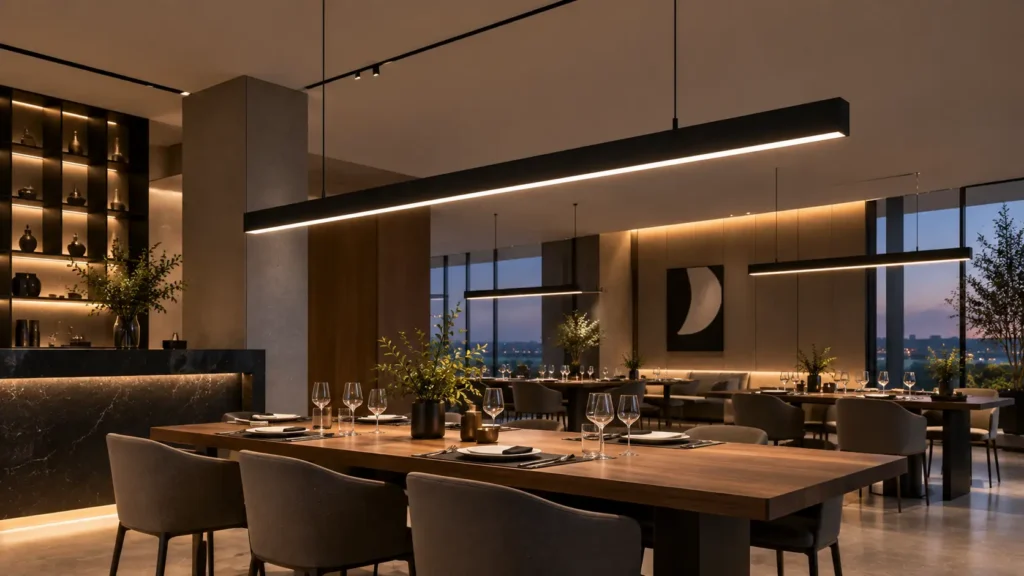
In a black linear pendant style, the bar often reads as a stronger outline against light ceilings and a quieter line against dark ones. Matte versus gloss changes how reflections catch on the housing. Suspension wires, canopy and end caps should stay in the same finish story if the graphic line must feel complete.
Then treat thermal behaviour as an engineering check on that exact build—not as a reason to skip the design intent.
When the pendant path is set, shortlist suspended linear lighting families that offer the finish and wattage you are actually quoting.
🎯 Is black mainly a look decision for pendants?
Yes for architecture—then still check thermal evidence on the same suspended build.
✅ 6. What should you check when specifying a black linear light?
Keep the list narrow: finish plus thermal risk—not a full fittings comparison sheet.
Check housing material, coating or finish type, rated ambient conditions, driver location, and thermal test data for the exact build. Ask whether the black finish was tested on the same wattage, length and driver configuration being quoted.
Do not assume one housing family’s test covers every wattage, length, driver and finish variant. Match evidence to the SKU path you will buy.
When you want to see how black bars sit in real rooms, browse our lighting projects.
🎯 What should you ask the supplier?
Ask for thermal evidence on the actual configuration—not assumptions based on housing color.
What to do next
- State finish, wattage, length, driver/control and mounting form in one line.
- Ask which of those fields the thermal test actually covers.
- Separate architectural finish choice from thermal path review.
- Need a build review or quotation? Contact the XHLUX team with finish, wattage, fixture length, driver/control and mount form.
🏁 Conclusion: Does a black finish affect the thermal performance of a linear light?
A black finish can influence surface heat exchange. It does not determine the thermal performance of the complete linear light by itself.
Color is visible. Thermal design is structural. Compare housing, path, area, drivers and ambient—and read tests that match the finish and wattage you will install.
Explore our related blog posts:
- Does a Black Suspended Linear Light Produce Less Light Than a White One?
- How to Choose Black Linear Lighting for Commercial Ceilings
Notes & Sources
- No invented temperature deltas (°C) or emissivity percentages; claims stay qualitative.
- Product and project URLs are live XHLUX pages placed after section decisions.