 XHLUX
XHLUX

When it comes to modern architectural lighting, downlights have become one of the most popular choices for both residential and commercial spaces. Their clean, recessed design allows them to blend seamlessly into ceilings while providing functional, efficient illumination.
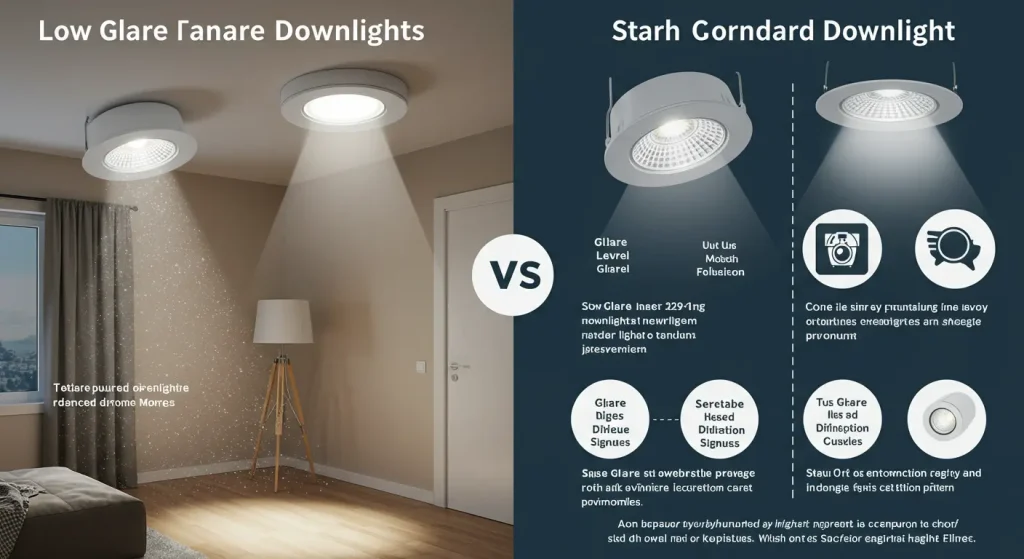
Yet, not all downlights are created equal. In recent years, low glare downlights have gained increasing attention, especially in high-end projects where lighting comfort and aesthetics matter. Designers, contractors, and property owners often face the question: Should I choose low glare downlights or standard downlights?
This article will break down the technical differences, advantages, and best applications of each type. By the end, you’ll know exactly which solution fits your project — whether it’s a hotel lobby, office workspace, retail showroom, or residential interior.
2. What Is a Low Glare Downlight?
A Low Glare Downlight is designed with advanced optical engineering to minimize glare — the harsh, uncomfortable brightness that can strain the eyes.
Key Technical Features:
- Deep Recessed Light Source: The LED chip or bulb is placed deeper within the fixture, preventing direct exposure to the eye.
- Specialized Lenses & Reflectors: Optical components diffuse light evenly, controlling beam angles to reduce intensity.
- UGR (Unified Glare Rating) Compliance: Many low glare recessed downlights are engineered to meet UGR < 19 standards, ideal for workplaces and commercial interiors.
Main Advantages:
- Visual Comfort: Creates a softer, more natural lighting effect.
- Premium Atmosphere: Enhances the sophistication of interiors such as hotels, galleries, and luxury homes.
- Better Eye Health: Suitable for environments where people spend long hours, like offices or conference rooms.
In essence, low glare downlights are not just about illumination — they are about human-centric lighting that supports comfort and well-being.
3. What Is a Standard Downlight?
A Standard Downlight is the traditional recessed fixture most people are familiar with.
Technical Characteristics:
- Shallower Light Source: The LED or lamp sits closer to the ceiling surface, often exposed to direct view.
- Direct Illumination: Produces strong, bright beams of light.
- Wide Availability: Offered in many sizes, wattages, and trims at lower cost.
Advantages & Limitations:
- Pros: High brightness, cost-effective, widely available.
- Cons: Can produce noticeable glare, especially in reflective surfaces or long-duration spaces.
Standard downlights remain popular in functional lighting applications such as corridors, supermarkets, parking lots, and general residential areas where comfort is less of a concern.
4. Low Glare Downlight vs Standard Downlight: Core Differences
To make the comparison easier, let’s break it down across several dimensions:
| Feature | Low Glare Downlight | Standard Downlight |
|---|---|---|
| Optical Performance | Soft, uniform, anti-glare beam control | Direct, sometimes harsh illumination |
| Visual Comfort | Ideal for long-duration spaces (UGR < 19 possible) | May cause eye strain and discomfort |
| Design Aesthetics | Minimalist, upscale look with recessed optics | Basic, functional design |
| Energy Efficiency | Both efficient with LED technology | Similar efficiency, varies by model |
| Price Range | Higher cost due to optical engineering | Lower upfront cost, budget-friendly |
| Best Applications | Offices, hotels, retail, residential living rooms | Corridors, parking lots, supermarkets |
Summary:
- If comfort and atmosphere matter → Choose Low Glare Downlight.
- If cost and basic brightness matter → Choose Standard Downlight.
5. Application Scenarios Compared
Lighting is not just about brightness — it’s about how people feel in a space.
Low Glare Downlights are ideal for:
- High-End Residences: Living rooms, bedrooms, dining areas.
- Hospitality Spaces: Hotels, lounges, restaurants.
- Workspaces: Offices, conference rooms, libraries.
- Retail & Galleries: Showrooms, boutiques, museums.
Standard Downlights are ideal for:
- Supermarkets & Convenience Stores: Functional illumination.
- Parking Garages & Corridors: Basic, cost-efficient lighting.
- Warehouses & Utility Rooms: Areas with low aesthetic requirements.
- Budget-Conscious Homes: Hallways, kitchens, utility rooms.
6. How to Choose the Right Downlight
When deciding between a low glare LED downlight and a standard recessed downlight, consider these factors:
Purpose of the Space
- Long-stay environments (office, hotel, retail) → prioritize comfort.
- Short-stay, functional spaces (corridors, storage) → prioritize cost.
Budget
- Standard downlights are cheaper upfront.
- Low glare options may save on maintenance and customer satisfaction costs in the long run.
Design Requirements
- Modern, minimalist, or luxury interiors → low glare fits better.
- Standard interiors with basic functionality → standard downlights suffice.
Regulatory Standards
- In workplaces, UGR < 19 may be mandatory, making low glare downlights the only suitable option.
7. Conclusion
Both Low Glare Downlights E Standard Downlights serve important roles in modern lighting design.
- Low Glare Downlights = comfort, sophistication, and wellness.
- Standard Downlights = affordability, brightness, and practicality.
As human-centric lighting becomes a global trend, low glare solutions are steadily becoming the preferred choice in high-end hospitality, commercial offices, and luxury homes.
👉 If you’re a contractor, designer, or building owner:
Investing in low glare downlights today could future-proof your project for comfort, efficiency, and premium aesthetics.
8. FAQ About Low Glare Downlights
Q1: What does “low glare” mean in lighting?
Low glare refers to reducing the harsh brightness or discomfort caused by direct light sources. Low glare downlights use optical design to achieve softer, eye-friendly illumination.
Q2: Are low glare downlights more energy efficient?
Energy efficiency depends on LED technology, not glare control. Both low glare and standard downlights can be equally efficient.
Q3: Do low glare downlights cost more?
Yes, they are typically more expensive due to advanced optics and design. However, the comfort and premium aesthetics justify the investment in many projects.
Q4: Can low glare downlights be dimmable?
Yes, most modern low glare LED downlights support dimming and smart controls.
Q5: Where can I use standard downlights instead of low glare ones?
Use standard downlights in functional or short-stay areas like hallways, parking lots, and utility rooms where visual comfort is not a top priority.
9. Related Content
What Is a Low Glare Downlight? Benefits for Modern Spaces
Low Glare Downlights vs. Recessed Spotlights: Which Is Better?
Top 5 Reasons to Choose Low Glare Downlights for Your Next Project
How Low Glare Downlights Improve Lighting in Hotels and Offices