 XHLUX
XHLUX

Table of contents
Lighting is one of the most powerful tools in interior design. It not only illuminates a space but also defines mood, enhances architectural features, and influences how comfortable people feel. In commercial and residential projects alike, the choice of fixtures can significantly affect both aesthetics and functionality.
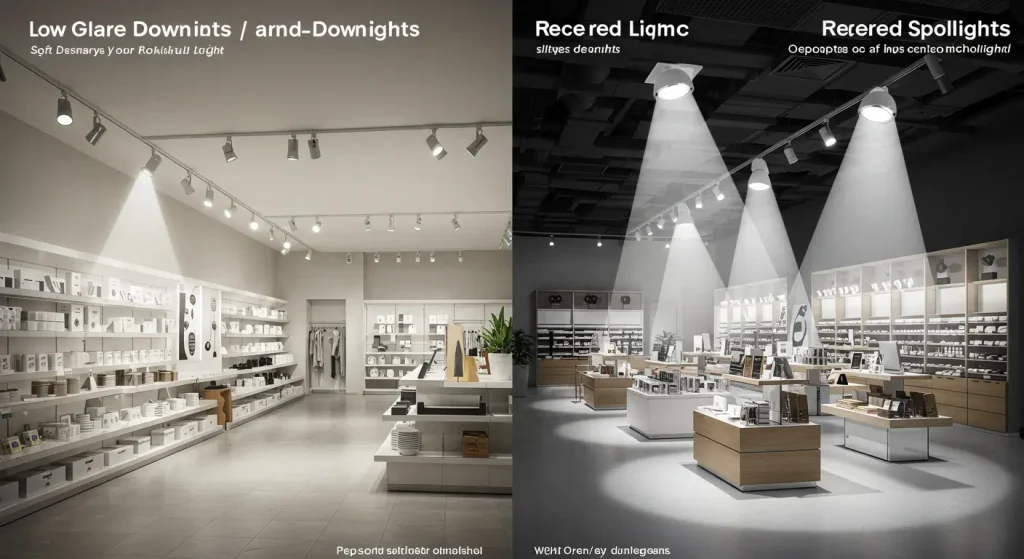
Two of the most popular recessed lighting options today are Low Glare Downlights E Recessed Spotlights. Both are sleek, modern, and versatile, yet they serve different purposes.
- Low Glare Downlights: Designed for soft, comfortable ambient lighting.
- Recessed Spotlights: Engineered for directional, accent lighting.
If you’re an architect, designer, contractor, or property owner trying to decide between the two, this guide will walk you through their differences, advantages, and best applications — so you can choose the right solution for your space.
2. What Are Low Glare Downlights?
A Low Glare Downlight is a recessed ceiling fixture designed with advanced optics to reduce glare — the harsh brightness that often causes eye strain.
How They Work:
- Deep-set light source: The LED is recessed deeper into the housing, preventing direct view of the light source.
- Special optics: Lenses, reflectors, or honeycomb filters diffuse the light.
- UGR (Unified Glare Rating): Many are engineered to achieve UGR < 19, a standard required in offices and workplaces for visual comfort.
Key Characteristics:
- Soft, uniform light distribution
- High visual comfort (no harsh shadows or dazzling effects)
- Premium, minimalist design that blends with modern interiors
Common Applications:
- Residential living rooms and bedrooms
- Hotel lobbies and guest rooms
- Offices and conference rooms
- Cinemas and auditoriums
- Galleries and exhibition halls
In short, low glare downlights are designed for spaces where people spend time and need comfort, not just brightness.
3. What Are Recessed Spotlights?
Recessed Spotlights, sometimes called recessed directional lights, are compact fixtures embedded into ceilings that produce a concentrated beam of light.
How They Work:
- Focused optics: Narrow beam angles (10°–45°) highlight specific areas.
- Adjustable direction: Many models allow tilting or rotation for flexible aiming.
- Accent lighting: Instead of evenly lighting a space, they draw attention to focal points.
Key Characteristics:
- Bright, focused illumination
- Highlighting effect for artwork, displays, or decor
- Directional flexibility compared to fixed downlights
Common Applications:
- Retail store displays and shop windows
- Museums, galleries, and art exhibitions
- Restaurants and bars for highlighting tables or decor
- Home feature walls, shelves, or decorative pieces
Simply put, recessed spotlights are about emphasis and drama — not overall comfort lighting.
4. Low Glare Downlights vs Recessed Spotlights: Core Comparison
To better understand their differences, here’s a side-by-side breakdown:
| Feature | Low Glare Downlights | Recessed Spotlights |
|---|---|---|
| Lighting Effect | Soft, even, glare-free illumination | Focused, concentrated beams |
| Visual Comfort | Eye-friendly, suitable for long exposure | May cause glare if not aimed carefully |
| Design Style | Minimalist, premium, blends with architecture | Creates contrast, highlights, and drama |
| Flexibility | Fixed beam, ideal for ambient lighting | Adjustable beam direction, versatile |
| Energy Efficiency | Highly efficient with LED technology | Equally efficient, but usage is more focused |
| Price Range | Medium to high (premium optics) | Flexible, from budget to premium |
| Best Uses | Offices, hotels, homes, auditoriums, workspaces | Retail, galleries, restaurants, display areas |
Key Takeaway:
- Choose Low Glare Downlights → if you need comfortable, general lighting.
- Choose Recessed Spotlights → if you need accent or display lighting.
5. Recommended Applications
Where Low Glare Downlights Shine:
- Homes: Living rooms, bedrooms, kitchens where family members spend hours.
- Hotels: Guest rooms, lobbies, corridors where comfort matters.
- Offices: Workstations and meeting rooms to reduce fatigue.
- Cinemas & Theaters: Providing soft lighting without distracting glare.
Where Recessed Spotlights Excel:
- Retail Stores: Showcasing merchandise, window displays.
- Art Galleries & Museums: Highlighting paintings, sculptures, and artifacts.
- Restaurants & Cafés: Adding atmosphere by spotlighting tables or decor.
- Home Interiors: Emphasizing feature walls, bookshelves, or artwork.
👉 In many projects, designers actually combine both types for layered lighting — using low glare downlights for general illumination, and recessed spotlights for accents.
6. How to Choose Between Them
When deciding which fixture fits your project, ask these questions:
What is the purpose of the lighting?
- Long-term comfort → Low Glare Downlight
- Accent and focus → Recessed Spotlight
What type of space is it?
- Large areas with people working or relaxing → Low Glare Downlight
- Areas requiring visual emphasis → Recessed Spotlight
What’s the design vision?
- Clean, seamless, uniform → Downlights
- Dramatic, layered, stylish → Spotlights
What’s the budget?
- Spotlights can be cheaper depending on design.
- Low glare downlights cost more but add value in premium projects.
7. Conclusion
Both Low Glare Downlights E Recessed Spotlights are essential in modern interior design — but they serve different functions.
- If your goal is comfort, uniformity, and modern elegance, go for Low Glare Downlights.
- If your goal is emphasis, flexibility, and drama, choose Recessed Spotlights.
- For the best results, many designers layer them together, creating a balanced, visually engaging space.
Lighting is not just about illumination; it’s about experience, atmosphere, and design harmony. The right choice depends on the story you want your space to tell.
8. FAQ About Low Glare Downlights
Q1: Are low glare downlights more expensive than recessed spotlights?
Yes, typically. Low glare downlights use advanced optics and deeper housing, making them costlier. However, they deliver superior comfort, which is valuable in high-end interiors.
Q2: Can recessed spotlights replace downlights entirely?
Not recommended. Spotlights are designed for accents, not for uniform general lighting. Using only spotlights may create uneven brightness.
Q3: Do low glare downlights save energy?
Yes. Most low glare downlights are LED-based, offering high energy efficiency while improving visual comfort.
Q4: Can I use both in one space?
Absolutely. Many designers combine low glare downlights for general lighting and recessed spotlights for highlighting.
Q5: Which is better for office lighting?
Low glare downlights. Offices require UGR < 19 compliance to minimize glare and protect eye comfort.
9. Data Visualization: Comfort vs Focus
Below is a conceptual comparison of how each fixture type performs in different aspects (scale of 1–10):
| Attribute | Low Glare Downlight | Recessed Spotlight |
|---|---|---|
| Visual Comfort | 9 | 6 |
| Uniformity | 8 | 5 |
| Accent/Highlighting | 5 | 9 |
| Design Flexibility | 6 | 9 |
| Cost Efficiency | 7 | 8 |
(This chart illustrates general trends. Actual performance varies by brand and model.)
10. Related Content
What Is a Low Glare Downlight? Benefits for Modern Spaces
Low Glare Downlights vs. Standard Downlights: Key Differences
Top 5 Reasons to Choose Low Glare Downlights for Your Next Project
How Low Glare Downlights Improve Lighting in Hotels and Offices