 XHLUX
XHLUX

Inhaltsverzeichnis
- 2. Was ist eine blendfreie Einbauleuchte?
- 3. Was ist eine Standard-Einbauleuchte?
- 4. Blendarme Einbaustrahler vs. Standard-Einbaustrahler: Wesentliche Unterschiede
- 5. Vergleich der Anwendungsszenarien
- 6. Wie man die richtige Einbauleuchte auswählt
- 7. Schlussfolgerung
- 8. Häufig gestellte Fragen zu blendfreien Einbaustrahlern
- 9. Verwandte Inhalte
Wenn es um moderne Architekturbeleuchtung geht, Einbaustrahler Sie haben sich zu einer der beliebtesten Optionen für Wohn- und Geschäftsräume entwickelt. Ihr klares, eingelassenes Design ermöglicht es ihnen, sich nahtlos in Decken einzufügen und gleichzeitig eine funktionale und effiziente Beleuchtung zu gewährleisten.
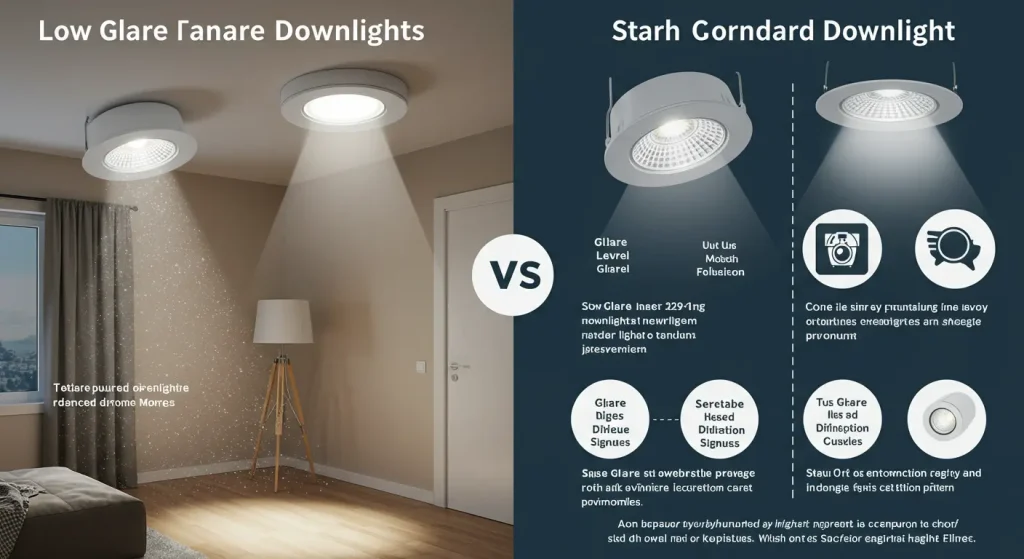
Doch nicht alle Einbaustrahler sind gleich. In den letzten Jahren, blendfreie Downlights haben zunehmend an Bedeutung gewonnen, insbesondere bei hochwertigen Projekten, bei denen Lichtkomfort und Ästhetik eine wichtige Rolle spielen. Designer, Bauunternehmer und Immobilieneigentümer stehen oft vor der Frage: Soll ich blendfreie oder Standard-Einbaustrahler wählen?
Dieser Artikel erläutert die technischen Unterschiede, Vorteile und optimalen Anwendungsbereiche der einzelnen Typen. Am Ende wissen Sie genau, welche Lösung zu Ihrem Projekt passt – egal ob Hotellobby, Büroarbeitsplatz, Verkaufsraum oder Wohnraumgestaltung.
2. Was ist eine blendfreie Einbauleuchte?
A Blendarme Einbauleuchte ist mit fortschrittlicher optischer Technik ausgestattet, um Blendung zu minimieren – die grelle, unangenehme Helligkeit, die die Augen belasten kann.
Wichtigste technische Merkmale:
- Tief eingelassene LichtquelleDer LED-Chip bzw. die LED-Lampe ist tiefer im Inneren der Leuchte platziert, wodurch ein direkter Lichteinfall ins Auge verhindert wird.
- Speziallinsen und ReflektorenOptische Komponenten streuen das Licht gleichmäßig und steuern die Abstrahlwinkel, um die Intensität zu reduzieren.
- UGR-Konformität (Unified Glare Rating)Viele blendfreie Einbauleuchten sind so konstruiert, dass sie bestimmte Anforderungen erfüllen. UGR < 19 Standards, ideal für Arbeitsplätze und gewerbliche Innenräume.
Hauptvorteile:
- Visueller Komfort: Erzeugt einen weicheren, natürlicheren Lichteffekt.
- Premium-Atmosphäre: Verleiht Innenräumen wie Hotels, Galerien und Luxuswohnungen ein besonders edles Ambiente.
- Bessere AugengesundheitGeeignet für Umgebungen, in denen sich Menschen lange aufhalten, wie Büros oder Konferenzräume.
Im Wesentlichen geht es bei blendfreien Downlights nicht nur um Beleuchtung – sondern auch um … humanzentrierte Beleuchtung das Komfort und Wohlbefinden fördert.
3. Was ist eine Standard-Einbauleuchte?
A Standard-Einbaustrahler ist die traditionelle Einbauleuchte, die den meisten Menschen bekannt ist.
Technische Merkmale:
- flachere LichtquelleDie LED-Lampe befindet sich näher an der Deckenfläche und ist oft direktem Blick ausgesetzt.
- Direkte BeleuchtungErzeugt starke, helle Lichtstrahlen.
- Breite Verfügbarkeit: Erhältlich in vielen Größen, Wattstärken und Ausführungen zu günstigeren Preisen.
Vorteile und Einschränkungen:
- VorteileHohe Helligkeit, kostengünstig, weit verbreitet.
- NachteileKann zu deutlicher Blendung führen, insbesondere auf reflektierenden Oberflächen oder in längeren Räumen.
Standard-Einbaustrahler sind nach wie vor beliebt in funktionalen Beleuchtungsanwendungen wie beispielsweise Flure, Supermärkte, Parkplätze und allgemeine Wohngebiete, in denen Komfort eine untergeordnete Rolle spielt.
4. Blendarme Einbaustrahler vs. Standard-Einbaustrahler: Wesentliche Unterschiede
Um den Vergleich zu vereinfachen, betrachten wir ihn anhand mehrerer Dimensionen:
| Besonderheit | Blendarme Einbauleuchte | Standard-Einbaustrahler |
|---|---|---|
| Optische Leistung | Sanfte, gleichmäßige, blendfreie Lichtsteuerung | Direkte, manchmal grelle Beleuchtung |
| Visueller Komfort | Ideal für Langzeitveranstaltungen (UGR < 19 möglich) | Kann zu Augenbelastung und Beschwerden führen. |
| Designästhetik | Minimalistisches, hochwertiges Design mit versenkter Optik | Grundlegendes, funktionales Design |
| Energieeffizienz | Beide sind dank LED-Technologie effizient. | Ähnliche Effizienz, variiert je nach Modell |
| Preisklasse | Höhere Kosten aufgrund optischer Konstruktion | Niedrigere Anschaffungskosten, budgetfreundlich |
| Beste Anwendungen | Büros, Hotels, Einzelhandelsflächen, Wohnzimmer | Korridore, Parkplätze, Supermärkte |
Zusammenfassung:
- Wenn Komfort und Atmosphäre Angelegenheit → Auswählen Blendarme Einbauleuchte.
- Wenn Kosten und Grundhelligkeit Angelegenheit → Auswählen Standard-Einbaustrahler.
5. Vergleich der Anwendungsszenarien
Bei der Beleuchtung geht es nicht nur um Helligkeit – es geht darum, wie Menschen sich in einem Raum fühlen.
Blendarme Einbaustrahler eignen sich ideal für:
- LuxusresidenzenWohnzimmer, Schlafzimmer, Essbereiche.
- GastronomiebereicheHotels, Lounges, Restaurants.
- ArbeitsbereicheBüros, Konferenzräume, Bibliotheken.
- Einzelhandel & GalerienAusstellungsräume, Boutiquen, Museen.
Standard-Einbaustrahler eignen sich ideal für:
- Supermärkte & LebensmittellädenFunktionale Beleuchtung.
- Parkhäuser und KorridoreEinfache, kostengünstige Beleuchtung.
- Lagerhallen und NutzräumeBereiche mit geringen ästhetischen Ansprüchen.
- Preisbewusste HäuserFlure, Küchen, Hauswirtschaftsräume.
6. Wie man die richtige Einbauleuchte auswählt
Bei der Entscheidung zwischen einer blendfreien LED-Einbauleuchte und einer herkömmlichen Einbauleuchte sollten Sie folgende Faktoren berücksichtigen:
Zweck des Raumes
- Umgebungen mit längerem Aufenthalt (Büro, Hotel, Einzelhandel) → priorisieren Komfort.
- Kurzzeitnutzbare, funktionale Räume (Flure, Lager) → priorisieren kosten.
Budget
- Standard-Einbaustrahler sind in der Anschaffung günstiger.
- Optionen mit geringer Blendung können Einsparungen ermöglichen Wartungs- und Kundenzufriedenheitskosten auf Dauer.
Designanforderungen
- Moderne, minimalistische oder luxuriöse Interieurs → blendfreies Licht passt besser.
- Standard-Innenausstattung mit grundlegender Funktionalität → Standard-Einbaustrahler genügen.
Regulierungsstandards
- An Arbeitsplätzen, UGR < 19 könnte vorgeschrieben sein, sodass blendfreie Downlights die einzig geeignete Option darstellen.
7. Schlussfolgerung
Beide Blendarme Downlights Und Standard-Einbauleuchten spielen eine wichtige Rolle im modernen Lichtdesign.
- Blendarme Downlights = Komfort, Eleganz und Wohlbefinden.
- Standard-Einbauleuchten = Erschwinglichkeit, Helligkeit und Praktikabilität.
Als humanzentrierte Beleuchtung wird zu einem globalen Trend, blendfreie Lösungen werden zunehmend zum Standard. bevorzugte Wahl in gehobenen Hotels, Bürogebäuden und Luxuswohnungen.
👉 Wenn Sie Bauunternehmer, Designer oder Gebäudeeigentümer sind:
Wer heute in blendfreie Einbaustrahler investiert, sichert seinem Projekt zukunftssicher Komfort, Effizienz und eine erstklassige Ästhetik.
8. Häufig gestellte Fragen zu blendfreien Einbaustrahlern
Frage 1: Was bedeutet “geringe Blendung” bei Beleuchtung?
Geringe Blendwirkung bedeutet, die grelle Helligkeit oder das Unbehagen durch direkte Lichtquellen zu reduzieren. Blendfreie Einbauleuchten nutzen ein optisches Design, um eine weichere, augenschonende Beleuchtung zu erzielen.
Frage 2: Sind blendfreie Downlights energieeffizienter?
Die Energieeffizienz hängt von der LED-Technologie ab, nicht von der Blendungsbegrenzung. Sowohl blendfreie als auch Standard-Einbauleuchten können gleich effizient sein.
Frage 3: Sind blendfreie Downlights teurer?
Ja, sie sind aufgrund der fortschrittlichen Optik und des Designs in der Regel teurer. Der Komfort und die hochwertige Ästhetik rechtfertigen jedoch in vielen Projekten die Investition.
Frage 4: Können blendfreie Downlights dimmbar sein?
Ja, die meisten modernen LED-Einbaustrahler mit geringer Blendwirkung unterstützen Dimmung und intelligente Steuerung.
Frage 5: Wo kann ich Standard-Einbaustrahler anstelle von blendfreien Einbaustrahlern verwenden?
Verwenden Sie Standard-Downlights in funktionalen Bereichen oder Bereichen mit kurzem Aufenthalt wie Fluren, Parkplätzen und Abstellräumen, wo der Sehkomfort keine oberste Priorität hat.
9. Verwandte Inhalte
Was ist eine blendfreie Einbauleuchte? Vorteile für moderne Räume
Blendarme Downlights vs. Einbaustrahler: Was ist besser?
Die 5 wichtigsten Gründe, warum Sie für Ihr nächstes Projekt blendfreie Downlights wählen sollten
Wie blendfreie Downlights die Beleuchtung in Hotels und Büros verbessern