 XHLUX
XHLUX

Table of contents
- 1. What Is a Dimmable LED Downlight?
- 2. Major Types of Dimming Systems and Their Features
- 3. How to Choose the Right Dimmable LED Downlight for Your Project
- 4. Common Dimmable Downlight Designs and Applications
- 5. Working with Chinese Manufacturers – B2B Buying Guide
- 6. Why Partner with a Professional Manufacturer
- 7. Common Questions About Dimmable LED Downlights
- 8. Conclusion
Lighting design in modern architecture has evolved beyond basic illumination. Today, clients expect flexible, energy-efficient, and controllable lighting solutions that elevate both function and aesthetics.
Among various lighting options, dimmable LED downlights have become a top choice for commercial, hospitality, and residential projects because of their adjustable brightness and advanced control compatibility.
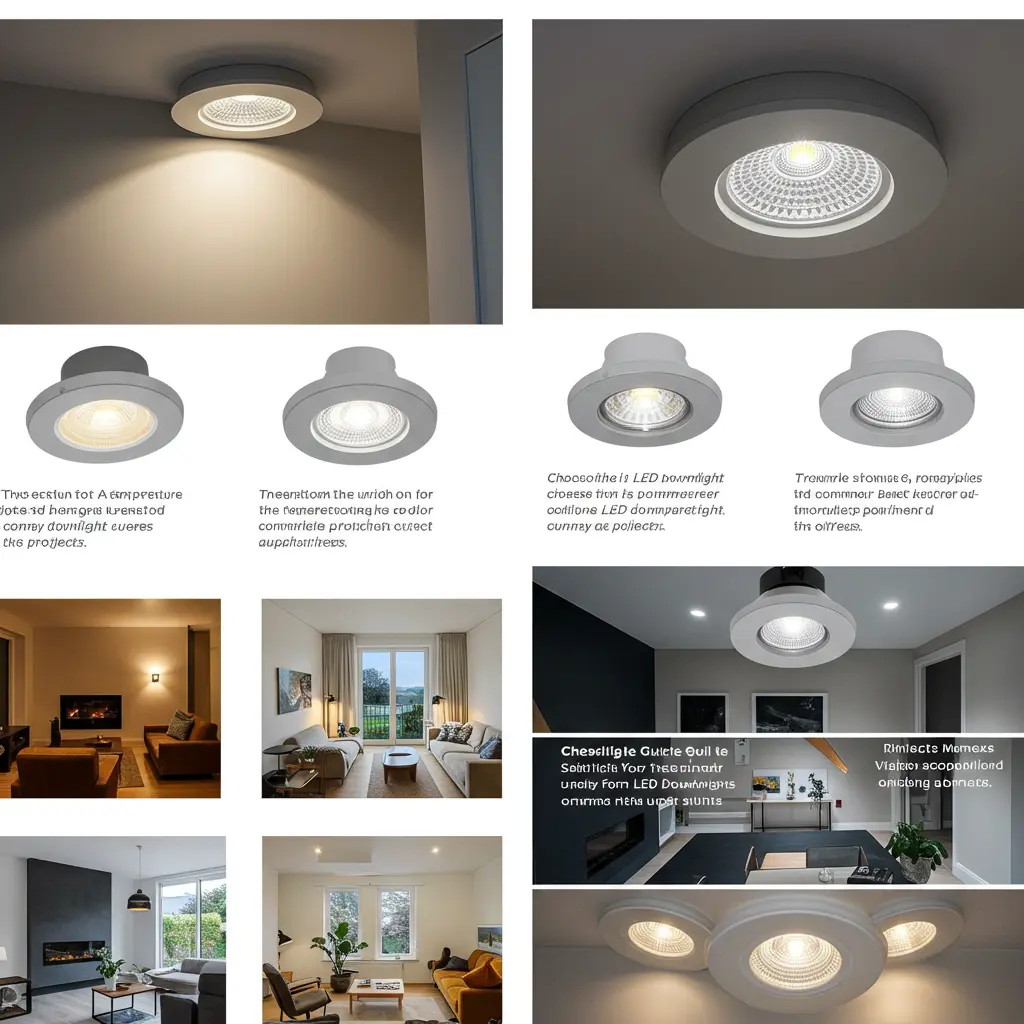
This guide will help you understand how to choose the right dimmable LED downlight, the differences between dimming systems, and how to evaluate suppliers when sourcing from China.
1. What Is a Dimmable LED Downlight?
A dimmable LED downlight is a lighting fixture that allows users to adjust the brightness level according to different needs, spaces, or moods.
Unlike conventional lights that operate only at full intensity, dimmable downlights provide a controllable lighting environment with added energy efficiency.
1.1. Basic Components
Every dimmable LED downlight includes three essential parts:
- LED Light Source – The chip or COB (Chip-on-Board) providing illumination.
- Dimming Driver – Converts power and regulates current for dimming.
- Control Interface – Receives signals from the dimming system (Triac, 0-10V, or DALI).
1.2. How Dimming Works
Dimming control works by varying voltage or current to reduce light output. The key is compatibility between driver and control system — an incompatible pair can cause flicker or unstable brightness.
1.3. Main Advantages
- ⚡ Energy Saving: Up to 30% less power consumption when dimmed.
- 🌗 Mood Control: Adjustable light levels create the right atmosphere for each scene.
- 🕒 Longer Lifespan: Reduced thermal stress extends LED lifespan.
- 🧠 Smart Integration: Compatible with systems such as DALI, 0-10V, or Wi-Fi smart controls.
2. Major Types of Dimming Systems and Their Features
Choosing the right dimming system is the foundation of a successful lighting project.
Below are the three most common dimming technologies used in LED downlights today.
| Dimming Type | Principle | Advantages | Limitations | Typical Applications |
|---|---|---|---|---|
| Triac (Leading/Trailing Edge) | Adjusts AC phase angle | Low cost, widely compatible | Limited dimming range, needs matching drivers | Residential, small offices |
| 0–10V Analog | Varies control voltage (0–10V) | Smooth, flicker-free dimming | Requires separate signal wiring | Commercial, office lighting |
| DALI (Digital Addressable Lighting Interface) | Digital two-way communication | Precise control, multi-zone adjustment | Higher cost, setup complexity | Smart buildings, luxury hotels |
2.1. Triac Dimming
Triac dimming is the simplest and most affordable system. It controls brightness by cutting the AC waveform. Suitable for retrofit and residential projects where compatibility with existing switches matters.
2.2. 0-10V Dimming
0-10V uses a low-voltage signal to adjust brightness between 0%–100%. Known for stable, flicker-free dimming, it’s a great choice for commercial and office lighting.
2.3. DALI Dimming
DALI is a digital dimming protocol allowing bidirectional communication between fixtures and controllers. It supports individual addressing, scene settings, and remote monitoring, making it ideal for smart, large-scale projects.
3. How to Choose the Right Dimmable LED Downlight for Your Project
Every lighting project has unique technical and design requirements. Here’s a step-by-step guide for selecting the best dimmable LED downlight.
3.1. Define Your Project Type
Different spaces demand different dimming systems:
- Commercial Projects (Offices, Retail, Hotels): Choose 0–10V or DALI for stability and control.
- Residential or Renovation Projects: Triac is easier to integrate with existing wiring.
- Smart or Green Buildings: DALI or wireless smart dimming for intelligent automation.
3.2. Evaluate Light Performance
- Luminous Efficiency: Choose models ≥ 100 lm/W to save energy.
- Color Rendering (CRI): For retail or gallery lighting, CRI ≥ 90 ensures color accuracy.
- Beam Angle: Use narrow beams (15°–30°) for accents, wide beams (60°–90°) for general areas.
3.3. Check Dimming Compatibility
Ensure the LED driver matches your chosen control system (Lutron, Philips Dynalite, DALI gateway).
Request a compatibility report from the supplier to avoid flicker issues.
3.4. Installation and Maintenance
- Choose between recessed or surface-mounted models depending on ceiling depth.
- Consider ease of driver replacement and access for maintenance.
- Verify that all accessories meet fireproof and insulation standards.
3.5. Budget and Warranty
- Compare 3-year and 5-year warranty models.
- Always prioritize certified brands with CE, ETL, or SAA marks.
4. Common Dimmable Downlight Designs and Applications
Modern lighting projects use different structural designs depending on style and function.
| Type | Description | Application |
|---|---|---|
| Fixed Type | Simple design for general illumination | Corridors, offices |
| Adjustable Type | Tiltable beam for accent lighting | Galleries, retail stores |
| Smart Dimmable Type | Controlled via app or voice | Modern homes, smart offices |
| Recessed / Surface Mounted | Installation based on ceiling structure | Hotels, restaurants, commercial halls |
Example Scenarios
- Hotel Lobby: DALI-controlled, high-CRI COB for warm ambience.
- Retail Store: 0–10V adjustable with spotlight focus.
- Office Space: Triac system with UGR<19 for low glare comfort.
5. Working with Chinese Manufacturers – B2B Buying Guide
China is the global center for LED lighting manufacturing. Partnering with the right supplier ensures quality, reliability, and long-term cooperation.
5.1. Typical Sourcing Workflow
- Inquiry: Define wattage, beam angle, CCT, dimming method, and quantity.
- Sample Testing: Evaluate light output, dimming performance, and finish.
- Quotation & Contract: Confirm transparent pricing and OEM/ODM terms.
- Mass Production & QC: Maintain consistent color binning and electrical safety.
- Delivery & After-Sales: Verify export inspection reports (CE/ETL/LM80).
5.2. Key Evaluation Criteria
| Factor | Why It Matters | Recommended Standard |
|---|---|---|
| Product Quality | Ensures consistent brightness and durability | High-quality COB + IC driver |
| Certification | Confirms global compliance | CE / ETL / SAA / LM80 |
| Lead Time | Impacts project scheduling | 25–30 working days |
| MOQ | Flexibility for trial orders | 500–1000 pcs |
| OEM/ODM Capability | Supports brand differentiation | Private label and custom optics |
5.3. Communication and Documentation
- Always request a Spec Sheet for technical confirmation.
- Use clear communication about dimming requirements and delivery timelines.
- Keep track of performance test data (IES files, LM80 reports).
6. Why Partner with a Professional Manufacturer
Working with an experienced factory offers more than just lower prices. A reliable manufacturer provides engineering support, customization, and long-term consistency.
6.1. What a Trusted Partner Provides
- 🧩 Technical Expertise: Guidance on driver compatibility and optical design.
- 🧾 Certifications: CE, ETL, and SAA for global market access.
- 🛠️ OEM/ODM Support: Private mold development, custom branding, and packaging.
- ⚙️ High-Quality Components: COB light source, flicker-free driver, aluminum housing.
- 🚀 Fast Lead Time: Samples in 7 days, bulk delivery within 25 days.
6.2. Real-World Success Cases
- Luxury Hotel Project (UAE): DALI system for ambient and task zones.
- Office Building (Australia): 0–10V dimming system ensuring energy efficiency.
- Retail Chain (Europe): Triac dimming integrated with smart switches.
6.3. Call to Action
- Get Factory Price Now
- Request Free Sample
- Download Product Catalog (PDF)
7. Common Questions About Dimmable LED Downlights
| Question | Answer |
|---|---|
| Q1: What’s the difference between dimmable and non-dimmable downlights? | Dimmable models allow brightness control; non-dimmable versions operate at fixed intensity. |
| Q2: Why do some dimmable LEDs flicker? | Flicker occurs due to driver incompatibility or poor-quality components. Always use flicker-free IC drivers. |
| Q3: Can Triac dimming work with smart controls? | Some smart dimmers support Triac, but DALI or 0–10V offers better stability and integration. |
| Q4: How to choose the right color temperature? | Offices: 4000K; Retail: 3500K; Homes: 3000K. Adjust based on ambience. |
| Q5: What is the typical lifespan of a dimmable LED downlight? | Around 30,000–50,000 hours depending on thermal management and usage. |
| Q6: Can I request OEM or private label services? | Yes, most Chinese suppliers provide custom logo, packaging, and optical design options. |
8. Conclusion
Choosing the right dimmable LED downlight means balancing design aesthetics, technical performance, and control system compatibility.
Whether you’re illuminating a modern office, luxury hotel, or retail space, the right dimming system ensures energy savings, visual comfort, and long-term value.
When sourcing from China, always prioritize manufacturers that provide proven certifications, professional support, and customization capabilities.
This combination guarantees that your project not only meets but exceeds expectations.
Final Call-to-Actions
✅ Contact us for a custom lighting proposal
✅ Download the Dimmable Downlight Product Catalog (PDF)
✅ Request a free evaluation sample