XHLUX
XHLUX
Many people think a linear ceiling light is simply a traditional fixture stretched into a longer shape. In reality, the difference goes much deeper.
When buyers search lights by linear, they usually mean a linear ceiling light fixture family—not a single lamp made longer. Length is visible. The real change is how light is distributed, how the housing meets the ceiling, and how the run organises the room.
We often see projects specify “a longer bar” and still get point-source behaviour, glare patches or a fixture that fights the architecture. A useful linear lighting product line redesigns optics, structure and mount paths together.
Вкратце: Linear ceiling lights are not traditional fixtures made longer. Their value sits in continuous light distribution, architectural integration, internal system design and install flexibility—not housing length alone.
Оглавление
- 👀 1. Why do linear ceiling lights look different from traditional fixtures?
- 💡 2. The difference is not length — it is light distribution
- 🏛️ 3. How linear fixtures become part of architectural design
- 🔧 4. More than appearance: what is inside a linear light fixture?
- 📌 5. Why installation flexibility matters in linear lighting
- ✅ 6. When does a linear ceiling light make more sense?
- Что делать дальше?
- 🏁 Conclusion
- Часто задаваемые вопросы
👀 1. Why do linear ceiling lights look different from traditional fixtures?
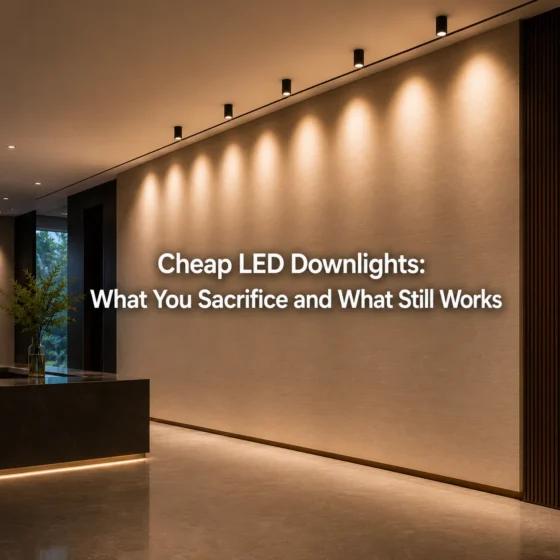
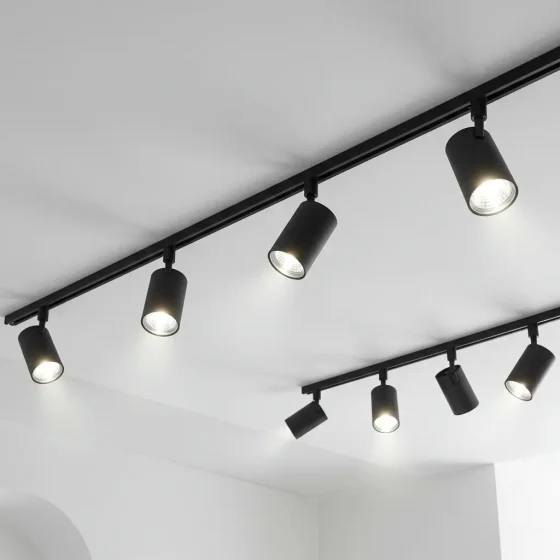
Traditional ceiling fixtures tend to create separate lighting points.
Each downlight or round surface lamp owns its own pool of light. The eye reads a pattern of islands.
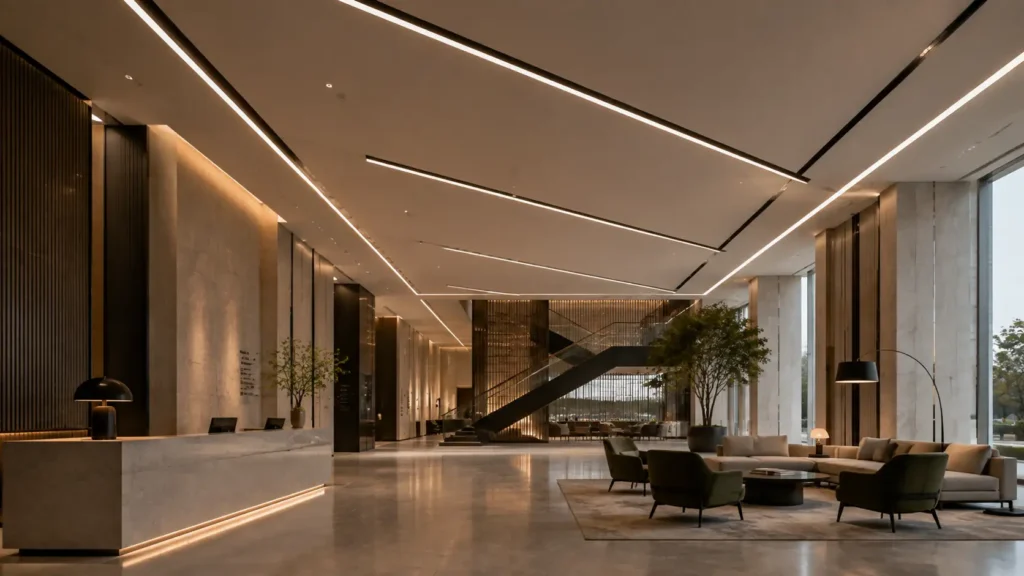
Linear light fixtures create continuous visual lines. Light becomes part of the ceiling composition, not a collection of objects hanging from it.
In large offices, retail floors and hospitality lobbies, that continuous line improves visual rhythm. Circulation reads clearer because brightness connects zones instead of hopping between spots.
| Traditional ceiling fixtures | Linear ceiling lights |
|---|---|
| Individual light points | Continuous lighting lines |
| Fixture-focused appearance | Space-focused appearance |
| Separate illumination areas | Connected visual flow |
🎯 Why do linear ceilings look calmer?
Continuous lines organise the plane; separate points keep the eye jumping between bright islands.
💡 2. The difference is not length — it is light distribution
Stretching a housing does not automatically create linear light quality.
LED arrangement shapes how output leaves the aperture. Optics steer distribution and manage glare. Diffuser design affects how even the line reads. Beam control decides whether the plane feels comfortable or harsh.
A longer shell with the wrong optic still behaves like a stretched point source. We see that when a project ordered “extra length” and kept the same optic language as a compact fixture.
Ignore catalogue length as the headline decision. Read how the line delivers light across the task and the view.
When the distribution story is clear, browse linear lighting solutions for families built as systems—not only longer metal.
🎯 Is a longer bar automatically linear light?
No. Length without matched LED layout, optics and diffuser still reads like a stretched point source.
🏛️ 3. How linear fixtures become part of architectural design
Designers reach for linear runs because they follow architectural lines.
A well-placed bar can connect ceiling elements, mark circulation and give the room a quiet direction. Clean ceiling concepts stay readable when light supports the geometry instead of interrupting it.
Office floors use lines to order open plan. Retail uses lines to guide movement between zones. Hospitality uses lines to keep lobbies and corridors visually continuous.
This is architectural language, not a longer lamp. Keep scene packages light here—the point is integration, not a full application programme.
🎯 Why do designers specify linear runs?
They follow building lines, connect ceiling elements and guide movement without a field of separate fixture objects.
🔧 4. More than appearance: what is inside a linear light fixture?
From below, a linear bar can look simple.
Inside, a commercial run is a full lighting system: housing structure, LED module arrangement, optical components, driver integration and a connection system for joins and feeds.
If a product evaluation only compares length and finish, it misses the modules, optics, driver path and joiners that decide real performance. Look at the system, not the silhouette alone.
🎯 What sits behind a simple linear look?
Housing, LED modules, optics, driver integration and joiners—a full system, not an empty longer shell.
📌 5. Why installation flexibility matters in linear lighting
Mount path is part of what makes linear lighting different.
The same visual language can travel as suspended linear lighting, recessed linear lighting, or surface-mounted linear lighting where the family allows a face-fix kit.
Different ceilings need different paths. Open voids often favour suspend. Flush planes favour recess when depth allows. Solid slabs often need surface.
Match the path to the building. Leave detailed wiring routes, cutting sequences and fault-finding for dedicated install planning—not this explainer.
For a wider mount map—including when linear pendant options sit under a suspended path—see Как выбрать линейные светодиодные светильники: подвесные, накладные или встраиваемые?.
🎯 Why does mount path matter for linear lights?
Suspend, recess and surface change how the same line meets structure, access and the finished ceiling plane.
✅ 6. When does a linear ceiling light make more sense?
Linear ceiling lights make more sense when the brief needs continuous illumination, a clean ceiling appearance or a clear architectural lighting concept.
They are a strong fit when visual flow matters more than a constellation of separate points.
They do not automatically replace every traditional fixture. Task spots, accent layers and feature objects still earn their place beside a linear ambient or circulation line.
| Project need | Why linear helps | Still keep traditional points when… |
|---|---|---|
| Continuous ambient or circulation light | Connected visual flow | You only need isolated pools |
| Quiet, organised ceiling plane | Fixture becomes line, not object field | Feature objects are the design intent |
| Architectural direction / guidance | Lines follow building geometry | Soft decorative spots define the mood |
🎯 When should you prefer a linear ceiling light?
When continuous light, a clean ceiling plane or architectural line-work matters more than separate fixture points.
Что делать дальше?
- Restate the brief in one sentence: continuous line, clean ceiling, or still a field of points?
- Check distribution language (optic / diffuser intent)—not only housing length.
- Pick the mount path that matches the real ceiling: suspended, recessed or surface.
- For installed references, browse примеры проектов.
- Need a project review or quotation? Contact the XHLUX team with zone tasks, ceiling type and preferred mount path.
🏁 Conclusion: Why are linear ceiling lights more than just a longer light?
Linear ceiling lights are not simply longer fixtures.
Their difference comes from lighting distribution, fixture design, architectural integration and installation flexibility. Length is the most visible trait—not the whole story.
When the project needs a continuous line that organises the ceiling and the space, match a system family—optics, joins and mount path—to the brief, then reach the project team with ceiling type, zone tasks and preferred mount path.
Ознакомьтесь с другими статьями в нашем блоге:
- How to Choose Modern Linear Lighting for Offices and Retail in 4 Steps
- Накладные линейные светильники для потолков без встраиваемого монтажа.
- Linear LED Suspension: What to Check Before You Order
Примечания и источники
- No invented W/m, lm/m or lm/W thresholds; distribution discussed qualitatively.
- Product and solution URLs are live XHLUX category, fixture and application pages cited for mount and conversion paths only.