XHLUX
Buying teams often treat “CRI 90” as an automatic upgrade over “CRI 80.” For commercial LED downlights, that shortcut is incomplete.
CRI 90 LED downlights are a common specification target when color appearance matters—but a higher general CRI (Ra) does not guarantee better rendering of every color, identical spectra between two “CRI 90” products, or a fair efficiency comparison unless you check R9, TM-30 data, chromaticity controls and the measurement level on the datasheet.
This guide compares CRI 80 and CRI 90 downlights for project decisions: what the ratings mean, what you may see, what the numbers miss, how products diverge, and how to verify samples and datasheets before you lock a schedule.
TL;DR
- CRI / Ra is an average color-rendering score—not brightness and not CCT.
- CRI 90 usually improves average rendering versus CRI 80, but reds and other hues still need separate checks (especially R9).
- Two CRI 90 sources can differ in R9, TM-30 Rf/Rg and spectral power distribution (SPD).
- Compare efficacy only at the same measurement level (package vs light engine vs complete luminaire).
- Match CCT (and Duv where available) for fair color comparisons; specify SDCM for multi-fixture ceilings.
- Confirm claims on the exact model datasheet and with controlled sample evaluation.
Table of contents
- What Do CRI 80 and CRI 90 Mean on an LED Downlight?
- Can You See the Difference Between CRI 80 and CRI 90 Downlights?
- Does a CRI 90 Rating Guarantee Good Color Rendering?
- Why Does R9 Matter When Comparing CRI 80 and CRI 90 Downlights?
- What Does TM-30 Tell You That CRI Does Not?
- Why Can Two CRI 90 Downlights Render Colors Differently?
- How Do CCT and Duv Affect a Comparison of CRI 80 and CRI 90 Downlights?
- Does Higher CRI Reduce LED Downlight Efficiency?
- Where Are CRI 90 Downlights More Important Than CRI 80?
- How Important Is Color Consistency When Installing Multiple Downlights?
- How Can You Compare CRI 80 and CRI 90 Downlights in a Real Project?
- How Do You Read Color Quality Data on an LED Downlight Datasheet?
📘 What Do CRI 80 and CRI 90 Mean on an LED Downlight?
What Does the CRI Rating Measure?
The Color Rendering Index (CRI) describes how a light source renders object colors relative to a reference illuminant of similar correlated colour temperature (CCT).
The commonly quoted general index Ra averages the rendering scores of eight standard test-color samples. A higher Ra means those samples, on average, look closer to the reference—not that the source is brighter, and not that it has a warmer or cooler CCT.
CRI measures color rendering quality in this average sense. It does not replace luminous flux, illuminance or beam distribution.
What Is the Difference Between CRI 80 and CRI 90?
CRI 80 usually means a declared Ra around 80; CRI 90 means a declared Ra around 90 (manufacturers may write 80+, 90+, or exact measured Ra).
A higher general Ra indicates better average rendering on the eight-sample set used for Ra. It does not mean every individual color—especially saturated reds—is equally improved. Two products with Ra near 90 can still diverge on special indices and spectra.
Why Are CRI 80 and CRI 90 Commonly Used in LED Downlights?
Commercial downlight catalogues often offer both CRI 80 and CRI 90 configurations because projects split between general ambient lighting and color-sensitive spaces.
Neither rating is a universal legal requirement for every commercial ceiling. Codes, brand standards and client preferences set the target—then the datasheet and samples confirm whether that target is enough.
🎯 What do CRI 80 and CRI 90 tell you about an LED downlight?
They indicate the light source’s general color-rendering rating. CRI 90 has a higher average Ra score than CRI 80, but neither rating tells you the brightness or color temperature of the downlight.
👁️ Can You See the Difference Between CRI 80 and CRI 90 Downlights?
How Do CRI 80 and CRI 90 Affect Skin Tones?
On a mock-up, skin can look more or less natural when you switch between CRI 80 and CRI 90 heads—even when brightness feels similar. How strong that change is varies by person, makeup, clothing and the rest of the room light.
Keep this as a visual check, not a metric. The technical reason reds and complexions shift is covered with R9 in a later chapter.
How Do They Affect Food, Wood and Fabric Colors?
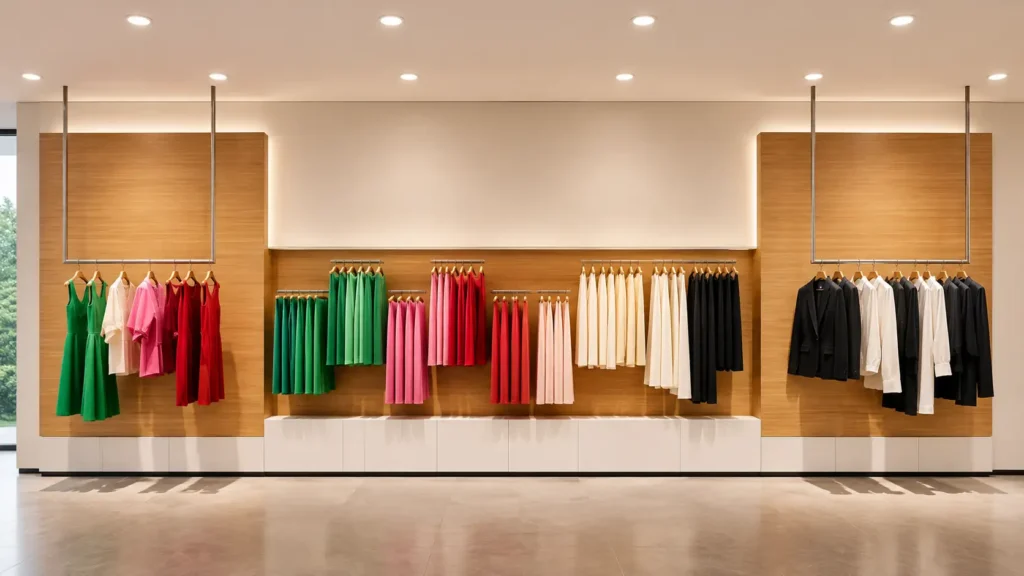
Merchandise, finishes and textured materials often make grade differences easier to notice than blank white paint. View the same objects under both sources with matched CCT and similar illuminance so you are judging appearance—not a brighter beam or a different white tint.
Avoid reading any one “before/after” photo as a universal CRI 80 vs CRI 90 color formula.
Why Do Some People Notice the Difference More Than Others?
Surrounding light, viewing distance and whether you see products side by side or one at a time all change what people notice. Practitioner discussions on forums such as Reddit’s lighting communities often report that differences feel subtle in general tasks without a direct comparison, yet become clearer when critical surfaces are viewed together.
Treat those experiences as subjective perception evidence—not as measured laboratory proof and not as a substitute for Ra, R9 or TM-30 data.
🎯 What is the best way to compare the visual difference between CRI 80 and CRI 90?
Compare the same materials under both light sources with similar CCT, illuminance and viewing conditions. The difference may be more noticeable on fabrics, food, skin tones and finished surfaces.
⚖️ Does a CRI 90 Rating Guarantee Good Color Rendering?
What Colors Are Included in the General CRI Ra Calculation?
General Ra averages eight medium-saturation test-color samples (often labeled TCS01–TCS08 in CIE CRI practice). Each sample receives a score; Ra is the mean of those eight.
Because it is an average, a strong score on some samples can mask a weaker score on others. The headline Ra alone does not disclose which hues are weak.
Why Can a CRI 90 Downlight Still Have Limitations in Color Rendering?
A high Ra means the eight-sample average is high. Saturated colors—especially saturated red—are evaluated with special indices outside that average. A CRI 90 downlight can still under-render some critical merchandise colors.
Supplementary measurements (R9, TM-30 and SPD) fill those gaps. R9 is introduced briefly here and explained in the next chapter.
What Information Is Missing from the CRI Rating?
A single average cannot show hue-specific fidelity, chroma boosts or cuts, or the full spectral shape. Specifiers who only buy “CRI 90” without R9, TM-30 or SPD still leave important color behavior unchecked.
🎯 Why is the CRI 90 rating not enough to judge every color?
CRI 90 describes average color rendering, not the performance of every individual color. R9, TM-30 and spectral data can reveal additional differences that the general Ra score does not show.
🔴 Why Does R9 Matter When Comparing CRI 80 and CRI 90 Downlights?
What Does the R9 Value Measure?
R9 is the special color-rendering index for a saturated red test sample. It is separate from the eight-sample Ra average.
A product can publish a strong Ra while still showing a modest or low R9. Datasheets that disclose both Ra and R9 give a clearer saturated-red check than Ra alone.
Why Does R9 Matter for Skin Tones, Food and Red Materials?
R9 specifically evaluates saturated red rendering on a special test sample—it is not a direct skin-tone measurement. Because many skin tones, red foods and red merchandise rely on red-rich reflection, a weak R9 can be a useful warning signal for those applications.
R9 alone does not fully predict how skin will look under a given downlight. For skin-tone assessment, use suitable visual samples together with broader color-rendering data (Ra, R9 and, where available, TM-30). Use R9 when red-critical displays are on the schedule, or when a mock-up raises a red-related concern.
Can a CRI 90 Downlight Have a Low R9 Value?
Yes. High Ra does not automatically produce high R9. Manufacturer light-engine tables sometimes show two “90 CRI” options with similar Ra but very different R9—see the verified product illustration in the next major section.
Avoid treating any single R9 number as a universal pass/fail for every application. Project needs still decide the target.
🎯 What additional information does R9 provide when comparing downlights?
R9 evaluates the rendering of saturated red. It helps buyers understand how well a light source shows red-rich materials and products beyond what the general CRI rating indicates.
📊 What Does TM-30 Tell You That CRI Does Not?
What Are TM-30 Rf and Rg?
ANSI/IES TM-30-24 evaluates light-source color rendition with a larger sample set than CIE Ra. Two headline averages are:
- Rf (Fidelity Index): average similarity of rendered colors to the reference.
- Rg (Gamut Index): average change in chroma (saturation) relative to the reference.
Rg near 100 means average chroma similar to the reference; Rg above 100 means average chroma increase; below 100 means average decrease. Higher Rg is not automatically “better color quality”—oversaturation can help some retail looks and hurt others.
How Does the TM-30 Color Vector Graphic Show Color Shifts?
The Color Vector Graphic (CVG) plots average behaviour across 16 hue-angle bins. Relative to a reference circle, outward movement indicates increased chroma, inward movement indicates decreased chroma, and tangential movement indicates hue shift.
The graphic shows where shifts happen—information lost when you only quote Rf or Rg.
Why Should You Look Beyond Rf and Rg?
TM-30 also supports hue-specific fidelity and local chroma / hue shift measures (for example local chroma shift by hue bin). IES TM-30-24 is designed so specifiers can go beyond two averages when a project needs documented hue behaviour—retail reds, brand colors or museum-adjacent display work.
Use the deeper layers when the schedule requires them; do not demand a full TM-30 report for every generic corridor downlight.
🎯 What additional color information can you get from TM-30?
TM-30 provides more detailed information about color fidelity and gamut, including Rf and Rg and additional color-vector information. It helps explain color differences that a single CRI number cannot fully describe.
🔬 Why Can Two CRI 90 Downlights Render Colors Differently?
Does the Same CRI Rating Mean the Same Spectral Distribution?
Spectral power distribution (SPD) is the relative power the source emits across wavelengths. Different LED packages and phosphor recipes can reach a similar Ra with different SPDs.
Same Ra is not identical spectral output—and identical Ra does not guarantee identical R9 or TM-30 results.
How Can R9 and TM-30 Values Differ Between CRI 90 Light Sources?
Compare light sources that share a similar Ra, then read R9, Rf and Rg. The H2 asks about downlights, but a clean published numeric pair for two “CRI 90+” configurations is easiest to show with an auxiliary technical example—not a conventional round/square downlight A/B photometry report.
Scope limit: XICO MICROSlot is a 1.5-inch low-profile recessed linear LED product. The table below is LED Light Engine typical data at 3500K. It illustrates how two high-Ra engine options can diverge on R9 and TM-30. It is not a measured comparison of two conventional LED downlight luminaires, and it must not be read as proof of how any specific circular/square downlight pair will behave on site.
Document mapping: Both Table 1 columns below are 3500K LED Light Engine typical data from one common source—XICO MICROSlot T-Bar Specification Guide DOC_1050_00-7 (LED Selection Guide rows Standard 90 / High-Efficiency 90). This is a T-Bar mounting-family document, not a conventional round/square downlight photometry report, and not a claim that the same engine pair is the current Recessed live catalogue. Older Rev D lineage is historical context only and is not the Table 1 citation. Recessed Rev F is reserved for Standard 80 / Standard 90 efficacy discussion in the efficiency chapter—do not merge T-Bar and Recessed mounting versions into one current SKU.
Confirm current sellable configurations on the latest manufacturer documents before specifying.
| Parameter | Standard 90 | High-Efficiency 90 |
|---|---|---|
| CCT | 3500K | 3500K |
| Ra | 91 | 92.2 |
| R9 | 54.3 | 90 |
| Rf | 89.3 | 90.7 |
| Rg | 98.9 | 103.8 |
Provenance: Manufacturer XICO · MICROSlot family (product page) · product type in this example: 1.5-inch low-profile linear LED (T-Bar documentation) · measurement level LED Light Engine · common source T-Bar DOC_1050_00-7 for both Standard 90 and High-Efficiency 90 color rows · status illustrative / historical—not complete-luminaire downlight photometry.
Separate commercial downlight families—such as Lumenpulse Lumencore recessed ranges—may offer CRI 80+, CRI 90+ and CRI 95+ grade options. That availability supports the same lesson (grade choice matters) but must not be ranked inside the XICO numeric table above. For complete-luminaire CRI 80 vs CRI 90 output/efficacy on a conventional downlight series, see the Visual Comfort example in the efficiency chapter.
How Can You Identify Differences in Spectral Power Distribution?
An SPD chart plots relative intensity versus wavelength. Look for where energy sits in blue, green, amber and red regions, and whether sharp peaks dominate.
SPD explains why two Ra-matched sources can look different, but SPD alone does not replace Ra, R9 or TM-30 evaluation for a complete color-quality decision.
🎯 Why might two downlights with the same CRI 90 rating show different colors?
They may have different spectral power distributions, R9 values and other color-rendering characteristics. The same Ra rating does not guarantee identical color appearance.
🌡️ How Do CCT and Duv Affect a Comparison of CRI 80 and CRI 90 Downlights?
Why Does CCT Matter When Comparing Downlights?
CCT describes the correlated colour temperature of the white light (for example 3000K vs 4000K). Comparing a warm CRI 90 head to a cooler CRI 80 head mixes two variables.
For a controlled color-rendering comparison, keep CCT matched so the CRI difference is what you are isolating.
Can Two Downlights with the Same CCT Look Different?
Yes. Identical CCT labels do not guarantee identical chromaticity. Sources can sit on different sides of the blackbody locus and appear slightly greenish or pinkish while sharing the same nominal Kelvin.
How Does Duv Affect the Appearance of White Light?
Duv describes chromaticity distance from the blackbody (Planckian) locus. Positive and negative Duv relate to greenish versus pinkish tint tendencies in common specifier language.
CCT and Duv are chromaticity descriptors—not components of CRI. When Duv is published, it helps explain white-tint differences that Ra will never capture.
🎯 Why should CCT and Duv be considered when comparing two downlights?
Different CCT values can change the overall white-light appearance, while Duv helps describe greenish or pinkish tint differences. Matching these characteristics makes a color-rendering comparison more meaningful.
⚡ Does Higher CRI Reduce LED Downlight Efficiency?
Why Can Higher Color Rendering Affect LED Efficacy?
Some LED designs with enhanced color rendering may involve trade-offs in luminous efficacy, depending on the LED package, phosphor system and overall luminaire design. Driver losses, optics and thermal design can also move the result more than a simple “CRI tax” narrative suggests.
Do not claim that every CRI 90 product must be less efficient than every CRI 80 product.
Do CRI 90 Downlights Always Produce Fewer Lumens per Watt?
No. Compare actual manufacturer configurations at the same measurement level. LED package, light engine and complete luminaire results are different layers.
As a light-engine historical note (efficacy only—not Table 1 color metrics): at 3500K, XICO MICROSlot Recessed Specification Guide Rev F lists Standard 80 around 190 lm/W and Standard 90 around 175 lm/W engine efficacy. The T-Bar DOC_1050_00-7 PDF linked with Table 1 lists High-Efficiency 90 around 190 lm/W engine efficacy where that HE90 row is published. Keep each lm/W figure tied to its named guide and engine code; they are not complete-luminaire lm/W and must not be merged into one “current Recessed HE90” claim.
How Should You Compare the Efficiency of CRI 80 and CRI 90 Downlights?
Keep three measurement levels separate:
- LED Package Efficacy — package light output relative to package electrical input
- LED Light Engine Efficacy — light-engine output relative to light-engine input power
- Luminaire Efficacy — complete-luminaire delivered lumens relative to luminaire input power
Compare products at the same level. Do not put package or engine lm/W next to complete-luminaire lm/W as if they were interchangeable. Check delivered lumens, rated input power, photometric report conditions, and keep CCT / optics as consistent as the documents allow.
Verified complete-luminaire example (same series): Visual Comfort ELEMENT 3″ LED Adjustable Downlight High Output Static White. The comparison below is complete-luminaire delivered performance from the published specification sheet (original PDF; footer UPDATED 11/12/25, PDF metadata CreationDate 2025-11-12): High Output 16 W, delivered 1697 lm / 1440 lm, efficacy 106 / 90 lm/W for the CRI 80+ / CRI 90+ pair (chart note: data reflect 3000K / 90 CRI values unless noted). Optics are field-changeable TIR options—this table is not a single fixed beam-angle laboratory A/B test.
Version caution: the same product’s current online configurator lists High Output as 17 W. Do not treat the historical 16 W sheet figures as the configurator’s current wattage. Re-confirm wattage, lumens and efficacy on the exact submittal package for the purchased configuration.
| Parameter | CRI 80 Downlight | CRI 90 Downlight |
|---|---|---|
| Product Model | ELEMENT 3″ LED Adjustable Downlight (High Output) | ELEMENT 3″ LED Adjustable Downlight (High Output) |
| CCT | 3000K (per chart base note) | 3000K (per chart base note) |
| Input Power | 16 W (spec sheet updated 11/12/25) | 16 W (spec sheet updated 11/12/25) |
| Delivered Lumens | 1697 lm | 1440 lm |
| Luminaire Efficacy | 106 lm/W | 90 lm/W |
| Beam Angle | Field-changeable TIR options (not a fixed shared optic in this table) | Field-changeable TIR options (not a fixed shared optic in this table) |
Source: Visual Comfort ELEMENT 3″ LED Adjustable Downlight specification sheet updated 11/12/25 (PDF linked above); product-page configurator cross-check 2026-11-07. Complete-luminaire data—not XICO light-engine data.
🎯 Can you assume that a CRI 90 downlight is less efficient than a CRI 80 downlight?
No. Higher color rendering can involve efficacy trade-offs, but the result depends on the LED package, light engine, driver and luminaire design. Compare actual products at the same measurement level.
🏪 Where Are CRI 90 Downlights More Important Than CRI 80?
When Are CRI 90 Downlights Useful in Fashion and Retail Lighting?
Clothing, cosmetics and merchandise displays often benefit when product color stays closer to reference appearance. Skin tones beside mirrors and fabric color accuracy are common reasons teams specify CRI 90 downlight options in retail ceilings.
Why Does Color Rendering Matter in Restaurants and Food Displays?
How critical color rendering is depends on the food, the display surface and the project’s visual goals. Dedicated food-display or presentation lighting is often more demanding than general dining ambient—especially where reds and freshness cues matter—but that does not mean every restaurant zone must specify CRI 90. Match the grade to the task layer on the schedule.
Are CRI 90 Downlights Necessary for Offices and General Commercial Areas?
Many offices and circulation zones run successfully on CRI 80 when tasks are not color-critical. Projects may still specify CRI 90 for brand standards, executive suites or mixed-use ceilings—without making CRI 90 mandatory for every commercial square metre.
Which Applications May Need More Than CRI 90?
Museums and galleries are color-sensitive environments where rendering targets may exceed a simple CRI 90 downlight grade. Color rendering is only one design input there: material sensitivity, illuminance limits and cumulative light exposure (conservation) sit beside color quality.
This section flags that boundary—it is not a museum lighting design guide.
🎯 Which commercial applications may benefit more from CRI 90 downlights?
Fashion retail, cosmetics, food displays and brand-sensitive merchandise often benefit from stronger color rendering. General offices and circulation areas may not always need CRI 90.
🔷 How Important Is Color Consistency When Installing Multiple Downlights?
What Does SDCM Mean for Downlight Color Consistency?
SDCM (Standard Deviation of Color Matching) relates to chromaticity tolerance, commonly discussed with MacAdam ellipses. Smaller SDCM values indicate tighter allowed variation between LED bins or finished luminaires.
SDCM is about white-point consistency between units—not the same thing as CRI color rendering of objects.
How Can Different SDCM Ratings Affect Adjacent Downlights?
In continuous ceilings and wallwash rows, neighboring heads can show visible white-tint differences if binning is loose. How noticeable the difference is depends on viewing conditions, finishes and whether fixtures sit side by side.
Online practitioner threads often discuss mismatched batches and SDCM concern for adjacent downlights; use those discussions as evidence that buyers care about consistency—not as a universal visibility threshold for any one SDCM number.
What SDCM Should You Specify for Multiple Downlights?
Project risk, ceiling layout and manufacturer binning practice set the tolerance. Ask for batch consistency and the declared SDCM (or MacAdam step) on the submittal. Avoid naming one SDCM value as universally correct for every installation.
🎯 Why is color consistency important when several downlights are installed together?
Different white-light chromaticity can make adjacent fixtures appear mismatched, even when they share the same nominal CCT. Check the declared color tolerance and batch consistency before installation.
✅ How Can You Compare CRI 80 and CRI 90 Downlights in a Real Project?
Compatibility and photometry work involving mains connections should follow local electrical rules and manufacturer procedures. Use qualified personnel for energized tests.
How Should You Prepare Downlight Samples for a Fair Comparison?
Separate two goals.
A. Controlled Color Comparison
- Same or comparable CCT
- Comparable measured illuminance on the target surface
- Matched or reasonably controlled beam angles / distributions
- Same mounting height and aiming
- Record the actual dimming level of each fixture (do not assume the same percentage equals the same output)
- Measure target illuminance at the selected operating condition
- Compare color appearance at the intended project dimming level
- Record any CCT or chromaticity changes observed during dimming
- Record Duv where available
- Comparable surrounding light and viewing geometry
- Record exact models and configurations
B. Real Project Evaluation
- Test the complete luminaire in actual (or mock-up) install conditions
- Evaluate delivered light output and beam coverage
- Check real mounting height and aiming
- Include the installed dimming setup and measured illuminance at operating points
- Record project operating requirements
How the two tests differ: Controlled color comparison prioritizes matched CCT, measured illuminance, beam control, dimming/operating notes and viewing conditions so you can judge rendering appearance. Real project evaluation prioritizes the installed environment—delivered output, coverage, aiming, dimming and operating state—even when those variables are not perfectly matched. Do not attribute brightness, beam or aiming differences to CRI, and do not treat matching dimmer percentages as equal illuminance.
Which Materials Should You Use to Compare Color Rendering?
Use stable samples: skin-tone cards or observers, saturated red objects, food/fruit, wood, leather and fabric. Keep the same objects and viewing geometry for every head under test.
How Can You Record and Evaluate the Results?
Separate subjective notes from instrument readings. Compare manufacturer color-rendering claims to what you see, and log material-by-material differences. Visual assessment supports decisions; it does not replace professional measurement when the contract requires it.
When Is Professional Color Measurement Necessary?
When disputes, brand standards or specifications demand documented SPD or color-rendering values, use spectroradiometric testing and qualified laboratory or field instrumentation. Mock-up eyes alone are not enough for contractual color metrics.
🎯 What conditions should you control when comparing CRI 80 and CRI 90 samples?
Use comparable CCT, illuminance, beam distribution, mounting height and viewing conditions. Compare the same materials under both light sources, and record the operating and dimming conditions. Do not assume that matching dimmer percentages produce equal illuminance.
📋 How Do You Read Color Quality Data on an LED Downlight Datasheet?
Which CRI and R9 Values Should Be Clearly Listed?
Check declared Ra (or CRI 80 / 90 grade), whether R9 is disclosed, the exact model/configuration code, and whether figures refer to the complete luminaire, LED package or light engine.
How Should You Check TM-30 and Spectral Data?
Where published, check Rf and Rg, ask for hue-bin or CVG detail on critical projects, confirm the SPD matches the quoted configuration, and note the measurement method or report identity.
Which Chromaticity and Consistency Specifications Should You Verify?
Verify CCT, Duv where available, SDCM (or MacAdam step), and LED binning / batch consistency language for multi-head ceilings.
How Should You Verify Delivered Lumens and Luminaire Efficacy?
Check rated input power, delivered lumens and stated luminaire efficacy—and confirm they belong to the same configuration and test conditions you are buying.
| Specification | What to Check | Why It Matters |
|---|---|---|
| CRI / Ra | Declared Ra value | General color rendering |
| R9 | Special color rendering value | Saturated red rendering |
| TM-30 Rf / Rg | Reported values | Color fidelity and gamut |
| CCT | Rated color temperature | White-light appearance |
| Duv | Where available | Chromaticity deviation |
| SDCM | Declared tolerance | Color consistency |
| SPD | Spectral data | Spectral distribution |
| Delivered Lumens | Complete luminaire output | Actual light output |
| Luminaire Efficacy | lm/W | Complete luminaire efficiency |
🎯 Which datasheet information helps you evaluate a downlight’s color performance?
Check CRI/Ra, R9, TM-30 values where available, CCT, Duv, SDCM and SPD. Also confirm that the reported figures belong to the exact product configuration and measurement level being purchased.
FAQ
🏁 Conclusion: Which should you specify?
Choose CRI 80 when the visual task is general and the schedule does not demand color-critical rendering. Move to CRI 90—and ask for R9, TM-30 and sample checks—when merchandise, food presentation, finishes or brand standards make color appearance part of the commercial risk. Before you release a purchase order, lock the exact model/configuration, the measurement level behind any lm/W claim, and the chromaticity/consistency notes for multi-head ceilings.
If you need OEM/ODM support for CRI 80 / CRI 90 downlight configurations, photometric documentation or sample programs, see our custom lighting solutions or contact the XHLUX team.
Explore our related blog posts: