 XHLUX
XHLUX
At a Glance
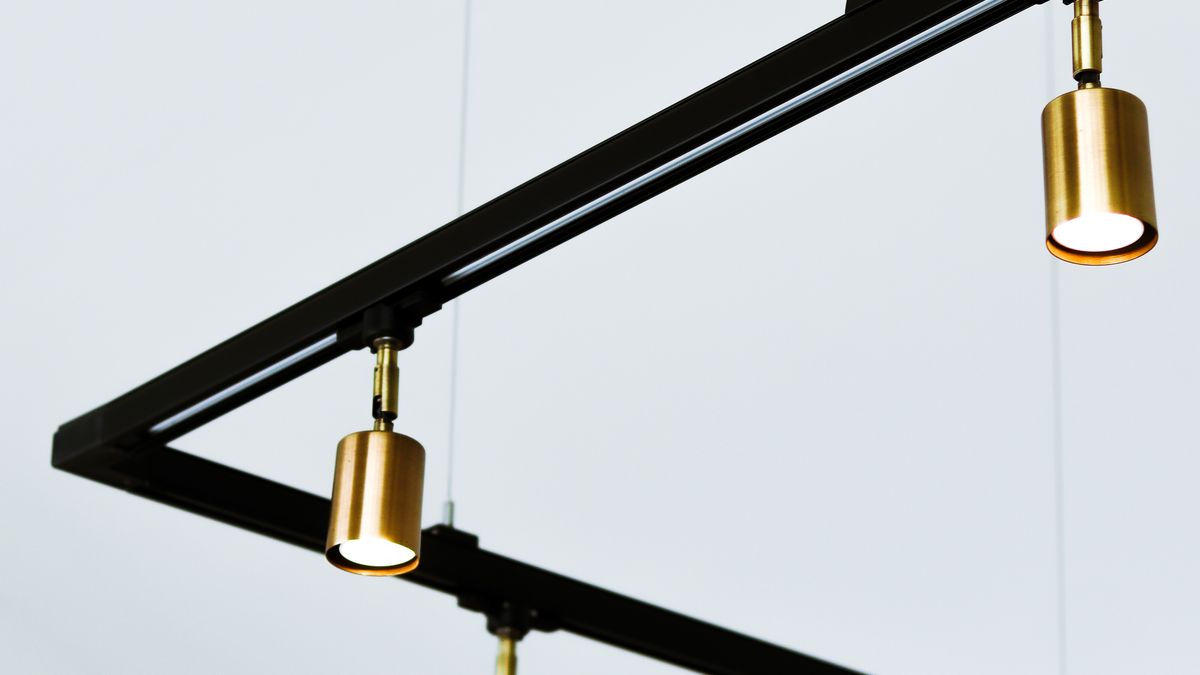
- Rail lighting and track lighting are physically different products that are often confused. Track lighting uses rigid, straight metal rails that carry line-voltage (120–277V AC) power. Rail lighting uses a flexible or custom-bendable rail that typically operates at low voltage (12V) through a transformer.
- In North America, the terms are sometimes used interchangeably, which creates confusion. A search for “track lighting” on a hardware retailer’s website may return both rigid track kits and flexible monorail systems. The distinction matters because the two formats are electrically and mechanically incompatible.
- For commercial applications, rigid track lighting is the dominant format — it supports higher wattages, more fixtures per circuit, and a larger ecosystem of compatible heads. Flexible rail lighting is primarily a residential and decorative format.
The Physical Difference
| Factor | Track Lighting | Rail Lighting |
|---|---|---|
| Rail/track structure | Rigid extruded aluminium; straight or pre-formed curved sections | Flexible aluminium or composite rail that can be bent on-site into custom curves |
| Voltage | Line-voltage: 120–277V AC | Low-voltage: typically 12V AC or DC via transformer |
| Transformer | Not required — connects directly to mains | Required — steps mains voltage down to 12V |
| Conductor design | Copper busbars embedded in rigid extrusion | Two exposed conductors running along the flexible rail surface |
| Fixture attachment | Mechanical adaptor — clips or locks into the track | Typically clamps onto the rail conductors; some use magnetic attachment |
| Aesthetic | Industrial, utilitarian; painted or anodised finishes | Decorative, sculptural; often left as bare metal (copper, brass, chrome) |
| Typical fixture types | Adjustable spotlights, flood heads, linear modules, pendant adaptors | Small spotlights, miniature pendants, decorative glass shades |
| Maximum wattage per circuit | 1,200–2,400W (at 120V/10–20A) or higher at 240V | Limited by transformer — typically 60–300W |
| Installation | Surface-mount, suspended, or recessed; one mains connection per run | Surface-mount with standoffs; transformer must be mounted nearby and connected to mains |
The Key Distinction: Rigid vs Flexible
The essential difference is the rail itself. A track lighting rail is a rigid aluminium extrusion — it comes in straight lengths (typically 1–2 metres) and can only form the shapes allowed by its connector fittings: straight lines, 90° corners with L-connectors, T-junctions, and crosses. The geometry is constrained to the available connector types.
A rail lighting rail is a flexible profile — it can be bent by hand into curves, spirals, and serpentine shapes on-site during installation. This allows the lighting layout to follow architectural features: a curved ceiling cove, a circular dining table, an arched alcove. The trade-off is that flexible rail systems carry lower voltage, support fewer fixtures, and come with fewer fixture type options.
The naming convention varies by region. In Europe, “track lighting” typically refers to the rigid line-voltage format, while “rail lighting” or “wire system” refers to low-voltage flexible systems. In North America, “track lighting” is often used as a catch-all term for both.
Monorail and Cable Lighting: Two Rail Subcategories
Monorail Lighting
Monorail is a specific type of rail lighting — a single, thicker flexible rail (typically 10–15mm diameter) that can be bent by hand. It is almost always a low-voltage (12V) system requiring a transformer. Monorail supports both surface-mount (with standoffs) and suspended installation.
The term “monorail” refers to the single-rail profile, as opposed to dual-rail or multi-conductor track. Monorail is popular in high-end residential interiors — above kitchen islands, dining tables, and in living areas — where the rail itself is an architectural feature and the lighting is secondary to the visual statement.
Cable Lighting
Cable lighting is a separate category that is sometimes grouped with rail systems. It uses two tensioned metal cables strung between walls, carrying low-voltage current through the cables themselves. Fixtures clamp onto the cables at any point. Cable lighting is the most minimal of the rail/track family — the cables are nearly invisible from a distance — but it is the least stable mechanically and supports the lightest fixtures.
When to Use Each Format
Choose rigid track lighting when:
– The application is commercial — retail, gallery, office, hospitality
– Higher fixture wattages are needed (15–50W per head)
– The ceiling is flat and the layout is based on straight lines and right angles
– A wide variety of fixture types (spot, flood, linear, pendant) is required on the same rail
– The system will be expanded or reconfigured over time — track has the largest fixture ecosystem
Choose flexible rail or monorail lighting when:
– The application is residential or boutique hospitality
– The ceiling or architectural feature demands a curved or custom-shaped lighting layout
– Low wattage is sufficient — 5–20W per fixture head
– The rail itself is intended as a visible design element
– The fixture count is modest — flexible rail supports fewer fixtures per run
The two formats are not interchangeable. A flexible rail fixture will not fit on rigid track, and a track fixture will not clamp onto a flexible rail. The decision between them should be made before the first component is ordered — the ceiling preparation, electrical rough-in, and transformer placement all depend on which format is being installed.
Cost Comparison
Rigid track lighting has a lower per-fixture cost and a wider range of price points — from budget kits to commercial-grade specification fixtures. Flexible rail and monorail systems carry a price premium because the rail material, transformer, and fixture components are sold at lower volumes and the installation is more labour-intensive.
For commercial projects with 10 or more fixtures, rigid track is the more cost-effective choice at every stage — materials, installation labour, and ongoing fixture additions or replacements. Flexible rail is cost-justified primarily by the design requirement for a curved or custom-shaped lighting layout — if the ceiling is flat and the layout is linear, rigid track is the practical choice.
Frequently Asked Questions
What to Do Next
If the ceiling is flat and the lighting layout is based on straight lines and right angles, rigid track lighting is almost certainly the correct choice — it is more cost-effective, supports more fixture types, and has a larger ecosystem for future expansion. Flexible rail and monorail systems are worth considering only when the architectural design requires a curved or custom-shaped lighting layout, or when the rail itself is intended as a visible sculptural element in a high-end residential or boutique hospitality interior.
Data notes: Voltage ratings, wattage capacities, and transformer specifications are representative of commercially available track and rail lighting products in North American and European markets. Specific values vary by manufacturer, model, and regional electrical standards. All mains electrical work must be performed by a licensed electrical contractor in accordance with local codes.

![What is Modular Dimmable Track Light: Best Guide [2025]](https://www.xhlux.com/wp-content/uploads/2025/06/High-Efficiency-Commercial-LED-Modular-Track-Light-Fixtures-560x560.webp "What is Modular Dimmable Track Light: Best Guide [2025]")