 XHLUX
XHLUX
Table of contents
- Why Track Lighting Reigns Supreme in Commercial Spaces
- Analysis of Commercial Track Lighting Systems
- A Step-By-Step Guide to Choosing Track Lighting
- What is The Track Lighting Market Outlook in 2025-2030
- How to Plan Your Track Lighting Cost and Value
- How to Avoid Common Track Lighting Pitfalls
- Conclusion: Track Lighting as a Strategic Asset
- FAQ About Commercial Electric Track Lighting
In the dynamic world of commercial interior design, lighting is not merely an operational necessity; it is the silent partner that dictates mood, directs focus, and ultimately drives commerce. Among the myriad of illumination options, commercial electric track lighting stands out as a quintessential solution, celebrated for its unparalleled adaptability and aesthetic precision. This is not just about illuminating a space—it’s about sculpting it with light.
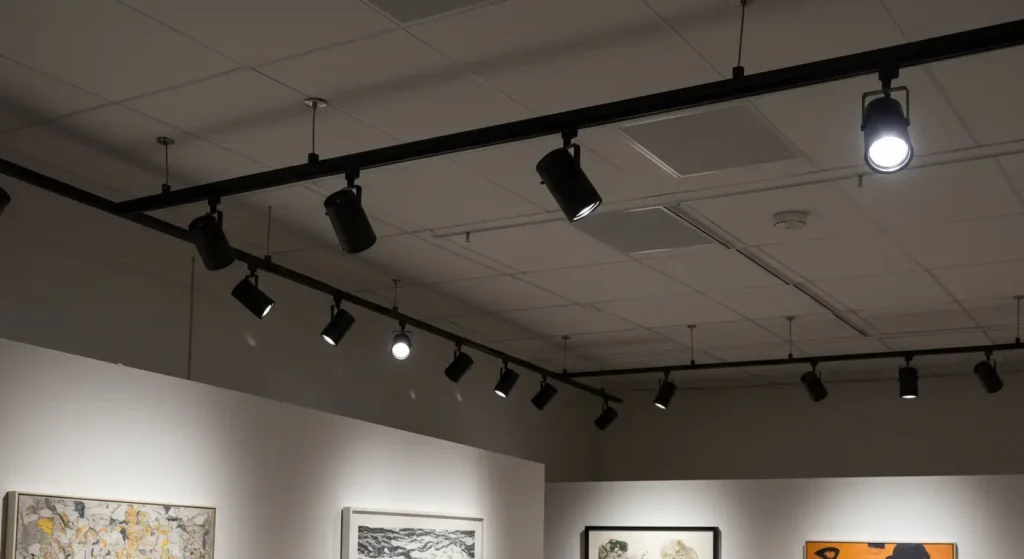
For business owners, facility managers, and architects, the challenge lies in navigating the complex landscape of lighting technology to find a solution that is flexible, efficient, and future-proof. This guide provides a comprehensive exploration of commercial track lighting systems, moving beyond basic specifications to offer actionable insights and expert perspectives. We will address the critical pain points—selection paralysis, technical jargon, and long-term value—to empower you to make an informed investment that enhances your environment and your bottom line.
Why Track Lighting Reigns Supreme in Commercial Spaces
Before delving into the technical minutiae, it’s crucial to understand why commercial-grade track lighting has become a ubiquitous feature in premier retail stores, art galleries, modern offices, and high-end restaurants. Its enduring popularity stems from three core pillars of value.
- Unmatched Flexibility and Adaptability: The primary advantage is the ability to change your lighting scheme without an electrician. As inventory moves, floor plans are reconfigured, or artistic displays are updated, track heads can be easily repositioned, aimed, swapped, or added. This agility is invaluable in environments that demand frequent changes.
- Precise and Strategic Illumination: Track lighting is the master of accent and task lighting. It allows you to create focal points, highlight architectural details, wash walls with uniform light (wall washing), or reduce glare on work surfaces. This level of control is fundamental to creating a deliberate and impactful customer or employee experience.
- Enhanced Aesthetics and Modern Design: Modern commercial electric track lighting systems offer a sleek, sophisticated, and often minimalist aesthetic that complements contemporary architectural design. With options ranging from discreet, miniaturized tracks to bold, industrial-style fixtures, the system itself can become a design element.
Analysis of Commercial Track Lighting Systems
Understanding the core components is the first step toward making an informed choice. A common point of confusion for buyers is the lack of universal compatibility. The industry is dominated by three main system types, often referred to by the initial of their pioneering manufacturer.
| System Type | Description & Characteristics | Common Applications | Key Consideration |
|---|---|---|---|
| H-Type (Halo) | A 3-wire system (sometimes 4-wire for 2-circuit) with three contacts on the fixture connector. The track itself has a flat bottom with three linear copper conductors. It is one of the most common specifications in North America. | Retail, galleries, residential spaces with high ceilings. | The most widely available type, offering a vast selection of fixtures from various manufacturers. |
| J-Type (Juno) | A 2-wire system (though 2-circuit versions exist) identifiable by the wider spacing (1 inch) between the two primary conductors. The track channel often has a deeper groove. | Common in residential and light commercial settings. | While popular, it is crucial to ensure any “J-type” fixture is truly compatible with your track, as minor variations exist. |
| L-Type (Lightolier) | A 2-wire system featuring a more centrally located contact line within the track. The contacts on the fixture are typically closer together than on J-type systems. | Architectural applications, high-end retail, and spaces where Lightolier systems were historically specified. | Often considered a premium or architectural-grade option. Fixture selection might be slightly more limited than H-type. |
Expert Insight: The choice between H, J, and L-type systems is the most critical initial decision. It dictates every future purchase of fixtures and accessories. For new installations in commercial environments, the H-type system is often recommended due to its widespread adoption and the sheer breadth of available fixtures, including high-performance options for specialized tasks.
A Step-By-Step Guide to Choosing Track Lighting
Choosing the right commercial electric track lighting goes far beyond picking a track type. A strategic approach ensures your lighting not only looks good but performs optimally for years to come.
Step 1: Define the Application and Desired Atmosphere
The purpose of the space dictates the lighting requirements.
- Retail: The goal is to attract customers and flatter merchandise. This demands high Color Rendering Index (CRI) lighting to show products in their truest colors. A mix of ambient, accent, and wall-wash fixtures is ideal.
- Art Galleries & Museums: The highest priority is color accuracy and conservation. A CRI of 95+ is non-negotiable. Low UV output and precise beam control are essential to protect artwork while creating dramatic effect.
- Offices & Workspaces: Lighting should enhance productivity and comfort. The focus is on providing adequate task lighting, reducing glare on screens (low UGR – Unified Glare Rating), and creating a pleasant ambient environment. Human-centric lighting that adjusts color temperature throughout the day is a growing trend.
- Restaurants & Hospitality: Atmosphere is everything. Lighting sets the mood. This requires a highly flexible system with excellent dimming capabilities, allowing for bright, clean light during the day and warm, intimate light in the evening.
Step 2: Master the Language of Light: Key Technical Specifications
To choose with confidence, you must understand the metrics that define light quality. The advent of LED commercial track lighting has made these specifications more important than ever.
- Lumens (lm): The total amount of visible light emitted by a source. Instead of thinking in “watts,” think in “lumens per square foot” (or foot-candles) to determine brightness levels.
- Correlated Color Temperature (CCT): Measured in Kelvin (K), this describes the color appearance of the light.
| CCT Range | Appearance | Typical Commercial Application |
|---|---|---|
| 2700K – 3000K | Warm White | Fine dining restaurants, hotel lobbies, luxury retail to create a cozy, inviting feel. |
| 3500K | Neutral White | Offices, general retail, showrooms. A balanced and professional look. |
| 4000K | Cool White | Task-oriented areas, modern offices, pharmacies, high-traffic corridors. Promotes alertness. |
| 5000K+ | Daylight | Galleries, print shops, industrial settings where precise color matching is critical. |
- Color Rendering Index (CRI): A scale from 0 to 100 measuring how accurately a light source reveals the true colors of an object compared to a natural light source. For most commercial applications, a CRI of 90 or above is the professional standard. For applications like high-end fashion or art, 95+ is essential. This is a crucial factor often overlooked in budget solutions.
Step 3: Layout, Design, and Control
The track layout itself is a design decision. You can move beyond simple straight lines:
- Linear Runs: Classic and clean, ideal for corridors or highlighting a long wall.
- Grid Patterns: Offer maximum flexibility for large, open-plan spaces like showrooms or large retail floors.
- Geometric Shapes: Squares, rectangles, or U-shapes can define specific zones within a larger area, such as a seating area in a lobby or a featured product zone.
Control is the new frontier. In 2025, static lighting is obsolete.
- Dimming: A fundamental requirement. Ensure compatibility between your fixtures, drivers, and dimmers (0-10V, TRIAC, ELV).
- Smart & Networked Controls: Systems like DALI (Digital Addressable Lighting Interface) or Zigbee allow for individual control of each fixture. This enables advanced scene-setting, daylight harvesting (dimming lights automatically when natural light is present), and integration with Building Management Systems (BMS). This not only improves the user experience but delivers significant energy savings.
What is The Track Lighting Market Outlook in 2025-2030
The commercial lighting market is in a state of rapid evolution. According to analysis from firms like Grand View Research, the global smart lighting market is projected to continue its robust growth, driven by the demand for energy efficiency and connected building technology. To ensure your investment is sound, consider these leading-edge trends:
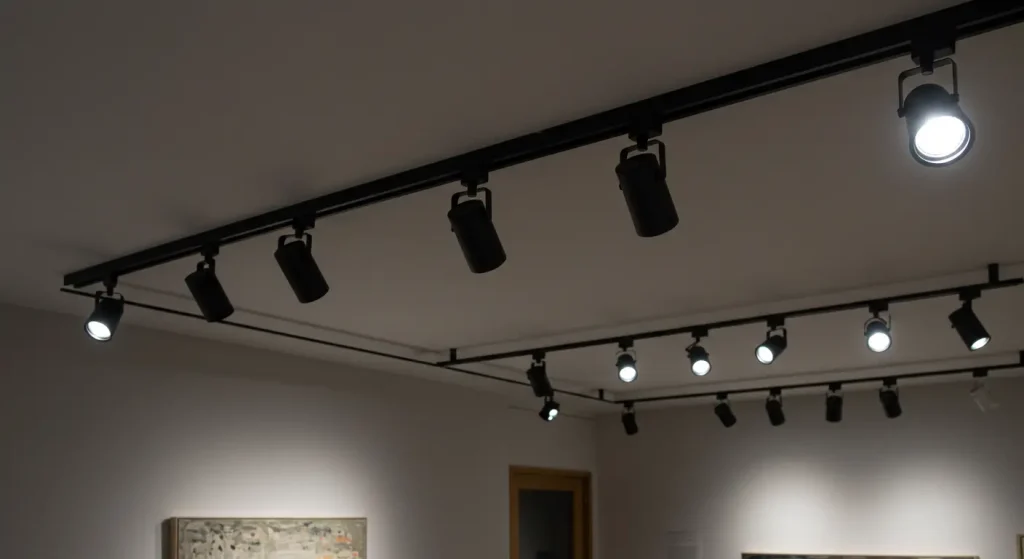
- Human-Centric Lighting (HCL): This is a paradigm shift. HCL systems use tunable-white LED to adjust the CCT throughout the day, mimicking the natural progression of sunlight. This is proven to support the human circadian rhythm, improving alertness, mood, and well-being. This is becoming a key differentiator in Class-A office spaces and healthcare environments.
- Miniaturization and Integration: Technology is allowing for smaller, more powerful commercial track lighting fixtures. Tracks are becoming more discreet, even being recessed flush into drywall or integrated directly into architectural ceiling systems for a seamless, “trimless” look.
- Sustainability and the Circular Economy: Beyond just energy efficiency (lumens per watt), the focus is shifting to the entire lifecycle of the fixture. Manufacturers like the reputable XHLUX are focusing on modular designs that allow for easy repair and upgrades, rather than full replacement. Materials with high recycled content and reduced environmental impact are gaining preference.
How to Plan Your Track Lighting Cost and Value
A common pain point is budgeting. The cost of a commercial electric track lighting system can be broken down into:
- Capital Expenditure (CapEx):
- Hardware: Tracks, connectors, power feeds, and the commercial track lighting fixtures themselves. Price varies dramatically based on performance, brand, and features. A high-CRI, tightly-binned LED fixture with a high-quality driver will cost more than a basic alternative.
- Labor: Professional installation is crucial for safety, code compliance, and warranty.
- Operational Expenditure (OpEx):
- Energy Consumption: This is where high-efficacy LED systems provide immense ROI, drastically lowering electricity bills compared to legacy halogen or metal halide systems.
- Maintenance: Quality LED fixtures are rated for 50,000 hours or more, virtually eliminating re-lamping costs and associated labor for years.
Expert Advice: Do not value-engineer your lighting. A cheaper system with poor color rendering can make high-value merchandise look dull, and frequent failures can disrupt business operations. The Total Cost of Ownership (TCO) of a premium system is often lower than that of a budget system over a 5-10 year period.
How to Avoid Common Track Lighting Pitfalls
Even the best hardware can be undermined by poor implementation. Be aware of these common mistakes:
- Creating Glare: Aiming fixtures directly at eye-level or reflective surfaces. Use honeycomb louvers or snoots to control the beam and reduce glare.
- Improper Spacing: Placing accent lights too close or too far from the object they are illuminating, resulting in “hot spots” or weak illumination.
- Ignoring Beam Angle: Using a wide floodlight where a narrow spotlight is needed (or vice versa). The beam angle (measured in degrees) is critical for creating the desired effect.
- System Incompatibility: Purchasing fixtures that do not match the track system (e.g., trying to fit a J-type head on an H-type track). As Wikipedia’s page on Track Lighting notes, these systems are intentionally not interchangeable.
Conclusion: Track Lighting as a Strategic Asset
Commercial electric track lighting is far more than a utility. It is a strategic tool that, when wielded with expertise, can transform a physical space, guide customer behavior, enhance brand perception, and improve the well-being of its occupants.
By prioritizing a system-based approach—understanding the core components, mastering the technical specifications, and aligning your choice with long-term business goals—you move from simply buying lights to investing in a dynamic and responsive lighting platform. As we progress further into 2025, the synergy of high-performance LED, intelligent controls, and human-centric design principles has solidified track lighting’s position as the definitive choice for modern commercial environments that demand nothing less than excellence.