 XHLUX
XHLUX

Table of contents
- Decoding Smart Dimmable Track Light: Beyond Basic Illumination
- The Spectrum of Intelligence: Exploring Smart Lighting Technologies
- Why Illuminate Smarter? The Compelling Benefits of Smart Dimmable Track Lighting
- Unparalleled Convenience and Intuitive Control
- Crafting Personalized Ambiance and Enhancing Well-being
- Realizing Significant Energy Savings and Promoting Sustainability
- Bolstering Security and Achieving Peace of Mind
- Future-Proofing Your Space with Adaptable and Scalable Solutions
- Elevating Property Value and Aesthetic Appeal
- Where Smart Dimmable Track Lighting Truly Shines
- Modern Homes: For Dynamic and Responsive Living Spaces
- Retail Environments and Showrooms: Engaging Customers and Accentuating Products
- Hospitality Sector: Designing Memorable and Adaptive Guest Experiences
- Art Galleries, Museums, and Studios: Precision Illumination for Creativity
- Progressive Workplaces: Fostering Productivity and Smart Office Environments
- A Buyer’s Guide to Selecting the Ideal Smart Dimmable Track Light System
- Defining Your Lighting Needs and Space Characteristics
- Prioritizing Compatibility and Seamless Ecosystem Integration
- Evaluating Dimming Performance, Light Quality, and Color Capabilities
- Considering Ease of Installation, Setup, and User Experience
- Addressing Security and Privacy in Connected Lighting
- Balancing Budget with Long-Term Value and ROI
- Smart Lighting Market Trends and Innovations (2025 and Beyond)
- Illuminating Market Growth: Statistics and Projections
- The Role of AI and Machine Learning in Predictive Lighting
- Deeper Integration with the Internet of Things (IoT) and Smart City Frameworks
- Evolving Standards for Data Privacy and Cybersecurity in Smart Lighting
- Expert Outlook: Towards Automated, Adaptive, and Human-Centric Illumination
- Step into a Brighter, Smarter Future with Smart Dimmable Track Lighting
In an era where smart technology seamlessly integrates into every facet of our lives, lighting has transcended its traditional role of mere illumination. Welcome to the world of Smart Dimmable Track Light systems – a sophisticated, versatile, and increasingly indispensable solution for modern living and commercial spaces. These intelligent systems offer not just light, but an experience, empowering users with unprecedented control over ambiance, energy consumption, and aesthetic design. As we navigate 2025, understanding the capabilities, technologies, and benefits of smart dimmable track lighting is crucial for anyone looking to create truly responsive, efficient, and future-proof environments.

Decoding Smart Dimmable Track Light: Beyond Basic Illumination
The term “smart” has become ubiquitous, but what does it truly signify in the context of dimmable track lighting? It’s about transforming a functional hardware piece into an interactive, adaptable, and intelligent component of your environment.
What Exactly Defines a “Smart” Dimmable Track Light?
A Smart Dimmable Track Light is a lighting fixture mounted on a track system that incorporates connectivity and advanced control capabilities. This “smartness” is characterized by:
- Connectivity: The ability to connect to a network, typically wirelessly (e.g., Wi-Fi, Bluetooth Mesh, Zigbee, Z-Wave, Thread) or sometimes via wired protocols (like DALI for more complex installations). This connection allows for remote access and integration.
- Controllability: Users can adjust not only the position of the lights on the track but also their intensity (dimming), and often their color temperature (from warm to cool white) or even full RGB colors, usually via a smartphone app, dedicated remote, or voice commands through virtual assistants.
- Automation & Intelligence: Beyond manual control, smart systems enable scheduling, scene setting (pre-programmed lighting configurations for different activities), sensor integration (e.g., motion or daylight sensors for automatic adjustments), and sometimes even learning capabilities based on user behavior or environmental factors.
These features elevate track lighting from a simple directional light source to a dynamic tool for shaping atmosphere, enhancing functionality, and improving energy efficiency.
Key Components Powering Your Smart Track Lighting System
A typical smart dimmable track lighting setup involves several interconnected components:
- Smart Track Lights/Heads: These are LED fixtures specifically designed with integrated smart technology (e.g., built-in Wi-Fi chips, Zigbee modules) or compatible with smart drivers/adapters that enable communication and control. Magnetic track light systems are a newer, sleek option offering easy repositioning.
- Track Rail: The physical structure that holds and powers the lights. For some smart systems, particularly professional ones, the track itself might include data lines.
- Hub/Gateway (Sometimes): For protocols like Zigbee or Z-Wave, a central hub or gateway is often required to bridge communication between the lights and your Wi-Fi network/smartphone app. Matter-enabled devices aim to simplify this, often working over Thread with a Matter controller (which can be an existing smart speaker or display).
- Control Interface: This is typically a smartphone application provided by the manufacturer. It allows for setup, customization, dimming, color changes, scheduling, and scene creation.
- Voice Assistants: Integration with platforms like Amazon Alexa, Google Assistant, or Apple HomeKit (often via Matter) allows for hands-free voice control.
The Journey from Manual Switches to Intelligent Lighting Ecosystems
Track lighting has always offered flexibility in directing light. However, its evolution has been remarkable:
- Traditional Track Lighting: Manual positioning, on/off switching, and basic dimming via wall dimmers (often with compatibility issues).
- Early “Remote Controlled” Track Lighting: Simple IR/RF remotes for dimming or on/off, lacking network connectivity or true smart features.
- Networked Smart Dimmable Track Lighting: The current generation, offering app control, voice integration, extensive customization, automation, and integration into broader smart home or smart building ecosystems. This includes “smart LED track lighting kits” that provide an all-in-one solution.
This progression mirrors the broader shift towards interconnected, intelligent environments where convenience, personalization, and efficiency are paramount.
The Spectrum of Intelligence: Exploring Smart Lighting Technologies
The “smart” in smart dimmable track lighting is powered by various communication technologies. Understanding these is key to choosing a system that aligns with your needs, existing infrastructure, and future ambitions.
Wired vs. Wireless: Charting Your Connectivity Course
- Wireless Systems: These are the most common for residential and many commercial smart track lighting applications due to ease of installation and retrofitting. They utilize radio frequency protocols.
- Wired Systems: While less common for typical consumer-grade smart track lights, professional systems like DALI (Digital Addressable Lighting Interface) offer robust, highly scalable, and interference-resistant control, often favored in large commercial projects, galleries, and high-end architectural lighting. DALI can also have wireless extensions (DALI+).
Popular Wireless Protocols Underpinning Smart Track Lights
Several wireless protocols dominate the smart lighting market:
- Wi-Fi Connected Track Lights: These connect directly to your home Wi-Fi network, eliminating the need for a separate hub.
- Pros: Easy setup, no hub required for basic use.
- Cons: Can congest your Wi-Fi network if many devices are connected, generally more power-hungry, range limited by Wi-Fi router.
- Bluetooth Mesh Track Lights: Bluetooth Low Energy (BLE) devices can form a mesh network, where lights relay messages to each other, extending range and improving reliability.
- Pros: Low power consumption, good for smaller to medium areas, direct phone control often possible without a hub initially (though a hub might be needed for remote access or voice assistant integration).
- Cons: Range per hop is shorter than Zigbee/Z-Wave, ecosystem might be less extensive than Zigbee.
- Zigbee/Z-Wave Track Lights: These are low-power mesh networking protocols specifically designed for smart home devices.
- Pros: Very low power consumption (ideal for battery-powered sensors that might integrate), robust mesh networks for good coverage in larger homes, less interference with Wi-Fi (especially Z-Wave which uses a sub-GHz frequency). Wide range of compatible devices beyond lighting.
- Cons: Require a dedicated hub/gateway.
Matter: The Game-Changer for Unified Smart Home Lighting
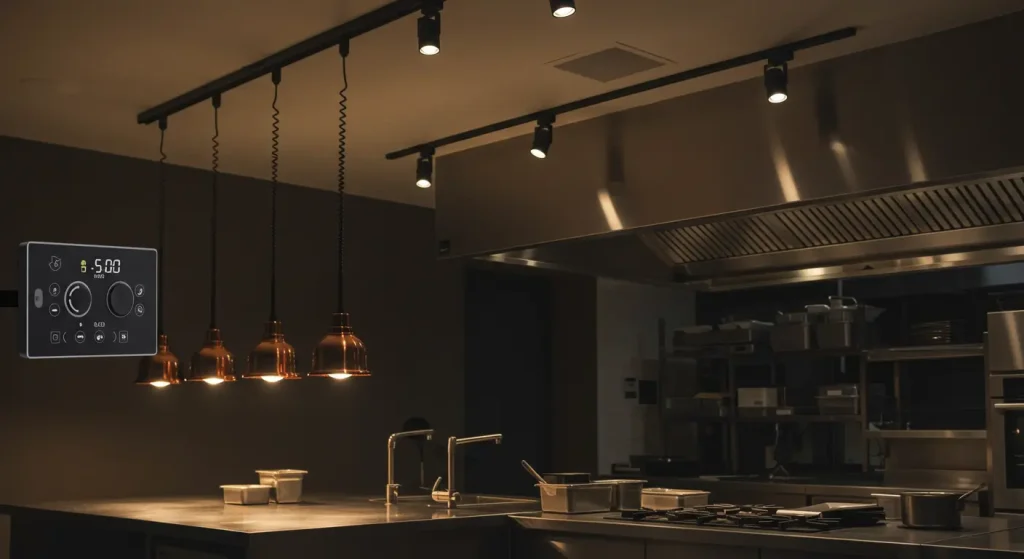
Launched by the Connectivity Standards Alliance (CSA), Matter is an open-source, royalty-free connectivity standard designed to increase interoperability between smart home devices and platforms from different manufacturers.
- Key Benefits for Smart Track Lighting:
- Simplified Setup: Easier onboarding of new devices.
- Multi-Admin Control: Control Matter-certified lights via any Matter-compatible ecosystem simultaneously (e.g., Apple Home, Google Home, Amazon Alexa, Samsung SmartThings).
- Enhanced Reliability: Often utilizes Thread (a low-power IPv6-based mesh network) alongside Wi-Fi and Ethernet for robust local communication.
- Improved Security: Strong encryption and authentication mechanisms.
- Future-Proofing: Broad industry backing suggests long-term viability.
Many existing smart lighting products are gaining Matter support via software updates to their hubs or the devices themselves. When choosing new “smart track lighting for home,” looking for Matter certification is increasingly advisable.
DALI: Professional-Grade Control in Smart Track Lighting
While many consumer-focused smart track lights use the wireless protocols above, DALI (Digital Addressable Lighting Interface) remains a gold standard for professional and architectural applications.
- Key DALI Features: Individual addressing of up to 64 luminaires (extendable), group control, scene setting, bi-directional communication for status feedback (e.g., lamp/driver failure), standardized dimming curves for smooth performance. DALI-2 enhances interoperability and adds control devices like sensors.
- Integration in Smart Systems: DALI systems can be integrated into larger smart building platforms or even some high-end smart home systems via gateways, offering a robust backbone for “commercial smart track lighting.” DALI+ is also bringing DALI capabilities to wireless IP-based networks.
At a Glance: Comparing Smart Lighting Communication Technologies
| Feature | Wi-Fi | Bluetooth Mesh | Zigbee | Z-Wave | Matter (over Thread/Wi-Fi) | DALI (Wired/DALI+) |
|---|---|---|---|---|---|---|
| Primary Use | Direct connect, simple setup | Smaller areas, direct phone control | Whole-home automation, low power | Whole-home automation, low interference | Unified ecosystem, interoperability | Professional, architectural, commercial |
| Hub Required? | No (typically) | Sometimes (for full features/remote) | Yes | Yes | Yes (Matter Controller) | Yes (DALI Controller/Gateway) |
| Range | Moderate (router dependent) | Good (mesh) | Very Good (mesh) | Very Good (mesh) | Very Good (mesh with Thread) | Excellent (wired), Good (wireless) |
| Power Consumption | High | Low (BLE) | Very Low | Very Low | Low (Thread) | Low (bus-powered options) |
| Interoperability | Varies by brand | Varies | Good (Zigbee 3.0) | Good | Excellent (its purpose) | Excellent (DALI-2 certified) |
| Max Devices | Limited by Wi-Fi router capacity | Thousands (mesh) | ~65,000 (mesh) | 232 per network (can bridge) | High (IP-based) | 64 per line (extendable) |
| Data Rate | High | Moderate | Low | Low | Moderate | Low |
| Typical Cost | Low to Medium | Low to Medium | Medium | Medium | Medium (evolving) | High |
Why Illuminate Smarter? The Compelling Benefits of Smart Dimmable Track Lighting
Upgrading to smart dimmable track lighting is more than a technological novelty; it’s an investment that delivers tangible benefits across various aspects of daily life and space management.
Unparalleled Convenience and Intuitive Control
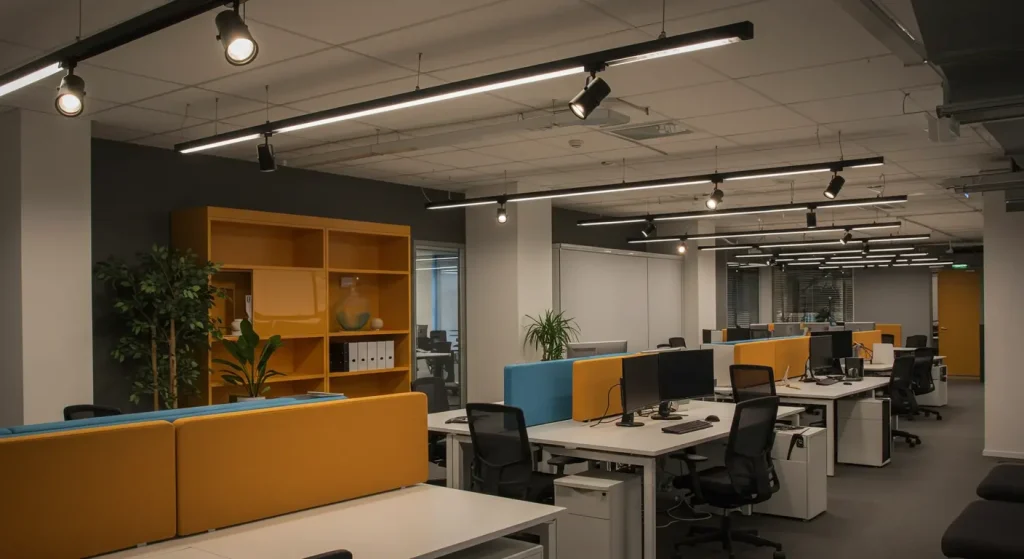
Forget walking to multiple switches. With “smart track lighting systems with app control,” you can adjust individual lights or entire scenes from your smartphone or tablet, whether you’re in the room or miles away. Voice commands like “Alexa, dim the living room track lights to 30%” or “Hey Google, activate movie scene” add another layer of effortless control.
Crafting Personalized Ambiance and Enhancing Well-being
Smart dimmable track lights allow you to tailor the lighting to your exact mood or activity.
- Precision Dimming: Create the perfect brightness for tasks, relaxation, or entertaining.
- Color Temperature Tuning: Many systems offer adjustable white light, from warm, cozy tones (around 2700K) for evenings to cool, energizing daylight hues (5000K+) for focused work. This is a key feature of “tunable white smart track lighting.”
- Full Color Spectrum (RGB/RGBW): Some models offer millions of colors, allowing for dynamic accent lighting or themed environments.
This level of control can contribute to human-centric lighting principles, supporting natural circadian rhythms and improving overall well-being.
Realizing Significant Energy Savings and Promoting Sustainability
Smart lighting is inherently more energy-efficient:
- LED Technology: Most smart track lights use LEDs, which consume significantly less energy (up to 75-80% less) and last much longer than incandescent or halogen bulbs.
- Precise Dimming: Dimming lights reduces power consumption.
- Scheduling & Automation: Ensure lights are only on when needed, automatically turning off when rooms are vacant (with motion sensors) or at set times.
- Daylight Harvesting: Smart sensors can dim artificial lights when sufficient natural light is available.
These features lead to lower electricity bills and a reduced environmental footprint, contributing to “energy-efficient smart track lighting” solutions.
Bolstering Security and Achieving Peace of Mind
Smart track lighting can enhance home or business security:
- Presence Simulation: Schedule lights to turn on and off randomly when you’re away, creating the illusion that someone is home, deterring potential intruders.
- Integration with Security Systems: Some smart lighting can integrate with security cameras or alarms, for example, flashing lights if an intrusion is detected.
Future-Proofing Your Space with Adaptable and Scalable Solutions
Investing in smart track lighting, especially systems supporting standards like Matter or robust protocols like DALI-2, prepares your space for future technological advancements. These systems are often scalable, allowing you to start small and expand as your needs or budget grow. The flexibility of track lighting combined with smart control means your lighting can adapt to changing room layouts or functions without major rewiring.
Elevating Property Value and Aesthetic Appeal
Well-designed smart lighting is an attractive feature for potential buyers or tenants. It signals a modern, technologically advanced, and energy-conscious property. The sleek designs of many smart track lights, including options like “magnetic smart track lighting,” also enhance the overall aesthetic of a space.
Where Smart Dimmable Track Lighting Truly Shines
The adaptability of smart dimmable track lighting makes it a powerful tool across a diverse range of environments.
Modern Homes: For Dynamic and Responsive Living Spaces
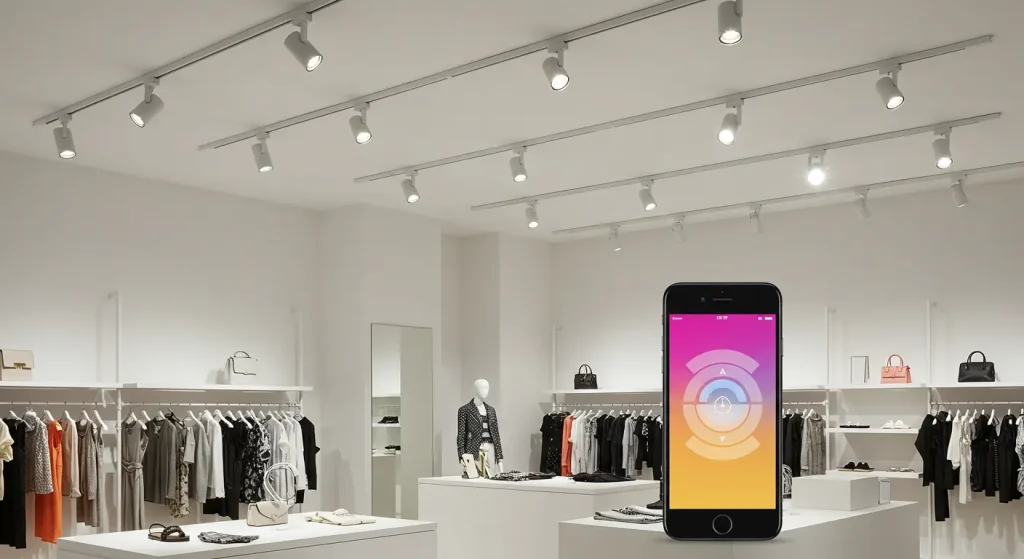
In residential settings, smart track lights can transform kitchens, living rooms, home offices, and hallways. Homeowners can create “smart home track lighting scenes” for cooking, dining, movie nights, reading, or entertaining, all controlled via app or voice. They are perfect for highlighting artwork, architectural features, or creating layered lighting designs.
Retail Environments and Showrooms: Engaging Customers and Accentuating Products
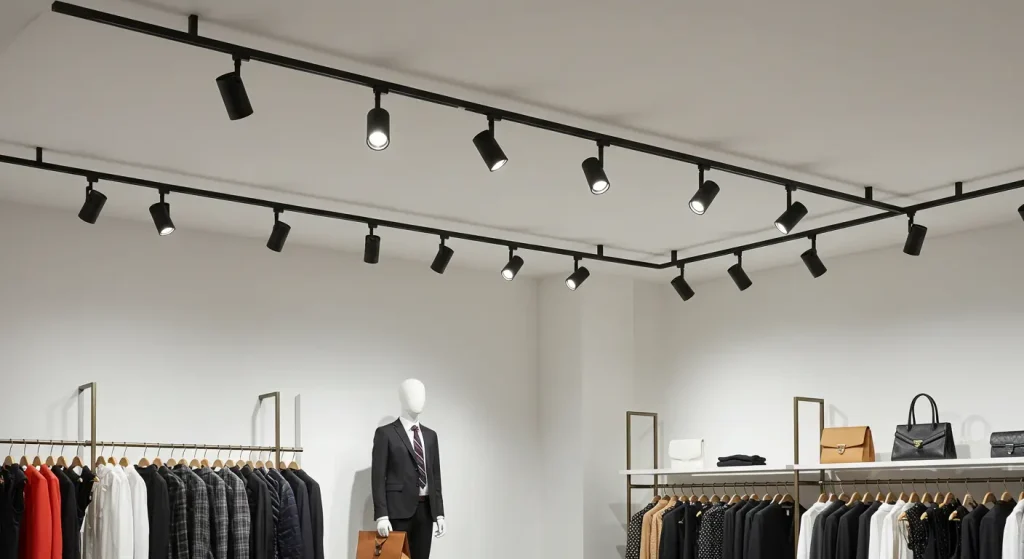
For retail, “commercial smart track lighting” is a game-changer. Businesses can:
- Dynamically adjust lighting to spotlight new merchandise or promotions.
- Create engaging visual experiences that guide customer flow.
- Schedule different lighting schemes for opening hours, special events, or after-hours window displays.
- Optimize energy use based on store traffic or daylight.
- Use color-tunable lights to best represent product colors.
Hospitality Sector: Designing Memorable and Adaptive Guest Experiences
In hotels, restaurants, and bars, smart dimmable track lighting helps craft the perfect ambiance. Different scenes can be set for breakfast, lunch, and dinner services in a restaurant, or to create a welcoming glow in a hotel lobby that adjusts throughout the day. Guest rooms can benefit from easy-to-control mood lighting.
Art Galleries, Museums, and Studios: Precision Illumination for Creativity
The precise control offered by systems like DALI, integrated into a smart track setup, is invaluable for galleries and museums. Curators can:
- Achieve exact lux levels required for sensitive artworks.
- Easily reconfigure lighting for new exhibitions without touching the fixtures.
- Highlight textures and colors accurately with high Color Rendering Index (CRI) smart LED track lights.
Artists and designers in studios also benefit from adaptable task and accent lighting.
Progressive Workplaces: Fostering Productivity and Smart Office Environments
Smart track lighting in offices can contribute to employee well-being and operational efficiency. Features include:
- Task-specific lighting for different work zones.
- Human-centric lighting that adjusts color temperature to support alertness or relaxation.
- Integration with occupancy sensors to save energy in unused meeting rooms or offices.
- Centralized control for facility managers.
A Buyer’s Guide to Selecting the Ideal Smart Dimmable Track Light System
With a plethora of options available, choosing the right smart dimmable track light system requires careful consideration.
Defining Your Lighting Needs and Space Characteristics
- Purpose: What do you want to achieve? Accent lighting, task lighting, general ambiance, or a combination?
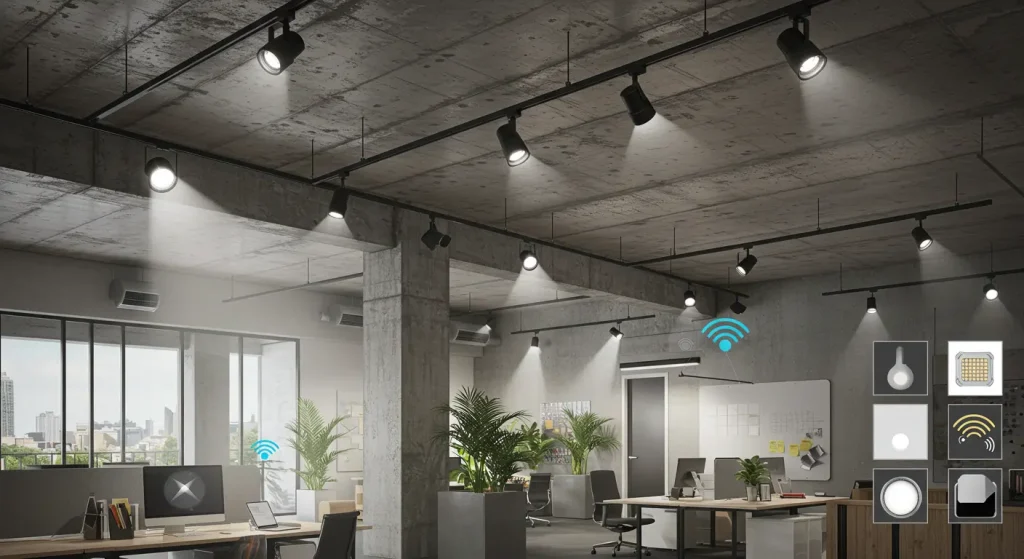
- Space Size & Layout: This influences the number of lights, required brightness (lumens), and the best communication protocol (e.g., mesh for larger areas).
- Existing Infrastructure: Are you retrofitting or doing a new build? Is there existing track?
Prioritizing Compatibility and Seamless Ecosystem Integration
- Smart Home Platform: Do you already use Amazon Alexa, Google Home, Apple HomeKit, or Samsung SmartThings? Look for systems compatible with your preferred platform. Matter certification is a strong plus for broad compatibility.
- Other Smart Devices: Consider if you want your lights to interact with other smart devices like sensors, thermostats, or security systems.
Evaluating Dimming Performance, Light Quality, and Color Capabilities
- Dimming Range & Smoothness: Look for smooth dimming down to low levels (e.g., 1% or less) without flicker.
- Color Rendering Index (CRI): A CRI of 90+ is recommended for accurate color representation, crucial for retail or art applications.
- Color Temperature Range: If tunable white is desired, check the range (e.g., 2700K to 6500K).
- RGB Capabilities: If full color is needed, verify the vibrancy and accuracy of the colors.
Considering Ease of Installation, Setup, and User Experience
- DIY vs. Professional Installation: Some systems are designed for easy DIY installation, while more complex setups (especially those involving new wiring or DALI) may require an electrician or smart home professional.
- App Usability: The companion app should be intuitive, stable, and offer the features you need. Read reviews.
- Reliability: Check user reviews for feedback on connectivity issues or unresponsiveness.
Addressing Security and Privacy in Connected Lighting
As with any IoT device, security is important.
- Reputable Brands: Choose established brands that are more likely to provide security updates.
- Network Security: Ensure your home Wi-Fi network is secured with a strong password.
- Matter: This standard has robust security protocols built-in.
- Privacy Policies: Understand how the manufacturer handles your data if cloud connectivity is involved.
Balancing Budget with Long-Term Value and ROI
Smart dimmable track lighting can range from budget-friendly DIY kits to high-end professional systems.
- Initial Cost: Factor in lights, tracks, hubs (if needed), and potential installation costs.
- Energy Savings: Consider the long-term savings on electricity bills.
- Lifespan & Warranty: LED lights have a long lifespan, but check warranty details.
- Features vs. Cost: Don’t pay for features you won’t use, but also consider future needs.
Smart Lighting Market Trends and Innovations (2025 and Beyond)
The smart lighting industry is dynamic and rapidly evolving, driven by technological advancements and increasing consumer demand for connected, intelligent environments.
Illuminating Market Growth: Statistics and Projections
The global smart lighting market is experiencing substantial growth. According to Allied Market Research, the market size was projected to reach $38.68 billion by 2026, registering a CAGR of 20.5% from 2018. More recent reports, such as one by Technavio in February 2025, indicate the market is set to grow by USD 26.4 billion from 2025 to 2029, accelerating at a CAGR of 18.5%. These figures underscore the robust demand for intelligent lighting solutions, including smart dimmable track lights, driven by factors like energy efficiency mandates, the desire for enhanced lifestyles, and the proliferation of smart home ecosystems.
The Role of AI and Machine Learning in Predictive Lighting
Future smart lighting systems will likely incorporate more advanced AI and machine learning capabilities. Imagine lights that:
- Learn your routines and preferences, automatically adjusting to anticipate your needs.
- Optimize energy consumption based on real-time occupancy patterns and utility pricing.
- Adapt lighting conditions to enhance mood or productivity based on biometric feedback or environmental cues.
“AI powered smart track lighting” is on the horizon.
Deeper Integration with the Internet of Things (IoT) and Smart City Frameworks
Smart lighting will become an even more integral part of the broader IoT landscape. In commercial buildings and smart cities, lighting data (occupancy, energy use) can inform facility management, space optimization, and even public safety initiatives. Smart track lighting in retail, for example, might integrate with inventory systems or customer analytics platforms.
Evolving Standards for Data Privacy and Cybersecurity in Smart Lighting
As more devices connect, the focus on data privacy and cybersecurity will intensify. Expect stronger industry standards, certifications, and consumer awareness regarding the security of smart lighting systems. Protocols like Matter are already prioritizing these aspects.
Expert Outlook: Towards Automated, Adaptive, and Human-Centric Illumination
Experts foresee a future where lighting is not just smart but truly adaptive and human-centric. Trends highlighted for 2025 and beyond include:
- Multifunctional Smart Lamps & Fixtures: Combining lighting with other features like speakers, chargers, or environmental sensors.
- Wellness-Focused Lighting: Systems designed to support circadian rhythms, improve sleep, and enhance overall well-being.
- Sustainable and Biophilic Designs: Lighting that incorporates natural elements and materials, with a strong emphasis on energy efficiency and responsible manufacturing.
The ultimate goal is lighting that seamlessly and almost invisibly supports and enhances our lives.
Step into a Brighter, Smarter Future with Smart Dimmable Track Lighting
Smart Dimmable Track Lighting is no longer a futuristic concept; it’s a present-day reality that offers an unparalleled blend of flexibility, control, efficiency, and aesthetic enhancement. Whether you’re renovating your home, designing a cutting-edge retail space, or aiming to create a more productive and comfortable work environment, these intelligent systems provide the tools to shape your illumination like never before.
By understanding the different technologies, weighing the benefits, and carefully selecting a system that aligns with your needs, you can unlock the full potential of smart lighting. As technology continues to evolve, smart dimmable track lights will undoubtedly play an even more significant role in creating responsive, personalized, and sustainable spaces.
Ready to take control and redefine your environment with intelligent illumination? Explore the diverse range of Smart Dimmable Track Light options available today and step confidently into a brighter, smarter future.