 XHLUX
XHLUX

For too long, the basement has been the most underestimated space in the home—a dark, forgotten lower level relegated to storage and shadows. But today, the modern finished basement is a blank canvas of immense potential: a sprawling home theater, a high-energy home gym, a sophisticated lounge and bar, a productive home office, or a vibrant playroom. Unlocking this potential, however, hinges on solving one fundamental challenge: light.
Basements are notorious for their unique lighting hurdles. Low ceilings create a sense of confinement, a lack of windows starves the space of natural light, and a single large room must often serve multiple, distinct functions. This is where traditional lighting solutions often fail. A single overhead fixture creates a “dungeon” effect, while recessed cans can be difficult to install around the inevitable ductwork and plumbing.
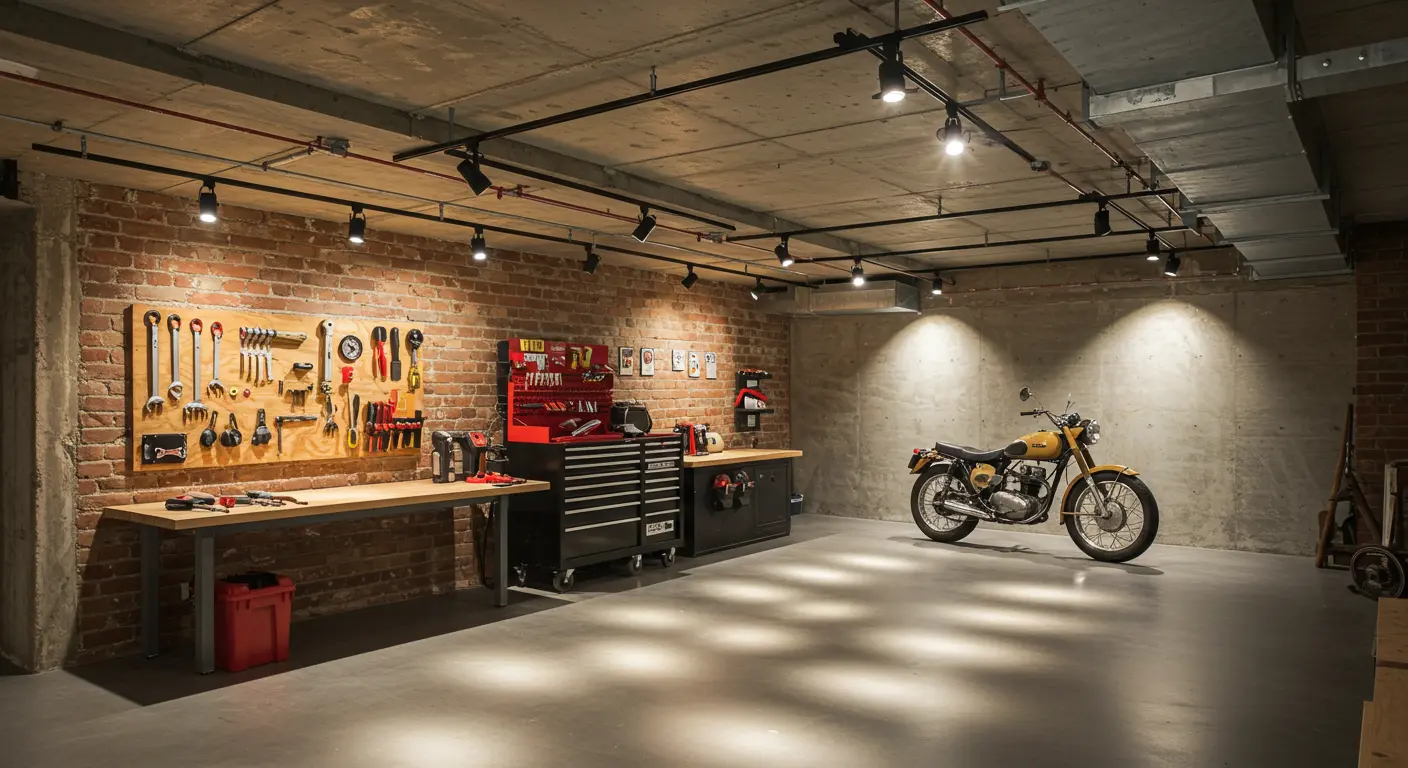
This is where track lighting emerges as the unsung hero of the subterranean space. When chosen and implemented correctly, it is the single most powerful tool for overcoming every classic basement challenge. This guide is your definitive resource for this process. We will move beyond a simple overview to provide a professional-level framework on how to choose the best track lighting for your basement, transforming it from the most overlooked room into the most versatile and inviting level of your home.
Why Track Lighting is the Premier Solution for Basements
Before diving into the “how,” it’s crucial to understand the “why.” Track lighting isn’t just an option; it’s arguably the optimal solution due to its unique problem-solving capabilities.
- Unmatched Flexibility & “Zoning” with Light: A modern basement is rarely just one room. It’s a home gym, a media center, and a wet bar all in one open-plan space. Track lighting allows you to cater to each zone’s specific needs from a single electrical circuit. You can have bright, energizing light on the workout equipment, focused accent light on the bar’s bottle collection, and a soft, ambient wash of light in the seating area—all from one cohesive system.
- The Ultimate Low Ceiling Solution: Headroom is precious in a basement. Unlike chandeliers or pendants that hang down and create obstacles, modern, low-profile track systems hug the ceiling, preserving every valuable inch. This makes them one of the best low ceiling basement lighting ideas available.
- It Works With Obstructions, Not Against Them: Exposed joists, HVAC ductwork, and support beams are common features. Track lighting can be strategically installed between joists or alongside ductwork, allowing you to place light exactly where you need it without being dictated by the ceiling’s irregularities.
- The Power to Create Perceived Space: The single most effective trick to make a basement feel bigger and brighter is to illuminate its vertical surfaces. Track lighting excels at this. By using specialized “wall washer” heads, you can drench the walls in a smooth, even layer of light, pushing them back visually and eliminating the closed-in, “cave-like” feeling.
Part 1: Choosing Your Track System
Your first decision is the most fundamental, as it dictates the compatibility of every component you will ever add. You must choose a track “system type.”
The Big Three: H, J, and L Systems
The industry is dominated by three main standards, often named after the pioneering manufacturers (Halo, Juno, and Lightolier). They are not cross-compatible.
| System Type | Key Identifiers | Commonality & Considerations | Idéal pour |
|---|---|---|---|
| H-Type | 3 contacts on the fixture. The track’s conductors are 1 inch apart. | The most common and widely adopted standard in North America. Offers the largest selection of fixtures from the most manufacturers. | New projects or renovations where you want the maximum selection of fixture styles and price points. |
| J-Type | 2 contacts on the fixture, spaced wider apart. Often a deeper groove in the track. | Very common, especially in products from big-box retailers. A solid choice, but with a slightly less extensive fixture selection than H-type. | Renovations where you are matching an existing J-type track or if you’ve found a specific J-type fixture you love. |
| L-Type | 2 contacts, spaced closer together than J-type. | The least common of the three, often considered a more architectural or high-end specification. Fixture selection is more limited. | High-end custom projects or matching an existing L-type installation. |
Expert Advice: For any new basement project, selecting the H-type system is the safest and most flexible choice. It guarantees you will have the widest possible array of fixture options to choose from, now and in the future.
Rigid vs. Flexible Track
- Rigid Track: This is the standard for 95% of basement applications. It comes in straight sections (typically 2, 4, 6, or 8 feet) that can be joined together to create straight lines or geometric patterns (squares, U-shapes) using connectors.
- Flexible / Monorail Track: This bendable track is a specialized solution used to create sweeping curves or to navigate unusual architectural features. It’s more complex to install and is best used as a deliberate design statement.
Part 2: Selecting the Perfect Fixture Heads
This is where you tailor the system to your basement’s specific needs. A great basement lighting plan uses a mix of three primary fixture types.
- Flood Heads (for Ambient Light): These fixtures have a wide beam angle (40° or more) and provide the foundational layer of general, room-filling light. They are the workhorses that make the entire space feel bright and usable.
- Spot or Accent Heads (for Task & Feature Light): With a narrower beam angle (under 25°), these fixtures create focused pools of light. They are essential for:
- Highlighting a feature wall (brick, stone, or a bold paint color).
- Accenting artwork or family photos.
- Providing focused task light over a workbench, a game table, or a wet bar.
- Wall Washer Heads (to Create Space): This is the secret weapon for a basement. A dedicated wall washer head has a specialized optic or a scoop-like shield that directs light asymmetrically for a smooth, even wash down a wall. Using these along the perimeter is the most effective way to make a low-ceilinged room feel taller and more expansive.
Part 3: Light Quality and Color
The quality of the light is just as important as the quantity.
Color Temperature (CCT): Setting the Right Vibe
The CCT, measured in Kelvin (K), determines if the light feels warm (yellowish) or cool (bluish). For a multi-functional basement, you’ll want to choose a CCT that matches the zone’s activity.
| CCT Range | Appearance | Recommended Basement Zone(s) |
|---|---|---|
| 2700K – 3000K | Warm White. Cozy, inviting, relaxing. | Home theater areas, lounges, wet bars, and any zone designed to feel like a comfortable living room. |
| 3500K – 4000K | Neutral White. Crisp, clean, vibrant. | Home gyms, laundry areas, workshops, and craft/hobby spaces. This range promotes focus and alertness. |
Color Rendering Index (CRI): Making Things Look Their Best
CRI is a measure of how accurately a light source reveals the true colors of objects. For a basement where you’ve invested in finishes and furniture, a high CRI is a must. A CRI of 90 or higher will ensure your paint colors, the wood grain of your bar, and the skin tones of your guests look natural and vibrant, not washed-out and dull. This is a key differentiator between cheap fixtures and high-quality lighting systems. For designers and contractors, specifying high-CRI fixtures from a quality manufacturer like XHLUX ensures a professional-grade result that clients will notice and appreciate.
Part 4: A Basement Layout Strategy
- Adopt the Perimeter Strategy: The most effective layout for most basements is to run your main tracks parallel to the walls, about 24-36 inches away. This gives you the perfect position to use a combination of wall washers (for ambient light and perceived space) and adjustable spots (to highlight features on the walls).
- “Zone” Your Lighting Plan: Before installation, draw a floor plan. Map out your zones (e.g., TV area, gym, bar) and plan a dedicated track or a section of a track for each. This ensures every area gets the type and amount of light it needs.
- Task-Oriented Runs: For specific tasks, place a track run directly above the area. A track centered over a pool table or a workbench provides excellent, shadow-free illumination right where you need it.
- Use Light to Create Pathways: In a large, open-plan basement, long runs of track can create implied “hallways,” guiding foot traffic and defining the flow of the space without needing to build walls.
Conclusion
Choosing the best track lighting for your basement is about embracing its unparalleled flexibility. It is a single system that can solve the multifaceted challenges of a subterranean space, turning its weaknesses into strengths.
By following a clear, methodical process—first, selecting a versatile track system (like the H-type); second, choosing a mix of fixture heads tailored to each zone’s function; and third, planning a strategic layout that maximizes both usability and the perception of space—you can achieve a truly transformative result. Add in the crucial element of dimmers for mood control, and you will have created not just a finished basement, but a dynamic, comfortable, and brilliantly illuminated lower level that will quickly become one of the most beloved areas of your home.