 XHLUX
XHLUX

Tabla de contenido
- What Is Continuous Linear LED Lighting
- How Continuous Linear LED Lighting Works
- Advantages of Continuous Linear LED Lighting
- Aplicaciones típicas
- How to Choose the Right Continuous Linear Lighting
- Installation and Maintenance Tips
- Conclusión
- Frequently Asked Questions (FAQ)
- Data Performance Comparison Table
In modern architectural lighting, the shift from traditional point-source illumination to sleek, seamless linear lighting has become a defining trend. Designers and engineers are increasingly looking for solutions that provide both functionality and aesthetics — and continuous linear LED lighting fits this demand perfectly.
Unlike conventional spotlights or downlights, continuous linear LED systems offer smooth, shadow-free light distribution, enhancing spatial harmony and visual comfort.
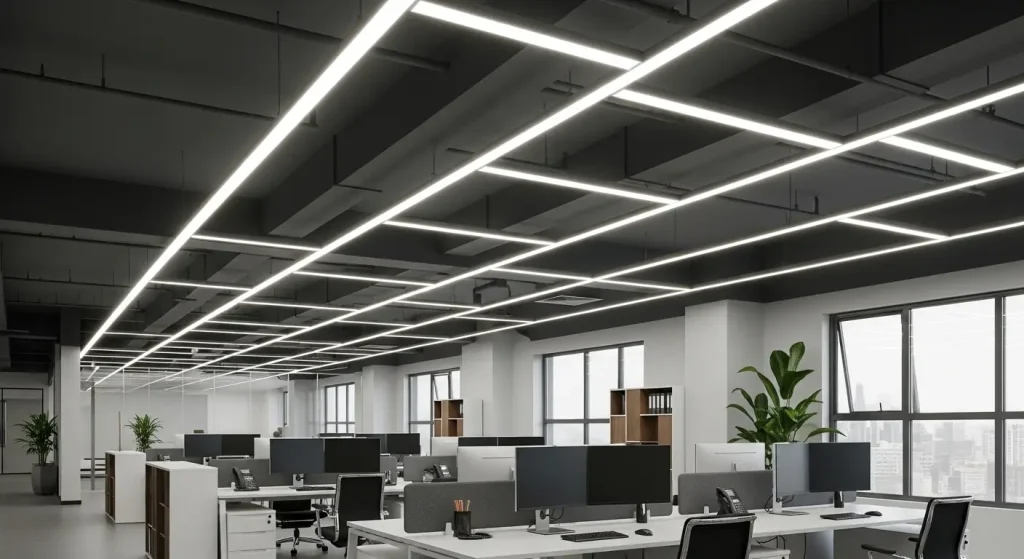
In this article, we’ll explore what continuous linear LED lighting is, how it works, its advantages, typical applications, y how to choose the right system for your project. We’ll also provide data, diagrams, and practical insights to help you make informed lighting decisions.
What Is Continuous Linear LED Lighting
Definition
Continuous linear LED lighting refers to a modular lighting system made up of multiple linear LED fixtures connected seamlessly to form one continuous light line. These fixtures can be installed in straight lines, L-shapes, U-shapes, or even complex geometric patterns, creating a consistent, uninterrupted beam of light without visible dark spots.
Difference from Traditional Fixtures
| Lighting Type | Light Output | Installation Style | Aesthetic | Solicitud |
|---|---|---|---|---|
| Spotlight / Downlight | Focused beam | Ceiling recessed | Accent or task lighting | Comercio minorista, museos |
| LED Strip Light | Flexible but visible breaks | Surface or hidden | Decorative | Iluminación indirecta |
| Continuous Linear LED Light | Uniform, seamless | Modular, embedded, or suspended | Architectural-grade | Offices, hotels, commercial |
Continuous Illumination Concept
The defining characteristic of continuous linear lighting is “no visual interruption” — the light appears as one solid beam, even though it’s made up of multiple modules. This is achieved through precision optics and diffusers that eliminate the gaps between fixtures.
Common Form Factors
Continuous linear LED lights come in multiple installation options:
- Recessed-mounted: Flush with the ceiling or wall surface for minimalist aesthetics.
- Surface-mounted: Easy to install on concrete or wooden ceilings.
- Suspended-mounted: Ideal for offices and open spaces requiring uniform downlight.
- Magnetic track system: Flexible modular system allowing easy repositioning of lights.
How Continuous Linear LED Lighting Works
A continuous linear LED system is composed of five essential parts:
- LED Light Source (Chips): Provides the base light output with high luminous efficacy (up to 160 lm/W).
- Aluminum Profile / Housing: Ensures heat dissipation, structural integrity, and design flexibility.
- Optical Diffuser: Made of PMMA or PC to deliver soft, even light without glare.
- Power Supply / Driver: Converts AC to DC and ensures stable performance and dimming control.
- Connectors and Couplers: Mechanically and electrically connect multiple fixtures seamlessly.
Modular Connection & Electrical Series
Each linear light module has male/female connectors that allow continuous electrical linking. Power is typically supplied at one or both ends of the series. The joints are designed for precision alignment, maintaining a smooth luminous surface.
Seamless Light Effect
By combining high-density LEDs (e.g., 240 LEDs/m) con professional diffusers, the system eliminates “dark zones” at fixture junctions. The result is a continuous beam effect that enhances architectural symmetry.
Smart Dimming & Control
Modern continuous linear systems support multiple dimming and control protocols:
- 0-10V or DALI dimming for precise brightness adjustment.
- Zigbee, Bluetooth, or Wi-Fi smart control integration for IoT lighting systems.
- Tunable white y RGB versions available for dynamic ambient environments.
Advantages of Continuous Linear LED Lighting
1. Uniform, Shadow-Free Illumination
No dark lines or patchy spots — the light flows continuously, ensuring even brightness across the space.
2. Energy Efficiency
Advanced LED chips and efficient drivers reduce energy consumption by up to 60% compared to traditional fluorescent tubes.
3. Flexible Design & Modular Customization
Lengths can be customized (0.6m, 1.2m, 2.4m, etc.), and the fixtures can be arranged into various shapes or angles to fit architectural features.
4. Sleek and Modern Aesthetic
Minimalist linear lighting blends perfectly into ceilings, walls, and furniture, providing a clean, high-end look.
5. Smart Lighting Compatibility
Easily integrated into intelligent control systems, allowing for occupancy sensing, daylight harvesting, and personalized lighting scenes.
6. Long Lifespan & Low Maintenance
High-quality LEDs last over 50.000 horas, reducing replacement and maintenance costs for commercial buildings.
Aplicaciones típicas
Continuous linear LED lighting is highly versatile and fits nearly any modern environment.
| Área de aplicación | Lighting Goal | Recommended Type |
|---|---|---|
| Espacios de oficina | Bright, uniform task lighting | Recessed or suspended linear systems |
| Tiendas minoristas / Salas de exposición | Highlight products, enhance brand atmosphere | Magnetic track or surface linear lights |
| Hotels and Residences | Soft ambient lighting | Cove linear or tunable white systems |
| Corridors and Lobbies | Visual guidance and elegance | Continuous recessed lines |
| Architectural Façades | Accent and decorative lighting | IP65 linear profiles |
| Industrial / Public Spaces | Efficient general lighting | Surface-mounted industrial linear systems |
How to Choose the Right Continuous Linear Lighting
When selecting a linear LED system for your project, consider these key aspects:
1. Installation Method
- Recessed: seamless finish, ideal for offices.
- Suspended: for open ceilings or architectural designs.
- Surface-mounted: easy installation for retrofit projects.
2. Color Temperature (CCT)
| Environment | Recommended CCT | Visual Effect |
|---|---|---|
| Office / Retail | 4000–5000K | Bright, neutral white |
| Hotels / Homes | 2700–3500K | Warm and cozy |
| Art Galleries | 3500–4000 K | Balanced tone with high CRI |
3. Color Rendering Index (CRI)
Choose CRI ≥ 90 for spaces that demand accurate color representation (showrooms, retail, art spaces).
4. Lighting Control
Opt for DALI or Bluetooth Mesh if you need energy management or scene control integration.
5. Manufacturer & Certification
Always choose a professional LED lighting manufacturer with certifications like CE, RoHS, UL, and ISO9001 to ensure safety and performance.
💡 [Iluminación XHLUX] provides fully customizable continuous linear lighting systems with professional optical design, reliable drivers, and global export service support.
Installation and Maintenance Tips
- Plan the Layout:
Draw a lighting map before installation to avoid wiring conflicts and dark zones. - Check Power Supply:
Use constant voltage drivers matching the LED system’s wattage and voltage. - Ensure Proper Alignment:
Tighten connectors and test alignment before powering up. - Consider Heat Dissipation:
Avoid sealing fixtures in airtight structures; allow airflow to extend LED lifespan. - Regular Cleaning:
Use soft dry cloths to remove dust and keep diffusers clear for maximum light output.
Conclusión
Continuous linear LED lighting represents a modern, flexible, and efficient lighting solution for today’s architecture.
Its ability to deliver seamless illumination, adapt to complex designs, and integrate smart controls makes it a favorite among lighting designers and facility managers.
Whether for offices, retail, hotels, or architectural projects, continuous linear lighting is shaping the future of visual comfort and spatial aesthetics.
Contacto [Iluminación XHLUX] today to explore our custom linear lighting solutions or request a free sample for your next project.
Frequently Asked Questions (FAQ)
1. What makes continuous linear LED lighting different from LED strip lights?
Continuous linear systems use rigid profiles and optical lenses to achieve professional-grade uniformity, while strip lights are flexible but prone to brightness inconsistencies.
2. Can linear LED lights be dimmed or color-tuned?
Yes. Most systems support 0–10V, DALI, or smart app control for brightness and color temperature adjustment.
3. How long do continuous linear LED lights last?
With proper heat management, they typically last 50,000 to 70,000 hours.
4. Are these lights suitable for outdoor use?
Yes, IP65 or higher-rated models are designed for exterior and façade lighting.
5. What is the ideal mounting height for suspended linear lights?
Usually 2.5–3 meters from the floor, depending on room height and brightness requirements.
Data Performance Comparison Table
| Característica | Continuous Linear LED | Traditional Tube Light | Halogen Downlight |
|---|---|---|---|
| Light Uniformity | ★★★★★ | ★★☆☆☆ | ★★★☆☆ |
| Eficiencia energética | Up to 160 lm/W | 90 lm/W | 20 lm/W |
| Lifespan | 50,000+ hrs | 15,000 hrs | 2,000 hrs |
| Mantenimiento | Bajo | Medio | Alto |
| Control inteligente | Sí | Limitado | No |