 XHLUX
XHLUX
![What is UGR<19 Dimmable Track Light: Best Guide [2025]](https://xhlux.com/wp-content/uploads/2024/05/news.webp)
Tabla de contenido
- UGR<19 Explained: The Gold Standard for Workplace Lighting
- The Anatomy of a Low-Glare Fixture: How a Track Light Achieves UGR<19
- It’s a System, Not Just a Fixture: Layout and Planning for Low UGR
- The Role of Dimming: Enhancing Visual Comfort and Saving Energy
- Where UGR<19 is a Mandate for Success: Prime Applications
- The WELL Building Standard: Connecting Glare Control to Human Health
- FAQ About UGR<19 Dimmable Track Lighting
- Market Insights: Productivity as a Commodity
- Is UGR<19 Your New Baseline?
In today’s digitally-driven workplaces, the greatest challenge isn’t just providing light—it’s providing light that works with us, not against us. Digital eye strain, focus fatigue, and persistent headaches are the silent enemies of productivity and well-being. The most effective weapon in a lighting designer’s arsenal to combat these issues? It’s a number: UGR<19.
If you’re specifying lighting for an office, school, or any environment where visual tasks are performed, you already know that simply making a space bright is not enough. You need to make it comfortable. This is where the UGR<19 Dimmable Track Light comes in. It’s not just a fixture; it’s a piece of performance-driven technology designed to meet stringent international standards for visual comfort.
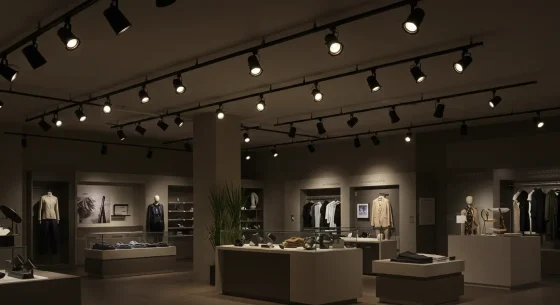
But what does UGR<19 really mean in practice? How do high-performance track lights achieve this demanding rating, and how does dimmability enhance it? This guide will provide the direct, authoritative answers you need. We’ll explore the science behind the standard, the anatomy of a low-glare fixture, and the strategies for deploying this technology effectively to create truly exceptional, human-centric environments.
UGR<19 Explained: The Gold Standard for Workplace Lighting
For the uninitiated, UGR stands for Unified Glare Rating. It’s an internationally accepted method for measuring the psychological discomfort caused by glare from luminaires in an indoor environment. The lower the number, the less discomfort your eyes will feel.
Why UGR<19 is the Magic Number for Offices and Schools
The specific benchmark of UGR<19 is not arbitrary. It is the recommended maximum value for task areas in offices, classrooms, and libraries as specified by the widely adopted European lighting standard EN 12464-1 (Light and lighting – Lighting of work places – Part 1: Indoor work places). This standard sets the minimum lighting requirements for visual comfort and performance. Adhering to UGR<19 means you are designing a space that is optimized for tasks like:
- Reading and writing
- Typing and computer work (VDU workstations)
- Meetings and presentations
By specifying UGR<19 Dimmable Track Light systems, you are essentially choosing a solution that is certified to be comfortable for all-day use in professional and educational settings.
The UGR Scale: A Practical Framework
Understanding where UGR<19 sits in the broader context is crucial for any specifier.
| Valor UGR | Level of Discomfort Glare | Typical Application Environment (per EN 12464-1) |
|---|---|---|
| UGR ≤ 16 | Imperceptible Glare | Technical drawing, high-precision industrial inspection, detailed design work. |
| UGR ≤ 19 | Low Glare (Professional Standard) | Offices (reading, writing, computer use), classrooms, libraries, meeting rooms. |
| UGR ≤ 22 | Moderate Glare | General industrial areas, reception areas, retail stores, canteens. |
| UGR ≤ 25 | Perceptible Glare | Heavy industrial areas, circulation zones, corridors, lobbies, foyers. |
| UGR ≤ 28 | High Glare | Outdoor areas, storage facilities, platforms. Not suitable for interior workspaces. |
The Anatomy of a Low-Glare Fixture: How a Track Light Achieves UGR<19
A luminaire doesn’t achieve a low UGR rating by accident. It is the result of meticulous optical engineering and thoughtful design aimed at controlling where the light goes—and where it doesn’t. When selecting a low glare office track lighting fixture, look for these key characteristics:
1. Deep-Set Optics: The First and Best Defense
This is the most critical design element for glare control. In a UGR<19-compliant fixture, the LED light source is deeply recessed within the luminaire’s housing. This creates a high “cut-off angle,” meaning the fixture body itself shields the bright source from view at normal viewing angles (typically above 45-55 degrees). You see the light on the intended surface, not the blinding source in your eye.
2. High-Performance Lenses and “Darklight” Reflectors
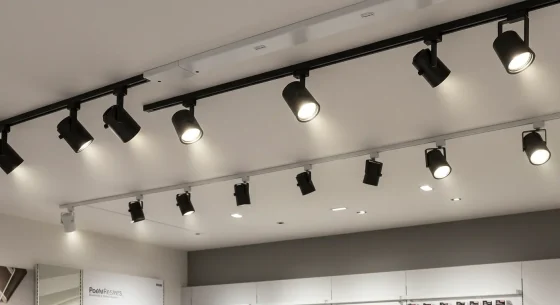
The quality of the optics is paramount.
- Precision Lenses: Advanced TIR (Total Internal Reflection) lenses are used to collimate the light into a clean, controlled beam with minimal light spill, which is a primary cause of glare.
- Darklight Reflectors: Many high-performance fixtures use specialized reflectors with a dark, specular, or micro-faceted finish. These reflectors are designed to direct the light downwards efficiently while absorbing stray, high-angle light rays that would otherwise cause glare. When you look up at the fixture, it can appear almost dark, even when it’s on—a hallmark of excellent glare control.
3. Glare Control Accessories: Louvers and Baffles
For even greater control, professional fixtures often incorporate or offer optional accessories:
- Honeycomb Louvers: These grid-like inserts are the ultimate tool for minimizing high-angle glare without affecting the main beam, perfect for accenting without distraction.
- Black Baffles: A matte black interior finish within the fixture’s cone acts as a light trap, absorbing any errant light rays before they can cause discomfort.
It’s a System, Not Just a Fixture: Layout and Planning for Low UGR
This is a point that separates amateur layouts from professional lighting design. The UGR value is calculated for an entire room from a specific viewing position, not for a single light fixture in isolation. Therefore, achieving a UGR<19 compliant space with your track lighting is a function of both the fixture’s quality and your layout strategy.
The Importance of Positioning and Aiming
How you position and aim your track lights has a huge impact on the final UGR. To maintain low glare, fixtures should be positioned to light the intended task areas (desks, tables) without shining directly into the typical line of sight of the room’s occupants. Avoid aiming high-intensity beams towards doorways or directly at seated positions.
Room Surfaces Matter: Reflectance and Contrast
The color and finish of your walls, ceiling, and floors also affect glare. Highly reflective, glossy surfaces can create veiling reflections and contribute to a higher UGR. Using matte or semi-matte finishes can help absorb stray light and create a more visually comfortable environment.
Using Lighting Design Software for UGR Calculations
For commercial projects, the best practice is to use lighting design software like DIALux or Relux. A lighting designer can model the room, place the specific UGR<19 Dimmable Track Light fixtures into the layout, and the software will generate a UGR map, proving that the design is compliant with the EN 12464-1 standard before a single fixture is ordered.
The Role of Dimming: Enhancing Visual Comfort and Saving Energy
The “Regulable1” component of your track light is a powerful tool for perfecting a low-glare environment.
- Task-Tuning: Not every task requires 100% light output. Dimming allows users to tune the light level to their specific needs, which can significantly reduce perceived glare and improve comfort.
- Daylight Harvesting: When paired with a sensor, a dimmable system can automatically reduce its output when there is ample natural daylight, maintaining a consistent, comfortable light level on the work plane while saving significant energy.
- Adapting to User Preference: Visual comfort is subjective. Giving individuals or groups control over their lighting intensity is a key tenet of modern, human-centric design.
Professional UGR-rated fixtures are readily available with robust dimming drivers compatible with 0-10V2 y DALI3 control systems—the standards for commercial lighting control.
Where UGR<19 is a Mandate for Success: Prime Applications
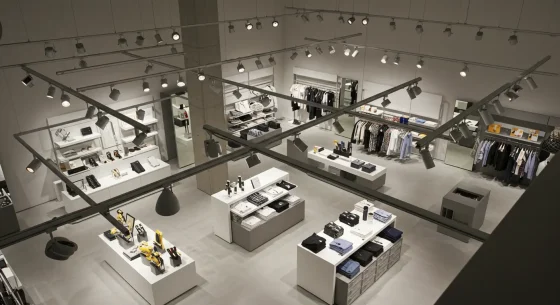
While beneficial anywhere, specifying UGR<19 Dimmable Track Light systems is essential in these key environments:
- Corporate Offices: Especially in open-plan layouts with extensive computer use. This is the primary application for creating a productive, ergonomic lighting scheme.
- Instituciones educativas: In classrooms, lecture halls, and libraries to help students and faculty maintain focus and avoid visual fatigue.
- Healthcare and Laboratories: In consultation rooms, labs, and other areas where visual acuity and comfort are critical for detailed work.
- Control Rooms and Technical Workspaces: For any environment where operators monitor screens for extended periods.
The WELL Building Standard: Connecting Glare Control to Human Health
The focus on low-glare lighting is a cornerstone of the modern wellness architecture movement. The International WELL Building Standard, a leading global rating system focused on human health and well-being in buildings, has dedicated features for visual comfort. Specifically, Feature L03: Visual Comfort and Glare Control sets stringent limits on glare to prevent eye strain and enhance productivity. Specifying lighting that meets UGR<19 is a direct way to contribute to achieving WELL certification and creating a healthier, more valuable building.
FAQ About UGR<19 Dimmable Track Lighting
Market Insights: Productivity as a Commodity
The commercial lighting market is increasingly driven by metrics that go beyond energy efficiency. As businesses compete for talent, the quality of the work environment has become a key differentiator. A well-lit, comfortable office is no longer seen as a cost center but as an investment in human capital. Studies have repeatedly shown a link between poor lighting, glare, and reduced productivity. Therefore, the demand for high-performance, low-glare lighting solutions like UGR<19 Dimmable Track Light systems is strong and growing, as facility managers and corporate leaders recognize the tangible return on investment.
Is UGR<19 Your New Baseline?
So, is specifying a UGR<19 Dimmable Track Light system the right move for your next professional project?
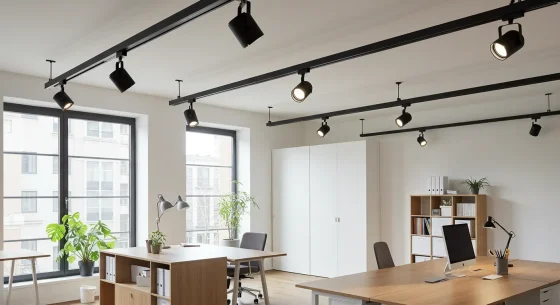
It is the essential, evidence-based choice if:
- You are designing any space for reading, writing, or computer-based work.
- Your project must comply with EN 12464-1 or WELL Building standards.
- The primary goal is to maximize employee/student productivity and well-being.
- You are lighting a visually critical task area in any environment.
For modern workspaces, UGR<19 is no longer a “nice-to-have”; it’s the professional baseline for responsible, effective lighting design. It is a direct investment in the comfort, health, and performance of the people who will use the space every single day.
Ready to design a workspace that is as comfortable as it is productive?
Specifying a compliant, low-glare lighting system requires technical expertise and high-performance products. Our team of lighting specialists is fluent in the language of UGR, WELL, and high-performance optical design. We are here to help you engineer a lighting solution that meets the most demanding standards.
Contact us today for a professional consultation and let’s create a visually perfect environment together.