 XHLUX
XHLUX

Tabla de contenido
- 1. Why Do Art Galleries Need Custom Lighting Systems?
- 2. Core Principles of Custom Lighting Design
- 3. The Custom Lighting Design Workflow
- 4. What Makes a Custom Fixture Truly Museum-Grade
- 5. Application Case Studies and Design Highlights
- 6. Choosing the Right Custom Lighting Partner
- 7. FAQ About Museum Art Lighting
- 8. Conclusión
Lighting is the language of art.In modern galleries, light not only illuminates but narrates — it guides emotion, reveals texture, and defines how audiences experience each piece.A well-designed custom museum lighting system transforms a static space into a living dialogue between artwork, architecture, and audience.
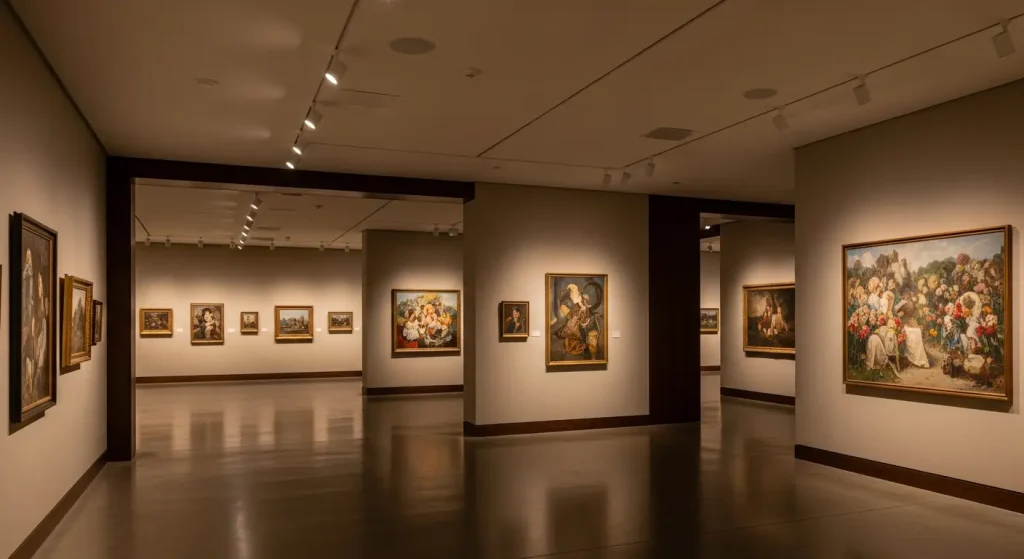
Generic fixtures can light a room;custom fixtures reveal the soul of art.This article explores how to design museum-grade, tailor-made lighting systems for art galleries — balancing artistic expression, technical precision, y commercial value.
1. Why Do Art Galleries Need Custom Lighting Systems?
1.1 Gallery vs. Museum Lighting – Different Goals, Same Standards
While museums prioritize preservation and accuracy, art galleries emphasize emotion, storytelling, and sales engagement.
Both require precision — but galleries demand flexibility y atmospheric control that standard fixtures can’t deliver.
| Aspecto | Museo | Art Gallery |
|---|---|---|
| Primary Focus | Conservation & color accuracy | Atmosphere & visual experience |
| Lighting Objective | Long-term preservation | Dynamic presentation |
| Change Frequency | Permanent exhibitions | Rotating / seasonal displays |
| Control System | Fixed DALI / wired | Wireless, scene-based (Casambi / DMX) |
A custom lighting system allows galleries to adapt easily to new exhibitions, adjust tones per artist’s preference, and maintain museum-grade performance with aesthetic freedom.
1.2 Why Generic Fixtures Fail in Art Spaces
Off-the-shelf luminaires often fall short because they:
- Lack precise beam angle options for diverse artworks.
- Deliver insufficient color rendering accuracy (CRI < 90).
- Produce glare and reflection, diminishing viewing comfort.
- Cannot integrate with modern smart control systems.
- Offer limited modularity for changing layouts.
In contrast, custom-engineered fixtures deliver tailored photometric performance, architectural harmony, and seamless integration with DALI, Casambi, or DMX systems.
💡 Download Whitepaper
Learn why Europe’s leading art galleries are switching to custom museum lighting systems.
👉 Download the Gallery Lighting Whitepaper ›
2. Core Principles of Custom Lighting Design
Designing custom museum lighting is both technical and artistic.
It requires understanding how light interacts with materials, colors, and space geometry.
Below are the four core design pillars guiding every successful gallery lighting system.
2.1 Optical Precision
Every lumen counts in a gallery.
The lighting must shape perception without drawing attention to itself.
That means fixtures with tight optical control y high spectral fidelity.
Key specifications:
- CRI ≥ 95 / R9 ≥ 90 for true color reproduction.
- Beam angle modularity: 15°, 24°, 36°, 60° options.
- Full-spectrum LED chips for balanced red, green, and blue wavelengths.
- SDCM ≤ 3 to ensure chromatic consistency between fixtures.
High-end optical systems use dual-reflector or lens-reflector combinations, providing soft-edge light distribution and no visible halos.
📊 Optical Quality Reference
| Parámetro | Museum Standard | Recommended for Galleries |
|---|---|---|
| CRI (Ra) | ≥ 90 | ≥ 95 |
| R9 | ≥ 80 | ≥ 90 |
| ángulo del haz | Fixed | Módulos intercambiables |
| SDCM | ≤ 5 | ≤ 3 |
| Flicker Index | < 1% | < 0.5% (flicker-free) |
2.2 Visual Comfort & Anti-Glare Control
True lighting design ensures that visitors “see the art, not the source.”
To achieve this, professional fixtures incorporate multiple anti-glare mechanisms:
- Deep recessed reflectors to hide LED points.
- Honeycomb louvers o black matte baffles to reduce brightness contrast.
- UGR < 19 design standard for visual comfort.
- Adjustable tilt angles (30°–45°) for glare-free lighting on glass-framed pieces.
These design features maintain eye comfort, enabling longer dwell times and improved audience engagement.
2.3 Flexibility and Modularity
Galleries evolve constantly — lighting must evolve with them.
Custom museum fixtures should support:
- Modular housings that allow different optics to be swapped easily.
- Adjustable gimbal heads for precise aiming.
- Multiple installation types (recessed, surface, track).
- Front-maintenance design for easy service and reconfiguration.
This flexibility ensures that lighting investments remain relevant across multiple exhibitions and spatial layouts.
2.4 Smart Lighting Control
Intelligence defines modern lighting design.
A gallery’s illumination should adapt to time, mood, and exhibit context.
Recommended protocols:
- DALI-2 for wired, scene-based programming.
- Casambi Bluetooth Mesh for wireless control in retrofit projects.
- 0–10 V or DMX for stage or new-media art installations.
Smart functions include:
- Preset scenes (Exhibition / Cleaning / Night Mode).
- Aprovechamiento de la luz natural for energy optimization.
- Light-on-demand with motion or schedule sensors.
- Mobile app adjustment for individual artworks.
🎯 Result: consistent presentation quality, lower operational cost, and improved visitor experience.
💡 Explore Smart Control Systems
See how XHLUX integrates DALI-2 y Casambi technology into European art galleries for intuitive scene control and energy efficiency.
👉 View Lighting Solutions ›
3. The Custom Lighting Design Workflow
Designing a custom museum lighting system is a collaborative journey between designers, engineers, and manufacturers.
Each phase requires technical precision and aesthetic alignment to ensure the final installation delivers both artistic impact and operational efficiency.
| Fase | Objective | Deliverables |
|---|---|---|
| 1. Requirement Analysis | Understand the space, artwork types, and project goals | Lighting brief, room dimensions, artwork inventory |
| 2. Optical Design | Define illuminance, beam angles, and optical mapping | Dialux/Relux simulation files, lux distribution plans |
| 3. Prototype Evaluation | Validate lighting samples and glare control | CRI test report, UGR analysis, photometric chart |
| 4. System Integration | Sync lighting with architecture and controls | DALI / Casambi configuration file, wiring layout |
| 5. Delivery & Maintenance | Training and long-term service plan | Installation manual, warranty & maintenance guide |
This structured workflow guarantees every fixture is engineered not just for form and function — but for the artistic emotion the gallery intends to communicate.
💬 Request Design Support
Need a professional lighting proposal for your next gallery project?
👉 Request a Free Design Consultation ›
4. What Makes a Custom Fixture Truly Museum-Grade
Behind every elegant beam of light lies deep engineering.
A continuación se muestran los four technical pillars that define professional-grade custom fixtures.
4.1 LED Source & Color Fidelity
At the heart of every luminaire is its light engine.
For art galleries, color accuracy is sacred — each hue must appear as the artist intended.
Essential criteria:
- Full-spectrum COB LED con CRI ≥ 95 / R9 ≥ 90
- Color tolerance (SDCM) ≤ 3 to ensure visual uniformity
- Tunable White (2700–4000 K) for dynamic ambience control
- Compliance with EN12464-1 y CIE 157:2004 museum standards
Technical Snapshot:
| Parámetro | Recommended Range | XHLUX Typical Value |
|---|---|---|
| CRI (Ra) | ≥ 95 | 96–97 |
| R9 | ≥ 90 | > 92 |
| Rango de CCT | 2700–4000 K | Tunable White |
| SDCM | ≤ 3 | ≤ 2 |
| Flicker Index | < 1% | 0.5% |
Such lighting ensures authentic pigment reproduction — from the deep reds of oil paintings to the delicate shades of watercolor and canvas textures.
4.2 Optical Architecture & Light Distribution
A fixture’s optical design determines how gracefully it paints the artwork.
High-end gallery luminaires use precision-engineered reflectors and lenses for seamless beam transitions.
Key design highlights:
- High-reflectivity aluminum reflectors (≥ 95%)
- Secondary optics: PMMA or glass lenses for consistent beam shape
- Honeycomb / anti-glare baffles for UGR < 19
- Adjustable beam modules (15°–60°) for versatile lighting zones
XHLUX modular optics allow curators to reconfigure light spreads without replacing the entire fixture — ideal for galleries that frequently refresh exhibitions.
Optical Performance Metrics:
| Metric | Standard Value | XHLUX Result |
|---|---|---|
| Reflector Efficiency | ≥ 90% | 95–96% |
| Beam Uniformity | ≥ 0.8 | 0.88–0.9 |
| Glare Index (UGR) | < 19 | < 17 |
| Edge Definition | Soft / No Hotspot | Optimizado |
4.3 Structure, Heat Management & Reliability
Longevity defines value.
Every gallery operates lighting for extended hours daily — meaning thermal stability and structural durability are non-negotiable.
Engineering essentials:
- Die-cast aluminum housing for efficient heat dissipation
- Separated driver chamber to isolate heat from optics
- Passive cooling fins for silent thermal regulation
- Surface temperature rise ≤ 25°C
- Lifetime ≥ 50,000 hours (L80/B10)
Performance Comparison:
| Criterion | Average Fixture | Museum-Grade Fixture |
|---|---|---|
| Material | Mixed metal/plastic | Full aluminum alloy |
| Thermal Rise | 35°C+ | ≤ 25°C |
| Lifetime | ~30,000 hours | ≥ 50.000 horas |
| Mantenimiento | Rear-service only | Front-service, modular design |
This ensures steady light output, consistent color quality, and reduced operational costs over time — essential for art spaces with continuous usage.
4.4 Intelligent Dimming & System Integration
Lighting control defines how “alive” a gallery feels.
Modern galleries rely on smart systems to tailor light for artworks, visitors, and events.
Control compatibility:
- DALI-2 for programmable scenes and zone management
- Casambi Bluetooth Mesh for wireless adjustments via mobile app
- 0–10V / DMX512 for dynamic installations and new-media exhibitions
Smart functions:
- Scene presets (Exhibition / Rest / Cleaning)
- Aprovechamiento de la luz natural for energy savings
- BMS integration for centralized control
- Remote diagnostics for real-time monitoring
When paired with museum-grade optics, intelligent dimming allows curators to tell visual stories through light — adapting brightness and tone to evoke specific moods.
🔧 Download Technical Specs
Discover the specifications of ENEC-certified CRI 95+ gallery fixtures compatible with DALI and Casambi systems.
👉 Download Data Sheet ›
4.5 Technical Integration Example
Below is a typical configuration for a 200 m² contemporary gallery space using XHLUX modular custom lighting system:
| Lighting Zone | Tipo de accesorio | CCT / CRI | Control Mode | Illuminance (lux) |
|---|---|---|---|---|
| Main Exhibition Wall | Recessed adjustable spotlight | 3000 K / 95+ | DALI scene control | 200 |
| Sculpture Zone | Surface-mounted accent light | 3500 K / 95+ | Casambi wireless | 250 |
| Entrance & Corridor | Linear wall washer | 4000 K / 90+ | 0–10 V dimming | 150 |
| Temporary Exhibit Area | Track spotlight | Tunable White 2700–4000 K / 95+ | DALI + Sensor | 180–220 |
🎯 Result:
Uniform illumination, high contrast precision, minimal glare, and reduced energy usage — all tailored to curatorial intent.
📘 Explore las soluciones de iluminación
Explore modular museum lighting systems designed specifically for European galleries.
👉 View Project References ›
5. Application Case Studies and Design Highlights
Custom museum lighting is about collaboration — turning architectural vision into immersive art experiences.
Below are three representative European gallery projects showcasing how bespoke lighting design elevates both presentation and commercial impact.
| Tipo de proyecto | Ubicación | Configuration | Key Achievements |
|---|---|---|---|
| Contemporary Art Gallery | Milan, Italy | Adjustable recessed spotlights + DALI scene control | Enabled real-time exhibition switching; achieved uniform 200 lux accent lighting |
| Classical Fine Arts Museum | Paris, France | CRI 95+ track lights + Tunable White (2700–4000 K) | Enhanced oil-painting contrast; dynamic warmth for seasonal exhibits |
| New-Media Art Space | London, UK | DMX programmable fixtures + interactive control system | Combined lighting with multimedia installations; created adaptive visitor experiences |
Each project demonstrates how modular optics, intelligent dimming, and full-spectrum LEDs can merge aesthetics with engineering precision.
Through these examples, galleries have reduced maintenance costs by over 20 % while improving visitor satisfaction metrics measured via dwell-time and feedback surveys.
🏛️ View European Projects
See how XHLUX custom lighting solutions are redefining art galleries across Europe.
👉 View Project Gallery ›
6. Choosing the Right Custom Lighting Partner
A successful custom lighting project depends not only on fixture performance, but also on the technical capability and reliability of the manufacturer.
Below is a checklist used by professional specifiers when shortlisting suppliers for European gallery projects.
6.1 Technical and Certification Competence
A qualified partner should meet or exceed the following standards:
- CE / ENEC / CB / RoHS / ISO 9001 certifications
- LM80 / TM21 verified LED modules
- Compliance with EN12464-1 y CIE 157:2004
- Third-party photometric verification (TÜV / Intertek / SGS)
📊 Compliance Snapshot
| Estándar | Purpose | Por qué es importante |
|---|---|---|
| ENEC / CE | EU electrical & safety compliance | Ensures eligibility for public projects |
| LM80 / TM21 | LED reliability testing | Confirms long-term lumen maintenance |
| CIE 157 | Light-damage control standard | Protects sensitive artworks |
| ISO 9001 | Quality management | Guarantees production consistency |
6.2 Design & Optical Engineering Support
Look for suppliers who provide real engineering collaboration, not just catalog products:
- Customized optical simulations (Dialux / Relux)
- 3D BIM / STEP models for architectural integration
- On-demand sample production and glare analysis reports
- Technical consultation from concept to commissioning
6.3 ODM / OEM Customization Capabilities
For lighting brands and integrators, private-label customization builds differentiation.
XHLUX proporciona:
- Custom reflectors, trims, and finishes (black / silver / champagne)
- Tailored CCT / CRI / beam-angle combinations
- Brand-specific packaging and labeling
- Driver configurations for DALI-2, Casambi, DMX protocols
- Quick sample turnaround and EU warehouse delivery
💬 Partner with XHLUX
Looking for a CE & ENEC-certified manufacturer for your next gallery project?
👉 Solicitar presupuesto | Chatea en WhatsApp
6.4 After-Sales Commitment
Beyond delivery, a strong supplier ensures operational peace of mind:
- ≥ 5-year warranty on fixtures and drivers
- 48-hour response for technical inquiries
- Spare-parts support and training for installers
- Continuous improvement via project feedback loops
7. FAQ About Museum Art Lighting
Q1: How long does a custom lighting design process take?
Typically 4 – 8 weeks from concept to delivery, depending on control integration complexity and sampling requirements.
Q2: Can custom fixtures support smart lighting control?
Sí.
All professional systems are compatible with DALI-2, Casambi, DMX, and 0–10 V, enabling wireless dimming, group zoning, and scene scheduling.
Q3: How do you ensure consistent color among fixtures?
By using LEDs with SDCM ≤ 3 and batch-matched optics, maintaining < 1 % deviation in correlated color temperature across installations.
Q4: Is ODM/OEM branding available?
Absolutamente.
XHLUX provides full OEM/ODM services — custom optics, housings, and packaging — empowering European brands to launch exclusive lighting lines.
Q5: Which certifications guarantee EU compliance?
CE, ENEC, CB, RoHS, y ISO 9001 ensure electrical safety, environmental responsibility, and compatibility with EU tender specifications.
📘 Download Technical Pack
Access certificates, photometric data, and IES/LDT files for your project specifications.
👉 Download Now ›
8. Conclusión
Custom museum lighting is not just a design service — it’s an artform of engineering.
It transforms vision into atmosphere, precision into emotion.
For curators and architects, bespoke lighting enables every artwork to communicate its essence authentically, while maintaining sustainability and control.
With high-CRI LED technology, anti-glare precision, y smart control systems, XHLUX delivers lighting solutions that embody both aesthetic excellence and technical reliability.
From concept sketch to final installation, every beam of light is meticulously engineered to enhance art — not overpower it.
✨ Why Galleries Choose XHLUX
- 15 + years of experience in museum and gallery lighting systems
- Certified under CE / ENEC / CB / SAA / ISO 9001
- Specialists in CRI 95+ LED optics & DALI/Casambi integration
- Proven ODM/OEM partner for European lighting brands
- 5-year warranty + EU warehouse for quick logistics
📞 Take Immediate Action
Ready to design a tailor-made lighting system that transforms your art gallery?
👉 Chatea en WhatsApp | Solicitar presupuesto | View Projects | Download Catalog