 XHLUX
XHLUX

Tabla de contenido
- What Is Lighting Layering in Restaurant Design?
- Why Lighting Layering Is Essential for Restaurants
- The Three Core Lighting Layers in Restaurant Interiors
- How Lighting Layers Work Together in Restaurants
- Lighting Layering Strategies for Different Restaurant Types
- Controlling Glare and Comfort in Lighting Layers
- Common Mistakes in Restaurant Lighting Layering
- How to Design Effective Lighting Layering for Restaurants
- FAQ About restaurant lighting layering
- Conclusión
Many restaurant owners and designers believe their lighting is “good enough.” The fixtures are modern, the space is bright, and the design looks appealing in photos. Yet when guests sit down to dine, something feels missing. The atmosphere feels flat. Conversations feel exposed. Diners do not linger.
The problem is rarely the quality of the luminaires themselves.The real issue is the absence of proper restaurant lighting layering.
Lighting layering is not about installing more fixtures. It is about structuring light into clear functional layers, each with a specific role in shaping comfort, intimacy, and atmosphere. Restaurants that master lighting layering feel warm, welcoming, and memorable—even without extravagant décor.
What Is Lighting Layering in Restaurant Design?
Lighting layering refers to the strategic combination of multiple lighting types, each performing a distinct role within the space. Instead of relying on a single uniform light level, layered lighting creates visual depth, hierarchy, and comfort.
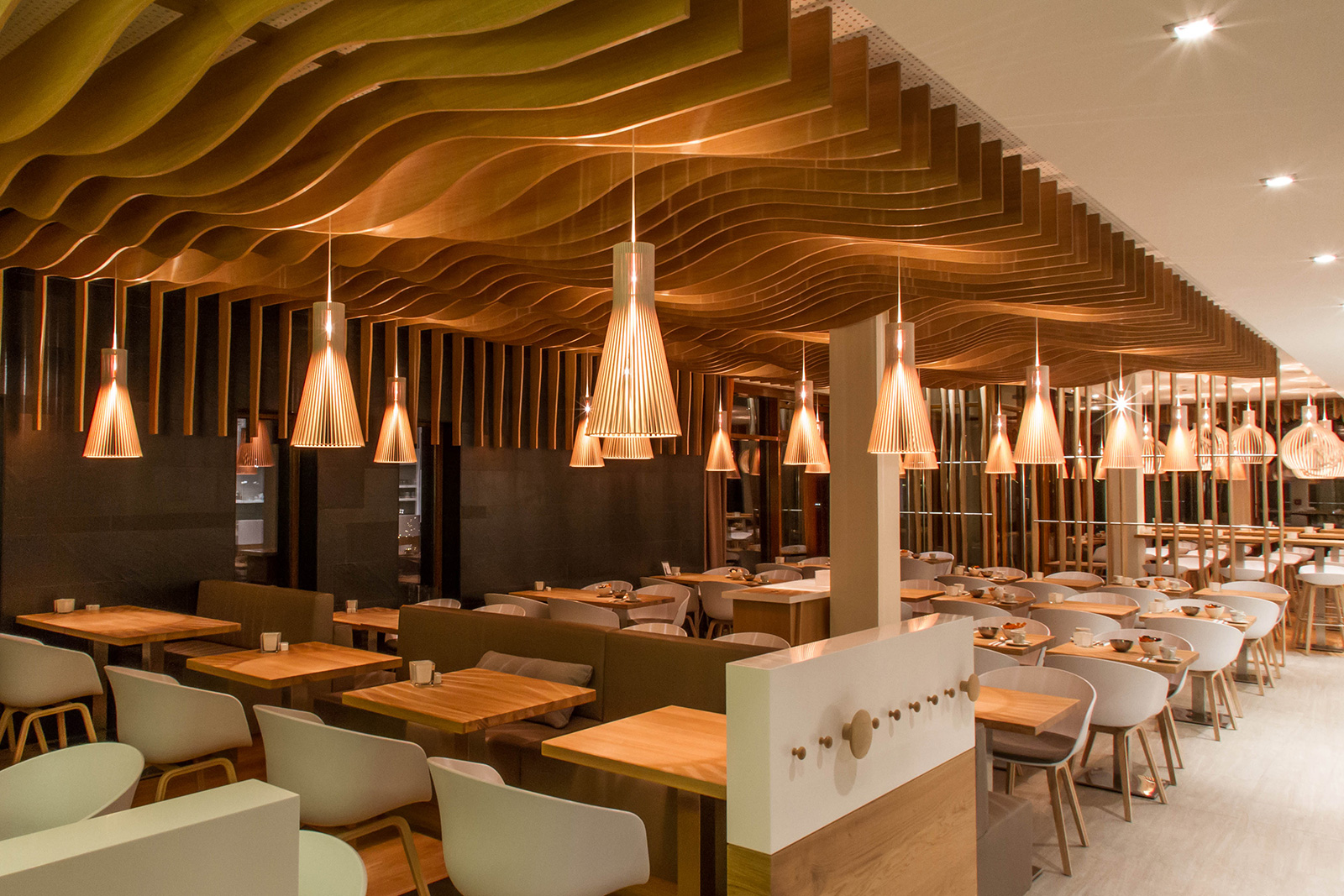
In professional restaurant lighting design, layering typically consists of:
- A base layer that establishes overall visibility
- A focus layer that highlights people, food, and key surfaces
- A character layer that reinforces brand identity and style
Importantly, lighting layering is not about quantity. A restaurant with fewer, well-layered fixtures will feel far more refined than one filled with uncoordinated lights.
🎯 What is lighting layering in restaurants?
Lighting layering is the strategic use of multiple lighting types—such as ambient, accent, and decorative lighting—to create depth and atmosphere in restaurants.
Why Lighting Layering Is Essential for Restaurants
Restaurants are long-stay, seated environments. Guests remain in the space for extended periods, often under low viewing angles. Poor lighting becomes uncomfortable very quickly.
Improved Atmosphere
Layered lighting softens the space. Instead of harsh, uniform brightness, guests experience a balanced environment where light gently guides attention without overwhelming the eyes.
Enhanced Spatial Depth
Lighting layers create contrast between background and focal areas. This prevents the space from feeling flat and helps visually organize seating, circulation, and feature zones.
Greater Visual Comfort
By distributing brightness across layers, lighting layering reduces glare, minimizes eye strain, and supports relaxed dining behavior.
🎯 Why is lighting layering important in restaurants?
Lighting layering improves ambiance, visual comfort, and the overall dining experience.
The Three Core Lighting Layers in Restaurant Interiors
Ambient Lighting – The Base Layer
Ambient lighting provides the foundation of visibility. Its role is to ensure guests can navigate the space comfortably without drawing attention to itself.
Typical ambient lighting solutions include:
- Deep anti-glare LED downlights
- Concealed linear lighting integrated into ceilings or coves
Ambient lighting should be soft, uniform, and glare-controlled. Overly bright ambient light destroys intimacy and makes diners feel exposed.
For restaurant projects, designers often rely on low-glare LED downlights specifically designed for hospitality environments.👉 LED downlights for restaurant ambient lighting
Accent Lighting – Creating Focus and Intimacy
Accent lighting is the most emotionally important layer in restaurant design. It directs attention to:
- Dining tables
- Food presentation
- Feature walls and bars
Accent lighting creates intimacy by illuminating people and surfaces while allowing surrounding areas to remain visually calm.
Common accent lighting tools include:
- Adjustable LED track lighting
- Directional spotlights with controlled beam angles
👉 LED track lighting for restaurant accent layers
Proper accent lighting makes guests feel “seen” without being exposed.
Decorative Lighting – Enhancing Style and Identity
Decorative lighting defines the restaurant’s personality. Pendants, sculptural luminaires, and statement fixtures help create visual memory and brand recognition.
However, decorative lighting must never replace functional layers. Relying on pendants alone often results in uneven brightness and glare at seated eye level.
Decorative lighting should support, not dominate, the overall lighting structure.
🎯 What are the main lighting layers in restaurant design?
Restaurant lighting typically includes ambient, accent, and decorative layers working together.
How Lighting Layers Work Together in Restaurants
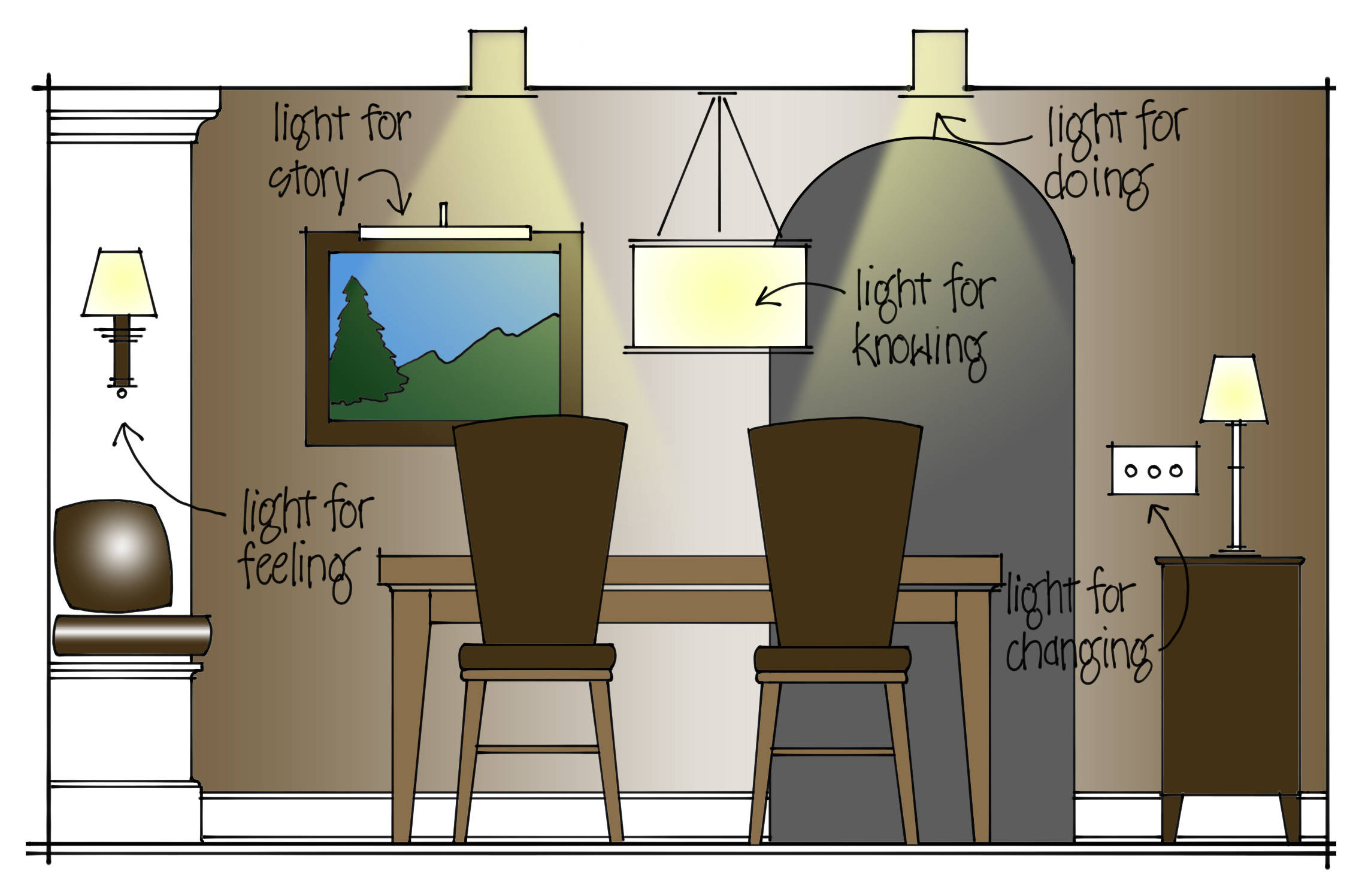
Lighting layers are most effective when they work as a system, not as isolated elements.
- Iluminación ambiental ensures the space is comfortable and legible
- Iluminación de acento creates intimacy and visual hierarchy
- Iluminación decorativa adds character and emotional identity
When these layers are balanced correctly, diners focus on food, conversation, and atmosphere—not the lighting itself.
🎯 How do lighting layers work together in restaurants?
Ambient lighting sets the base, accent lighting adds focus, and decorative lighting enhances character.
Lighting Layering Strategies for Different Restaurant Types
Fine Dining Restaurants
Fine dining environments rely heavily on emotional control.
- Very low ambient lighting
- Strong, glare-free accent lighting on tables
- Strict control of light source visibility
Deep recessed downlights and carefully aimed accent lights are critical to avoid discomfort at seated eye level.
Casual Dining Restaurants
Casual dining spaces require balance.
- Moderate ambient brightness
- Soft accent lighting for tables and walls
- Decorative lighting used selectively
The goal is comfort and approachability rather than drama.
Cafés and Bistros
Cafés benefit from a brighter, more social atmosphere.
- Slightly higher ambient light levels
- Stronger emphasis on bar counters and displays
- Decorative lighting contributes to warmth and identity
Layering still applies—but with a more relaxed visual rhythm.
Controlling Glare and Comfort in Lighting Layers
Glare is one of the most common failures in restaurant lighting. Guests are seated for long periods, often directly beneath luminaires.
Restaurants should avoid:
- Direct view of light sources
- Bright fixtures positioned above eye level
- Narrow beams aimed incorrectly
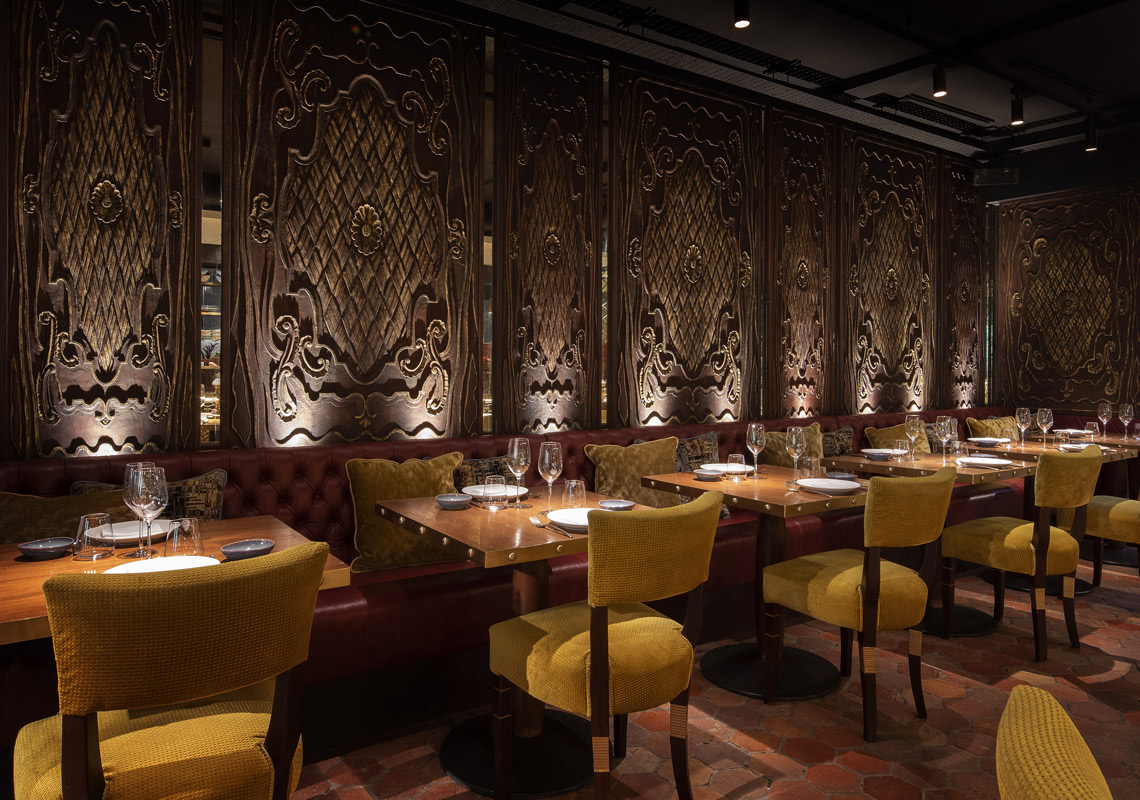
According to visual comfort principles described by the scientific definition of glare, discomfort occurs when luminance is poorly controlled within the field of view.
Lighting layering helps reduce glare by:
- Distributing brightness across multiple layers
- Allowing ambient light to remain soft
- Using accent lighting precisely where needed
🎯 How does lighting layering help reduce glare?
Proper layering distributes brightness and prevents harsh direct light, improving comfort.
Common Mistakes in Restaurant Lighting Layering
Many restaurants struggle with the same issues:
- Using only ambient lighting
- Treating decorative pendants as primary illumination
- Creating too many uncontrolled layers
- Ignoring dimming and scene control
Without clear hierarchy, lighting becomes visually chaotic and uncomfortable.
🎯 What are common mistakes in restaurant lighting layering?
Common mistakes include relying on a single lighting layer and ignoring glare control.
How to Design Effective Lighting Layering for Restaurants
A practical lighting layering checklist for restaurants:
- Define ambient lighting first
- Add accent lighting to tables and features
- Introduce decorative lighting last
- Always evaluate from a seated eye-level perspective
- Use dimming and zoning to adjust atmosphere
Experiencia en proyectos reales
In multiple restaurant projects, redesigning lighting around clear ambient–accent–decorative layers led to noticeably longer guest dwell time and improved overall atmosphere—without increasing energy consumption.
For professional support with restaurant lighting structure and product selection, explore:👉 Restaurant lighting solutions
FAQ About restaurant lighting layering
What is lighting layering in restaurant design?
It is the structured use of ambient, accent, and decorative lighting to create depth and atmosphere.
How many lighting layers should a restaurant have?
Most restaurants require at least three functional layers working together.
What lighting creates the best restaurant atmosphere?
A combination of soft ambient light, focused accent light, and controlled decorative elements.
Can track lighting be used for restaurant lighting layers?
Yes. Adjustable LED track lighting is commonly used for accent layers.
How does lighting layering affect dining experience?
Proper layering improves comfort, intimacy, and guest satisfaction.
Conclusión
Restaurant atmosphere is not created by brightness alone. It is created by structure, balance, and intention.
Lighting layering transforms restaurants from visually flat spaces into environments that feel comfortable, intimate, and memorable. By combining ambient, accent, and decorative lighting correctly—and by controlling glare at seated eye level—restaurants can dramatically improve dining experience and brand perception.
👉 If you are planning a restaurant project and need support with lighting layering design and product selection, visita: https://xhlux.com/servicesolution/