XHLUX
XHLUX
En spotlight kan vara märkt ”bländskyddad” och ändå upplevas obehaglig från fel betraktningsvinkel.
Bländskyddad konstruktion kan minska direkt bländning, men märkningen i sig visar inte hur väl armaturen begränsar bländningen.
Det kan den – men ”bländskyddad” är inte i sig ett bevis på låg bländning. Det viktiga är hur mycket av ljuskällan som är synlig, hur djupt den sitter infälld, avskärmningen, optiken eller reflektorn samt var betraktaren står i förhållande till ljusstrålen.

TL;DR: En bländskyddad spotlight kan vara behagligare för ögat när den optiska vägen och avskärmningen begränsar direkt insyn i ljuskällan. Bländskydd är resultatet av en konstruktion, inte bara ett produktnamn.
Innehållsförteckning
- 💡 1. Vad orsakar egentligen bländning från en spotlight?
- 🔧 2. Vad förändrar en bländskyddad spotlight rent fysiskt?
- 🛡️ 3. Löser en bländskyddande lins eller ett täckglas automatiskt bländningsproblemet?
- ⚖️ 4. Varför kan två bländskyddade spotlights upplevas så olika?
- 📐 5. Betyder ett lägre UGR-värde att en bländskyddad spotlight är bättre?
- 🔦 6. Kan smalare spridningsvinklar minska bländning?
- ✅ 7. Hur bör du kontrollera ett påstående om bländskydd före beställning?
- Vad man ska göra härnäst
- 🏁 Slutsats
- Vanliga frågor
💡 1. Vad orsakar egentligen bländning från en spotlight?
Bländning från en spotlight handlar oftast om vad ögat kan se, inte bara om hur många lumen armaturen levererar.
Vanliga orsaker:
- en ljuskälla med hög luminans som är direkt synlig
- en ljuskälla som sitter grunt i öppningen
- otillräcklig avskärmning från den aktuella betraktningsvinkeln
- en betraktare som tittar nära ljuskällans axel
- stark kontrast mellan en ljus armaturöppning och mörkare omgivning
Samma armatur kan upplevas behaglig från en sittplats och skarp från en annan. Betraktningsvinkeln förändrar resultatet.
Projekt efterfrågar ofta bländfri accentbelysning. ”Bländfri” är vanligtvis ett alltför absolut löfte för ett verkligt projekt. Målet är att hantera obehag vid normala siktlinjer, inte att eliminera varje ljus yta.
🎯 Vad driver bländning från spotlights ur köparens perspektiv?
Bländning från en spotlight beror på vad ögat ser från den normala betraktningspositionen, inte bara på ljusflödet.
🔧 2. Vad förändrar en bländskyddad spotlight rent fysiskt?
En bländskyddad spotlight som verkligen förtjänar namnet förändrar den optiska vägen eller avskärmningen – inte bara texten på databladet.
Djupare placerad ljuskälla
LED-ljuskällan sitter längre in bakom öppningen. Från vissa sidovinklar syns mindre av den starka ljuskällan.
Avskärning / avskärmning
En djup reflektorkopp, en baffelkant eller annat skydd begränsar direkt insyn i ljuskällan från höga vinklar.
Reflektor- eller linsgeometri
Optiken formar ljusstrålen och kan begränsa oönskat spilljus utanför målområdet.
Mörka eller svagt reflekterande innerytor
Mörkare ytor i hålrummet kan minska oönskade ljusreflexer. En svart reflektorkopp innebär inte automatiskt bländskydd.
Öppningens geometri
Öppningens storlek och djup samt frontringens form påverkar hur stor del av ljuskällan som förblir synlig.
Bländningsbegränsad spotlightkonstruktion bygger på att dessa val samverkar. En LED-modul för bländskyddad spotlight behöver fortfarande rätt avskärmning och optik runt sig; beteckningen på dioden räcker inte.
Vi ser ofta att offerten säger ”bländskyddad” medan ritningen fortfarande visar en grunt placerad ljuskälla med en vidöppen front.
🎯 Vad måste ändras för att bländskyddet ska vara verkligt?
En verklig bländskyddad konstruktion förändrar den optiska vägen eller avskärmningen – inte bara produktmärkningen.
🛡️ 3. Löser en bländskyddande lins eller ett täckglas automatiskt bländningsproblemet?
Inga.
En täckning för bländskyddad spotlight eller linsöverdrag för bländskydd kan sprida ljuset, mjuka upp en hotspot, dölja LED-ljuskällan från vissa riktningar eller förändra ljusstrålens form.
Det löser inte automatiskt bristande avskärmning, en grunt placerad ljuskälla, felriktning, fel monteringshöjd eller direkt insyn i ljusstrålen.
En diffusor kan också minska accentkontrasten eller förändra hur effektiv ljusstrålen upplevs.
🎯 Kan ett täckglas ersätta avskärmning och riktning?
Ett täckglas kan förändra ljuskällans ljusstyrka och ljusbild, men kan inte ersätta korrekt optisk avskärmning och riktning.
⚖️ 4. Varför kan två bländskyddade spotlights upplevas så olika?
”Bländskyddad” är inte en enda prestandaklass. Två armaturer kan ha samma märkning men ändå exponera ljuskällan på olika sätt.
Det som fortfarande kan skilja sig:
- ljuskällans djup
- öppningens storlek
- reflektorgeometri
- linstyp
- strålvinkel
- avskärningens styrka
- innerytans finish
- lutningsvinkel
- monteringshöjd
- observatörens position
| Båda är märkta ”bländskyddade” | Vad som ändå kan skilja sig |
|---|---|
| Ljuskällans position | Grunt placerad kontra djupt infälld |
| Avskärning | Svagare kontra starkare avskärmning |
| Optisk | Lins-/reflektorkonstruktion |
| Ljusbild | Smal / medel / bred |
| Öppning | Olika stor synlig del av ljuskällan |
| Installation | Fast eller justerbar riktning |
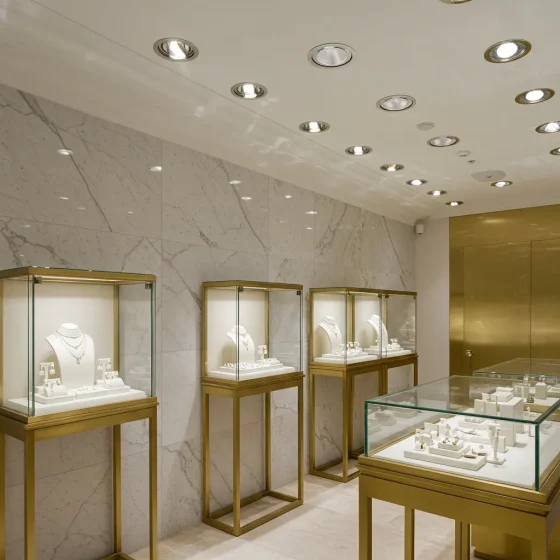
När du jämför produktserier bör du granska publicerat öppningsdjup och optikuppgifter på ett justerbar rund LED-spotdownlight D90i stället för att enbart läsa marknadsföringstexten.
🎯 Kan samma märkning dölja olika bländningsegenskaper?
Två produkter kan ha samma märkning för bländskydd men ändå exponera ljuskällan på helt olika sätt.
📐 5. Betyder ett lägre UGR-värde att en bländskyddad spotlight är bättre?
Behandla inte UGR-klassning för spotlight som ett enkelt, inneboende värde som gäller för en spotlight i alla rum.
UGR beror på belysningslayouten, rummet, betraktarens position och armaturens luminansfördelning. Vissa leverantörer anger UGR under särskilda beräkningsförhållanden.
En uppgift om ”UGR under 19” bevisar inte låg bländning i varje projekt, vid varje riktning och från alla betraktningsvinklar – särskilt inte när en accentspotlight kan vinklas.
Fråga vilka beräkningsförhållanden, rumsantaganden och armaturorienteringar UGR-värdet bygger på.
🎯 Är UGR ett universellt bländningsvärde?
UGR är beroende av användningssituationen och ska inte ses som ett universellt bländningsvärde för alla användningar av en viss spotlight.
🔦 6. Kan smalare spridningsvinklar minska bländning?
Inte automatiskt.
En smalare ljusstråle kan koncentrera mer ljus på målet och minska spill åt sidorna. Samtidigt kan den höja intensiteten i centrum. Om någon kommer in i ljuskonen kan bländningen ändå bli stark.
En bredare ljusstråle innebär inte heller automatiskt ”mer bländning”.
Visuell komfort avgörs fortfarande av ljusstrålens riktning, avskärningen, ljuskällans synlighet och betraktarens position.
🎯 Innebär en smalare ljusstråle mindre bländning?
Spridningsvinkel och bländning hänger ihop, men en smalare ljusstråle innebär inte automatiskt mindre bländning.
✅ 7. Hur bör du kontrollera ett påstående om bländskydd före beställning?
Granska de optiska underlagen för formuleringen bländskyddad spotlight kontra vanlig spotlight så här:
- Var sitter LED-ljuskällan i förhållande till öppningen?
- Vilken avskärning eller skärmningskonstruktion används?
- Är ljuskällan synlig från vanliga betraktningsvinklar?
- Vilket reflektor- eller linssystem används?
- Vilken spridningsvinkel anges?
- Är armaturen fast eller justerbar?
- Vilken fotometrisk fil finns tillgänglig?
- Om UGR anges, under vilka beräkningsförhållanden?
- Ingår det ”bländskyddande täckglaset” i den faktiskt testade konfigurationen?
- Kan det exakta provexemplaret betraktas från sannolika siktlinjer i projektet?
Jämför den optiska konstruktionen och resultatet vid betraktning, inte bara märkningen för bländskydd.
När offerter blandar spotlight- och downlightserier, öppna lösningar med LED-downlights och be om den fotometriska filen och information om öppningen för exakt artikelnummer.
🎯 Vilken är den säkraste kontrollen av ett påstående om bländskydd?
Den säkraste kontrollen kombinerar ljuskällans synlighet, avskärmning, fotometriska data och den verkliga betraktningsvinkeln.
Vanliga misstag
- Att behandla ”bländskyddad” som en certifierad prestandaklass
- Att anta att en djup svart reflektor ensam garanterar låg bländning
- Att använda UGR som ett universellt värde för en enskild armatur
- Att jämföra spridningsvinklar utan att kontrollera från vilka vinklar ljuskällan är synlig
Vad man ska göra härnäst
- Skilj märkningen från ritningen: kontrollera först ljuskällans djup, avskärningen och optiken.
- Begär den fotometriska filen och eventuella antaganden bakom UGR-beräkningen.
- Bedöm ett provexemplar från sannolika siktlinjer i projektet vid representativt ljusflöde.
- Behöver du en projektgenomgång eller offert? Kontakta XHLUX-teamet med spridningsvinkel, fast eller justerbar riktning, monteringshöjd, målyta, normal betraktningsriktning, bländningskrav, eventuella UGR-krav, behov av fotometriska filer och åtkomst till provexemplar.
🏁 Slutsats: Minskar en bländskyddad spotlight verkligen bländningen?
Ja, en bländskyddad spotlight kan minska bländningen – men bara när den optiska konstruktionen och avskärmningen faktiskt minskar direkt insyn i ljuskällan eller hög ljusstyrka vid stora vinklar.
Bländskydd är ingen enda kvalitetsnivå. Ett täckglas, en svart reflektorkopp eller en smal ljusstråle bevisar inte i sig låg bländning. UGR kräver också att användningsförhållandena bakom värdet är kända.
Bedöm bländningskontrollen utifrån vad ögat kan se, inte utifrån orden på databladet.
Utforska våra relaterade blogginlägg:
- Infällda LED-spotlights för kommersiella projekt
- Djupt infällda vs. infällda downlights: Vad är den verkliga skillnaden?
- Hur man väljer rätt infälld takspotlight för inomhusbruk
Anteckningar och källor
- Katalogord som bländskyddad, låg bländning och bländfri varierar mellan leverantörer.
- Här anges varken någon universell procentuell ljusförlust för täckglas eller något universellt UGR-värde för alla användningar av spotlights.