Are your downlights compromising your fire safety—or your profits?In today’s high-stakes lighting industry, it’s no longer enough to focus on lumen output or aesthetics alone. Lighting contractors, architects, wholesalers, and manufacturers are under growing pressure to meet stringent fire regulations, energy efficiency targets, and evolving client demands.
One overlooked component could be standing between you and code compliance—or worse, risking liability: the downlight cover.
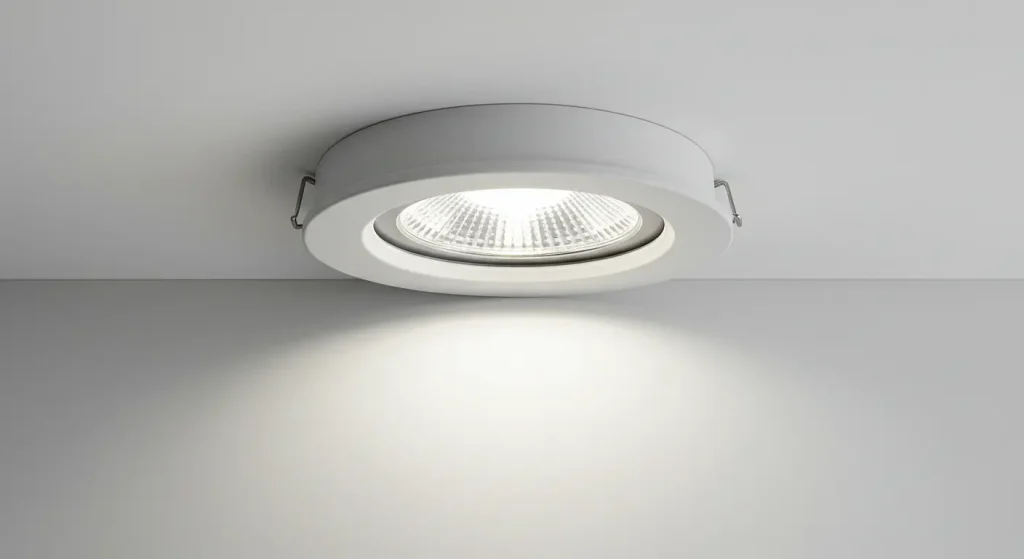
Deep Recessed Downlight for Commercial Ceilings
Whether you’re designing a commercial space in New York, supplying retrofits in Sydney, or manufacturing fixtures for the EU market, understanding when and why downlight covers are required isn’t optional—it’s essential. This guide cuts through the confusion with expert insights, international standards, market trends, and practical product comparisons to help you stay ahead in 2025 and beyond.
What Are Downlight Covers?
Downlight covers—also referred to as fire hoods, insulation guards, or ceiling light domes—are protective devices placed over recessed downlights in ceilings. These covers are typically made from fire-resistant, thermally stable materials that help:
Restore fire integrity in penetrated ceilings
Allow insulation to safely cover or touch downlights
Prevent heat loss and condensation buildup
They are most commonly used in buildings with ceiling insulation or where fire-rated construction is required by code.
Why You Might Need Downlight Covers
You are likely asking this because you’re retrofitting or installing recessed LED downlights and wondering if an additional component is necessary.
If your downlights are not fire-rated and your ceiling has insulation or requires fire protection, you absolutely need downlight covers.
Let’s look at specific triggers for needing them:
Insulated Ceilings: Prevent insulation from direct contact with non-IC rated downlights
Fire-Rated Ceilings: Restore the ceiling’s original fire protection
Building Regulations: Required under most EU codes (BS 476, DIN 4102, etc.)
Energy Savings: Avoid thermal bridging and air leakage
Insurance Compliance: Some policies mandate fire integrity around ceiling penetrations
Fire Safety Compliance
Penetrating a fire-rated ceiling with a downlight compromises its resistance time. This is a major risk in both residential and commercial buildings.
Here’s how downlight covers help you comply with current building regulations:
Region
Fire Code Requirement
Are Covers Needed?
UK
BS 476 Part 21 / Part L
✅ Yes, if fixture isn’t fire-rated
Germany
DIN 4102
✅ Strongly recommended
France
RT2012 Fire + Energy Efficiency Codes
⚠️ Often required
Netherlands
NEN 6068 + NTA 8825
✅ Yes
A 2023 European Fire Safety Alliance report noted that 36% of ceiling fire cases involving lighting were due to improper ceiling penetrations.
Energy Efficiency & Insulation Benefits
Installing recessed lighting in an insulated ceiling without protection leaves gaps in insulation, creating thermal bridges. This causes:
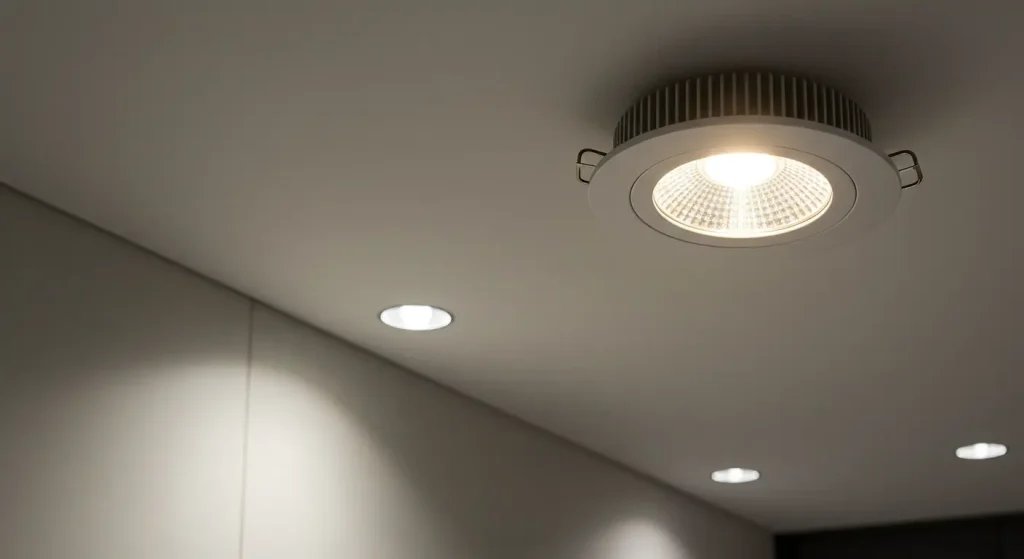
Anti-Glare Recessed Downlight for Projects
Heat Loss
Increased Energy Bills
Condensation Build-Up
A 2024 study by the European Commission found that homes using downlight covers achieved:
18% better ceiling insulation performance
\$95–\$190/year in energy savings, depending on the climate
Covers allow you to lay insulation safely over or around the light fixture—without creating hot spots that risk overheating or fire.
Common Use Cases: Residential vs Commercial
Application Type
When Covers Are Needed
Example Scenario
Residential
Insulated attic, loft, or timber ceiling
Loft conversions, second-story homes
Commercial
Ceiling penetrations in fire-rated assemblies
Offices, hotels, showrooms
Industrial
Close proximity to combustible materials
Warehouses, workshops
Do All LED Downlights Need Covers?
Not necessarily.
If you’re installing fire-rated and IC-rated downlights, you may not need an external cover. However, many standard or budget LED downlights:
Lack integrated fire protection
Cannot safely touch insulation
May void warranties or insurance without covers
COB LED downlights, smart downlights, and older models are especially prone to requiring insulation guards.
✅ Always check with the manufacturer or your local code authority to determine compatibility and requirements.
Alternatives: Fire-Rated Downlights vs Covers
There’s a growing trend toward using built-in fire-rated LED downlights. These often include integrated thermal protection and intumescent components. But they’re not always the most economical option.
Here’s a quick comparison:
Feature
Fire-Rated Downlight
Downlight Cover
Easy to Retrofit
❌
✅
Lower Initial Cost
❌ (\$22–\$48)
✅ (\$6–\$12)
Insulation Compatibility
⚠️ Depends
✅ Fully compatible
Simpler Installation
✅
⚠️ Slightly more steps
Code Compliant
✅
✅ When used properly
Installation Tips & Best Practices
Do Not Compress: Downlight covers should not press directly on the light fitting. Leave ventilation room.
Use the Right Size: Match cover to light diameter (e.g., 70mm, 90mm, 110mm).
Use Fire-Rated Versions: Always choose certified covers for fire-rated ceilings.
Maintain Electrical Access: Ensure junction boxes are accessible.
Label Zones: Especially in commercial setups for maintenance safety.
💡 For smart homes, combine with thermal cutoff sensors to avoid overheating when dimming or color-tuning downlights.
Cost Breakdown & ROI Consideration
Component
Average Cost Per Unit (USD)
Lifespan
ROI Potential
Downlight Cover
\$6–\$12
25+ years
✅ Medium–High (energy + safety)
Fire-Rated Fixture
\$22–\$48
20+ years
✅ High (regulatory compliance)
No Protection
\$0
N/A
❌ Negative (risk of damage)
A one-time investment of \$10 per cover can save you hundreds in energy loss and reduce fire hazard liability—especially important for landlords and contractors.
Expert Recommendations & Industry Trends
Industry Insight:
“Downlight covers are not just a fire precaution—they’re an energy and compliance investment. In many cases, they offer greater flexibility than all-in-one fire-rated units.” — Hans Müller, Senior Engineer, TÜV Rheinland
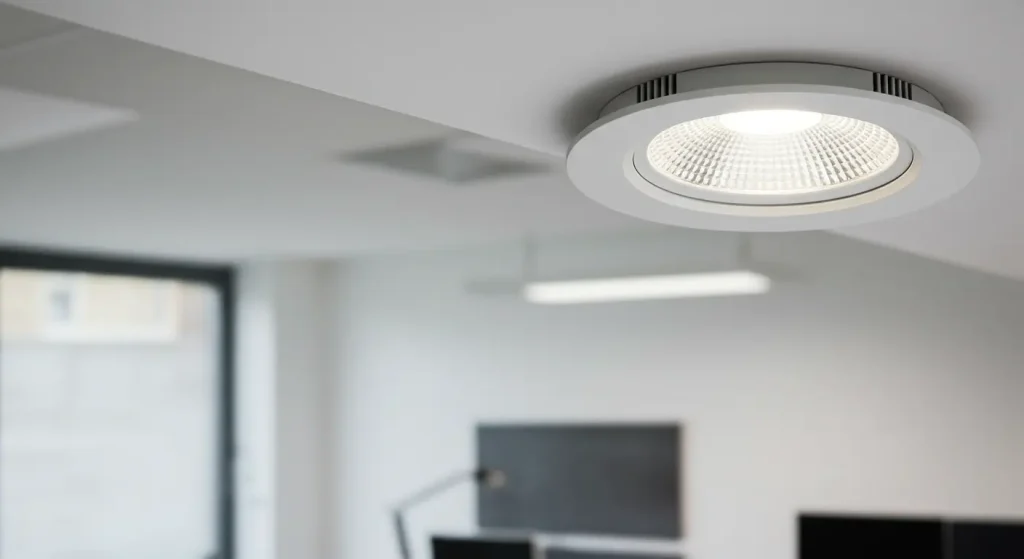
Adjustable Commercial Recessed LED Downlight
Market Data:
According to a 2025 report by ResearchAndMarkets, the global recessed LED lighting market is projected to reach \$10.4 billion by 2029, driven by:
Regulatory compliance pressures
Energy-efficiency retrofits in old buildings
Growth in smart and modular ceiling systems
Products like fire hoods and insulation guards are an integral part of that upgrade cycle.
Final summary
So, do you need downlight covers?
In most cases—yes. Especially if:
Your downlights are not fire-rated
You’re working with insulated ceilings
Local codes require protection for ceiling penetrations
They’re inexpensive, easy to install, and offer long-term safety and savings. Whether you’re a contractor, architect, or homeowner, downlight covers are a smart, compliant choice in modern lighting design.
FAQ About Do i Need Downlight Covers
Can I lay insulation directly over LED downlights?
Only if they are IC-rated or protected with a certified cover.
Do fire-rated downlights need covers?
Not always, but confirm fire-resistance time and local code requirements.
How much do downlight covers cost?
Typically \$6–\$12 per unit depending on size, brand, and fire rating.
Are downlight covers reusable?
Yes. If removed carefully, they can be reused during renovations or fixture upgrades.
Can they reduce noise between floors?
Yes—many users report noticeable acoustic benefits as a side effect.
Ready to Upgrade Your Lighting With Confidence?
Whether you’re retrofitting an existing ceiling or designing a new commercial space, choosing the right downlight protection isn’t just about compliance—it’s about long-term value, safety, and peace of mind.
At XHLUX, we specialize in fire-rated downlights, certified downlight covers, and complete recessed lighting solutions tailored for architects, contractors, and wholesalers across the EU and global markets.
✅ Bulk pricing available ✅ CE & RoHS certified components ✅ Custom OEM/ODM services for lighting professionals ✅ Fast lead times and technical support
 XHLUX
XHLUX
![Нужны ли мне защитные крышки для встраиваемых светильников: подробное руководство [2025]](https://xhlux.com/wp-content/uploads/2024/05/news.webp)