 XHLUX
XHLUX

In the calculus of running a successful business, lighting is too often relegated to a line-item expense—a basic utility required to keep the dark at bay. This is a profound strategic error. The reality is that your choice of commercial indoor lighting fixtures is one of the most critical investments you can make, directly influencing employee productivity, customer behavior, operational safety, and ultimately, your profitability.
Navigating the landscape of modern lighting, however, is a formidable task. You are faced with a dizzying array of options, a lexicon of technical jargon, and the critical pressure to balance upfront costs with long-term value. This is where poor decisions are made—choices that lead to underlit workspaces, unflattering retail environments, or crippling energy bills.
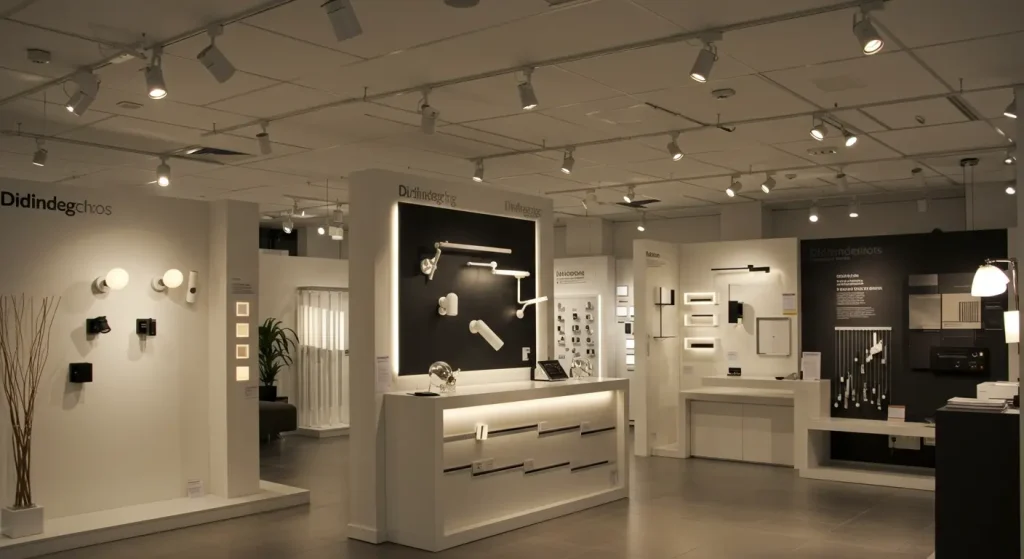
This guide is designed to be your definitive strategic partner in this process. We will move beyond a simple catalog of fixtures to provide a decision-making framework. We will translate the technical into the practical and show you how to choose lighting not as an expense, but as a powerful tool to achieve your specific business objectives. Whether you are retrofitting a warehouse in Houston, designing a new office in Chicago, or outfitting a boutique in Los Angeles, this guide will provide the clarity and confidence you need to make the optimal choice.
Aligning Lighting with Your Business Application
Before you look at a single fixture, you must answer one question: What is the primary purpose of the light in this specific space? The best lighting for a machine shop is fundamentally different from the best lighting for a luxury hotel. Defining the application is the most critical step, as it dictates every subsequent decision.
| Business Environment | Primary Lighting Goal(s) | Key Metrics & Considerations | Common Fixture Types |
|---|---|---|---|
| Corporate Offices | Productivity, Employee Well-being, Glare Reduction | Low UGR (\<19), Tunable White (HCL), High Efficacy | LED Troffers, Architectural Linear Pendants, Recessed Downlights |
| Retail (General & Grocery) | Product Appeal, Customer Experience, Brand Atmosphere | High CRI (>90), Strategic Accent Lighting, Color Temperature | Track Lighting, Adjustable Downlights, Linear Systems |
| Industrial & Warehouse | Safety, Visibility, Durability, Energy Efficiency | High Lumen Output, Durability (IP Rating), Sensor Controls | High Bay & Low Bay LED, Linear Strips, Vapor Tight Fixtures |
| Hospitality (Hotels, Restaurants) | Ambiance, Guest Comfort, Aesthetics, Flexibility | Dimmability, Warm CCT (2700K-3000K), High-Design Fixtures | Decorative Pendants, Architectural Downlights, Track Systems, Cove Lighting |
| Healthcare & Education | Visual Acuity, Alertness, Patient/Student Comfort, Cleanliness | High CRI, Low Glare, Tunable White, Easy to Clean | Sealed Troffers, Recessed Downlights, Linear Ambient/Task Lighting |
Expert Insight: Do not adopt a one-size-fits-all approach. A common mistake is using the same 2×4 troffer in an office, a hallway, and a breakroom. By tailoring the lighting to the specific task and desired mood of each space, you create a more effective and sophisticated environment. This granular approach is a hallmark of professional office lighting design.
A Practical Guide to Lighting Specifications
The specifications sheet for a modern LED fixture can be intimidating. However, you only need to master a few key metrics to understand 90% of what matters. Think of this as learning to read the nutrition label for your lighting.
- Efficacy (Lumens per Watt – lm/W): This is the single most important metric for operational cost. Efficacy tells you how efficiently a fixture converts electricity (Watts) into light (Lumens). A fixture with 150 lm/W is 50% more efficient than one with 100 lm/W, meaning it produces the same amount of light for two-thirds of the energy cost. For US-based businesses seeking utility rebates, look for fixtures on the DesignLights Consortium (DLC) Qualified Products List, which have passed rigorous efficacy and quality testing.
- Correlated Color Temperature (CCT): Measured in Kelvin (K), this defines the color of the white light.
- 2700K-3000K (Warm White): Creates a cozy, inviting ambiance. Ideal for fine dining and hotel lobbies.
- 3500K-4000K (Neutral White): A clean, balanced white light that promotes focus. The modern standard for most offices, general retail, and classrooms.
- 5000K+ (Cool White/Daylight): An intense, bluish-white light that maximizes alertness. Best for industrial facilities, hospitals, and task-intensive workshops where high visibility is paramount.
- Color Rendering Index (CRI): A scale from 0-100 that measures how accurately a light source reveals the true colors of objects. For commercial applications, a CRI of 80 is the minimum acceptable standard. However, for spaces where color is critical, a CRI of 90 or higher is non-negotiable. Think of high-CRI light as your best, silent salesperson in a retail store, or a critical diagnostic tool in a healthcare setting.
- Unified Glare Rating (UGR): Glare is a primary cause of eye strain and headaches in office environments. UGR is a measure of the discomfort glare produced by a lighting scheme. For offices and classrooms, the Illuminating Engineering Society (IES) recommends a UGR of less than 19 (UGR\<19) for optimal visual comfort. When choosing troffers or panels, always look for the UGR rating.
How To Match Hardware To Applications
With your goals defined and metrics understood, you can now select your hardware. Here’s a breakdown of the most common commercial indoor lighting fixtures.
For Office & Educational Spaces:
- LED Troffers & Panels: The workhorses of office lighting, designed to fit into standard drop ceilings (2’x4′ or 2’x2′). Modern troffers offer excellent efficacy and low-glare optics, making them a cost-effective choice for general illumination.
- Architectural Linear Fixtures: These long, sleek fixtures can be recessed, surface-mounted, or suspended. They offer a more modern, high-design aesthetic than troffers and are often used to create visual lines or define zones in open-plan offices. Many offer direct/indirect distribution (casting light both up and down) to create a bright, comfortable space.
- Recessed Downlights: Circular fixtures recessed into the ceiling, ideal for hallways, reception areas, and conference rooms. They provide a clean, minimalist look and can be used for both general and accent lighting.
For Industrial & Warehouse Spaces:
- High Bay & Low Bay Fixtures: The key distinction is mounting height. Low Bays are for ceilings under 20 feet (e.g., workshops, small warehouses), while High Bays are for ceilings 20-45+ feet high (e.g., distribution centers, large manufacturing plants). Modern LED high bays are exceptionally powerful and efficient, replacing thousand-watt metal halide fixtures at a fraction of the energy cost.
- Vapor Tight Fixtures: These sealed, gasketed fixtures are designed for harsh environments where moisture, dust, or corrosive fumes are present. Think food processing plants, car washes, and parking garages. Their IP (Ingress Protection) rating indicates their level of protection.
For Retail & Hospitality:
- Track Lighting Systems: The champion of flexibility. Track lighting allows you to aim, move, and change fixtures easily, making it perfect for retail displays, art galleries, and restaurants where scenes need to change. Reputable systems, like those offered by XHLUX or other architectural brands, provide a vast ecosystem of fiaxture heads for various effects (spots, floods, wall washers).
- Adjustable Downlights: Often called “gimbals” or “eyeballs,” these recessed fixtures can be tilted and rotated to function as accent lights, highlighting products, artwork, or architectural details with precision.
- Decorative & Architectural Pendants: In hospitality, the fixture is often a key part of the decor. Pendants and chandeliers are used to make a statement, define a space (like over a bar or reception desk), and create a powerful sense of ambiance.
How To Maximize Your Lighting ROI
Choosing the right fixture is only half the battle. A truly professional lighting solution incorporates controls, compliance, and a clear understanding of long-term costs.
Intelligent Lighting Controls
A light that is on when no one is present is 100% wasted energy.
- Occupancy/Vacancy Sensors: A simple, powerful tool that automatically turns lights off (or on and off) when a room is empty. A must-have for offices, restrooms, and storage areas.
- Daylight Harvesting: Photosensors detect the amount of natural light entering a space and automatically dim the electric lights accordingly, saving significant energy near windows.
- Networked Systems (DALI, PoE): This is the future. Networked systems connect all fixtures to a central controller, allowing for granular control, scene setting, energy monitoring, and even using the lighting grid for other building services (Li-Fi, space utilization tracking).
FutureTrends Shaping Commercial Lighting
To ensure your investment remains relevant, be aware of these transformative trends.
- Human-Centric Lighting (HCL): This is arguably the most important development in decades. HCL uses tunable white fixtures to change color temperature throughout the day, mimicking the natural rhythm of the sun. As reported by sources like the U.S. Department of Energy, this can improve alertness, mood, and sleep cycles, making it a powerful tool for enhancing employee well-being and productivity.
- Sustainability & The Circular Economy: The focus is shifting from simply disposing of old fixtures to creating systems that can be repaired, upgraded, and recycled. Modular designs that allow for the replacement of just the LED engine or driver, rather than the entire housing, are gaining traction.
Final Summary
Choosing the best commercial indoor lighting fixtures is an exercise in strategic thinking. It requires you to look beyond the hardware and consider the specific needs of your space, the well-being of its occupants, and the long-term financial health of your operation.
By starting with your application, mastering the key performance metrics, selecting the right tools for the job, and layering on intelligent controls, you transform lighting from a passive expense into an active asset. You create an environment where employees are more productive, customers are more engaged, safety is paramount, and energy waste is minimized. In the competitive landscape of 2025, a superior lighting strategy is not just a bright idea—it’s a fundamental component of a thriving business.
Frequently Asked Questions (FAQ)
Q1: How many lumens do I need for my commercial space?
A: This depends heavily on the application and ceiling height. As a very general rule, an office might require 30-50 foot-candles (a measure of light on a surface), while a warehouse might need 20-30, and detailed task work could require 70+. It’s best to consult the IES Lighting Handbook or a lighting professional for specific recommendations.
Q2: What is the difference between a UL and a DLC listing?
A: A UL (or ETL) listing is a safety certification, confirming the product has been tested to national safety standards and is safe to install. A DLC listing is a performance certification, indicating the product meets high standards for energy efficiency and quality, making it eligible for utility rebates in many parts of the U.S. and Canada.
Q3: Is it better to retrofit my old fixtures with LED bulbs or replace the entire fixture?
A: While retrofitting can be cheaper upfront, replacing the entire fixture with an integrated LED solution is almost always the better long-term choice. Integrated fixtures are engineered specifically for LED, resulting in better thermal management, higher efficacy, longer life, and superior optical control compared to simply putting an LED bulb in a fixture designed for a fluorescent tube.