 XHLUX
XHLUX

Índice
- What Is a Fire-Rated LED Downlight, Exactly?
- Do I Actually Need Fire-Rated Downlights?
- The Science of Safety: Deconstructing the Ratings
- Fire-Rated vs. Non-Fire-Rated Compared
- The “Hidden” Benefits of a Sealed Design
- How to Choose the Right Fire-Rated Downlight
- A Critical Warning on Installation: This is Not a DIY Job
- The Future is Integrated and Safer
- Conclusion: It’s More Than a Light; It’s a Guardian
- FAQ About Fire Rated LED Downlight
Let’s set a scene. You’re standing in your newly renovated space, admiring the clean lines and the flawless ceiling, punctuated by a series of sleek, modern downlights. They cast a perfect glow, transforming the room. But hidden from view, within the housing of each of those lights, is a technology that has nothing to do with lumens or color temperature, and everything to do with protecting your home and the people in it.
We’re talking about fire-rated downlights.
It’s a term many have heard, particularly during a renovation or new build, yet it remains shrouded in confusion. Is it a legal requirement? Is it just a costly upsell? What does “fire-rated” even mean in the context of a simple light fixture?
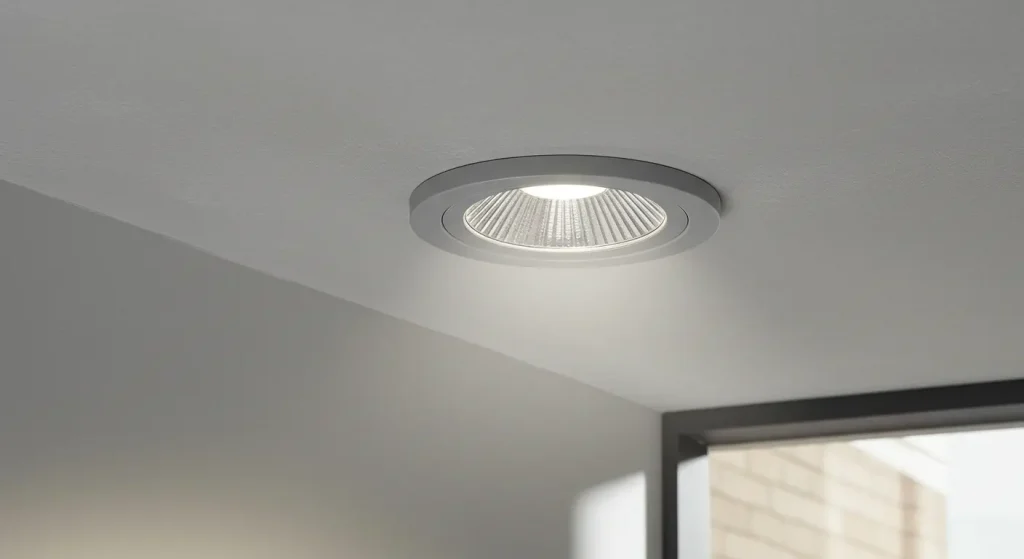
As a consultant who has spent over two decades navigating the intersection of lighting design and building safety codes, I can tell you this: understanding what a fire rated LED downlight is isn’t just a matter of compliance; it’s a fundamental aspect of responsible homeownership. This guide is designed to demystify the topic completely. We will go far beyond a simple definition to give you the clarity and confidence to make the right decision for your project. This is not about technical jargon; it’s about your safety and peace of mind.
What Is a Fire-Rated LED Downlight, Exactly?
At its core, a fire-rated LED downlight is a light fixture specifically engineered to restore the fire barrier of a ceiling after a hole has been cut into it for installation.
Think of your home’s ceilings (and floors) as sealed compartments designed to contain a fire within a single area for a specific period, giving occupants precious time to escape. This is a crucial principle of building safety. Every time you cut a hole in that plasterboard ceiling to install a standard downlight, you compromise that barrier. You create a gateway. In the event of a fire, this opening allows flames, intense heat, and toxic smoke to rapidly spread upwards into the floor cavity and the room above.
A fire-rated downlight is designed to plug that gateway.
How does it achieve this? The magic lies in a specialized material called intumescent. This material is integrated into the can or housing of the downlight. Under normal conditions, it’s completely inert. But when exposed to the intense heat of a fire (typically around 150°C / 300°F), it undergoes a rapid chemical reaction, swelling up to many times its original size. This expanding char, a bit like a dense, fire-proof foam, completely seals the downlight and the hole it sits in.
This seal effectively restores the ceiling’s original fire integrity, containing the fire for the rated period—typically 30, 60, or 90 minutes. It’s not the light itself that is fire-proof; it’s the fitting’s ability to seal the breach it creates. It’s a small, passive, yet incredibly powerful life-saving device.
Do I Actually Need Fire-Rated Downlights?
This is the most pressing question for most homeowners and even many contractors. The answer isn’t a simple “yes” or “no” for every situation, but is dictated by building regulations, which are in place for life safety. While local codes can vary slightly, the principles are universal.
You almost certainly need fire-rated downlights if your ceiling is:
- Below any inhabited room. This is the most common scenario. If you are installing downlights in your ground-floor kitchen and there is a bedroom directly above it, that ceiling must maintain its fire integrity. Non-rated downlights would act as chimneys for fire to reach the sleeping occupants above.
- Part of a designated escape route. Hallways, corridors, and landings are critical paths for escape. Ceilings in these areas must be protected to ensure the route remains tenable during a fire.
- In a multi-story apartment or commercial building. In any building with multiple dwellings or businesses, fire compartmentation between units is mandatory to prevent a fire in one unit from spreading to others.
- In an integrated garage with a room above it. The garage is a high-risk area for fires (due to cars, flammable liquids, etc.), so the ceiling separating it from a living space above must be robustly protected.
My Professional Rule of Thumb:
After years of seeing projects of all shapes and sizes, my advice is unequivocal. If you are in any doubt whatsoever, install fire-rated downlights. The cost difference between a quality non-rated downlight and its fire-rated equivalent is often marginal in the grand scheme of a building project. The peace of mind and the unequivocal safety benefit, however, are immeasurable. It is one of the few areas in a renovation where cutting a small corner introduces a disproportionately large risk.
The Science of Safety: Deconstructing the Ratings
To truly trust the technology, it helps to understand the standards it’s held to. The benchmark for fire resistance in the UK and many parts of Europe is BS 476 Part 21: Fire tests on building materials and structures. In North America, similar standards are governed by bodies like UL (Underwriters Laboratories).
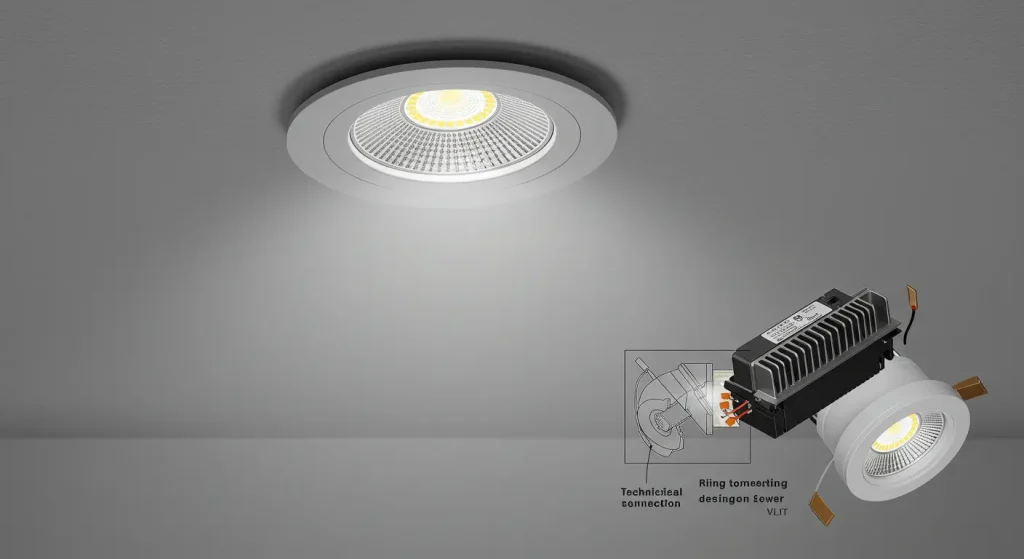
These tests don’t just involve putting a light in a fire. They involve building an entire section of a representative ceiling (e.g., plasterboard with timber joists), installing the downlight, and then subjecting the underside to a controlled fire that follows a specific temperature curve. The test measures how long the ceiling maintains its:
- Integrity: Preventing the passage of flames and hot gases.
- Insulation: Limiting the temperature rise on the non-fire side of the ceiling to prevent objects in the room above from spontaneously combusting.
This leads to the time-based ratings you see on the box:
| Fire Rating | Typical Application | Meaning |
|---|---|---|
| 30 Minutes | Standard for most single-family homes with two stories. Designed to provide sufficient time to escape from a typical domestic property. | The downlight will maintain the ceiling’s fire barrier for at least 30 minutes in a standard timber joist construction. |
| 60 Minutes | Often required in three-story homes or buildings with more complex layouts. Also used in some commercial applications. | Provides an extended period of protection, maintaining the fire barrier for at least 60 minutes. |
| 90 Minutes | Typically reserved for larger commercial buildings, high-rise apartments, or specific constructions using concrete floors. | Offers the highest level of passive fire protection, maintaining the barrier for at least 90 minutes. |
For the vast majority of residential projects in the UK, a 30- or 60-minute rating is sufficient. Always check with your local building control officer or your qualified electrician to confirm the specific requirement for your property type.
Fire-Rated vs. Non-Fire-Rated Compared
A side-by-side comparison reveals that the difference is not merely the addition of one material, but a fundamental divergence in design philosophy and construction.
| Recurso | Fire-Rated LED Downlight | Non-Fire-Rated LED Downlight |
|---|---|---|
| Construction | Fully enclosed steel or high-grade aluminum “can.” Robust build, heavier feel. Contains visible intumescent lining. | Often an “open-back” design. Lighter construction, with exposed electronics and heat sink. |
| Safety Mechanism | Active intumescent material that swells to seal the unit in a fire. | None. The open back provides a direct path for fire and smoke to pass through the ceiling. |
| Acoustic Sealing | The enclosed design and seals significantly reduce sound transmission between floors. | The open design allows sound to travel easily through the ceiling cut-out. |
| Air Leakage (Drafts) | Gaskets and tight construction prevent drafts, improving home energy efficiency. | Allows for significant air leakage, leading to heat loss and drafts. |
| Regulations & Compliance | Designed to meet stringent building and fire safety regulations (e.g., BS 476). | Does not meet fire compartmentation requirements. Can only be used in specific circumstances (e.g., top floor with no loft). |
| Custo | Higher initial purchase price due to complex construction and safety materials. | Lower initial purchase price. |
| Peace of Mind | Provides documented, tested assurance that you have not compromised your home’s structural fire safety. | Offers no protection, potentially invalidating home insurance and creating a known safety hazard. |
The “Hidden” Benefits of a Sealed Design
The superior, enclosed construction of a fire-rated downlight provides valuable benefits that go beyond its primary function. This is where we see a holistic approach to product design.
- Acoustic Insulation: The open back of a cheap downlight is like a tiny speaker hole, allowing noise from conversations, televisions, and footsteps to travel between floors. A sealed fire-rated unit acts as an effective acoustic barrier, contributing to a quieter, more peaceful home environment.
- Air Leakage (The “I-Rating”): Modern building standards are increasingly focused on energy efficiency and airtightness. Every hole in your ceiling is a potential source of heat loss in the winter and heat gain in the summer. Fire-rated downlights, with their sealed cans and gaskets, significantly reduce this airflow, preventing drafts and lowering your energy bills. This is often designated by an “I-Rating” for air and sound integrity.
- Insulation Contact (The “IC-Rating”): This is another critical safety rating. An IC-rated downlight is certified to be in direct contact with loft or ceiling insulation without posing a fire hazard from overheating. Many, but not all, fire-rated downlights also carry an IC rating. This is a crucial detail to check, as covering a non-IC-rated fixture with insulation is a major fire risk in itself.
How to Choose the Right Fire-Rated Downlight
Selecting the right fixture involves more than just picking a 60-minute rating. As with any quality lighting, you need to consider performance and aesthetics. Here is your expert checklist:
- Verify the Fire Rating: First and foremost, ensure it meets the requirements for your property (30, 60, or 90 minutes). Look for the official certification marks.
- Confirm the IC-Rating: If your ceiling has or will have thermal insulation laid over it, you must choose an IC-rated fixture.
- Check the IP Rating (Ingress Protection): For bathrooms and kitchens, you need protection against moisture.
- IP44 is suitable for general bathroom areas.
- IP65 is required for areas directly above a shower or bath (Zone 1). It is completely dust-tight and protected against jets of water.
- Demand High Color Rendering (CRI 90+): As we covered in our general LED guide, a high CRI (Color Rendering Index) is non-negotiable for a modern home. It ensures that colors, skin tones, and decor appear vibrant and true-to-life. A CRI of 90 or above should be your standard.
- Select the Right Color Temperature (Kelvin):
- 2700K-3000K (Warm White): For relaxing, inviting spaces like living rooms and bedrooms.
- 4000K (Cool White): For task-oriented areas like kitchens and home offices where clarity is key.
- Ensure Dimming Capability: Smooth, flicker-free dimming is a hallmark of a quality LED driver. Check for compatibility with leading/trailing edge dimmers and consider smart dimming options.
- Consider the Aesthetics: Look at the bezel (the visible trim). Is it slim and minimalist? Does it come in different finishes (white, chrome, brass) to match your decor?
- Review the Warranty and Brand Reputation: A reputable brand will stand behind its product with a solid warranty (typically 3-7 years). This is an indicator of quality components and manufacturing.
A Critical Warning on Installation: This is Not a DIY Job
I cannot stress this enough: the installation of fire-rated downlights should only be carried out by a qualified, certified electrician.
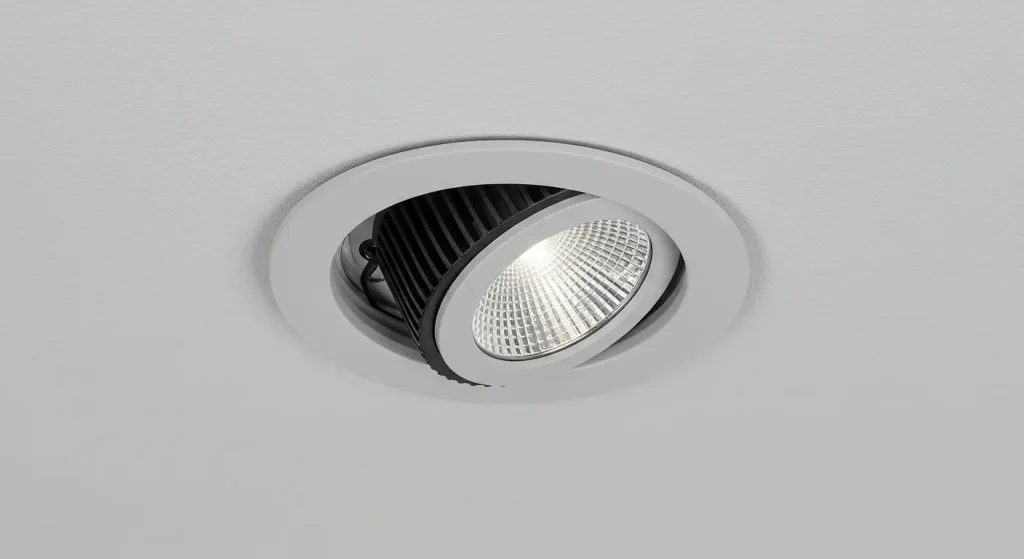
The fire rating of the product is entirely dependent on it being installed correctly according to the manufacturer’s instructions. An improper installation—the wrong size hole, a damaged seal, incorrect wiring—voids the rating completely. You might as well have installed a non-rated fitting.
A professional electrician understands the nuances of wiring regulations, safe zones, and the structural elements of your ceiling. They ensure the integrity of the product is maintained, and they can provide the necessary certification for the work, which is often required for building control sign-off and home insurance purposes. Don’t risk it.
The Future is Integrated and Safer
The market for passive fire protection is constantly evolving, driven by innovation and, tragically, by learning from disasters. A 2024 market report by Building Safety Analytics noted a significant post-Grenfell surge in demand for certified, high-performance fire-stopping products, with integrated lighting being a key growth sector.
Looking toward the rest of 2025 and beyond, we can expect to see:
- Smarter Integration: Fire-rated downlights will become more seamlessly integrated with smart home ecosystems, but with safety protocols that ensure the core fire-stopping function is never compromised by electronic failure.
- Enhanced Thermal Management: As LED become more powerful, managing heat within an enclosed, fire-rated can becomes more challenging. Expect to see even more sophisticated heat sink designs to ensure both longevity and safety.
- Stricter Global Standards: A continued push for harmonized and more stringent testing protocols across international markets, making it easier for consumers to trust the ratings they see.
Conclusion: It’s More Than a Light; It’s a Guardian
We began by admiring a beautifully lit room. Let us end by appreciating the profound, invisible safety net that underpins it. A fire-rated LED downlight is a testament to brilliant, passive engineering. It’s a device that sits dormant for its entire life, hoping never to be needed, but ready to perform its critical function in an instant.
Choosing to install them is not about succumbing to regulations. It is an active decision to build a safer envelope for your life to unfold within. It’s the quiet confidence of knowing you haven’t created a weakness where strength is most needed. It is, quite simply, one of the most intelligent and responsible investments you can make in the fabric of your home.