 XHLUX
XHLUX

Índice
- What Is Track Lighting and Why It Matters for Retail
- How Track Lighting Enhances Visual Merchandising
- Key Lighting Parameters for Retail Visual Merchandising
- Track Lighting Layout and Installation Tips
- Track Lighting and Brand Experience
- Common Mistakes in Retail Lighting Design
- Recommended Track Lighting Solutions for Retail Projects
- FAQ About Track Lighting For Retail Stores
- Conclusão
- Get Professional Lighting Advice for Your Retail Project
Lighting does more than illuminate—it tells a brand’s story. In retail environments, the right lighting design shapes how customers perceive products, move through space, and ultimately make purchasing decisions. Among all lighting systems, iluminação de trilho stands out as the most flexible and effective tool for visual merchandising.
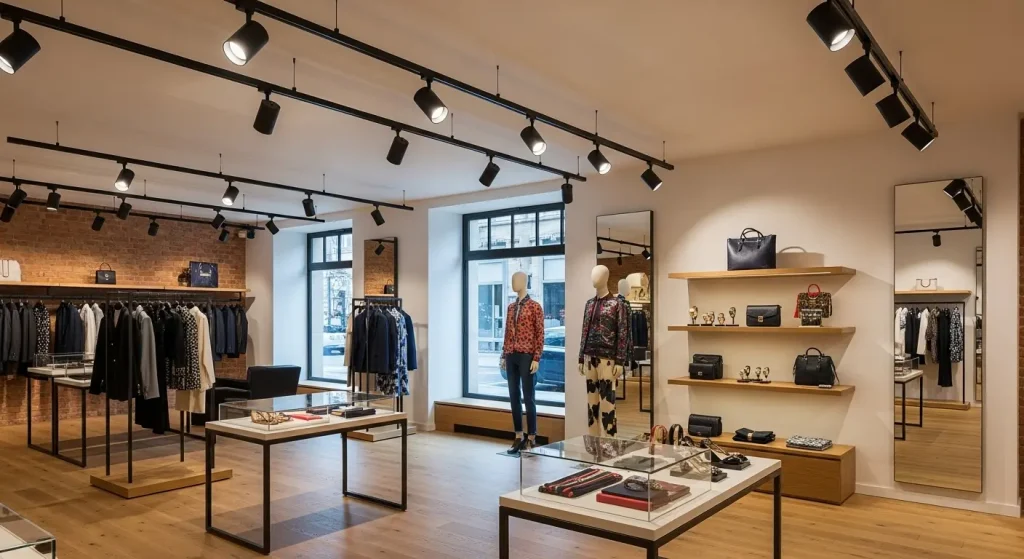
In this article, we’ll explore how iluminação de trilho enhances retail displays, supports brand identity, and improves sales performance. You’ll also learn how to select, install, and maintain track lighting systems for maximum visual impact in your store.
What Is Track Lighting and Why It Matters for Retail
Track lighting is a modular lighting system consisting of three key parts:
- Track Rail: The power conduit mounted to the ceiling.
- Adapters / Connectors: Components that attach lighting heads to the rail.
- Track Lights: Adjustable spotlights or projectors that can slide, rotate, and tilt.
Unlike fixed ceiling lights such as downlights, track lighting provides directional adjustability and easy reconfiguration. In retail stores, merchandise displays change seasonally—new product lines, promotions, or interior layouts require constant lighting adjustments. Track lighting allows this flexibility without major rewiring or ceiling modification.
Why Retail Stores Prefer Track Lighting
- Adjustable Direction: Each spotlight can pivot or slide along the rail to target new products or displays.
- Dynamic Ambience: Combine accent and ambient lighting to create visually rich environments.
- Quick Maintenance: Lights can be replaced or repositioned within minutes.
- Eficiência energética: Modern LED track lights consume less power while maintaining high brightness and CRI.
- Professional Aesthetic: Sleek profiles complement modern store design.
In short, track lighting combines design flexibility, technical precision, and aesthetic balance, making it indispensable for retail spaces seeking to optimize both beauty and function.
How Track Lighting Enhances Visual Merchandising
The core of retail success lies in visual merchandising—how products are displayed, highlighted, and emotionally connected with customers. Track lighting directly supports these objectives by shaping perception and guiding attention.
1. Lighting as Guidance
Directional lighting acts like a silent salesperson. By using focused beams, you can guide customers’ eyes toward new arrivals, promotions, or key display zones.
For example:
- Narrow 15° beams emphasize premium products or mannequins.
- Wider 36° beams brighten general circulation areas.
2. Layered Lighting Design
A well-designed retail lighting system uses three layers:
- Ambient lighting: General illumination for overall brightness.
- Accent lighting: Focused beams from track lights to highlight merchandise.
- Decorative lighting: Adds atmosphere or highlights architectural features.
Combining these layers using adjustable track systems creates depth and visual hierarchy, ensuring that customers instinctively focus on highlighted items.
3. Brand Identity Through Light
Lighting communicates mood and brand value:
- Warm tones (2700–3000K): Luxury boutiques, jewelry, high-end fashion.
- Neutral tones (3500–4000K): Minimalist or modern brands.
- Cool tones (4000–5000K): Technology and lifestyle brands.
By aligning lighting tone and brightness with the brand’s personality, track lighting becomes a key component of retail storytelling.
4. Product Highlighting and Color Accuracy
Alto CRI (Índice de Reprodução de Cores) values—preferably CRI ≥ 90—are essential in retail environments.
- Clothing: Accurate color display avoids mismatch between in-store and outdoor light.
- Cosmetics: True-to-tone lighting helps customers see realistic skin color results.
- Jewelry: Sharp, bright beams enhance brilliance and reflections.
| Display Objective | Recommended Fixture Type | Poder | Ângulo do feixe | CCT | Propósito |
|---|---|---|---|---|---|
| Fashion / Apparel | Adjustable Track Light | 20 W | 24° | 4000 K | Highlights fabric texture |
| Jewelry / Watches | High-CRI COB Spotlight | 30 W | 15° | 3000 K | Enhances sparkle and contrast |
| Cosmetics Counter | Deep Anti-Glare Track Light | 25 W | 36° | 3500 K | Soft, uniform illumination |
| Furniture Area | Wide Beam Track Light | 35 W | 60° | 3000 K | Warm ambient atmosphere |
✅ Professional Tip:
Mixing beam angles in one layout creates visual rhythm—narrow beams attract attention, wide beams maintain harmony.
Key Lighting Parameters for Retail Visual Merchandising
Professional retail designers rely on precise technical parameters to achieve optimal results. Below are the most important metrics when specifying LED track lights for visual merchandising:
| Parâmetro | Recommended Range | Application Insight |
|---|---|---|
| CRI (Índice de Reprodução de Cores) | ≥ 90 | Accurately displays true product colors |
| CCT (Color Temperature) | 2700K–4000K | Warmer tones for apparel; cooler tones for electronics |
| Ângulo do feixe | 15°–60° | Narrow for accent, wide for general illumination |
| Wattage | 15–40 W | Varies by ceiling height and brightness requirement |
| Illuminance (Lux) | 500–1500 lux | Differentiate functional zones |
| UGR (Índice Unificado de Ofuscamento) | < 19 | Ensures comfortable viewing and browsing |
Lighting Zoning Example
- Display Windows: 1000–1500 lux, high contrast (3000K, CRI ≥ 90)
- Sales Floor: 600–800 lux, uniform lighting
- Cashier Area: 400–600 lux, neutral white tone
- Fitting Rooms: 300–500 lux, warm flattering light
By fine-tuning these parameters, retailers can elevate customer experience and encourage longer in-store engagement.
Track Lighting Layout and Installation Tips
Proper layout and installation are essential for achieving the full visual potential of retail track lighting systems. When designed correctly, the lighting layout not only improves visibility but also enhances customer flow and brand storytelling.
1. Track Layout Configurations
Different track shapes create distinct lighting effects.
Common configurations include:
- Linear Tracks: Clean and simple, ideal for corridors or single display aisles.
- Rectangular Grids: Provide balanced lighting across large stores and showrooms.
- Circular or Curved Tracks: Used in flagship stores or galleries to highlight central displays.
- Freeform Layouts: Custom patterns used in modern boutiques for visual rhythm.
💡 Tip: Combine linear and curved tracks for a dynamic, layered lighting atmosphere.
2. Installation Methods
There are three main mounting options for retail environments:
- Surface Mounted: Installed directly onto the ceiling surface—fast and low-cost.
- Suspended (Pendant): Suitable for high ceilings; allows flexible height adjustment.
- Recessed: Sleek and integrated appearance, ideal for premium retail interiors.
Each mounting type affects ceiling aesthetics and light distribution. For upscale retail stores, recessed or suspended systems are often preferred for a more refined, architectural look.
3. Lighting Direction and Aiming Angles
- Direct beams 15°–30° toward merchandise to avoid shadows on faces or products.
- Maintain a 30° vertical offset from the product display plane for even illumination.
- Avoid aiming spotlights too horizontally; glare increases and product texture diminishes.
4. Lighting Control and Adjustment
Modern track lighting systems support multiple control options:
- 0–10V dimming: Simple, cost-effective brightness adjustment.
- DALI systems: Networked control for zones and preset scenes.
- Bluetooth / Smart APP: Wireless control for retail operators to quickly update lighting scenes.
💡 Pro Insight:
Integrate track lighting with motion sensors or time-based dimming to save energy during off-peak hours.
5. Maintenance and Replacement
Track lighting is known for its easy serviceability.
- Spotlights can be slid or detached from the track without rewiring.
- Maintenance teams can replace heads quickly during store updates.
- Always use fixtures with compatible adapters (e.g., 1-phase or 3-phase) to ensure system stability.
Track Lighting and Brand Experience
Lighting is not just technical — it’s emotional. It creates a sensory experience that connects customers with the brand’s personality and values.
1. Light as a Brand Storytelling Tool
Every successful retail brand uses lighting to tell its story:
- Luxury brands prefer warm 3000K light with narrow beams to create an exclusive, intimate atmosphere.
- Tech and lifestyle brands usar 4000K neutral white for clarity and futuristic aesthetics.
- Sustainable or organic brands often select 3500K natural tones to convey comfort and authenticity.
Lighting becomes part of the identidade da marca, subtly reinforcing perception without words.
2. Creating Mood Through Contrast
Lighting contrast defines attention hierarchy:
- Highlight hero products with 2–3× brighter light than the background.
- Keep ambient light soft (300–500 lux) to make focal points stand out.
- Use color temperature contrast (e.g., warm vs cool) to define brand zones within the same store.
3. Consistency Across Stores
For multi-location retailers, maintaining uniformidade da iluminação ensures a consistent brand image worldwide.
Standardize:
- Fixture models and beam angles
- CCT and CRI specifications
- Control protocols and installation standards
Consistent lighting equals consistent customer perception — a cornerstone of strong retail branding.
4. Sensory Experience and Emotional Impact
Lighting affects dwell time and purchasing behavior. Studies show:
- Warm, well-balanced lighting increases customer comfort and dwell time.
- Dynamic lighting transitions during product highlights improve engagement.
- Iluminação de destaque on promotional areas can boost sales by up to 20%.
✅ Example:
A luxury handbag retailer increased perceived product value by adjusting CRI from 80 to 95 and narrowing beam angle from 36° to 24°—resulting in a more focused, elegant display.
Common Mistakes in Retail Lighting Design
Even well-intentioned lighting plans can fail if not executed carefully. Below are common mistakes retail designers and installers should avoid.
1. Over-Illumination
Too much brightness washes out textures and causes customer fatigue.
- Keep illumination within recommended 500–1500 lux range depending on zone.
- Overly bright environments can reduce focus on hero displays.
2. Temperatura de cor inconsistente
Mixing 2700K warm and 4000K cool tones without purpose creates a disjointed look.
Maintain consistent color temperature across zones or use contrast intentionally for zoning effects.
3. Glare and Shadow Issues
Incorrect aiming angles or exposed LED chips cause glare (UGR > 19), which discomforts customers.
Usar deep anti-glare ou honeycomb lenses for visual comfort.
4. Uneven Illumination
Without proper spacing or beam overlap, some products appear dull.
Ensure overlapping light distribution between fixtures for smooth brightness transitions.
5. Ignoring Maintenance and System Compatibility
- Different brands of track lights may not fit the same rail system (1-phase vs 3-phase).
- Poor driver quality can lead to flicker and reduce fixture lifespan.
- Always specify certified systems (CE, RoHS, ETL) for safety and long-term reliability.
| Common Problem | Cause | Solução recomendada |
|---|---|---|
| Glare / Harsh Light | Beam aimed incorrectly | Use deep anti-glare design, adjust tilt |
| Uneven Lighting | Poor spacing | Follow 1.2× mounting height rule |
| Mixed Color Temperatures | Lack of planning | Standardize CCT (e.g., 3500K) per zone |
| Flickering | Low-quality driver | Use flicker-free driver (<1% ripple) |
| Difficult Maintenance | Non-standard adapters | Choose universal 3-circuit track systems |
Recommended Track Lighting Solutions for Retail Projects
Selecting the right track lighting system is about balancing technical precision, brand aesthetics, and long-term performance. Below are the most widely used and effective solutions for modern retail projects.
1. COB Adjustable Track Light Series
- Faixa de potência: 15 W – 40 W
- CRI: ≥ 90
- Beam Angle Options: 15° / 24° / 36° / 60°
Características:
- Rotatable 350° / Tilt 90° for flexible aiming
- High lumen efficiency (> 95 lm/W)
- Clean, smooth light spot with deep reflector design
- Aplicações: Apparel stores, showrooms, cosmetics counters
2. Série Antirreflexo Profundo
- UGR: < 19
- CCT Range: 2700 K – 4000 K
- Housing Colors: Black / White / Champagne / Silver
Vantagens:
- Reduces glare and visual fatigue
- Creates elegant atmosphere for luxury brands
- Compatible with standard 3-phase tracks
3. Smart Dimming and Control Series
- Protocolos: 0–10 V / DALI / Bluetooth / Zigbee
- Function: Adjustable brightness, programmable scenes, mobile control
Benefícios:
- Adapts lighting scenes for morning, evening, and sale events
- Enables energy savings up to 30% through adaptive dimming
- Perfect for multi-store chains with centralized control
4. Magnetic Track Lighting System
- Tensão: 48 V Low-Voltage
- Modules Available: Spot, Linear, Wall Washer, Pendant
Vantagens:
- Tool-free installation and repositioning
- Minimalist aesthetic and easy maintenance
- Ideal for high-end boutiques and lifestyle stores
5. OEM / ODM Customization Service
Customization Scope:
- Beam angle, color temperature, housing finish, and logo printing
- Bespoke packaging and photometric data (IES files)
- Certificações: CE / RoHS / ETL / CB
- Lead Time: 15 – 25 days for mass production
- Valor agregado: Technical drawings, catalog support, and branding options
| Product Type | Potência (W) | CRI | Ângulo do feixe | UGR | Sistema de controle | Ideal para |
|---|---|---|---|---|---|---|
| COB Adjustable | 20 – 40 | ≥ 90 | 15° – 36° | < 19 | DALI / 0–10 V | Retail / Showroom |
| Deep Anti-Glare | 25 – 35 | ≥ 90 | 24° – 60° | < 19 | Fixed | Luxury Boutiques |
| Smart Dimming | 15 – 30 | ≥ 90 | 24° – 60° | < 19 | Bluetooth / Zigbee | Multi-Store Chains |
| Magnetic System | 10 – 35 | ≥ 90 | 24° – 60° | < 19 | 48 V DC | Modern Retail Spaces |
✅ Tip: For large retail chains, using one standardized track system across locations simplifies installation, maintenance, and spare-part management.
FAQ About Track Lighting For Retail Stores
1. What’s the difference between track lights and downlights?
Track lights are mounted on adjustable rails, allowing flexible positioning and beam direction. Downlights are fixed in one location, providing general illumination. Retail stores favor track systems for adaptability to changing displays.
2. How do I choose the right beam angle for my retail store?
- 15°–24°: Use for accenting specific products.
- 36°: Balanced coverage for medium areas.
- 60°: General illumination for open zones.
Consider ceiling height and object distance to achieve even light distribution.
3. Can track lighting support smart dimming or automation?
Yes. Most modern LED track systems are compatible with DALI, 0–10 V, or Bluetooth controls, enabling wireless scene adjustments and scheduling via mobile apps.
4. How does color temperature affect product presentation?
- 2700–3000 K (Warm White): Creates cozy, luxurious mood for fashion / jewelry.
- 3500 K (Neutral White): Balanced light for natural products and décor.
- 4000 K + (Cool White): Enhances clarity in electronics / tech retail.
Uniform CCT ensures cohesive visual identity across the store.
5. Is a magnetic track system suitable for retail use?
Absolutely. 48 V magnetic tracks are safe, modular, and visually clean—ideal for high-end showrooms where flexibility and design aesthetics are priorities.
Conclusão
Track lighting is more than a technical fixture—it’s a strategic merchandising tool.
When designed intelligently, it:
- Highlights hero products with precision.
- Shapes customer flow through visual guidance.
- Strengthens brand identity through light tone and quality.
- Enhances the emotional shopping experience.
For retail designers and contractors, the right lighting plan directly impacts sales performance, dwell time, and brand perception.
Whether you’re illuminating a boutique, supermarket, or flagship concept store, Iluminação de trilho LED remains the most adaptable and future-ready solution.
Get Professional Lighting Advice for Your Retail Project
Let our lighting experts help you create unforgettable retail experiences.
We provide end-to-end project consultation, technical design, and OEM production for international partners.
You’ll Get:
✅ Free photometric simulation and lux calculation
✅ Customized beam angles and color temperatures
✅ Fast delivery and OEM/ODM branding support
✅ Certified products for global projects (CE / RoHS / ETL)
Ready to Get Started?
👉 Solicite um orçamento
👉 Download Retail Lighting Catalog
👉 Solicite um projeto de iluminação gratuito.