 XHLUX
XHLUX

Índice
- 1. Start with Your Project Requirements
- 2. Look for Industry Certifications and Standards Compliance
- 3. Evaluate Experience and Project Portfolio
- 4. Assess Product Range and Technology
- 5. Check Warranty and After-Sales Support
- 6. Investigate Pricing Transparency
- 7. Evaluate Communication and Responsiveness
- 8. Sustainability and Green Credentials
- 9. Request a Site Visit or Mock-Up
- 10. Verify Business Legitimacy
- Example Checklist for Selecting a Commercial Lighting Company
- Conclusão
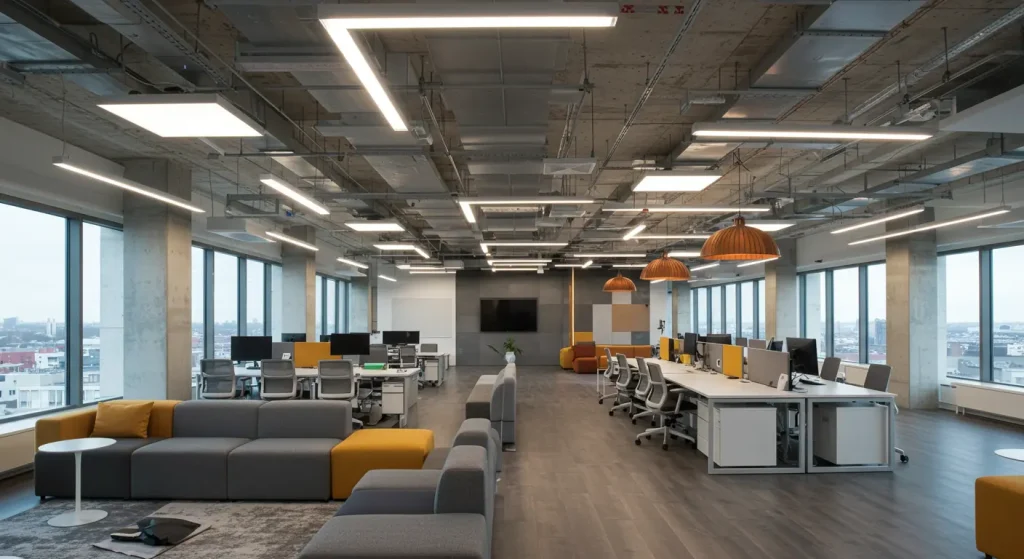
When you’re planning a lighting upgrade for your office, retail store, warehouse, or hospitality space, choosing the right commercial lighting company can make or break your project. The right partner won’t just sell you fixtures—they’ll help you design a system that enhances productivity, reduces energy costs, meets regulatory standards, and improves your brand image.
But with so many suppliers and contractors claiming to be “the best,” how do you separate genuine experts from those who might leave you with subpar products, hidden costs, or poor after-sales service?
This guide walks you through exactly how to identify, evaluate, and select a trustworthy commercial lighting company, backed by industry insights, expert recommendations, and real-world examples.
1. Start with Your Project Requirements
Before you even talk to suppliers, clarify your own needs. A trustworthy lighting company will always ask for detailed project specifications—so it’s best to prepare them in advance.
Questions to consider:
- Type of space: Retail, office, warehouse, showroom, hospital, etc.
- Purpose: Ambient lighting, task lighting, accent lighting, emergency lighting.
- Scale: Square footage, number of fixtures, ceiling height.
- Control systems: DALI, 1–10V dimming, smart lighting, motion sensors.
- Energy goals: Are you targeting a specific energy efficiency rating or certification (e.g., LEED, BREEAM)?
💡 Expert Tip:
If a company jumps straight into selling products without understanding your space, that’s a red flag.
2. Look for Industry Certifications and Standards Compliance
Reputable commercial lighting companies adhere to international safety and quality standards.
| Certification | Meaning | Por que isso importa |
|---|---|---|
| CE (Europe) | Conformity with EU safety standards | Ensures legal sale in the EU market |
| RoHS | Restriction of hazardous substances | Guarantees safer, eco-friendly products |
| UL / ETL | North American safety compliance | Prevents electrical hazards |
| ISO 9001 | Quality management certification | Consistent product quality |
| ISO 14001 | Environmental management | Sustainable production |
Authority Insight:
According to the Global Commercial Lighting Market Report 2025, 78% of B2B lighting buyers consider certification a top factor in supplier trust.
3. Evaluate Experience and Project Portfolio
A trustworthy company should have:
- Case studies from similar industries.
- Referências from past clients.
- Before-and-after photos or videos.
- Data on achieved energy savings and ROI.
Red Flag:
If they can’t show real projects or provide contacts for reference, you may be dealing with an inexperienced supplier.
4. Assess Product Range and Technology
Commercial lighting is evolving quickly. Look for a partner that offers:
- LED track lighting, downlights, panel lights, and high bays for different applications.
- Sistemas de iluminação inteligentes with wireless control (e.g., Casambi, Zigbee, Bluetooth Mesh).
- High-efficiency LEDs with a lumen efficacy above 120 lm/W.
- Customizable options (beam angle, CCT tuning, color rendering index above CRI 90).
📊 Market Data:
The LED lighting market is projected to grow from $81 billion in 2024 to $124 billion by 2030 (CAGR 7.1%, MarketsandMarkets). Companies that keep up with smart and sustainable tech will have a competitive edge.
5. Check Warranty and After-Sales Support
A long warranty is meaningless without responsive after-sales service.
- Industry benchmark: 3–5 years warranty for commercial LED lighting.
Ask about:
- On-site troubleshooting.
- Spare parts availability.
- Turnaround time for replacements.
Pro Insight:
The most trustworthy suppliers often offer advance replacements to minimize downtime.
6. Investigate Pricing Transparency
While price is important, beware of unusually cheap offers—they often signal lower quality or hidden costs.
| Good Practice | Bad Practice |
|---|---|
| Detailed quote with itemized costs | One-line “lump sum” quote |
| Clear payment terms | Vague or constantly changing terms |
| No hidden charges | Surprise add-ons post-contract |
💡 Tip: Always compare at least three quotations to spot market norms.
7. Evaluate Communication and Responsiveness
During early conversations, notice:
- Do they respond within 24–48 hours?
- Are answers detailed and clear?
- Do they proactively suggest improvements or alternatives?
Trustworthy companies act like lighting consultants, not just sellers.
8. Sustainability and Green Credentials
If sustainability is part of your business values, check whether the company:
- Uses recyclable materials.
- Offers energy audits.
- Has carbon-neutral operations.
Stat:
A Deloitte 2024 Sustainability Report found that 62% of businesses now choose suppliers based partly on environmental performance.
9. Request a Site Visit or Mock-Up
Reliable companies often provide:
- 3D lighting simulations using software like Dialux or Relux.
- On-site mock-ups for key areas before full rollout.
- Lux level measurements to ensure compliance with regulations.
10. Verify Business Legitimacy
Simple but vital:
- Check business registration and licensing.
- Procurar physical address, not just a PO box.
- Search for online reviews and industry awards.
Example Checklist for Selecting a Commercial Lighting Company
| Criteria | Weight (%) |
|---|---|
| Certificações e Conformidade | 20% |
| Industry Experience | 20% |
| Product Range & Tech Capability | 15% |
| Warranty & Service | 15% |
| Pricing Transparency | 10% |
| Sustainability | 10% |
| Comunicação | 10% |
Conclusão
Choosing the right commercial lighting company is not just about getting the lowest quote—it’s about finding a trusted partner who understands your business, provides quality products, ensures compliance, and offers reliable after-sales support.
By following the steps above—starting with your own requirements, verifying credentials, reviewing portfolios, and testing communication—you’ll greatly reduce the risk of costly mistakes and ensure your lighting investment delivers long-term value.