 XHLUX
XHLUX
Inhoudsopgave
- 1. Why Architectural Lighting Manufacturers Matter in Large Projects
- 2. What Are Architectural Lighting Manufacturers?
- 3. Lighting Challenges Unique to Large Projects
- 4. What Architectural Lighting Manufacturers Bring to Large Projects
- 4.1 System-Level Lighting Design and Expertise
- 4.2 High-Performance, Consistent, Long-Lifecycle Luminaires
- 4.3 Reliable, Scalable Supply Chains for Large Quantities
- 4.4 Customization (OEM / ODM / Project-Specific Engineering)
- 4.5 On-Site Technical and Engineering Support
- 4.6 Lifecycle Support: Warranty, Spare Parts, and Maintenance Planning
- 5. How to Evaluate Architectural Lighting Manufacturers
- 6. Different Large Project Types Have Different Requirements
- 7. FAQ About Architectural Lighting Manufacturers
- 8. Conclusie
1. Why Architectural Lighting Manufacturers Matter in Large Projects
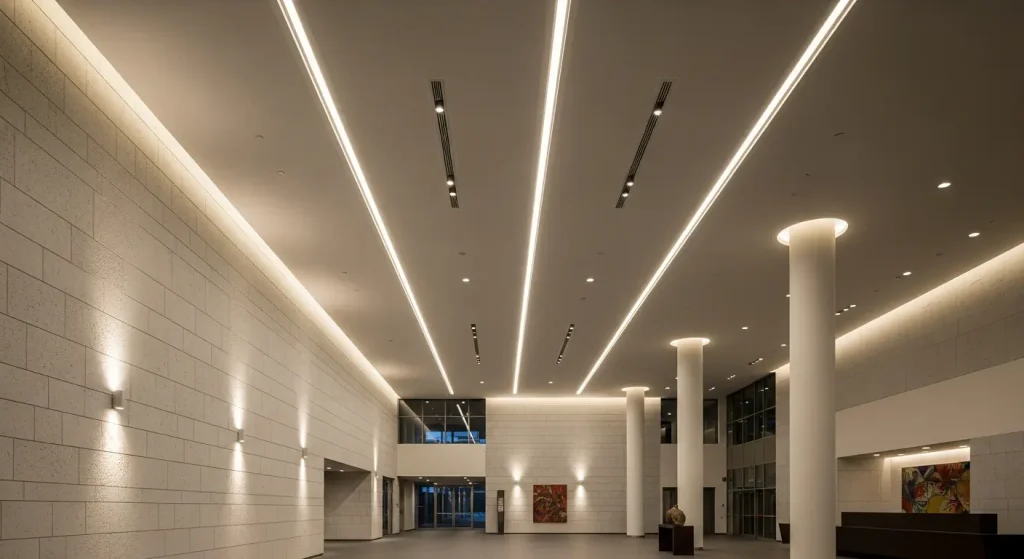
In modern architecture, lighting is no longer a “finishing layer.”It is a structural, experiential, and operational component of every professional space:
- Hotels
- Mixed-use commercial developments
- Winkelcentra
- Premium retail
- Kantoortorens
- Art galleries & museums
- Airports & transportation hubs
- Cultural and civic buildings
Large projects have high technical and aesthetic expectations, and the lighting system must achieve:
- Visueel comfort
- Consistent photometric performance
- A coherent architectural expression
- Energie-efficiëntie
- Maintainability over 10–20 years
- Compliance with building codes and lighting standards
Dit is waarom Architectural Lighting Manufacturers are essential partners—not just product providers.
Instead of supplying commoditized luminaires, they deliver:
system design + technical expertise + engineering-grade fixtures + project-level support.
This article explains what top-tier architectural lighting manufacturers truly bring to large projects—and how developers, architects, or procurement teams should evaluate them.
2. What Are Architectural Lighting Manufacturers?
Architectural Lighting Manufacturers are professional-grade companies that provide:
- High-performance lighting fixtures (linear, recessed, track, wall-washers, grazers, accent fixtures)
- Optical engineering & photometric control
- Lighting system integration (DALI, 0–10V, DMX, Bluetooth)
- Technical documentation (IES files, BIM models, shop drawings)
- Project-specific customization
- Site coordination and commissioning support
They are fundamentally different from consumer lighting brands or general commodity suppliers:
| Type | What They Provide | Geschikt voor |
|---|---|---|
| Architectural Lighting Manufacturers | Photometrics, custom optics, engineered structures, project support | Commercial & civic projects |
| General LED suppliers | Standard fixtures, basic specs | Small shops, home renovations |
| Retail lighting brands | Decorative products | Residential & hospitality decoration |
Architectural manufacturers operate more like technical partners than vendors.
External references:
3. Lighting Challenges Unique to Large Projects
Large-scale spaces introduce complexity that cannot be solved by simply “buying LED fixtures.”
3.1 Complex Lighting Environments
Large buildings include multiple zones with different needs:
- Lobbies & atriums
- Corridors & circulation spaces
- Retail zones
- Restaurants & lounges
- Vergaderzalen
- Exterior façades
- Artwork & architectural features
Each zone requires unique lighting layers:
ambient + accent + task + grazing + indirect.
3.2 High Photometric & Visual Comfort Requirements
Professional architecture requires:
- Hoge CRI (90–95+)
- Consistent light color & output
- Beam precision (10° / 24° / 36° / 60°)
- Excellent glare control (UGR < 19 or strict cutoff systems)
Referentie:
3.3 Rigorous Supply Chain Needs
Large projects may require:
- 1,000–20,000+ luminaires
- Long-term delivery schedules
- Multiple installation phases
- Strict color binning consistency
Any supply chain delay impacts construction timelines.
3.4 Integration With Control Systems
Large buildings require centralized and automated systems:
- DALI
- 0–10V
- CASAMBI
- DMX (for façade or dynamic scenes)
- BACnet integration
Referentie:
- DALI Alliance
3.5 Engineering Complexity
Installations require structural coordination:
- Recessed installations
- Plenum-rated housings
- Brandwerende plafonds
- Custom profiles
- Electrical coordination with other MEP trades
4. What Architectural Lighting Manufacturers Bring to Large Projects
4.1 System-Level Lighting Design and Expertise
The biggest advantage of professional manufacturers is their strategic involvement from concept to completion.
They bring:
- Conceptual lighting design validation
- Photometric calculations
- Lighting layout coordination
- Beam angle & optical recommendations
- Mockups and on-site photometric testing
- Compliance guidance for IES and local building standards
This ensures:
- the right amount of light,
- in the right place,
- with the right distribution.
Manufacturers like ERCO and Signify treat lighting as a precision architectural tool—not just hardware.
Referentie:
- Signify Lighting Academy: Optical Design Principles
4.2 High-Performance, Consistent, Long-Lifecycle Luminaires
Architectural luminaires are engineered for:
- 50,000–100,000h lifetime
- Low flicker, stable drivers
- Perfect optical consistency
- Thermal performance for long-term output stability
- Robust materials (extruded aluminum, steel housings, engineered polycarbonate)
This directly impacts:
- long-term maintenance cost
- operational uptime
- building owner satisfaction
Fixtures include:
- Inbouwspots
- Linear continuous systems
- Track and spotlights
- Wall grazers / wall washers
- Cove & indirect lighting
- Custom architectural profiles
Manufacturers follow:
- UL / ETL electrical safety standards
- DLC energy requirements
- RoHS environmental compliance
4.3 Reliable, Scalable Supply Chains for Large Quantities
Large projects fail when lighting delivery fails.
Architectural manufacturers provide:
- Batch-consistent color temperature
- High-volume production capacity
- Quality control across thousands of units
- Phased delivery aligned with construction
- SKD (Semi-Knocked-Down) shipments to reduce tariffs for international projects
This is crucial in:
- Hotels with 500+ rooms
- Winkelketens
- Airports
- hoofdkantoor
- Mixed-use complexes
4.4 Customization (OEM / ODM / Project-Specific Engineering)
Custom work is often required for:
- Unique ceiling geometries
- Special beam control
- Architectonische integratie
- Non-standard fixture lengths
- Custom trim, finish, RAL color
- Special anti-glare systems
Architectural manufacturers can:
- Modify optical engines
- Adjust housing dimensions
- Redesign mounting systems
- Engineer new shapes or profiles
This is where companies like XHLUX Verlichting excel—providing OEM/ODM engineering for overseas project developers and lighting brands.
4.5 On-Site Technical and Engineering Support
This includes:
- Reviewing shop drawings
- Approving installation plans
- Advising on ceiling cutout dimensions
- Providing wiring diagrams
- Supporting DALI / 0–10V / Bluetooth commissioning
- Performing mockups and lighting aim adjustments
- Troubleshooting installation conflicts
Without manufacturer support, even the best design can fail during installation.
4.6 Lifecycle Support: Warranty, Spare Parts, and Maintenance Planning
Large projects must remain functional for 10–20 years.
Manufacturers provide:
- 3–5+ year warranties
- Spare driver and module supply
- Replaceable components
- Standardized systems for easy maintenance
- Support for future system upgrades
This prevents long-term operational issues—especially important in hospitality, retail, and public buildings.
5. How to Evaluate Architectural Lighting Manufacturers
A practical checklist
✔ Do they provide photometric files (IES)?
✔ Do they have large-scale project experience?
✔ Is the optical quality demonstrably professional?
✔ Can they support DALI / 0–10V / DMX / Bluetooth?
✔ Do they offer custom or OEM/ODM solutions?
✔ Do they have stable, scalable production capacity?
✔ Can they provide mockups and site coordination?
✔ Are their luminaires certified (UL/ETL/DLC/CE)?
✔ Do they provide lifecycle support and spare parts?
Architects and developers can use this list to compare manufacturers side-by-side.
6. Different Large Project Types Have Different Requirements
6.1 Hospitality: Hotels & Restaurants
Prioriteiten:
- Sfeer
- Gelaagde verlichting
- Consistent dimming
- High-end finishes
Manufacturers must support visuele verhalen vertellen.
6.2 Retail & Flagship Stores
Prioriteiten:
- Hoge CRI
- Beam precision
- Accent lighting flexibility
- Track-based systems
Manufacturers must enable product presentation excellence.
6.3 Office Towers
Prioriteiten:
- Visual comfort (UGR)
- Energie-efficiëntie
- Mensgerichte verlichting
- Integration with building management systems
6.4 Galleries, Museums, Exhibition Spaces
Prioriteiten:
- CRI 95+
- Verstelbare optiek
- Minimale schittering
- Modular beam systems
Referentie:
- ERCO Museum and Gallery Lighting Guide
6.5 Airports, Transportation Hubs, Public Buildings
Prioriteiten:
- Betrouwbaarheid
- Consistentie
- High-output systems
- Safety and code compliance
7. FAQ About Architectural Lighting Manufacturers
Q1: What is the main difference between a lighting manufacturer and a supplier?
A manufacturer provides engineered systems, not just products.
Q2: Can any manufacturer handle a large project?
No—only those with strong supply chains, photometric expertise, and engineering support.
Q3: Do manufacturers need to provide IES files?
Yes. Without photometric data, no professional simulation or design approval is possible.
Q4: Why is customization important?
Large architectural spaces often require fixtures tailored to geometry, optics, or brand identity.
Q5: Are overseas manufacturers reliable?
If they have strong QC, certifications, and SKD export ability, they can be highly competitive.
8. Conclusie
✔ They ensure lighting quality
✔ They safeguard project delivery
✔ They enable architectural integration
✔ They support customization and system optimization
✔ They provide reliability throughout the lifecycle
In large commercial projects, success depends not only on good design—but on having the right manufacturing partner behind the lighting system.
For brands, contractors, developers, and global distributors, choosing the right architectural lighting manufacturer is a strategic decision that directly influences cost, aesthetics, functionality, and long-term performance.