 XHLUX
XHLUX

Table of Contents
- Why DALI-2 Is Becoming the Preferred Dimming Standard for High-End Track Spotlights
- 1. What DALI-2 Means for Track Spotlights
- 2. Why Tridonic DALI-2 Drivers Are Frequently Specified for Track Spotlights
- 3. Core Value of Tridonic DALI-2 Drivers in Track Spotlight Applications
- 3.1 Ultra-Low-Level Flicker-Free Dimming
- Figure 2 — Low-Level Dimming Performance Curve
- 3.2 Multi-Luminaire Consistency and Group Control
- Figure 3 — Output Consistency Across Multiple Track Spotlights
- 3.3 Full Compatibility with DALI-2 Control Ecosystems
- 3.4 Long Lifetime and Reduced Maintenance Risk
- Table 1 — Lifecycle Impact of Driver Selection
- 4. Typical Applications of Tridonic DALI-2 Track Spotlights
- 5. DALI-2 Track Spotlights vs Traditional Dimming Approaches
- 6. Key Checks When Selecting Tridonic DALI-2 Track Spotlights
- 7. Value of Tridonic DALI-2 in OEM / ODM Track Spotlight Projects
- 8. FAQ About DALI-2 Dimmable Track Spotlight
- 9. Conclusie
- Welcome to Cooperate
Why DALI-2 Is Becoming the Preferred Dimming Standard for High-End Track Spotlights
In professional commercial lighting projects, dimming performance is no longer a secondary feature—it is a core system requirement.
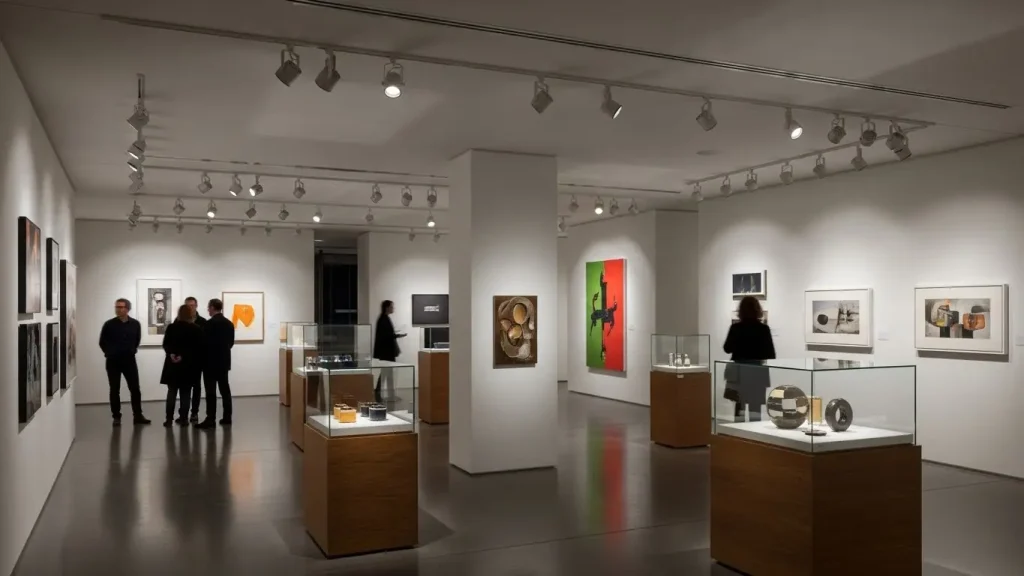
Track spotlights used in luxury retail, museums, corporate headquarters, and high-end public interiors demand:
- stable low-level dimming
- consistent behavior across multiple luminaires
- reliable group control and scene management
This is why many designers and project consultants are moving away from traditional phase-cut (Triac) and even 0–10V dimming, and are increasingly specifying DALI-2 systems instead.
In parallel, one driver brand is frequently named in both specifications and project discussions:
Tridonic DALI-2 drivers.
This article explains, from a project and system perspective, why DALI-2 has become the mainstream solution for track spotlights, why Tridonic drivers are often specified, and how they reduce technical and operational risk in commercial projects.
1. What DALI-2 Means for Track Spotlights
DALI-2 is not simply an incremental update to the original DALI protocol.
It is a more strictly defined and certified system standard, designed to ensure consistent behavior across devices and manufacturers.
For track spotlight applications, the key difference is not whether dimming is possible, but whether the system can deliver:
- stable performance at very low output levels
- uniform dimming across many luminaires
- predictable results in large installations
Figure 1 — Dimming Stability Comparison for Track Spotlights
| Dimming Method | Low-Level Stability | Flicker Risk | System Consistency |
|---|---|---|---|
| Phase-Cut (Triac) | Laag | Hoog | Laag |
| 0–10V | Medium | Medium | Medium |
| DALI-2 | Hoog | Very Low | Hoog |
Interpretation:
In commercial track spotlight systems, DALI-2 clearly outperforms traditional dimming methods in stability and system reliability, especially at low brightness levels.
2. Why Tridonic DALI-2 Drivers Are Frequently Specified for Track Spotlights
In professional projects, it is common for the driver brand to be specified independently of the luminaire brand.
The reason is simple:
for track spotlights, the driver determines:
- dimming curve behavior
- low-end stability
- group consistency
- long-term maintenance performance
Tridonic has long been recognized for:
- deep involvement in DALI standard development
- high driver consistency and reliability
- strong performance in large, system-based installations
In many high-end projects, specifying Tridonic drivers is not about preference—it is about risk control.
3. Core Value of Tridonic DALI-2 Drivers in Track Spotlight Applications
This section represents the technical and commercial core of the solution.
3.1 Ultra-Low-Level Flicker-Free Dimming
(Critical for Retail and Museum Lighting)
Retail and museum environments often require dimming down to 1% or lower without visible flicker or stepping.
Figure 2 — Low-Level Dimming Performance Curve
| Dimming Level | Generic Driver Behavior | Tridonic DALI-2 Behavior |
|---|---|---|
| 100%–30% | Stable | Stable |
| 30%–10% | Minor instability | Stable |
| 10%–1% | Flicker / jump | Smooth, flicker-free |
Interpretation:
At low output levels—where visual sensitivity is highest—Tridonic DALI-2 drivers maintain smooth and predictable performance.
3.2 Multi-Luminaire Consistency and Group Control
Track spotlight systems often include dozens or even hundreds of luminaires on the same control network.
Inconsistent driver behavior leads to:
- uneven brightness
- visible variation between fittings
- poor scene quality
Figure 3 — Output Consistency Across Multiple Track Spotlights
| Driver Type | Typical Output Deviation |
|---|---|
| Non-optimized driver | ±8–12% |
| Generic DALI driver | ±5–7% |
| Tridonic DALI-2 driver | ±2–3% |
Interpretation:
Lower deviation means more uniform visual appearance and higher perceived lighting quality—especially important in retail and corporate spaces.
3.3 Full Compatibility with DALI-2 Control Ecosystems
Because Tridonic drivers are fully DALI-2 certified, they integrate smoothly with:
- professional lighting control systems
- building management systems (BMS)
- complex zoning and scene logic
This level of compatibility is essential for projects where lighting is part of a wider automation strategy rather than a standalone system.
3.4 Long Lifetime and Reduced Maintenance Risk
From a lifecycle perspective, driver quality directly affects operating cost.
Table 1 — Lifecycle Impact of Driver Selection
| Aspect | Standard Driver | Tridonic DALI-2 Driver |
|---|---|---|
| Thermal stress | Higher | Lager |
| Expected lifetime | Medium | Long |
| Failure risk | Medium–High | Laag |
| Maintenance frequency | Higher | Lager |
Interpretation:
For commercial projects with long operating hours, driver stability significantly reduces maintenance effort and cost.
4. Typical Applications of Tridonic DALI-2 Track Spotlights
Tridonic DALI-2 driver solutions are commonly specified in:
- luxury retail and flagship stores
- museums, galleries, and exhibition spaces
- corporate headquarters and premium offices
- commercial showrooms
- airports and high-end public interiors
Where lighting quality, control precision, and long-term stability matter, DALI-2 with Tridonic drivers is a natural fit.
5. DALI-2 Track Spotlights vs Traditional Dimming Approaches
From a project decision perspective, the comparison is clear.
Table 2 — Project-Level Comparison of Dimming Solutions
| Criteria | Phase-Cut | 0–10V | DALI-2 + Tridonic |
|---|---|---|---|
| Low-level dimming | Arm | Medium | Uitstekend |
| Multi-lamp consistency | Laag | Medium | Hoog |
| System scalability | Laag | Medium | Hoog |
| Project risk | Hoog | Medium | Laag |
| Long-term maintenance | Hoog | Medium | Laag |
Key takeaway:
Large commercial projects succeed by minimizing system risk—not by minimizing individual component cost.
6. Key Checks When Selecting Tridonic DALI-2 Track Spotlights
Before finalizing a specification, project teams should confirm:
- genuine DALI-2 certified Tridonic driver
- suitable power range for the spotlight
- proper LED module–driver matching
- availability of CRI 90 / CRI 95 options
- effective glare control and beam selection
- full luminaire compliance with UL / ETL for the U.S. market
- proven commercial project references
These checks ensure that the theoretical advantages of DALI-2 translate into real-world performance.
7. Value of Tridonic DALI-2 in OEM / ODM Track Spotlight Projects
For brands and OEM/ODM customers, using Tridonic DALI-2 drivers provides:
- stronger technical credibility with designers
- easier access to high-end commercial projects
- reduced commissioning and after-sales risk
- alignment with international lighting standards
- a stable platform for global product lines
In premium projects, Tridonic often acts as a trusted technical benchmark, independent of luminaire branding.
8. FAQ About DALI-2 Dimmable Track Spotlight
Is the difference between DALI and DALI-2 really important?
Yes. DALI-2 ensures device consistency, which is critical in large systems.
Are Tridonic drivers more expensive?
Unit cost is higher, but system reliability and reduced project risk often justify the investment.
Is DALI-2 suitable for small projects?
Not always necessary, but ideal for medium and large commercial applications.
Is Tridonic mandatory for DALI-2 systems?
No, but it is one of the most trusted and widely specified options.
Is DALI-2 suitable for global projects?
Yes. It is an internationaally accepted commercial lighting standard.
9. Conclusie
To summarize:
- DALI-2 has become the de facto standard for high-end commercial lighting control
- Track spotlights place exceptional demands on driver performance
- Tridonic DALI-2 drivers deliver stability, consistency, and system reliability
- For designers, contractors, brands, and OEM partners, this is a risk-reduction decision, not merely a cost decision
Tridonic DALI-2 combined with professional track spotlights represents a proven, future-ready solution for demanding commercial environments.
Welcome to Cooperate
If you are planning a commercial interior lighting project and require track spotlight product matching or integrated lighting solutions, the following resources may be helpful:
- Contact Page — for general inquiries and project discussions
- OEM Inquiry — for private-label, OEM, or ODM cooperation
- Project Consultation — for evaluating system architecture and dimming strategies
- Download Catalog — to review commercial indoor lighting products
We support commercial interior lighting products and solution-based lighting systems for retail, office, hospitality, exhibition, and public-space projects.