 XHLUX
XHLUX
Table of contents
- 1. Why is precision architectural lighting important in modern projects
- 2. Design Philosophy & Core Product Features of Precision Architectural Lighting
- 3. Where Precision Architectural Lighting Excels in Project Design
- 4. Core Advantages of Precision Architectural Lighting
- 5. Limitations of Precision Architectural Lighting
- 6. Design Guidelines for Using Precision Architectural Lighting in Real Projects
- 7. FAQ About Precision Architectural Lighting
- 8. Conclusion
1. Why is precision architectural lighting important in modern projects
Precision Architectural Lighting (commonly abbreviated as PAL, or recognized under the Precision Lighting brand) has earned a strong reputation in the architectural lighting world for its:
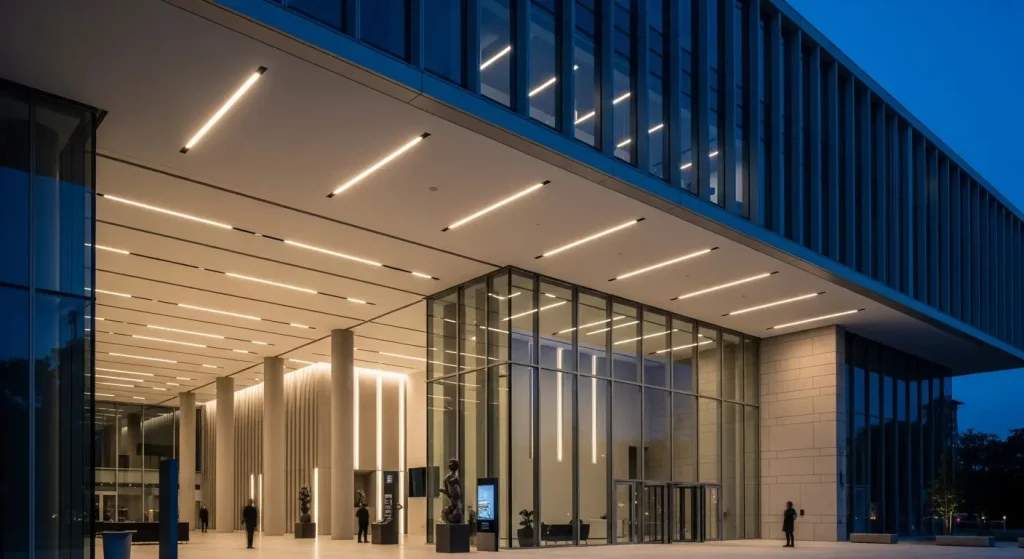
- Precision optics
- Minimalist industrial design
- High-quality materials
- Architectural-integration capabilities
Now part of Luminii Group, known for its advanced custom architectural lighting solutions.
Today’s projects demand much more than generic brightness. Designers expect lighting systems to deliver:
- High fidelity (CRI & color consistency)
- Precise beam control
- Optical quality suitable for art, commercial, or hospitality environments
- Architectural integration
- System consistency across fixtures
PAL is positioned exactly in this segment: premium-grade architectural lighting tools designed for projects where the quality of light is as important as the architecture itself.
This article explains where Precision Architectural Lighting excels, where it isn’t the ideal choice, and how to apply it effectively in real design projects.
2. Design Philosophy & Core Product Features of Precision Architectural Lighting
Precision Architectural Lighting is engineered around the idea that light—not the fixture—should shape spatial experience. Their products function as professional tools for creating architectural atmospheres rather than decorative accents.
2.1 Core Product Categories
PAL’s portfolio typically includes:
• Architectural Linear Lighting
- Recessed, surface, and pendant profiles
- Uniform illumination using high-quality optics
- Perfect for ambient or perimeter outlining
• Precision Spotlights
- Adjustable spot heads
- Multiple beam angles (10°–60°)
- Clean, sharp beams
- Ideal for artwork, sculpture, or highlight zones
• Recessed / Surface / Pendant Architectural Fixtures
- Minimalist housings
- Trimless options
- Options for glare control, cut-off, and shielding
• Light Engines + Interchangeable Optics
- TIR lenses
- Honeycomb louvers
- Zoom or adjustable lenses
- Interchangeable modules to support evolving project needs
2.2 Signature Characteristics
1. Precision Optics
Beam uniformity and tight beam control are PAL’s defining features.
ERCO lighting guide reinforces the importance of precise beam quality for architectural and gallery spaces.
2. Minimal Visual Presence
Fixtures aim to disappear into the ceiling or architecture.
Perfect for:
- Minimalist interiors
- High-end residential
- Luxury retail
- Art museums
3. Consistency & Customizability
PAL supports:
- Custom lengths (linear systems)
- Custom finishes
- Modular optic changes
- Precision mounting options
4. High CRI & Excellent Color Stability
Often CRI 90–95+ with SDCM < 3 for visual uniformity.
3. Where Precision Architectural Lighting Excels in Project Design
Below are the project types where PAL demonstrates the strongest performance and design impact.
3.1 High-End Residential / Luxury Homes / Minimalist Loft Spaces
Advantages in this category:
- Highlights material textures (stone, timber, concrete)
- Minimalist luminaires preserve clean architectural lines
- Adjustable beams can highlight artwork or feature walls
- Wall grazing and linear perimeter lighting enhance spatial depth
PAL’s clean beam quality is often superior to mainstream residential fixtures, giving interiors a refined, gallery-like atmosphere.
3.2 Galleries, Museums, Showrooms & Art Display Spaces
This is where PAL truly excels.
- High CRI (95+) reveals true colors in artwork
- Precision beam control reduces spill light
- Optional zoom lenses support changing exhibitions
- Accent lighting elevates sculpture, canvas textures, and installations
In environments where detail, color accuracy, and optical purity matter, PAL belongs among the top-tier solutions.
3.3 Modern Offices & Creative Workspaces
Today’s workplaces demand a balance of:
- Functional lighting
- Atmosphere
- Architectural clarity
- Glare-free illumination
PAL’s linear lighting and recessed spot systems enable:
- UGR-controlled illumination
- Balanced ambient + accent layers
- Comfortable lighting for long work hours
Signify’s Lighting Academy also emphasizes layered lighting for modern office well-being.
3.4 Boutique Hotels, Upscale Restaurants & High-End Public Spaces
PAL is ideal for hospitality projects that prioritize ambience.
Benefits include:
- Precise wall grazing for textured materials
- Soft ambient linear light for mood
- Clean accent lighting for architectural features
- Superior contrast control for emotional impact
Premium hospitality relies on atmosphere; PAL fixtures deliver refined lighting gradients that elevate guest experience.
3.5 Premium Retail Environments
High-end retail requires lighting that:
- Enhances product materiality
- Communicates luxury
- Shapes brand identity
- Is flexible for changing merchandise
PAL’s precise beams and high CRI make merchandise look richer and clearer.
Special applications:
- Fitting rooms
- Feature displays
- Window showcases
- Luxury brand boutiques
4. Core Advantages of Precision Architectural Lighting
PAL’s product philosophy results in several technical and aesthetic advantages.
4.1 Precision Optics
- Clean beam edges
- No unintended spill
- Sharp cutoff
- Multiple beam angles
- Professional TIR lenses
ERCO, a leader in optical engineering, reinforces why precision optics matter.
4.2 High CRI & Strong Color Consistency
Perfect for environments where visual accuracy is non-negotiable:
- Art
- Fashion
- Hospitality
- High-end retail
- Material-focused interiors
4.3 Minimalist Design & Architectural Integration
PAL fixtures are designed to be:
- Visually discreet
- Compact
- Trimless in recessed versions
- Harmonized with modern architectural lines
4.4 Flexible Installation Options
Compatible configurations include:
- Recessed
- Surface-mounted
- Pendant
- Track-mounted
This versatility helps designers maintain system coherence across different space types.
4.5 Customizability
PAL supports bespoke solutions:
- Custom colors
- Custom beam optics
- Custom mounting adaptors
- Custom lengths for linear systems
Suitable for premium design-driven spaces.
5. Limitations of Precision Architectural Lighting
PAL is a powerful design tool—but not universally applicable.
5.1 High Cost
Precision engineering and optical quality come at a premium.
Not suitable for:
- Budget-sensitive projects
- Cost-controlled commercial rollouts
- Mid-tier residential installations
5.2 Longer Lead Times
High-end architectural products often require:
- Export timelines
- Custom finishes
- Longer engineering cycles
Large-scale urgent projects may not accommodate this.
5.3 Higher Maintenance & Spare-Part Costs
Due to specialized LED and optics, replacement components are more expensive.
5.4 Not Suitable for High-Output Industrial Applications
PAL focuses on precision—not large-output luminaires.
Not ideal for:
- Warehouses
- Industrial halls
- Hypermarkets
- Large outdoor projects
5.5 Not Suitable for OEM/ODM/SKD Business Models
PAL does not support:
- OEM production
- SKD/CKD manufacturing
- Mass-market distribution models
This limits applicability in international export or large-chain deployment.
5.6 Not Ideal for Large-Scale Chain Stores or Fast-Rollout Businesses
Costs, supply-chain pace, and maintenance complexity make PAL impractical for:
- Chain retail (mid-tier)
- Franchise rollouts
- Large-scale multi-city deployments
6. Design Guidelines for Using Precision Architectural Lighting in Real Projects
For optimal use, PAL must be treated as a precision lighting instrument, not a generic light source.
6.1 View Luminaires as “Optical Tools,” Not Decorative Elements
Prioritize:
- Beam angle
- Lux levels
- Wall-wash uniformity
- Glare control
- Material interaction
Form follows optical function.
6.2 Plan Lighting Early in the Architectural Stage
Important considerations include:
- Ceiling type
- Trimless integration depth
- Recessed openings
- Linear system routing
- Ceiling service coordination
Late-stage addition increases installation difficulty.
6.3 Combine Ambient + Accent + Wall-Wash + Grazing
A PAL-based lighting strategy should always include multiple layers.
This yields:
- Spatial depth
- Emotional tone
- Architectural clarity
- Material emphasis
6.4 Pre-Plan Control Systems
PAL works with:
- DALI
- 0–10V
- Casambi (depending on product range)
- Scene-control systems
DALI reference
6.5 Plan Supply, Maintenance & Spare Parts Early
Especially for international or remote projects.
7. FAQ About Precision Architectural Lighting
Q1. Is PAL suitable for normal residential settings?
Only for high-budget or design-focused homes. Overkill for basic renovations.
Q2. Can PAL be used in large commercial projects?
Yes, but evaluate:
- Cost
- Lead time
- Maintenance
- Lumen requirements
If large-output lighting is required, other brands may be better suited.
Q3. How is PAL different from mainstream commercial lighting?
PAL focuses on:
- Optical precision
- Architectural integration
- Minimal form factors
- Professional-grade beam control
- High visual performance
Q4. What if clients want similar effects with a lower budget?
They may consider XHLUX Lighting for:
- Architectural linear lighting
- Commercial-grade spotlights
- Cost-effective track systems
- OEM/ODM-friendly projects
8. Conclusion
Precision Architectural Lighting excels in:
- Light quality
- Beam precision
- Architectural integration
- Minimalist modern aesthetics
- Material and artwork presentation
It is best suited for:
- Luxury residences
- Galleries and museums
- Boutique hotels
- Creative offices
- Showrooms
- High-end retail
However, PAL is not ideal for:
- Budget-controlled projects
- High-output industrial lighting
- Fast rollout or chain store environments
- OEM/SKD-driven export projects
PAL is, above all, a designer’s lighting tool, crafted for beauty, accuracy, and architectural harmony.
For scalable commercial, budget-optimized, or OEM-driven needs, XHLUX Lighting remains a complementary and practical alternative.