 XHLUX
XHLUX
Table of contents
- 🔍 What Is an Integrated LED Downlight?
- 🧠 What Does “Integrated” Mean in LED Lighting?
- 🚨 Why It Matters in 2025: Industry Trends & Growth
- 🔧 Design & Components of Integrated LED Downlights
- ⚖️ Integrated vs Non-Integrated LED Downlights
- 🏡 Where to Use Integrated LED Downlights
- 🔋 How Long Do Integrated LED Downlights Last?
- 🌡️ Integrated Downlights & Heat Management
- 🧰 Installation Tips for Integrated LED Downlights
- ✅ Benefits of Integrated LED Downlights
- 🔎 How to Choose the Best Integrated LED Downlights
- 📈 Integrated LED Downlight Market Outlook (2025–2030)
- 🤔 Common Questions About Integrated LED Downlights
- 🏁 Conclusion: Are Integrated LED Downlights Right for You?
- 📌 Related Articles
🔍 What Is an Integrated LED Downlight?
An integrated LED downlight is a type of recessed or surface-mounted light fixture where the LED light source is built into the fitting itself, as opposed to using a replaceable bulb. This means the LED chip and the driver are integrated into the unit, creating a compact, efficient, and often longer-lasting lighting solution.
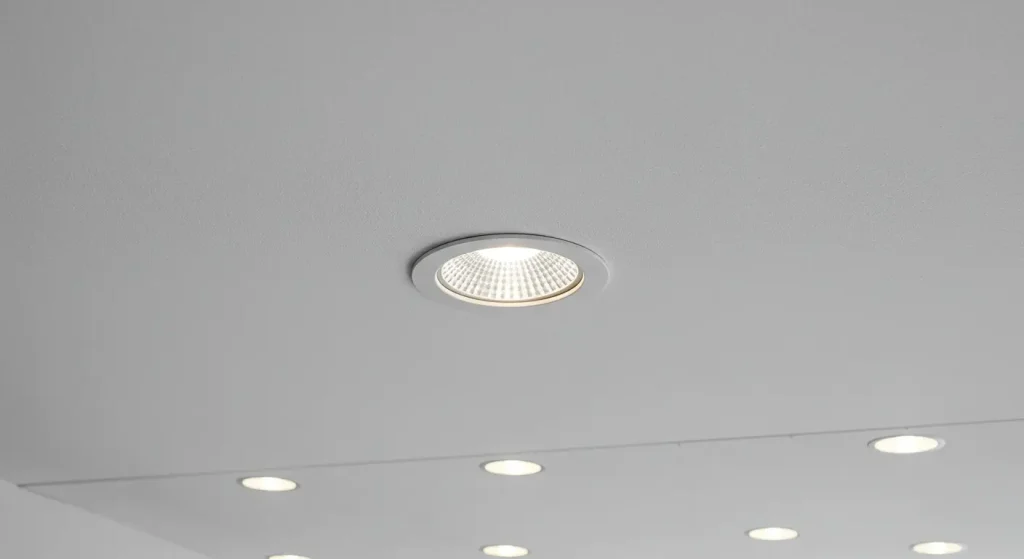
With energy efficiency, low profile design, and longer lifespans, integrated LED downlights are increasingly becoming the go-to choice for residential, commercial, and hospitality lighting.
But what exactly does “integrated” mean? And how does it compare to traditional fixtures that use GU10 or MR16 bulbs? This guide breaks it all down — and helps you determine if integrated LED downlights are the right choice for your next project.
🧠 What Does “Integrated” Mean in LED Lighting?
| Type | Description |
|---|---|
| Integrated LED | LED chip is built directly into the fixture. Cannot be replaced separately. |
| Non-integrated LED | Light source (usually a GU10 or MR16 bulb) is replaceable and separate from the fixture. |
Integrated LED downlights are designed as a single complete unit. Once the LED reaches the end of its lifespan (usually 30,000–50,000 hours), the entire fixture is typically replaced, not just the bulb. This may sound like a disadvantage, but because LED degrade very slowly, the need to replace the unit is rare in most real-world scenarios.
🚨 Why It Matters in 2025: Industry Trends & Growth
According to the 2025 Global LED Lighting Market Outlook by Grand View Research, the LED lighting market is projected to surpass \$160 billion by 2026, driven by integrated smart lighting systems and energy efficiency mandates worldwide.
- 🔋 Integrated LED lights are 60–80% more efficient than incandescent or halogen.
- 🏗️ Integrated luminaires are more compatible with modern lighting control systems (smart home apps, DALI, Casambi, Zigbee).
- 🌍 The EU’s updated EcoDesign Directive now discourages replaceable light sources with shorter lifespans, favoring integrated designs.
In essence, integrated LED downlights are future-proof.
🔧 Design & Components of Integrated LED Downlights
Understanding the structure of integrated LED downlights helps in recognizing their value.
📦 Typical Components:
- LED Chip: Usually SMD or COB; determines brightness and color temperature.
- Heat Sink: Usually made of aluminum; disperses heat efficiently to extend life.
- Driver: Converts mains power to a low voltage suitable for LED operation.
- Housing & Trim: Aesthetic outer layer, often fire-rated or IP-rated.
- Diffuser/Lens: Helps shape the beam (wide flood, narrow spot, etc.)
Pro Tip: Higher-end integrated downlights come with advanced features like adjustable beam angles, dimmability (0–10V, TRIAC, DALI), and tunable white capabilities.
⚖️ Integrated vs Non-Integrated LED Downlights
| Feature | Integrated LED Downlight | Non-Integrated LED Downlight |
|---|---|---|
| Replaceable Bulb | ❌ No | ✅ Yes |
| Efficiency | ✅ Higher (better thermal coupling) | ❌ Lower |
| Aesthetic Profile | ✅ Sleek, low-profile | ❌ Often bulkier due to bulb & housing separation |
| Initial Cost | ⬆️ Higher upfront | ⬇️ Lower |
| Maintenance | ✅ Lower (less frequent replacement) | ❌ Higher (bulb failure more common) |
| Smart Lighting Compatibility | ✅ Full compatibility (DALI, Zigbee, Casambi, etc.) | ❌ Limited |
👉 If you’re looking for modern lighting solutions with minimal hassle, integrated LED downlights are the better option in most professional environments.
🏡 Where to Use Integrated LED Downlights
| Application | Recommended Wattage | Recommended IP Rating |
|---|---|---|
| Living Rooms | 7–10W | IP20 |
| Kitchens | 10–12W | IP44 (above cooktops) |
| Bathrooms | 10W | IP65 (wet zones) |
| Offices | 9–12W | IP20 or IP44 |
| Retail & Showrooms | 12–15W with CRI 90+ | IP20 |
Integrated LED downlights come in multiple beam angles, CCT options (2700K–6500K), and CRI ratings to suit various needs — from task lighting to accent illumination.
🔋 How Long Do Integrated LED Downlights Last?
A major concern buyers have is the non-replaceable nature of the light source. However, the lifespan of an integrated LED downlight can exceed 50,000 hours, which translates to over 17 years of usage at 8 hours per day.
Many high-quality brands offer 5–10 year warranties, and reputable manufacturers conduct LM-80 and TM-21 testing to prove their longevity.
Expert Insight: “Most integrated LED will outlast the finish of your ceiling — not just the bulb.”
— Alan Hughes, Lighting Consultant, LUXLIVE Europe 2025
🌡️ Integrated Downlights & Heat Management
Unlike traditional bulbs that radiate heat into the room, integrated LED downlights are engineered to manage thermal dissipation internally. That’s why they:
- Have precision-designed heat sinks
- Are fire-rated (e.g., 30/60/90-minute compliance)
- Are compatible with insulation coverable designs
💡 Always check the manufacturer’s fire and insulation compatibility rating when buying integrated LED models for ceiling installations.
🧰 Installation Tips for Integrated LED Downlights
Most integrated LED downlights are hardwired, and some models come with plug-and-play drivers.
⚙️ Steps to Install:
- Turn off the power from the mains.
- Cut out the required hole (check fixture cutout size).
- Connect the wiring to the LED driver and mains.
- Push the fixture into the ceiling using spring clips.
- Secure and test.
⚠️ If you’re not licensed to do electrical work in your country (e.g., EU or AU), always consult a certified electrician.
✅ Benefits of Integrated LED Downlights
- ✅ No bulb replacements
- ✅ Lower power bills
- ✅ Modern, minimal design
- ✅ Higher compatibility with automation
- ✅ Better thermal & optical performance
- ✅ Less maintenance over the product life cycle
🔎 How to Choose the Best Integrated LED Downlights
When shopping in 2025, consider:
| Specification | Why It Matters |
|---|---|
| CRI (Color Rendering Index) | CRI >90 is ideal for true color representation in homes, galleries. |
| CCT (Color Temperature) | Choose between 2700K (warm) to 6000K (daylight) based on space use. |
| Beam Angle | Wider angles (90°+) for general lighting; narrow (30°) for accents. |
| IP Rating | Especially important in bathrooms or kitchens. |
| Dimmability | Ensure it’s compatible with your dimmer type (TRIAC, DALI, etc.). |
| Smart Integration | Look for Zigbee, Tuya, or Casambi enabled downlights. |
📈 Integrated LED Downlight Market Outlook (2025–2030)
The global market is shifting strongly toward integrated lighting systems. Here’s what analysts predict:
- 📈 35% CAGR expected in integrated downlights through 2030 (Source: Statista 2025)
- 🌍 Smart integration will dominate new construction by 2027
- 💡 EU & US building codes will favor non-replaceable LED designs for efficiency and safety
🤔 Common Questions About Integrated LED Downlights
Q1: What happens when the LED stops working?
A: The whole fixture typically needs replacing — but with 50,000 hours lifespan, that’s often 15+ years of use.
Q2: Can integrated LED downlights be used in bathrooms?
A: Yes, but choose models with IP65 ratings for safety in wet zones.
Q3: Are integrated LED lights dimmable?
A: Many are — but always confirm if it’s TRIAC, DALI, 0–10V, or other types.
🏁 Conclusion: Are Integrated LED Downlights Right for You?
If you’re planning a new build or renovation in 2025, integrated LED downlights are likely the most efficient, stylish, and future-ready lighting solution available.
They are eco-friendly, cost-effective over the long term, and offer unmatched versatility in lighting design — from kitchens and offices to galleries and hotels.
Whether you’re a homeowner, lighting designer, or contractor, understanding the shift toward integrated LED downlighting is essential for smart lighting decisions.
📌 Related Articles
- Best Fire-Rated LED Downlights for Ceilings in 2025
- How to Replace Old GU10 Fixtures with Integrated LED Downlights
- Smart LED Lighting: Zigbee vs Casambi vs DALI Explained