 XHLUX
XHLUX
Table of contents
- Why This Matters
- 1 LED-first pendants: efficiency + flexibility
- 2 Tunable white & human-centric pendant lighting (health + performance)
- 3 Acoustic pendant luminaires — two problems, one fixture
- 4 Networked controls: the new baseline (DALI-2, D4i, Bluetooth Mesh, PoE)
- 5 Sculptural, modular and statement pendants
- 6 Sustainable & natural materials — visible responsibility
- 7 Linear & modular pendant systems for open plans
- 8 Low-glare optics + high CRI (retail & hospitality)
- 9 Multifunction pendants — sensors, speakers, chargers (integrations)
- 10 Data, telemetry and lifecycle features (smarter maintenance)
- Quick Comparison Table
- Buying & Spec Checklist
- Short Case Study Examples
- Risks & Pitfalls (what to avoid)
- Source Reference
Commercial pendant lighting in 2025 is about doing more with less: LED efficiency, human-centric tunable white, acoustic integration, smart networked control, and natural/sustainable materials. Pendants are no longer just decoration — they’re tools for brand, comfort, and energy savings.
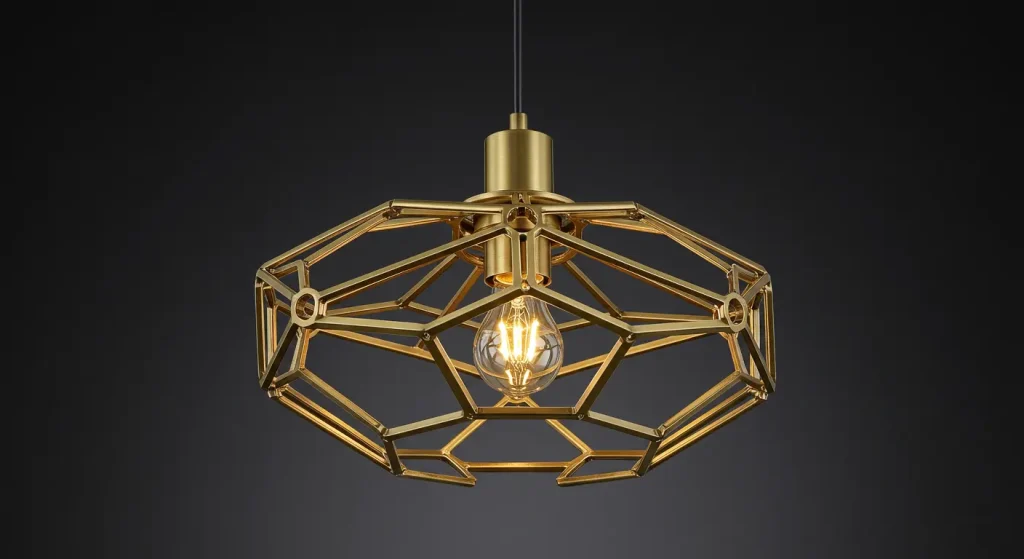
Modern Commercial Pendant Lighting Trends You Need to Know — 2025 guide for specifiers, designers, and facilities managers. Learn about tunable white pendants, acoustic pendants, smart control (DALI/Bluetooth), sustainable materials, and design-forward fixtures.
Why This Matters
If you run a store, hotel, restaurant, office or campus, pendant lights now influence all of these things at once:
- Brand and mood
- Worker comfort and health
- Acoustics and speech clarity
- Energy and maintenance costs
That mix explains why specifiers pick pendants first in many commercial projects and why manufacturers are innovating fast. LED and smart controls are driving market growth; expect continued adoption through the decade. (Grand View Research)
1 LED-first pendants: efficiency + flexibility
What’s changing: Nearly every new pendant is LED-based. LEDs give high lumens-per-watt, long life, and small form factors that let designers create thin rings, slim linear bars, and layered sculptures. The LED lighting market is growing fast and is expected to keep expanding through 2030.
Why it matters: Lower energy use, smaller fixtures, and easier dimming mean lower operating costs and more design freedom. For commercial clients, LED pendants reduce total cost of ownership (energy + maintenance).
Practical tip: When you spec pendants, ask for delivered lumens (not just LED chip lumens), fixture efficacy (lm/W), LM-79 photometric reports, and LM-80/TM-21 lumen maintenance data. Those documents help estimate real-life performance and maintenance cycles.
2 Tunable white & human-centric pendant lighting (health + performance)
What’s changing: Tunable white pendants let a space change color temperature (CCT) through the day. Designers use cooler, brighter tones during work hours and warmer tones for evenings to support circadian rhythms and comfort. Federal and large institutional projects increasingly specify circadian or human-centric lighting strategies. (ies.org)
Why it matters: Studies and guidance from lighting bodies show tunable white improves alertness, mood, and perceived comfort when used correctly. For workplaces and hospitality, this can improve productivity and guest satisfaction.
Practical tip: For stores or restaurants that are open long hours, consider pendants with tunable white (3000K–5000K range) and integrate them into a control system that automates schedules, rather than letting staff change settings manually.
3 Acoustic pendant luminaires — two problems, one fixture
What’s changing: Acoustic pendants combine lighting and sound absorption in one product. They use felt, PET recycled fibres, or wool blends to cut reverberation while delivering light. Manufacturers and specifiers now choose these in open offices, lounges, restaurants, and lobbies. (Luxxbox)
Why it matters: Open-plan spaces get noisy. Acoustic pendants reduce noise and improve speech clarity without needing extra ceiling panels. They also let designers add color and texture via felt finishes.
Practical tip: Check NRC (noise reduction coefficient) and delivered lumens. Compare the acoustic rating (e.g., NRC 0.6–1.0 is high) and lumens-per-watt — some acoustic pendants trade sound performance for lower light output. Use acoustic pendants in clusters above meeting alcoves or over collaboration tables.
4 Networked controls: the new baseline (DALI-2, D4i, Bluetooth Mesh, PoE)
What’s changing: Commercial pendants are shipped ready for building networks. Wired standards like DALI-2 / D4i give precise control and diagnostics; wireless solutions (Bluetooth Mesh, Zigbee) make retrofits simpler. PoE (Power over Ethernet) is growing for low-voltage smart lighting too. Industry bodies and award programs show DALI and networked systems gaining traction. (led-professional.com)
Why it matters: Controls reduce energy (schedules, daylight harvest), give analytics (energy use, lamp health), and enable human-centric scenes. For multi-site operators, remote management reduces on-site labor.
Practical tip: Decide early: for new builds choose wired DALI-2 if you want long-term reliability and per-fixture addressing; for retrofit projects consider Bluetooth Mesh. Always verify driver compatibility (DALI vs 0-10V vs phase-cut) before ordering.
5 Sculptural, modular and statement pendants
What’s changing: Pendants are now a primary brand surface in commercial spaces. Curved rings, asymmetric chains, oversized globes and modular bars are popular. Designers treat pendants like art that also performs as task or accent light. (decorilla.com)
Why it matters: A well-chosen pendant can anchor a lobby, create a feature above a dining area, or signal a brand personality in a retail store. Sculptural forms also draw social media attention — a real plus for hospitality and retail.
Practical tip: For large-scale statement pendants, confirm shipping and on-site assembly needs early. Many sculptural fixtures ship in sections and require crane or lift access. Ask the vendor for detailed install drawings.
6 Sustainable & natural materials — visible responsibility
What’s changing: Designers prefer recycled metals, reclaimed wood, recycled glass, PET felt and low-VOC fabrics. Consumers and tenants notice visible sustainability and often prefer spaces that show it. Decorative lighting and pendant makers add eco-credentials and EPDs. (Better Homes & Gardens)
Why it matters: Sustainability supports marketing, ESG reporting, and sometimes procurement rules. For some public projects, Buy-American / domestic content and environmental product declarations (EPDs) influence supplier choice.
Practical tip: Ask for material data (recycled content percentage, EPDs) in your RFP. If claiming “recycled” or “eco,” request proof and cleaning/maintenance guidance for the material.
7 Linear & modular pendant systems for open plans
What’s changing: Long linear pendants and joinable modules give continuous, even illumination for work aisles, open desks, and retail gondolas. They’re easier to aim and can be combined with acoustic elements. Designers like linear pendants for clean ceiling lines and flexible zoning. (Signlite LED)
Why it matters: Linear systems simplify install and maintenance. They also create crisp visual runs that match modern architecture and give even task lighting for desks and displays.
Practical tip: Balance spacing and beam angles: for work surfaces, target maintained illuminance (300–500 lux) with even distribution. Use lumen output and photometric files to model spacing before ordering.
8 Low-glare optics + high CRI (retail & hospitality)
What’s changing: Low-glare lenses, deep baffles, and precision reflectors are common. At the same time, high color quality (CRI ≥ 90, robust R9) is now expected where appearance matters: clothing, food, skin tones, and art all look better with higher CRI. IES/DOE guidance underscores the user benefits of good color rendering.
Why it matters: Good optics increase perceived quality and reduce fatigue. In retail, correct color rendering helps sales. In hospitality, it improves guest satisfaction.
Practical tip: Ask for UGR (Unified Glare Rating) or vendor glare statements for low ceilings and for CRI plus R9 values for fashion/food spaces.
9 Multifunction pendants — sensors, speakers, chargers (integrations)
What’s changing: New pendants include built-in occupancy sensors, microphones for analytics, Bluetooth speakers, and even wireless charging pads. Trade shows (Euroluce, Milan) have highlighted multifunction fixtures that combine lighting with tech. (Houzz)
Why it matters: Fewer ceiling penetrations, neater installs, and consolidated maintenance when one unit performs multiple functions. These fixtures also add user convenience in hospitality and workplaces.
Practical tip: If integrating speakers or sensors, verify power draw, heat limits, and interference with lighting dimming. Ensure IT and AV teams sign off on network connections.
10 Data, telemetry and lifecycle features (smarter maintenance)
What’s changing: Networked pendants can report runtime, relay driver temperature, and signal failures. This data streamlines maintenance and helps predict replacements. Controls market reports show rising investment in connected lighting systems across commercial projects. (Archive Market Research)
Why it matters: Predictive maintenance reduces downtime and lowers lifecycle costs. For portfolios, it helps central teams prioritize site visits.
Practical tip: Include basic telemetry requirements in specs: runtime counters, DALI diagnostics or equivalent, and a preferred cloud/commissioning platform.
Quick Comparison Table
| Use case | Trend priority | Recommended pendant features |
|---|---|---|
| Hotel lobby | Sculptural design, tunable accent, brand color | Large-ring pendants, tunable white, high CRI, DALI scenes |
| Open office | Acoustic + linear lighting | Acoustic pendants, linear modules, Bluetooth/DALI control |
| Restaurant/bar | Mood + low glare | Warm CCT (2700–3000K), dimmable, decorative materials |
| Retail (fashion) | High CRI + spot accents | High CRI (≥90), narrow beams, tunable white for window displays |
| Education / library | Visual comfort + acoustics | Acoustic pendants, even distribution, durable materials |
Buying & Spec Checklist
- Specify delivered lumens, fixture efficacy (lm/W), CRI and R9.
- Require LM-79 photometrics and LM-80/TM-21 lumen maintenance.
- If you want per-fixture control, require DALI-2 / D4i support; for retrofit, allow Bluetooth Mesh options.
- For acoustic pendants, ask for NRC and material recycled content.
- For tunable white, define the required CCT range and scheduling behavior.
- Ask for installation drawings, shipping splits, and service access for cleaning.
- Confirm warranty, RMA, and spare parts availability.
Short Case Study Examples
Retail pop-up / window: Use small sculptural pendants with 500–750 lux at product surfaces, tunable white for day/night shifts, plus DALI scenes. This helps the product “pop” while controlling energy. (Designers use accent lux levels to create contrast and focus.)
Hybrid office hub: Replace a grid of recessed troffers with linear pendants + acoustic circular pendants over lounge zones. Add Bluetooth Mesh for quick commissioning in a retrofit. Result: reduced reverberation, better daylight blending, and easier scene control for meetings.
Boutique restaurant: Big sculptural pendants over banquettes, warm 2700K with dimming and low glare optics, natural wood/matte metal finishes to support brand and comfort.
Risks & Pitfalls (what to avoid)
- Ignoring glare — a beautiful pendant can still cause discomfort if optics aren’t specified. Ask for UGR or physical baffle info.
- Under-spec’d controls — mismatched drivers and controls cause flicker or poor dimming. Match driver protocol (DALI vs 0-10V) before order.
- Overlooking maintenance — statement pendants may require special cleaning or bulb replacement methods. Get a service plan.
- Not verifying acoustic claims — some products market “acoustic look” but have low NRC. Confirm ratings with test data.
Source Reference
I reviewed recent industry reports and trade guidance, plus manufacturer product data and design press to capture both technical and stylistic trends. Key sources include: Grand View Research on LED / decorative lighting market growth, GSA/DOE and IES guidance on human-centric lighting, DALI Alliance awards and Bluetooth market updates for controls, and manufacturer case studies for acoustic pendants. These sources back the market and technical claims above. (Grand View Research, ies.org, led-professional.com, Bluetooth® Technology Website, Cooper Lighting Solutions, Better Homes & Gardens)