 XHLUX
XHLUX
In the high-pressure, fast-paced environment of a commercial kitchen, lighting is far more than a utility. It is one of the most critical operational systems you have. It is a fundamental tool for safety, the first line of defense against sanitation failures, and a key factor in staff efficiency and morale. Proper lighting isn’t just about seeing; it’s about preventing accidents, ensuring cleanliness, and producing high-quality food consistently.
Navigating the web of commercial kitchen lighting requirements, however, can feel like a daunting task. The regulations are a complex patchwork from various governing bodies—the FDA, OSHA, NSF International, and local health departments—each with its own set of stringent rules. For a restaurant owner or facility manager, the fear is real: one failed health inspection due to inadequate or non-compliant lighting can lead to fines, forced closures, and damage to your reputation.
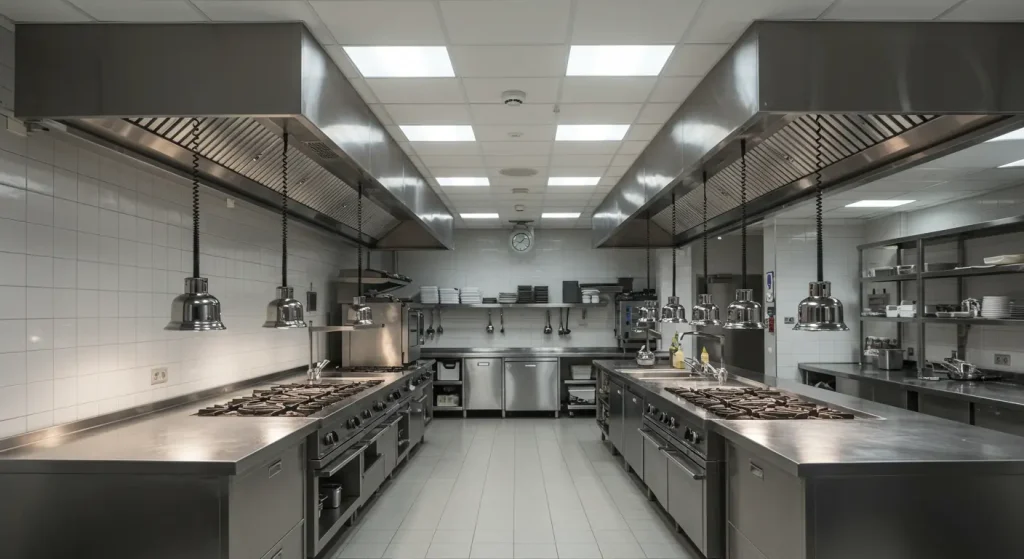
This guide is designed to be your comprehensive roadmap to compliance and operational excellence. We will demystify the standards, translating arcane codes into a practical, actionable checklist. We will move beyond the “what” to explain the “why,” helping you understand the crucial role lighting plays in a safe and sanitary kitchen. From health code lighting standards on brightness to the specific hardware required, this is your definitive resource for designing a lighting system that is not just compliant, but also safer, more efficient, and built to withstand the rigors of a professional kitchen.
Why Commercial Kitchen Lighting Standards Are Non-Negotiable
Before selecting a single fixture, you must understand the three core pillars of compliance. These are the standards that health inspectors live by.
1. Brightness Levels (Foot-Candles): The FDA Food Code Mandate
The most frequently cited requirement revolves around the intensity of light, measured in foot-candles (fc). A foot-candle is a measurement of light intensity on a surface one foot away from the source. The FDA Food Code provides a clear, zone-based standard that is widely adopted by local health departments across the United States.
| Minimum Light Intensity | Location / Activity Zone | Rationale & Importance |
|---|---|---|
| 50 foot-candles (540 lux) | Food preparation surfaces (chopping, mixing, etc.), utensil-washing areas, food inspection areas, and areas where equipment like slicers and grinders are used. | Maximum Detail Visibility. This level is required to ensure staff can clearly see what they are doing, accurately assess food quality, identify physical contaminants, and effectively clean surfaces and equipment. |
| 20 foot-candles (220 lux) | Walk-in refrigerators, dry food storage areas, hand-washing stations, dishwashing areas (loading/unloading), and toilet rooms. Also applies to dining areas during cleaning periods. | General Task Visibility. Sufficient light for safely navigating the space, reading labels on shelves, identifying items, and performing general cleaning tasks. |
| 10 foot-candles (110 lux) | Corridors, changing rooms, and storage closets. | Safe Passage. The minimum level required for safe movement and general orientation within the facility. |
2. Fixture Construction: The NSF Seal of Approval
Not all fixtures are created equal. In a food environment, the fixture itself must not become a source of contamination. This is where NSF International certification becomes critical. An NSF certified lighting fixture has been independently tested to meet stringent standards for use in food zones.
Key requirements for an NSF-rated fixture include:
- Smooth and Easily Cleanable: The housing must be free of cracks, crevices, or exposed fasteners where grease, moisture, and bacteria can accumulate.
- Corrosion-Resistant: The materials must withstand harsh cleaning chemicals and constant moisture without degrading.
- Durable Construction: The fixture must be robust enough to resist accidental impacts.
- Non-Toxic Materials: All components must be made of materials that are safe for a food environment.
Expert Insight: Specifying NSF-certified lighting is the single best way to ensure your fixtures will pass a health inspection. It’s a clear signal to inspectors that you have prioritized sanitation in your equipment selection.
3. Physical Protection: Sealing and Shatterproofing
Kitchens are harsh environments with high heat, steam, grease, and high-pressure spray-downs during cleaning. Your lighting must be built to withstand this abuse.
- Shatterproof Requirement: Per the FDA Food Code (6-202.11), light bulbs must be shielded, coated, or otherwise shatter-resistant in areas where there is exposed food, clean equipment, or unwrapped single-service articles. This is to prevent glass shards from contaminating food in the event of a bulb breaking. Modern LED fixtures with durable polycarbonate lenses typically meet this requirement inherently.
- Ingress Protection (IP) Ratings: The IP rating defines how well a fixture is sealed against solids (like dust) and liquids (like water). This is arguably the most important specification for fixture longevity in a kitchen.
| IP Rating | Protection Against Solids (First Digit) | Protection Against Liquids (Second Digit) | Kitchen Application Suitability |
|---|---|---|---|
| IP65 | 6 (Dust Tight) | 5 (Protected against low-pressure water jets) | Good for general kitchen areas, but may not be sufficient for direct, high-pressure hose downs. |
| IP66 | 6 (Dust Tight) | 6 (Protected against high-pressure water jets) | The ideal standard for most kitchen areas. This fixture can withstand the rigorous cleaning protocols common in commercial kitchens. |
| IP67 | 6 (Dust Tight) | 7 (Protected against temporary immersion in water) | Exceeds most kitchen needs but provides an extra layer of robust protection, suitable for the most demanding environments. |
How to Choose the Right Lighting for a Commercial Kitchen
With the requirements understood, you can now select the appropriate hardware.
The Workhorse: Vapor Tight / Vapor Proof Fixtures
This is the go-to category for most commercial kitchen lighting applications. Vapor tight lighting fixtures are fully sealed and gasketed units designed specifically for harsh, wet environments.
- Key Features: They typically feature a durable polycarbonate housing and lens, stainless steel clips, and carry high IP ratings (IP65/IP66/IP67).
- Compliance: Many high-quality vapor tight fixtures are also NSF certified, making them a complete, one-stop solution for compliance. Manufacturers that specialize in performance lighting, such as XHLUX, offer a range of vapor tight fixtures engineered specifically to meet these stringent kitchen and food processing standards.
High-Temperature Fixtures
Standard LED fixtures can fail prematurely when exposed to the high ambient heat generated by commercial ovens, ranges, and fryers. For areas directly above this equipment, you must specify fixtures that are explicitly rated for high-temperature environments (e.g., up to 120°F / 50°C or higher).
Recessed Lighting
In areas like kitchen offices, dry storage, or corridors adjacent to the main kitchen, recessed lighting can be used. However, it must be “wet location rated” and feature a lensed or fully sealed trim to prevent moisture and grease from entering the ceiling plenum.
What are The Commercial Kitchen Lighting Standards
Meeting the code is the minimum. A truly well-lit kitchen also focuses on performance, efficiency, and staff well-being.
- Color Rendering Index (CRI): While not a health code requirement, CRI is crucial for kitchen operations. A high CRI (85+) ensures that chefs can accurately judge the color, freshness, and doneness of food, from a perfectly seared steak to the vibrant colors of fresh vegetables.
- Glare Control: Stainless steel surfaces are highly reflective. A poor lighting layout can create intense glare, leading to eye strain, fatigue, and headaches for staff. Position fixtures thoughtfully and consider using fixtures with diffused or frosted lenses to soften the light and minimize specular reflections.
- Energy Efficiency & ROI: Modern LED vapor tight fixtures are dramatically more efficient than the fluorescent fixtures they replace. They can reduce lighting energy consumption by over 60% and, with lifespans exceeding 50,000-100,000 hours, they virtually eliminate the maintenance costs and kitchen downtime associated with frequent bulb and ballast replacements. Look for DLC-certified products to qualify for potential energy rebates.
How to Maintain Commercial Kitchen Lighting
Installing a compliant system is only step one. Proper maintenance is required to ensure it remains compliant and effective.
- Establish a Cleaning Schedule: Grease and dust buildup on fixtures can drastically reduce light output, potentially dropping your foot-candle levels below the legal requirement. Fixtures should be wiped down regularly as part of the kitchen’s overall cleaning protocol.
- Use Proper Cleaning Techniques: Clean fixtures when they are turned off and cool. Use non-abrasive cloths and food-safe detergents to avoid damaging the lenses.
- Perform Regular Inspections: Once a month, do a quick visual inspection of all fixtures. Look for signs of moisture ingress, cracked lenses, failing gaskets, or flickering LEDs, and address any issues promptly.
Conclusion
Meeting commercial kitchen lighting requirements is not about checking boxes; it is a fundamental component of a well-run, professional operation. It is an investment in the safety of your staff, the sanitation of your food product, and the overall efficiency of your kitchen.
By building your lighting plan on the three pillars of compliance—meeting the FDA’s foot-candle standards, specifying robust and cleanable NSF certified lighting fixtures, and ensuring they are sealed against the harsh environment with high IP ratings—you create a foundation for success. By layering on smart design choices like high CRI and glare control, you create a kitchen that is not just compliant, but one that is safer, more productive, and a better environment for the culinary professionals at its heart.