 XHLUX
XHLUX
Table of contents
- 1. What Is Adjustable Recessed Lighting and How It Works
- 2. Core Benefits of Adjustable Recessed Lighting
- 3. Best Applications for Adjustable Recessed Lighting Design
- 4. Lighting Design Tips and Matching Techniques
- 5. How to Choose the Right Adjustable Recessed Downlight for Your Project
- 6. Recommended OEM Supplier: XHLUX Lighting (China)
- 7. FAQ About Adjustable Recessed Lighting
- Q1. What is the lifespan of adjustable recessed downlights?
- Q2. Which commercial spaces benefit most from adjustable recessed lighting?
- Q3. Are adjustable recessed fixtures difficult to install?
- Q4. Can these luminaires be customized for brand projects?
- Q5. What certifications should I check before purchasing?
- Q6. How can I reduce glare in recessed lighting designs?
- 8. Conclusion
Lighting is more than illumination — it’s the art of shaping how people experience a space. Among modern lighting technologies, adjustable recessed lighting stands out for its precision, flexibility, and aesthetic appeal. For commercial projects such as retail stores, hotels, offices, and galleries, this lighting form allows designers to balance functionality with elegance while achieving perfect visual comfort.
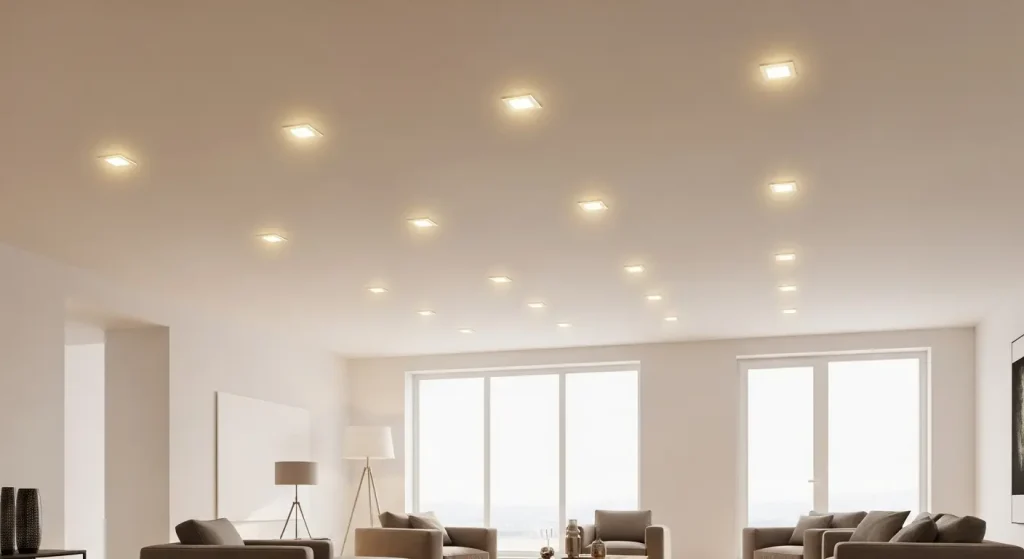
For professionals — lighting designers, contractors, and project procurement managers — understanding where and how to use adjustable recessed downlights is critical. This guide explores the best applications, technical considerations, and supplier selection strategies that help businesses create lighting environments that sell, inspire, and perform.
1. What Is Adjustable Recessed Lighting and How It Works
Adjustable recessed lighting refers to fixtures mounted flush within the ceiling while offering a tiltable or rotatable lamp head that allows users to direct light precisely where it’s needed. Unlike fixed recessed lights that illuminate only downward, adjustable models provide multi-angle beam control, making them ideal for accent and task lighting in commercial interiors.
1.1 How It Works
The luminaire’s housing sits above the ceiling line, while a gimbal or cardan mechanism enables the light source to rotate (up to 360° horizontally and 30–60° vertically). Combined with LED optical lenses, this system delivers smooth, controlled beams without visible glare.
1.2 Difference from Fixed Downlights
| Feature | Adjustable Recessed Downlight | Fixed Downlight |
|---|---|---|
| Beam Direction | Multi-angle adjustable | Downward only |
| Visual Focus | Highlights objects or zones | General ambient lighting |
| Flexibility | Can adapt to layout changes | Limited |
| Maintenance | Slightly higher due to moving parts | Simple |
| Design Value | Dynamic and premium | Basic utility |
💡 Tip for designers: When planning retail or hospitality spaces, always reserve at least 30–40% of ceiling fixtures as adjustable units to maintain flexibility for future layout changes.
2. Core Benefits of Adjustable Recessed Lighting
The success of a commercial environment depends heavily on its lighting quality. Adjustable recessed fixtures deliver professional-grade performance and aesthetic impact that fixed luminaires can’t match.
2.1 Directional Flexibility
The main advantage is controllability — lighting can be angled to accentuate merchandise, artwork, or architectural features. Designers can shift light direction without moving the fixture, reducing renovation time and cost.
2.2 Enhanced Visual Comfort
Modern adjustable downlights are engineered with deep-recessed optics and anti-glare reflectors, achieving UGR < 19 (Unified Glare Rating). This design reduces direct eye glare, creating a comfortable environment ideal for hotels, galleries, and corporate offices.
2.3 Energy Efficiency and Long-Term Performance
High-efficiency LED COB (Chip-on-Board) technology ensures better heat dissipation and luminous efficacy — often exceeding 100 lm/W. Combined with smart dimming (0–10 V, DALI, or Bluetooth Mesh), adjustable downlights save up to 40% more energy compared with traditional halogen or fixed LED types.
2.4 Design Integration and Minimalism
Frameless or trimless versions blend seamlessly with the ceiling surface, providing a clean architectural aesthetic that complements modern interior design trends. This “light without fixture” effect is highly sought after in luxury retail and hospitality projects.
2.5 Maintenance and Lifecycle
Because the fixtures are modular, maintenance is simplified: replaceable LED modules and drivers extend the system’s usable life beyond 50,000 hours, significantly lowering lifecycle cost.
2.6 Comparative Overview: Adjustable vs Fixed Downlights
| Parameter | Adjustable Recessed Downlight | Fixed Downlight |
|---|---|---|
| Beam Angle Options | 15° / 24° / 36° / 60° | 24° / 36° |
| Light Direction Control | 360° rotation / 30°–60° tilt | None |
| Typical CRI | ≥ 90 | 80–85 |
| Energy Efficiency | Up to 110 lm/W | 90–100 lm/W |
| Suitable Environments | Retail, hotel, office, gallery | General lighting |
| Maintenance Cost | Medium | Low |
| Aesthetic Appeal | High – architectural integration | Standard |
📈 Insight for procurement teams: Though the initial cost of adjustable fixtures is roughly 15–25% higher, the long-term ROI from flexibility and extended product life typically offsets that within 18 months of operation.
2.7 Why Buyers Prefer Adjustable Recessed Systems
- Future-proof investment: supports interior reconfiguration without additional wiring.
- Customizable OEM designs: allows private labeling, housing color variations, and driver options.
- Improved customer experience: better product presentation in stores leads to increased sales.
3. Best Applications for Adjustable Recessed Lighting Design
Adjustable recessed lighting has become a must-have for designers and project managers looking to elevate commercial spaces. Its ability to combine functionality and aesthetics makes it suitable for multiple professional environments.
3.1 Retail Stores & Showrooms
In retail design, light sells. Adjustable recessed downlights allow retailers to highlight products with precision.
Key applications:
- Accent lighting for display walls, mannequins, or product shelves.
- CRI ≥ 90 ensures true color rendering, especially for fashion and jewelry stores.
- Adjustable heads make it easy to adapt lighting to seasonal layout changes.
Pair adjustable downlights with track lights to create a layered effect — focused beams for highlights and broader illumination for general space
Example: A fashion boutique using 24° beam angle downlights over display racks achieved 30% longer customer dwell time after re-lighting.
3.2 Hotels and Restaurants
Hospitality lighting is about creating mood and comfort. Adjustable recessed fixtures help define zones — from cozy dining areas to elegant corridors.
Lighting goals:
- Warm CCT (2700K–3000K) for relaxation zones.
- Adjustable angles to emphasize decorative textures, artwork, or architectural arches.
- Frameless models ensure clean ceiling integration for a premium finish.
Design tip: Combine recessed lights with DALI dimming control, allowing staff to switch between bright service lighting and soft dining ambience seamlessly.
3.3 Offices and Meeting Rooms
In corporate environments, lighting influences focus and productivity. Adjustable recessed fixtures enable targeted task illumination without glare.
Key considerations:
- UGR < 19 to prevent visual fatigue.
- 4000K neutral white for accurate color perception.
- Adjustable modules let you redirect beams toward presentation boards or branding walls.
💡 Smart integration: Pair adjustable recessed luminaires with motion sensors or daylight sensors to improve energy savings by up to 25%.
3.4 Museums and Galleries
For museums, galleries, and cultural venues, light control = art protection. Adjustable downlights allow curators to tailor the light precisely to each exhibit.
Advantages:
- 15° or narrower beams for highlighting sculptures and paintings.
- Dimmable drivers for delicate illumination without UV/IR radiation.
- Anti-glare honeycomb filters preserve the viewer’s visual comfort.
Case study example: A gallery project in Singapore replaced halogen spots with LED adjustable recessed downlights and achieved a 65% energy reduction while enhancing artwork visibility.
3.5 Luxury Homes & Show Flats
In high-end residential spaces, adjustable recessed fixtures provide architectural-grade lighting for modern interiors.
Applications:
- Directional lighting for wall art or textured surfaces.
- Adjustable beam settings for flexible living and entertainment zones.
- Trimless designs blend with minimalist ceilings for a clean, luxury look.
Pro tip: Use different beam angles (15° for highlights, 36° for ambient zones) to craft depth and sophistication in residential showrooms.
4. Lighting Design Tips and Matching Techniques
Professional lighting design integrates both art and science. The following strategies ensure that adjustable recessed downlights deliver optimum performance in any project.
4.1 Choosing the Right Beam Angle
| Space Type | Recommended Beam Angle | Purpose |
|---|---|---|
| Display Areas / Artwork | 15°–24° | Narrow focus for accent lighting |
| General Commercial Areas | 36°–45° | Balanced illumination |
| Large Rooms / Corridors | 60°+ | Wide coverage, soft shadows |
Smaller beam angles create intensity and focus, while wider beams provide uniform illumination. For most commercial projects, mixing two or more beam angles adds dimension and hierarchy to the lighting design.
4.2 Selecting the Right Color Temperature (CCT)
Color temperature affects perception and mood.
- 2700K–3000K (Warm White): Ideal for hospitality, lounges, and restaurants.
- 3500K–4000K (Neutral White): Suits offices, retail, and galleries.
- 5000K (Cool White): Used for task-oriented spaces or showrooms requiring high clarity.
For premium applications, consider tunable white (2700K–5000K) systems that can adjust CCT dynamically throughout the day.
4.3 Glare Control and Visual Comfort
For lighting buyers, UGR (Unified Glare Rating) is a vital metric.
- Use deep reflector designs or anti-glare baffles.
- Aim for UGR < 19 in offices and UGR < 16 in galleries or hospitality projects.
- Combine with diffusers or honeycomb lenses for soft-edged light distribution.
4.4 Layered Lighting Strategy
A professional lighting design always includes three light layers:
- Ambient Lighting – overall illumination using wider-beam recessed lights.
- Accent Lighting – focused beams to highlight products, art, or textures.
- Task Lighting – adjustable lights aimed at work surfaces or functional areas.
By combining adjustable recessed downlights with track lighting or linear systems, designers can achieve dynamic light layering that adapts to multiple uses.
🧠 Design Insight: In a 200m² retail store, using a layered setup with 60% ambient, 30% accent, and 10% task lighting can reduce total power consumption by 22% while improving visual impact.
5. How to Choose the Right Adjustable Recessed Downlight for Your Project
When sourcing lighting for commercial projects, product selection is not just about brightness — it’s about performance consistency, certification, and supplier reliability.
5.1 Evaluate Optical and Electrical Performance
- Luminous Efficacy: Choose ≥100 lm/W for energy efficiency.
- Color Rendering Index (CRI): ≥90 for color-critical environments.
- Flicker-Free Driver: Ensure a driver with ≤5% flicker rate for eye comfort.
- Dimming Compatibility: Check if compatible with TRIAC, DALI, or 0–10V systems.
5.2 Verify Certifications and Warranty
Only work with suppliers who can provide CE, RoHS, ETL, and ISO9001 certifications.
A strong supplier offers:
- 3–5 years product warranty.
- Full photometric and LM79/LM80 reports.
- Clear documentation for installation and maintenance.
5.3 Prioritize OEM/ODM Customization Ability
For lighting brands and project-based buyers, customization means market differentiation. Look for factories that can:
- Provide private label services.
- Customize dimensions, finish colors, and wattages.
- Support 3D modeling and quick prototyping for project validation.
5.4 Consider Installation and Maintenance Ease
- Confirm ceiling cutout and mounting depth requirements.
- Opt for modular designs with replaceable LED modules and drivers.
- Choose frameless versions if seamless ceiling integration is desired.
5.5 Partner with Reliable Manufacturers
Rather than purchasing from trading companies, collaborate directly with professional OEM lighting manufacturers that control the full production process — from die-cast tooling to quality testing.
This ensures consistent quality, transparency, and post-sale technical support.
💬 Note: Long-term partnerships with a capable factory can reduce your procurement cost per unit by 10–15% annually, thanks to economies of scale and brand consistency.
6. Recommended OEM Supplier: XHLUX Lighting (China)
When selecting an adjustable recessed lighting supplier, one example of excellence in the global market is XHLUX Lighting, a trusted name in LED commercial lighting manufacturing.
6.1 Company Overview
XHLUX Lighting is a professional indoor LED commercial lighting manufacturer integrating R&D, manufacturing, and sales for over 15 years.
Located in Shenzhen, China, XHLUX operates a 3,000 m² facility equipped with advanced CNC machining, optical testing, and SMT production lines.
The company has become a reliable OEM & ODM partner for lighting brands and distributors worldwide, known for turning design concepts into market-ready lighting products.
6.2 Product Portfolio
XHLUX specializes in a complete range of architectural and commercial lighting systems, including:
- Adjustable recessed downlights
- LED track lights
- Linear and magnetic track lighting
- Smart lighting systems (DALI, 0–10 V, Bluetooth Mesh)
Each product undergoes strict quality control and conforms to CE, RoHS, and ETL certification standards.
6.3 Manufacturing & Customization Strength
What makes XHLUX stand out among China’s lighting suppliers is its end-to-end OEM/ODM capability:
| Service Capability | Description |
|---|---|
| Product Design | 3D modeling, heat simulation, photometric optimization |
| Tooling & Molding | In-house die-casting and rapid prototyping |
| Assembly & QC | 100% aging test, lumen output validation |
| Customization | Branding, labeling, packaging, and bespoke specifications |
💬 “With over 15 years of experience, XHLUX Lighting helps global brands create premium adjustable recessed lighting for all commercial applications.”
6.4 Global Partnerships and Market Reach
XHLUX exports to Europe, the Middle East, and Southeast Asia, collaborating with lighting distributors, architects, and engineering firms.
Clients value the company’s flexibility, quick sampling, and transparent communication.
For brands aiming to expand their lighting portfolio or develop exclusive architectural fixtures, XHLUX provides a one-stop OEM solution — from concept to mass production.
7. FAQ About Adjustable Recessed Lighting
Q1. What is the lifespan of adjustable recessed downlights?
High-quality LED recessed downlights last over 50,000 hours, depending on ambient temperature and driver quality. Reputable suppliers such as XHLUX provide 3–5-year warranties.
Q2. Which commercial spaces benefit most from adjustable recessed lighting?
They are ideal for retail stores, hotels, restaurants, galleries, offices, and luxury homes — any environment where flexible, directional lighting is essential.
Q3. Are adjustable recessed fixtures difficult to install?
Not at all. Most come with standard ceiling cut-out dimensions and tool-free mounting springs. OEM suppliers can provide installation brackets and wiring diagrams to simplify setup for contractors.
Q4. Can these luminaires be customized for brand projects?
Yes. Professional factories offer OEM/ODM customization, including wattage, color temperature, beam angle, housing finish, and even branded packaging.
Q5. What certifications should I check before purchasing?
Look for CE, RoHS, ETL, and ISO9001 certificates. These ensure compliance with international electrical and environmental safety standards, critical for exports and public projects.
Q6. How can I reduce glare in recessed lighting designs?
Choose models with deep-recessed reflectors, UGR < 19, and optional honeycomb anti-glare lenses. This maintains comfort for guests, customers, or employees.
8. Conclusion
Adjustable recessed lighting represents the perfect fusion of form and function — allowing commercial designers and project owners to control how every beam of light interacts with a space.
Whether you’re illuminating a luxury boutique, modern office, or art gallery, this lighting form offers unmatched flexibility, energy efficiency, and aesthetic appeal.
To succeed in the competitive lighting industry, you need more than a product — you need a partner who understands your project goals, certification requirements, and brand value.
Why Choose XHLUX Lighting as Your OEM Partner
- 15+ years of LED commercial lighting expertise
- Complete in-house design, tooling, and testing facilities
- CE / ETL / RoHS certified production
- Fast prototyping and consistent delivery
- Global export experience and multilingual support
💡 Partner with a manufacturer that combines technology, precision, and reliability.
👉 Request a Free Quote for Adjustable Recessed Downlights
Let XHLUX Lighting design a custom solution tailored to your retail, hotel, or gallery project.
📞 Contact Us Today
Email: [[email protected]]
Website: www.xhluxlighting.com