 XHLUX
XHLUX

Table of contents
- 🔍 What Does Wattage in LED Downlights Really Mean?
- 🛋️ Recommended LED Downlight Wattage by Room Type
- 📐 How to Calculate Total LED Downlight Wattage for a Room
- 🧱 Considerations That Affect LED Downlight Wattage
- 🌎 Global Trends: Energy Efficiency and LED Adoption
- 🛠️ Real-World Example: 20m² Kitchen LED Plan
- 🎯 Conclusion: How to Choose the Right LED Downlight Wattage
- 🔑 Frequently Asked Questions (FAQ)
Choosing the right wattage for your LED downlights can be the difference between a well-lit, comfortable room and one that feels too dim or harshly overexposed. Whether you’re designing a cozy living room, a functional kitchen, or a high-ceiling commercial space, understanding how many watts your LED downlights should be is essential for energy efficiency, visual comfort, and cost savings.
In this guide, we’ll explore:
- 🔧 How wattage relates to brightness (lumens)
- 🏠 Recommended LED downlight wattage per room
- 📏 A simple formula to calculate wattage needs
- 💡 How ceiling height, room size, and purpose affect wattage
- ✅ What wattage is best for dimmable or smart downlights
- 📊 Comparison table of LED wattage vs traditional bulbs
🔍 What Does Wattage in LED Downlights Really Mean?
Unlike traditional incandescent bulbs, LED downlight wattage doesn’t directly equate to brightness. That role now belongs to lumens, the unit that measures light output. Wattage in LED lights refers to how much energy the fixture uses, not how bright it is.
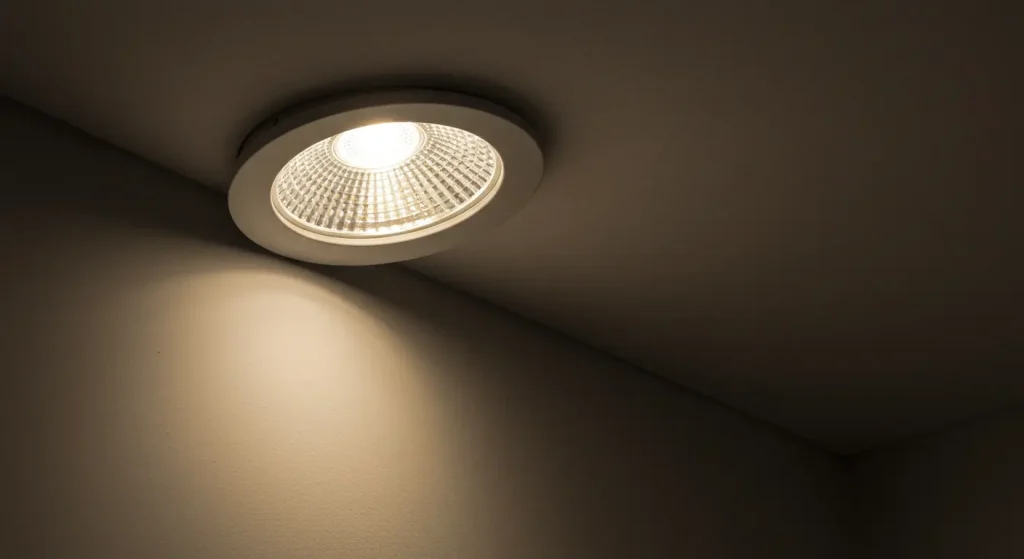
📘 Rule of thumb: The higher the lumens per watt (lm/W), the more efficient the downlight.
| Wattage (LED) | Approx. Lumens | Traditional Equivalent |
|---|---|---|
| 5W | ~450 lm | 40W incandescent |
| 9W | ~800 lm | 60W incandescent |
| 12W | ~1000–1200 lm | 75W incandescent |
| 15–18W | ~1300–1600 lm | 100W+ incandescent |
🛋️ Recommended LED Downlight Wattage by Room Type
Choosing wattage also depends on the function of each space. A kitchen or workspace typically needs brighter, task-oriented lighting, while a bedroom or hallway can rely on softer light.
| Room Type | Recommended Wattage per Fixture | Suggested Spacing |
|---|---|---|
| Living Room | 9W – 12W | 1.5m – 2m |
| Kitchen | 12W – 15W (task areas) | 1m – 1.5m |
| Bedroom | 7W – 9W | 1.5m – 2m |
| Bathroom (Zone 2) | 9W – 12W (IP-rated) | 1.5m |
| Hallway | 5W – 7W | 2m – 2.5m |
| Office/Home Study | 12W – 15W | 1.2m – 1.8m |
| Retail/Showroom | 15W – 18W | Variable |
💡 Tip: In rooms with dimmers or layered lighting (e.g. pendant + downlight), you can go for slightly lower wattage fixtures and adjust brightness as needed.
📐 How to Calculate Total LED Downlight Wattage for a Room
Here’s a practical step-by-step method:
Step 1: Calculate Total Lumens Required
Use this general formula:
Room Area (sq. meters) × Lux Level = Total Lumens Needed
| Room Type | Recommended Lux Level |
|---|---|
| Bedroom | 100–150 lux |
| Living Room | 150–200 lux |
| Kitchen | 300–500 lux |
| Ufficio | 300–500 lux |
| Bathroom | 200–300 lux |
Example: A 15m² living room × 150 lux = 2,250 lumens required
Step 2: Divide by Lumen Output per Light
If you’re using 10W LED downlights that emit 800 lumens:
2,250 ÷ 800 ≈ 3 downlights
To ensure even lighting, it’s best to round up and install 4 fixtures.
🧱 Considerations That Affect LED Downlight Wattage
1. Ceiling Height
Higher ceilings (over 2.7m) require higher wattage or narrower beam angles to ensure light reaches the floor effectively.
| Ceiling Height | Suggested Wattage |
|---|---|
| ≤ 2.4m | 7W – 9W |
| 2.4m – 2.7m | 10W – 12W |
| ≥ 3m | 15W+ (narrow beam) |
2. Room Color & Surface Reflectivity
Darker walls or matte surfaces absorb more light. Opt for higher wattage in such cases or increase fixture count.
3. Purpose & Mood
For ambient lighting, lower wattage (7W – 9W) is fine. For task lighting (kitchens, home offices), go higher (12W – 18W).
4. Dimming & Smart Control
If using dimmable LED downlights, ensure they operate efficiently across brightness levels. Some 15W fixtures can dim down to 2W while maintaining stability.
🌎 Global Trends: Energy Efficiency and LED Adoption
According to IEA’s 2024 lighting report (nofollow), LED now represent over 85% of global residential lighting sales, primarily due to their energy savings, longevity, and reduced heat output. Choosing the correct wattage not only reduces electricity bills but aligns with energy efficiency goals in homes and buildings.
✅ Fact: A 10W LED downlight can save up to 85% energy compared to a 75W halogen equivalent, and last 10–20x longer.
🛠️ Real-World Example: 20m² Kitchen LED Plan
Let’s say your kitchen is 20 square meters and you need 500 lux:
- Total Lumens Required: 20m² × 500 lux = 10,000 lumens
- LED Downlight Output: Choose 12W fixtures (~1000 lm each)
- Number of Fixtures Needed: 10 downlights, spaced ~1.2m apart in grid layout
✅ Go for high CRI (>90) and 4000K color temperature for cooking accuracy.
🎯 Conclusion: How to Choose the Right LED Downlight Wattage
Selecting the ideal wattage comes down to:
- Room size & purpose
- Ceiling height
- Desired brightness (lux level)
- Number and placement of fixtures
- Energy efficiency goals
Always look at lumens first, not just watts, and consider how many lights you need—not just how bright one should be.
🔑 Frequently Asked Questions (FAQ)
Q1: Is higher wattage always better for LED downlights?
No. Too high wattage can cause glare or excessive brightness. It’s about balance and distribution.
Q2: Can I mix different wattages in one room?
Yes, especially for layered lighting (e.g. ambient + task). Just keep color temperature consistent.
Q3: What’s the best wattage for LED downlights in a bathroom?
Usually 9W–12W with at least IP44 waterproof rating.
If you’re planning a full home upgrade or a commercial fit-out, consider working with lighting professionals who can run photometric simulations to optimize brightness and distribution. The right LED downlight wattage is more than just numbers—it’s about comfort, clarity, and cost-effectiveness.
Want a tailored Faretto a LED da incasso layout plan for your space? Feel free to contact us — we offer free consultations with wattage and fixture count breakdowns.