 XHLUX
XHLUX
![What is GU10 Downlight: Best and Definitive Guide [2025]](https://xhlux.com/wp-content/uploads/2024/05/news.webp)
Table of contents
- What is a GU10 Downlight? The Definitive Answer
- The GU10 Advantage: Why is This System So Popular?
- GU10 vs. The Alternatives: A Homeowner’s Comparison
- How to Choose the Perfect GU10 Bulb: A 2025 Buyer’s Guide
- Important Considerations for Installation
- Market Insights: The Enduring Power of a Standard
- FAQ About GU10 Downlight
- The Final Verdict: Is a GU10 Downlight Right for You?
- You may also know these contents about GU10 downlight
Recessed downlights are the unsung heroes of modern interior design. They provide clean, minimalist lighting for millions of homes, kitchens, and businesses. But when it’s time to choose one or replace a bulb, you’re suddenly faced with a cryptic string of letters and numbers. GU10? MR16? E26? What does it all mean?

If you’ve ever found yourself puzzled by the term “GU10 Downlight“, you’re in the right place. This term refers to one of the most popular, versatile, and user-friendly lighting systems on the market today.
This is your ultimate guide. We’ll demystify “GU10” once and for all. We’ll explain what it is, why it’s so popular, how it compares to other fixtures, and most importantly, how to choose the perfect GU10 bulbs and fixtures for your space. This is the solid information you need to make confident and informed lighting decisions.
What is a GU10 Downlight? The Definitive Answer
Let’s start by breaking down the term into its two parts. A “GU10 Downlight” is a system comprised of a downlight fixture designed to accept a bulb with a specific type of base, known as a GU10 base.
Decoding the Term: “GU10” Refers to the Bulb’s Base
The term GU10 has nothing to do with the shape or brightness of the bulb, and everything to do with the connector at its bottom. It’s a specific standard for a lamp base.
- G: Stands for “Glass,” indicating the material the original halogen bulbs were made of.
- U: Stands for “U-shaped,” referring to the shape of the pins.
- 10: This is the most important part—it refers to the 10-millimeter distance between the centers of the two pins.
The GU10 base is a “twist-and-lock” or “push-and-twist” mechanism. The two pins are shaped like small feet. You push the bulb into the socket and twist it clockwise to lock it securely in place. This design is distinct from a screw-in bulb or a simple push-in bulb.
The System: A Mains-Voltage Fixture
A GU10 Downlight is a fixture where the GU10 lampholder is wired to operate directly on mains voltage (120V in North America, 230V in Europe and other regions).

This is a crucial point: A standard GU10 downlight does not require a separate external transformer or driver to operate the bulb. The necessary electronics to convert the mains AC power to the low-voltage DC that an LED needs are all self-contained within the body of the GU10 bulb itself. This simplicity is a key reason for its popularity.
Anatomy of a GU10 Downlight System
When you install a GU10 Downlight, you’re typically working with these parts:
- The Housing (or “Can”): The main body of the fixture that is recessed into the ceiling.
- The GU10 Lampholder: The socket inside the housing that the bulb twists into.
- The GU10 Bulb: The interchangeable light source. Today, this is almost always an LED bulb, though older installations used halogen.
- The Trim: The visible ring that sits flush against the ceiling, giving the fixture its finished look.
The GU10 Advantage: Why is This System So Popular?
The GU10 downlight has not only survived the transition from halogen to LED but has thrived. Its enduring popularity is due to several powerful, user-centric advantages.
1. Simplicity and Cost-Effectiveness
Because the system wires directly to your home’s mains power without the need for an external low-voltage transformer, the installation is simpler and generally less expensive. There’s one less component to purchase, install, and potentially fail.
2. Ultimate Flexibility with Replaceable Bulbs
This is a huge benefit. If a bulb fails, you simply twist it out and replace it with a new one in seconds. If you decide you want a different color temperature or a wider beam angle, you just swap the bulbs. You don’t need to replace the entire fixture.
3. A Massive Selection of Bulbs
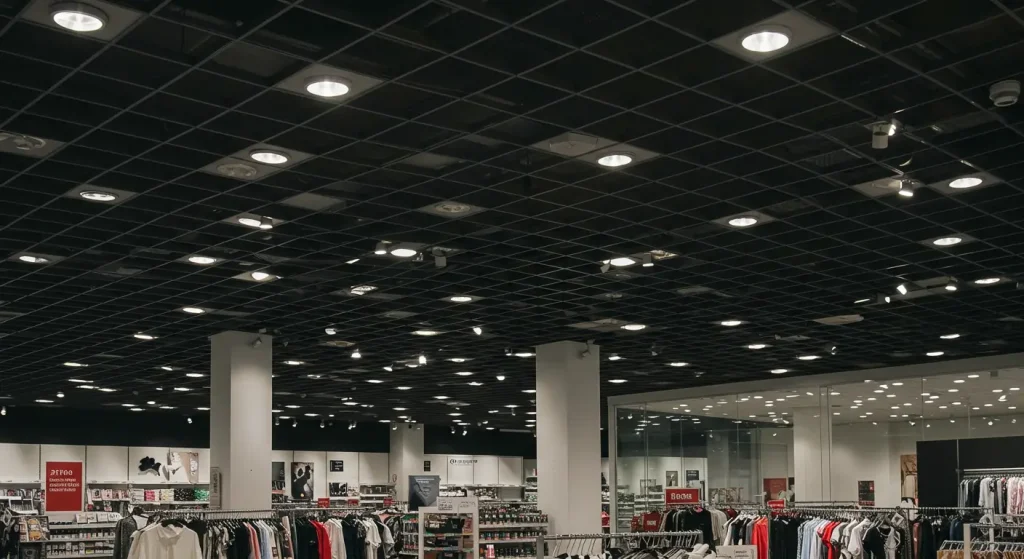
The GU10 base is an incredibly popular global standard. This means you have a vast selection of LED GU10 bulbs to choose from, made by dozens of different manufacturers. This competition leads to innovation, a wide range of features (like “warm dim” or smart control), and competitive pricing.
4. Future-Proofing Your Installation
LED technology is constantly improving. With a GU10 downlight system, your core installation (the housing and wiring) is future-proof. In five years, when even more efficient or feature-rich GU10 bulbs are available, you can upgrade your lighting simply by changing the bulbs, without calling an electrician.
GU10 vs. The Alternatives: A Homeowner’s Comparison
Understanding the alternatives makes the choice clearer. Here’s how GU10 stacks up against the other two most common recessed lighting options.
| Feature | GU10 Downlight (Mains Voltage) | MR16/GU5.3 Downlight (Low Voltage) | Integrated LED Downlight |
|---|---|---|---|
| Wiring | Direct to mains voltage (e.g., 120V). Simple. | Requires a low-voltage transformer (12V) for each fixture or group. | Direct to mains voltage. Simple. |
| Flexibility | Excellent. Bulbs are easily replaceable and upgradeable. | Excellent. Bulbs are also easily replaceable. | Poor. The LED is built-in. If the light fails, the entire fixture must be replaced. |
| Failure Mode | Bulb fails -> replace bulb. Socket fails -> replace socket. | Bulb fails -> replace bulb. Transformer fails -> replace transformer. | Any component fails -> replace entire fixture. |
| Dimming | Generally simpler. Dimmability depends on the GU10 bulb and a compatible dimmer switch. | Can be more complex due to transformer/dimmer compatibility issues. | Simple. Dimmability is a feature of the whole fixture. |
| Performance | Performance depends on the quality of the GU10 bulb you choose. | Historically offered very high-quality light, but LED GU10s have closed the gap. | Can offer excellent, optimized performance as all parts are engineered together. |
The bottom line:
- GU10 vs. MR16: GU10 is simpler and more popular for new residential installations due to not needing a transformer.
- GU10 vs. Integrated LED: GU10 offers far superior long-term flexibility and serviceability. Integrated fixtures may offer a slightly sleeker profile but lock you into a single, non-upgradeable product for its entire lifespan.
How to Choose the Perfect GU10 Bulb: A 2025 Buyer’s Guide
Choosing the right GU10 LED bulb is what truly defines your lighting. Here’s what to look for:
1. Forget Wattage, Focus on Lumens
With old halogen bulbs, wattage was a proxy for brightness. With LED, this is no longer true. Always look at the lumens (lm) to determine the bulb’s brightness. A typical 50W halogen GU10 can be replaced by a 5W-7W LED GU10 that produces 450-600 lumens.
2. Dimmability: Not All GU10s Are Created Equal
If you want to dim your lights, you must buy GU10 bulbs that are explicitly labeled “dimmable.” You will also need a modern, LED-compatible wall dimmer switch (an ELV-type dimmer is often recommended) for smooth, flicker-free performance.
3. Beam Angle: From Narrow Spot to Wide Flood
- Narrow (10°-25°): For accenting artwork or creating dramatic highlights.
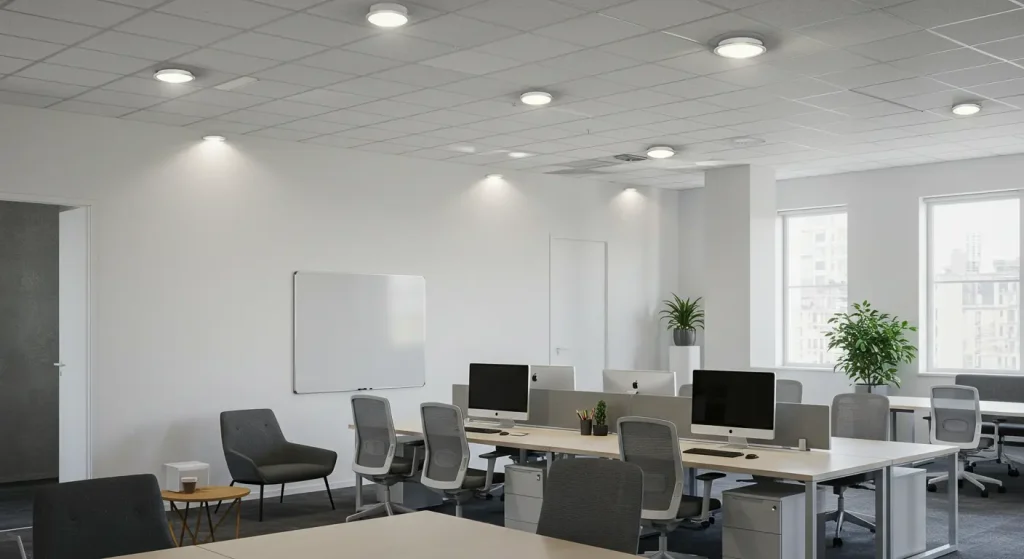
- Medium (25°-40°): The most versatile choice, great for kitchens, living rooms, and general task lighting.
- Wide (40°+): For providing broad, even ambient light in hallways or playrooms.
4. Color Temperature (CCT): Setting the Mood
- Warm White (2700K): Creates a cozy, relaxing, incandescent-like glow. Perfect for bedrooms and living rooms.
- Soft/Natural White (3000K): A slightly crisper, cleaner white. An excellent all-around choice for kitchens, bathrooms, and living spaces.
- Cool White (4000K+): A bright, neutral white that feels more like daylight. Best for offices, garages, and task-heavy areas.
5. Color Rendering Index (CRI): Seeing True Colors
For spaces where color accuracy matters, like kitchens (food), bathrooms (skin tones), and over artwork, choose a GU10 bulb with a CRI of 90 or higher. This will ensure colors appear rich, natural, and true-to-life.
Important Considerations for Installation
When installing any recessed downlight, two safety ratings are critical:
- Fire-Rated Downlights: In many construction scenarios (especially in multi-story buildings), building codes require fire-rated downlights. These fixtures are designed to seal the hole cut in the ceiling in the event of a fire, restoring the ceiling’s fire barrier and slowing the spread of flames. Always check your local building codes.
- IC Rating (Insulation Contact): An “IC-rated” housing is one that is approved for direct contact with thermal insulation in your attic or ceiling. A “Non-IC” housing must have a clearance of at least 3 inches from any insulation to prevent a fire hazard. This is a crucial safety distinction.
Market Insights: The Enduring Power of a Standard
In an industry filled with rapid technological change and proprietary systems, the GU10 standard has shown remarkable resilience. Its ability to adapt from the halogen era to the LED era is a testament to its sound design. While integrated fixtures are popular, market trends also show a strong consumer desire for user-serviceable and upgradeable products. The GU10 platform perfectly serves this need, ensuring its continued relevance and popularity in both residential and light commercial projects worldwide. It represents a safe, reliable, and flexible choice for anyone looking to invest in recessed lighting.
FAQ About GU10 Downlight
The Final Verdict: Is a GU10 Downlight Right for You?
So, after this deep dive, is a GU10 Downlight system the right choice for your project?
It is an outstanding and highly recommended choice if:
- You value simplicity of installation and want a direct mains-voltage solution.
- You want the long-term flexibility to easily change and upgrade your light bulbs in the future.
- You want access to a wide, competitive market of bulbs with a variety of features.
- You want a reliable, user-serviceable lighting system.
A GU10 downlight system offers a near-perfect balance of simplicity, flexibility, and performance. It’s a proven, future-ready platform that puts the power of choice in your hands, allowing you to easily adapt your lighting to meet the changing needs of your life and the ongoing evolution of lighting technology.
Ready to design a lighting plan that is simple, flexible, and perfectly suited to your space?
Choosing the right fixture is just the beginning. Our team of lighting specialists can help you design a complete lighting layout, select the perfect GU10 bulbs for each room, and ensure you have the right controls to bring your vision to life.
Contact us today for a professional consultation and let’s create your ideal lighting environment.
You may also know these contents about GU10 downlight
Do GU10 Downlights Need To Be Earthed
How To Change GU10 LED Downlights
How To Connect GU10 Downlights
How To Install GU10 LED Downlights
How To Remove GU10 Bulb From Downlight