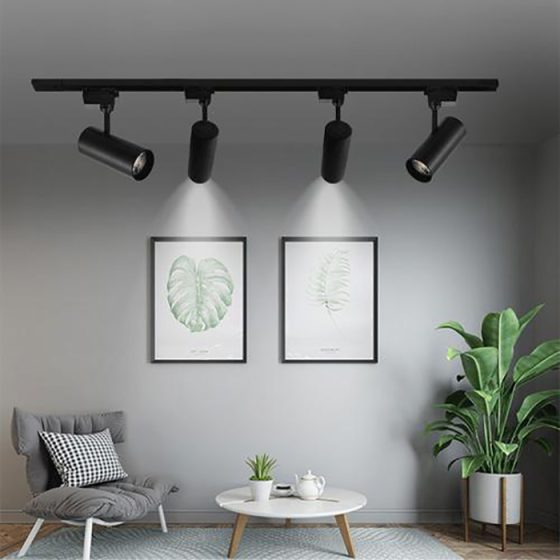
Among modern lighting solutions, Faretti a LED are popular for their flexibility and energy-saving features. Whether it’s in your home, office or commercial space, choosing the right color temperature is crucial to creating the ideal lighting effect. In this article, we will provide you with details on how to choose the right color temperature for your LED track lights.
What Is LED Track Light Color Temperature And Its Advantages And Disadvantages

Color temperature refers to the color of light emitted by a light source, usually measured in Kelvin (K). Low color temperature (e.g. 2700K) usually shows warm yellow, high color temperature (e.g. 6500K) shows cool white.
Warm white light (2700K-3000K): suitable for homes, restaurants and other places that need a cozy atmosphere.
Advantage: creates a warm and cozy atmosphere, perfect for homes and restaurants.
Disadvantage: low light brightness, not suitable for places that need high brightness
Neutral white light (3500K-4500K): suitable for offices and commercial places, providing natural and comfortable lighting.
Advantage: Provides natural and comfortable lighting, suitable for offices and commercial places.
Disadvantage: lacks the warmth of warm light, but is softer than cold light
Cool white light (5000K-6500K): suitable for industry, exhibition and other places that require high brightness
Advantage: Bright light, improve work efficiency, suitable for work environments that require high brightness.
Disadvantage: colder light, not suitable for environments that require a cozy atmosphere
Influencing Factors Of LED Track Light Color Temperature Selection
Different scenes have different needs for color temperature. For example, warm white light is usually chosen for homes and restaurants, while neutral white light is chosen for offices and commercial places. Color temperature affects people’s psychology and emotions. Warm light is usually relaxing, while cool light improves concentration and productivity. LED fixtures with different color temperatures may vary in energy consumption and light efficiency. Generally, lamps with higher color temperatures are more efficient, but warmer tones are more energy efficient
 XHLUX
XHLUX