 XHLUX
XHLUX
![How To Change GU10 LED Downlights: Best Guide [2025]](https://xhlux.com/wp-content/uploads/2024/05/news.webp)
Table of contents
So, a GU10 downlight has gone out in your kitchen or living room. It should be a simple fix, but you find yourself staring up at the ceiling, trying to solve the puzzle of how to get the old bulb out without breaking the fixture. You’re not alone. That small, fiddly retaining clip has frustrated countless homeowners.
The good news is that changing a GU10 downlight bulb is actually a very straightforward task—if you know the proper technique. It requires no special electrical knowledge, just a little patience and the right approach.
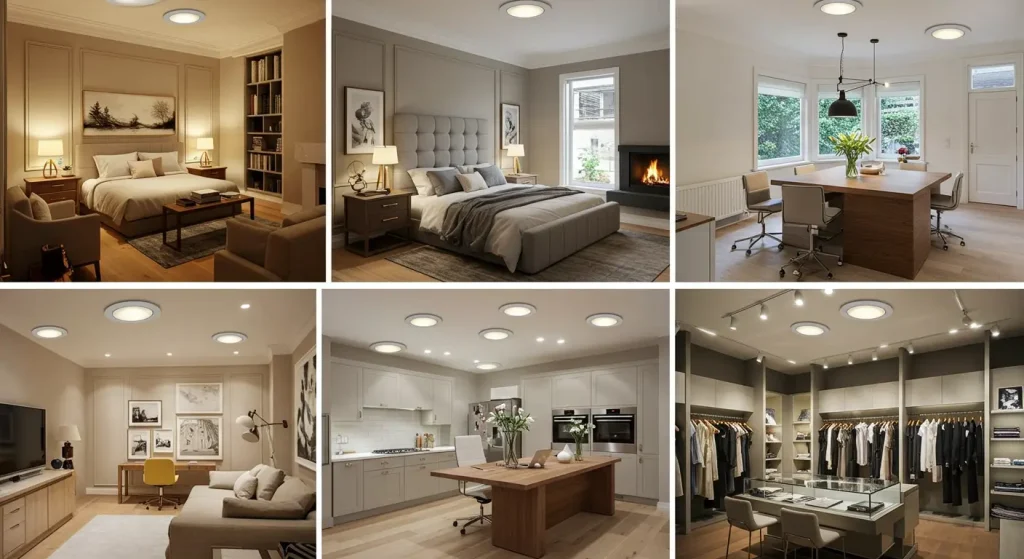
This is your definitive, expert guide. We’ll walk you through the entire process, step by step, with a major focus on safety and the professional tricks to handle that tricky retaining clip with ease. We’ll not only show you how to replace the bulb but also empower you with the knowledge to choose the perfect new LED bulb for your space.
Safety First: The Unskippable First Step
Before you even think about grabbing a ladder, let’s talk about the most important step. You must turn off the power to the lighting circuit.
This doesn’t mean just flicking the wall switch off. While that usually works, the safest method is to go to your home’s main electrical panel (circuit breaker box) and turn off the breaker that controls the lights for that specific room.
- Why? This ensures that no electricity is flowing to the fixture whatsoever, eliminating any risk of electric shock.
- Pro Tip: Once you’ve turned off the breaker, flick the wall switch for that room to the “on” position. If the other lights on that circuit do not turn on, you’ve successfully cut the power. For ultimate safety, professionals use a simple voltage tester to confirm there is no power at the socket.
Your Toolkit: What You’ll Need
You don’t need a professional’s toolbox for this job. Simply gather these items:
- A sturdy stepladder that allows you to comfortably reach the ceiling.
- Safety glasses (always a good idea when working overhead).
- Your new, replacement GU10 LED bulb.
- Optional: A pair of thin gloves for better grip on the bulb.
- Optional: A small suction cup tool can help grip a flush-fitting bulb.
The Step-by-Step Guide to Changing Your GU10 Downlight
Let’s walk through this together. Take your time, be gentle, and follow these steps precisely.
Step 1: Power Down Completely
As mentioned above, go to your breaker box and switch off the correct circuit. Confirm the power is off. This is non-negotiable.
Step 2: Access the Fixture Safely
Position your stepladder on a flat, stable surface directly below the downlight. Ensure you can work comfortably without overreaching.
Step 3: The Key Move – Releasing the Retaining Clip
This is the part where most people get stuck. The GU10 bulb is held in place by a thin, spring-loaded wire clip. Its purpose is to press the bulb up against the fixture’s trim.
- Identify the Clip: Look closely at the inside edge of the downlight, right against the face of the bulb. You will see the thin wire clip. Most clips have two small ends that you can pinch together.
- The Technique: Using your thumb and index finger, gently squeeze the two ends of the clip towards each other. This will release the tension. As you squeeze, the clip will bow downwards, allowing you to carefully work it out of its groove. Let it hang down—it is still attached to the fixture.
The bulb should now be loose and may drop down slightly from the fixture housing. Be prepared to support it with your other hand.
Step 4: Removing the Old GU10 Bulb (Push and Twist)
Now that the clip is released, the bulb is held only by the socket. The GU10 base is a “push and twist” mechanism.
- Grip the Bulb: Hold the bulb firmly by its edges.
- Push and Twist: Gently push the bulb upwards about a quarter of an inch (or a few millimeters) into the socket. While pushing, turn it counter-clockwise about a quarter turn. You will feel it release.
- Remove: Carefully pull the old bulb down and out of the fixture.
Step 5: Installing the New GU10 Bulb
This is simply the reverse of the removal process.
- Align the Pins: Look at the two pins on your new GU10 bulb and align them with the two larger openings in the socket.
- Push and Twist: Gently push the new bulb up into the socket and turn it clockwise about a quarter turn until it locks into place. You will feel a distinct click or stop. Give it a very gentle tug to ensure it’s secure.
Step 6: Securing the Retaining Clip
This can be a little fiddly, but patience is key.
- Pinch and Insert: Squeeze the ends of the retaining clip together again.
- Find the Grooves: Carefully guide the clip back up and into the small grooves on the inside of the downlight housing from which you removed it.
- Release: Once both sides of the clip are seated in the grooves, gently release your fingers. The clip will spring back into place, pressing firmly and evenly against the face of your new bulb.
Step 7: Power Up and Test
Clear the area, step down from the ladder, and go back to your circuit breaker. Switch the power back on. Now, test your new light using the wall switch. It should turn on instantly.
Beyond the Basics: Choosing the Right Replacement GU10 LED
Now that you know how to change the bulb, you have an opportunity to upgrade your lighting. Don’t just grab the first bulb you see. Consider these features to choose the perfect replacement:
| Feature | What to Look For | Why It Matters for You |
|---|---|---|
| Lumens (Brightness) | A 5W-7W LED producing 450-600 lumens is a great replacement for an old 50W halogen. | Focus on lumens, not watts, for a true measure of brightness. More lumens = brighter light. |
| Dimmability | The packaging must say “Dimmable.” | If your lights are on a dimmer switch, a non-dimmable bulb will flicker, buzz, or fail. |
| Color Temperature (CCT) | 2700K (cozy, warm), 3000K (clean, soft white), 4000K (neutral, cool white). | Match your existing bulbs or choose a new “mood” for your room. 3000K is the most popular all-rounder. |
| Beam Angle | Narrow (25°) for accent, Medium (35°-40°) for general, Wide (60°+) for broad wash. | Match the beam angle to the bulb’s job. A wider beam for general light, a narrower beam to highlight artwork. |
| Color Rendering (CRI) | Look for CRI 90+. | This ensures colors in your room (food, decor, skin tones) look vibrant and natural, not dull and washed out. |
Troubleshooting Common Problems
What if things don’t go smoothly? Here are solutions to common issues.
Problem: “The retaining clip is a solid ring and won’t squeeze.”
- Solution: Some older styles have a “C” shaped circlip. You may need a small flathead screwdriver to carefully pry one end out of its groove. Be very gentle to avoid scratching the fixture.
Problem: “The bulb is stuck and won’t twist.”
- Solution: The socket might be stiff. Wear a glove for better grip. Ensure you are pushing up firmly (but gently) before you twist. Sometimes a tiny wiggle as you push can help loosen it. A small suction cup tool can also provide the grip you need.
Problem: “My new dimmable LED bulb is flickering or buzzing.”
- Solution: This is almost always a compatibility issue with your wall dimmer switch. Older dimmers were designed for halogen bulbs and don’t work well with the low power draw of LEDs. You will likely need to upgrade your wall switch to a modern, LED-compatible (ELV or trailing-edge) dimmer.
Problem: “There’s no retaining clip and no visible bulb to twist.”
- Solution: Stop. You likely have an Integrated LED Downlight. This is a sealed unit where the light source is a permanent part of the fixture. These cannot be serviced by changing a bulb. The entire fixture must be replaced, which is a job for a qualified electrician.
Final Word: Safety and Confidence
Changing a GU10 LED downlight is a skill that empowers you to maintain and improve your own home’s lighting. By following these steps—prioritizing safety, understanding the mechanism, and being patient—you can tackle the job with confidence. And by choosing your replacement bulb wisely, you can do more than just fix a broken light; you can actively enhance the comfort and beauty of your space.
Ready to plan a bigger lighting project or need help choosing the perfect suite of products?
Now that you’ve mastered the basics, you may be thinking about a larger lighting upgrade. Our team of residential lighting specialists is here to help you design a complete lighting plan that is beautiful, functional, and perfectly suited to your home.
Contact us today for a professional consultation and let’s bring your vision to light.