 XHLUX
XHLUX

Table of contents
- Why Products Still Don’t Stand Out Even with Good Lighting
- Why Product Visibility Is Critical in Retail Lighting
- What Is Lighting Placement in Retail Lighting Design?
- How Poor Lighting Placement Reduces Product Visibility
- How Proper Lighting Placement Improves Product Visibility
- Lighting Placement for Different Retail Display Types
- Track Lights vs Downlights – Placement Impact on Visibility
- Common Retail Lighting Placement Mistakes
- How to Optimize Retail Lighting Placement for Better Results
- FAQ About retail lighting placement
- Business inquiries are welcome
Why Products Still Don’t Stand Out Even with Good Lighting
Many retail stores invest heavily in retail lighting, choosing well-known brands, high-efficiency LED fixtures, and modern designs. Yet after installation, store owners often face the same frustrating result: products still do not stand out, displays feel flat, and customers walk past merchandise without noticing it.
In most cases, the problem is not the lighting fixtures themselves.
The real issue lies in lighting placement—where lights are installed, how they are aimed, how far they are from products, and whether the lighting direction supports how customers actually look at merchandise. Poor lighting placement can create shadows, glare, and uneven illumination that directly reduce product visibility, even when brightness levels seem sufficient.
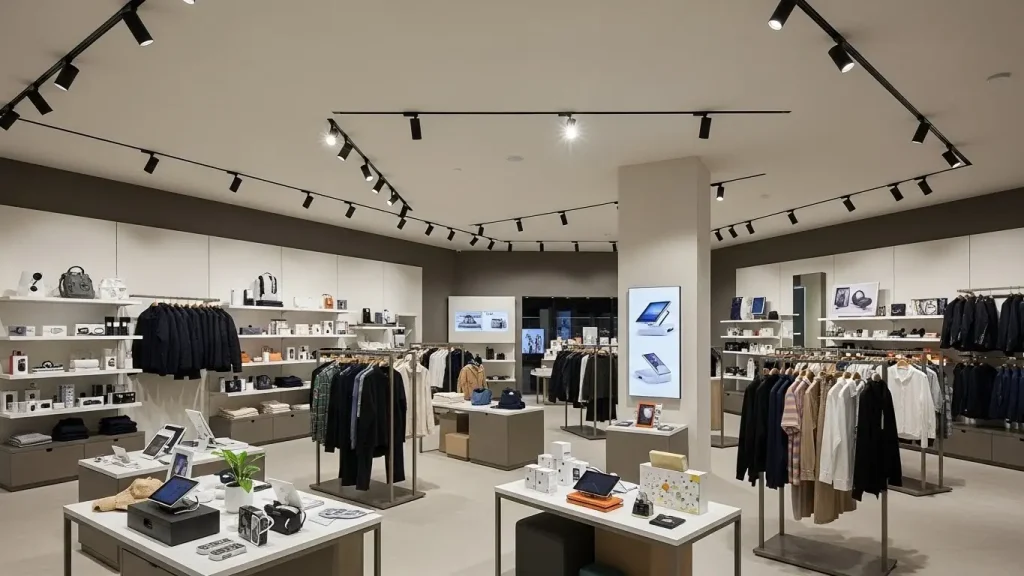
This guide explains how retail lighting placement affects product visibility, why many stores get it wrong, and how practical placement strategies can dramatically improve how products are seen, understood, and purchased.
Why Product Visibility Is Critical in Retail Lighting
In retail environments, visibility is not just about seeing—it is about noticing, understanding, and engaging.
When products are clearly visible:
- Customers stop longer
- They can evaluate color, texture, and details
- They are more likely to touch and interact
- Purchase confidence increases
Product visibility directly influences customer behavior and sales performance. From a visual merchandising perspective, lighting is one of the most powerful tools for directing attention and shaping perception.
Importantly, visibility is not the same as brightness. A brightly lit store can still suffer from poor visibility if lighting is poorly placed. Shadows, reflections, and flat lighting can make products blend into the background or appear visually uninteresting.
According to guidance from the Illuminating Engineering Society (IES), effective retail lighting should emphasize products while maintaining visual comfort and clarity(Illuminating Engineering Society).
Why is product visibility important in retail stores?
Product visibility determines how easily customers notice, recognize, and evaluate products, directly influencing purchasing decisions.
What Is Lighting Placement in Retail Lighting Design?
Lighting placement in retail lighting design refers to more than simply installing fixtures on the ceiling. It is a combination of three critical factors:
- Position – where the light fixture is located relative to the product
- Direction – where the light is aimed
- Distance – how far the light is from the illuminated surface
In other words, lighting placement answers not just “Where is the light?” but “Where is the light going?”
Good lighting placement ensures that:
- Light falls on the front surfaces of products
- Shadows are controlled rather than accidental
- Glare is minimized for customers
- Products are visible from normal viewing angles
Poor placement, by contrast, often results in light hitting floors, aisles, or ceilings instead of merchandise.
What is lighting placement in retail lighting?
Lighting placement refers to the positioning and aiming of light fixtures to illuminate products effectively without glare or shadow.
How Poor Lighting Placement Reduces Product Visibility
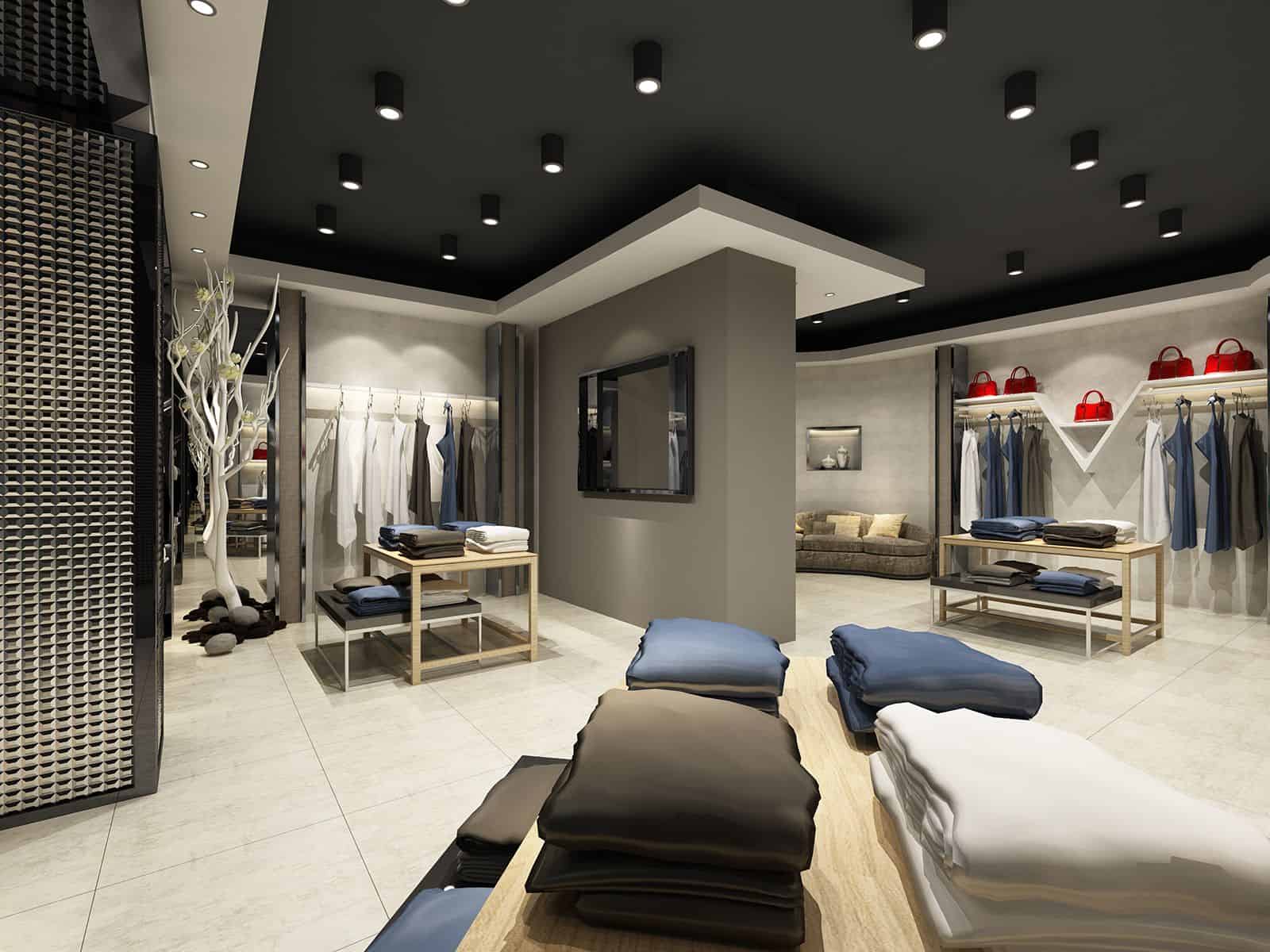
Even high-quality fixtures can fail when lighting placement is incorrect. Some of the most common problems include:
Overhead-Only Lighting Creates Self-Shadows
When lights are installed directly above customers or products, the merchandise itself blocks the light. Shelves, product edges, and mannequins cast shadows onto the very surfaces that should be highlighted.
Vertical Lighting Flattens Displays
Lighting aimed straight down produces uniform illumination but eliminates contrast. Products appear flat, with little depth or texture, making displays visually uninteresting.
Excessive Distance Wastes Light
Lights installed too far from displays often illuminate the floor rather than the product. The result is a bright aisle and dim merchandise—exactly the opposite of what retail lighting should achieve.
How does poor lighting placement affect retail displays?
Poor lighting placement can create shadows, glare, and uneven illumination, making products harder to see and less appealing.
How Proper Lighting Placement Improves Product Visibility
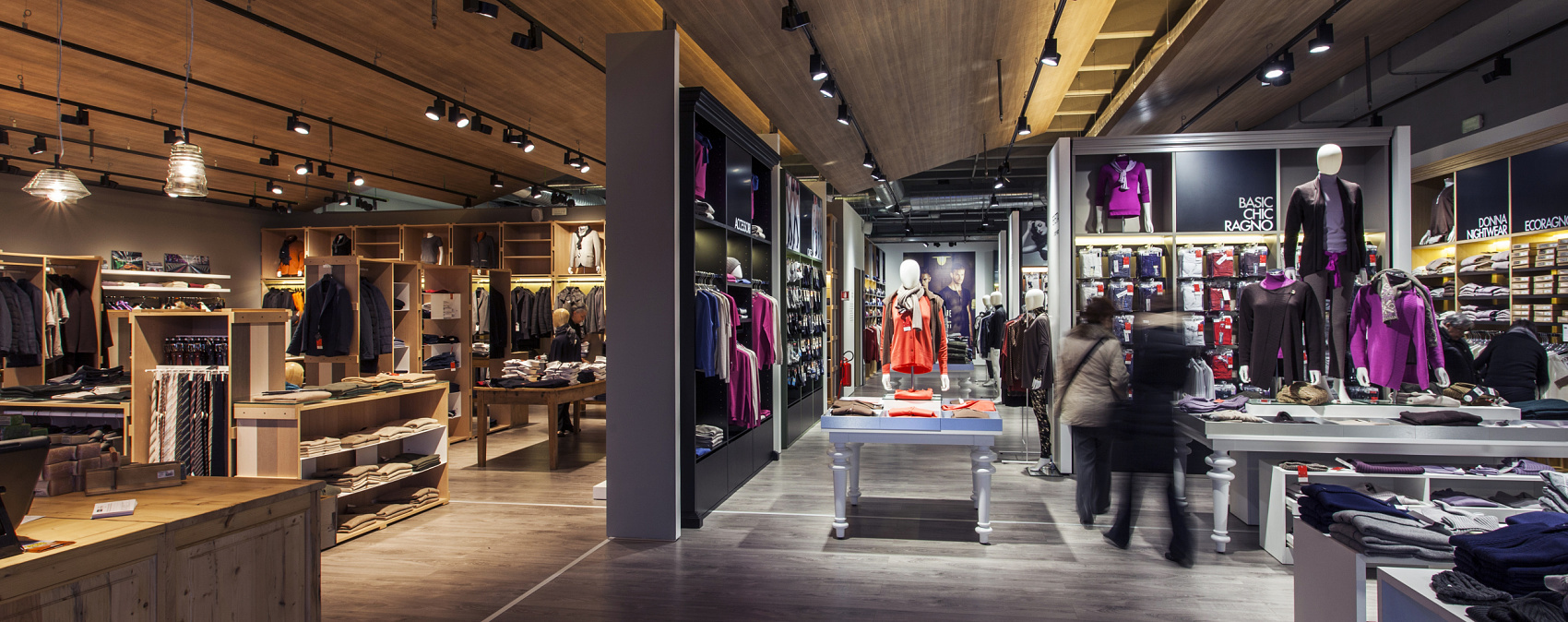
Correct lighting placement transforms how products are perceived. Instead of simply illuminating a space, lighting becomes a visibility tool.
Angled Lighting Creates Depth and Focus
Aiming lights at a 30°–45° angle toward products introduces shadows in controlled ways. This creates depth, highlights texture, and separates products from their background.
Angled lighting is particularly effective for apparel, accessories, and packaged goods where surface detail matters.
Front-Focused Lighting Reduces Shadows
Lighting placed slightly in front of products ensures that light reaches the surfaces customers actually see. This reduces harsh shadows caused by overhead fixtures and improves facial and material visibility on mannequins and displays.
Correct Distance Improves Light Distribution
Lights placed too close can cause hotspots and glare, while lights placed too far dilute intensity. Balanced distance ensures even distribution across product surfaces without visual discomfort.
How does lighting placement improve product visibility?
Proper lighting placement highlights product surfaces, reduces shadows, and creates visual contrast that attracts customer attention.
Lighting Placement for Different Retail Display Types
Shelves & Wall Displays
Wall-mounted displays are common in retail and require careful placement to avoid glare and shadows.
Best practices:
- Place lights 30–60 cm from the wall
- Aim at a 30°–45° angle
- Avoid direct light into customers’ eyes
This approach ensures even illumination across vertical surfaces while maintaining visual comfort.
Mannequins & Feature Products
Mannequins and hero products need stronger visual emphasis.
Effective placement includes:
- Narrow beam angles for focus
- Front-angled lighting to avoid facial shadows
- Multiple light sources for balanced coverage
This technique enhances form and texture, making products appear more premium and realistic.
Island Displays
Island displays must be visible from multiple directions.
Recommended strategies:
- Use multiple lights from different angles
- Create overlapping beams to avoid dark edges
- Avoid single overhead fixtures
This ensures consistent visibility regardless of where customers approach from.
Track Lights vs Downlights – Placement Impact on Visibility
Both track lighting E Faretti a LED da incasso are widely used in retail, but their placement flexibility differs significantly.
Downlights
- Provide general, even illumination
- Often fixed in position and direction
- Can create flat lighting if overused
Downlights are useful for ambient lighting but limited for precise product highlighting.
Track Lights
- Adjustable position and direction
- Easy to realign with changing displays
- Better control of lighting direction and focus
Because track lights allow precise placement and aiming, they are more effective for improving product visibility in dynamic retail environments.
How do track lights and downlights affect product visibility?
Downlights provide general illumination, while track lights offer adjustable placement to better highlight products and displays.
Professional retail projects often combine both, using downlights for ambient lighting and track lights for accent and display illumination, supported by flexible LED track lighting systems.
Common Retail Lighting Placement Mistakes
Frequent Mistakes and Their Impact
| Mistake | Visibility Impact |
|---|---|
| Lights placed only over aisles | Products remain dark |
| Lights aimed at floors | Wasted light |
| Fixed lighting angles | No adaptability |
| Ignoring glare | Customer discomfort |
Ignoring glare control can significantly reduce visual comfort. Many professional projects reference indoor lighting standards such as EN 12464-1 to manage glare and brightness balance.
What are common retail lighting placement mistakes?
Common mistakes include placing lights directly overhead, misaligning fixtures with displays, and ignoring lighting angles.
How to Optimize Retail Lighting Placement for Better Results
Optimizing lighting placement does not always require new fixtures. Often, adjusting position and direction delivers immediate improvements.
Practical Placement Checklist
- Lights should follow products, not ceiling grids
- Lighting angle matters more than quantity
- Combine track lighting and downlights strategically
- Prioritize adjustable fixtures for flexibility
In real retail projects, simple adjustments—changing angles, moving fixtures closer to displays, or reorienting beams—have significantly improved product visibility without major renovation. This is why many retailers seek lighting layout consultation as part of a complete retail lighting solution.
FAQ About retail lighting placement
How does lighting affect product visibility?
Lighting direction, angle, and distance determine how clearly products can be seen and evaluated.
Where should lights be placed in a retail store?
Lights should be placed to illuminate product surfaces directly, not just aisles or floors.
Can lighting placement increase sales?
Yes. Better visibility improves engagement, confidence, and purchasing behavior.
Is brighter lighting always better for visibility?
No. Proper placement and contrast are more important than raw brightness.
What type of lighting is best for retail displays?
Adjustable track lighting combined with controlled ambient lighting is often the most effective.
Business inquiries are welcome
Retail lighting success is not defined by how many fixtures are installed, but by how intelligently they are placed.
Proper lighting placement ensures that products are visible, attractive, and easy to evaluate. By focusing on direction, distance, and alignment with displays, retailers can transform lighting from a background utility into a powerful visibility and sales tool.
Planning Retail Lighting Placement?
If you are:
- Evaluating why products are not standing out
- Planning a new store or renovation
- Adjusting displays for seasonal changes
it may be time to review not just your lighting fixtures, but your lighting placement strategy.
You may explore:
Or seek project-based support through:
For tailored advice on improving product visibility through better lighting placement, you can also contact our lighting team directly