 XHLUX
XHLUX

In the ever-evolving world of lighting design, one common question asked by both commercial property owners and residential users is: Can track lights be used instead of fluorescent lights? The short answer is yes—but it’s not a simple swap. To fully understand the implications, advantages, and considerations, we must dive into technical, aesthetic, and economic aspects. This article will provide expert-level insight backed by credible sources to help you make an informed decision, whether you’re an architect, lighting designer, contractor, or end-user.
Table of contents
- 1. Introduction to Track Lights vs Fluorescent Lights
- 2. Key Differences in Technology
- 3. Advantages of Using Track Lighting Over Fluorescents
- 4. Application Scenarios: Where Track Lighting Excels
- 5. Energy Efficiency & Cost Comparison
- 6. Lighting Quality: CRI, Beam Angles, and Flexibility
- 7. Installation Considerations
- 8. Expert Opinions and Market Trends
- 9. FAQs
- 10. Conclusion
1. Introduction to Track Lights vs Fluorescent Lights
Fluorescent lights have long been a staple in schools, offices, and supermarkets due to their affordability and high lumen output. However, the lighting industry has shifted significantly toward more energy-efficient, customizable, and aesthetically pleasing options—enter LED track lighting.
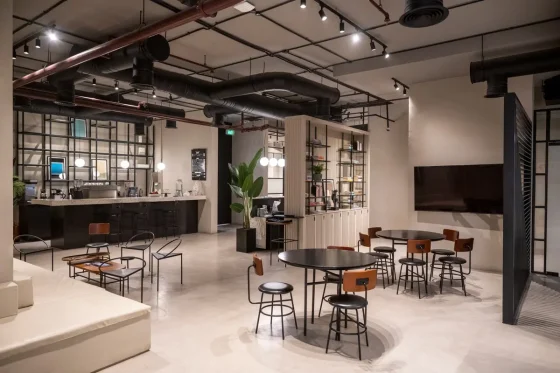
Track lights are modular lighting systems where fixtures are mounted along a linear rail or track. The flexibility they offer makes them ideal for modern interiors, retail displays, galleries, and even residential ceilings.
2. Key Differences in Technology
| Feature | Fluorescent Lights | Faretti a LED per binari |
|---|---|---|
| Lighting Technology | Gas-discharge lamp | Solid-state lighting (LED) |
| Fixture Design | Fixed, tube-based | Adjustable, directional heads |
| Lifespan | 10,000–15,000 hours | 30,000–50,000 hours |
| Warm-up Time | Often delayed | Instant-on |
| Control Systems | Limited dimming | Smart, DALI, Casambi, Bluetooth, Wi-Fi |
| Energy Efficiency | Moderate | High-efficiency track light options |
3. Advantages of Using Track Lighting Over Fluorescents
✅ Flexibility and Aesthetic Control
LED track lights provide a clean, modern look and allow directional control over each luminaire, perfect for highlighting artwork or merchandise.
✅ Modular and Scalable
With systems like DALI LED track lights, smart dimmable LED track lights, E Casambi LED track lighting, users can scale and control their lighting remotely and intuitively.
✅ Improved Light Quality
Most LED track light fixtures offer a high CRI (Color Rendering Index) of 90+, compared to fluorescent tubes that typically hover around 70-80.
4. Application Scenarios: Where Track Lighting Excels
🏢 Commercial Retail
- Replace harsh fluorescents with commercial LED track lighting systems to enhance visual appeal and reduce operational costs.
🖼️ Art Galleries & Showrooms
- Precision lighting via adjustable dimmable LED track lights allows curators to control every spotlight individually.
🏠 Modern Homes
- Homeowners are increasingly using smart LED track lights for homes, especially in kitchens and living rooms for task lighting and ambiance.
5. Energy Efficiency & Cost Comparison
Secondo il U.S. Department of Energy, LED lighting uses at least 75% less energy and lasts 25 times longer than incandescent lighting, with comparable savings over fluorescents.
| Metric | Fluorescent Fixture | LED Track Light Fixture |
|---|---|---|
| Wattage for 2000 Lumens | ~32W | ~18W |
| Average Lifespan | 12,000 hours | 40,000–50,000 hours |
| Annual Energy Cost (per unit) | $12.80 | $7.20 |
| Maintenance Cost | Higher (frequent change) | Lower (less frequent change) |
(Source: Energy.gov; Statista Lighting Efficiency Report, 2023)
6. Lighting Quality: CRI, Beam Angles, and Flexibility
Track lighting allows for beam angle customization—narrow for spotlighting, wide for general illumination. Fluorescents lack such precision.
Also, with smart dimmable LED track lights, you can adjust brightness levels and even color temperatures, creating mood-enhancing environments—something impossible with conventional fluorescent lighting.
7. Installation Considerations
While fluorescent lights often require recessed mounting or suspended ceiling grids, LED track light installation is faster and more adaptable.
Modern installations include:
- Magnetic track systems for tool-free fixture adjustment
- Wireless Casambi LED track lighting control for streamlined setup
- 6-wire and 3-phase track systems for commercial-grade scalability
8. Expert Opinions and Market Trends
“Track lighting, particularly in its LED and smart variants, has transcended decorative purposes and now plays a critical role in functional, energy-conscious lighting design.”
— Lighting Europe Association, 2024 Report
According to a recent MarketWatch industry report, the global LED track lighting market is projected to grow at a CAGR of 12.8% from 2024 to 2030, driven by increasing demand in retail and commercial sectors.
9. FAQs
Q: Can I replace a fluorescent ceiling fixture with track lighting directly?
A: Yes, but it may require rewiring or track mounting rails depending on the existing fixture setup.
Q: Are LED track lights more expensive than fluorescent?
A: Initial costs can be slightly higher, but the long-term energy savings and reduced maintenance make them cost-effective.
Q: Are there dimmable versions of track lights?
A: Absolutely. You can find dimmable commercial LED track lighting E LED track lights with adjustable brightness suitable for homes or offices.
10. Conclusion
So, can track lights be used instead of fluorescent lights? Yes—and in many cases, they are the superior choice. From energy-efficient LED track lighting systems to smart, app-controlled solutions, track lighting offers not only improved illumination but also enhances aesthetics, flexibility, and user control.
For commercial applications, commercial LED track lighting provides tailored illumination, while LED track lights with dimming features are perfect for both functional and ambient lighting in homes and offices. As building codes and consumer expectations evolve, upgrading to high-efficiency track lights is no longer a luxury—it’s a lighting necessity.