XHLUX
XHLUX

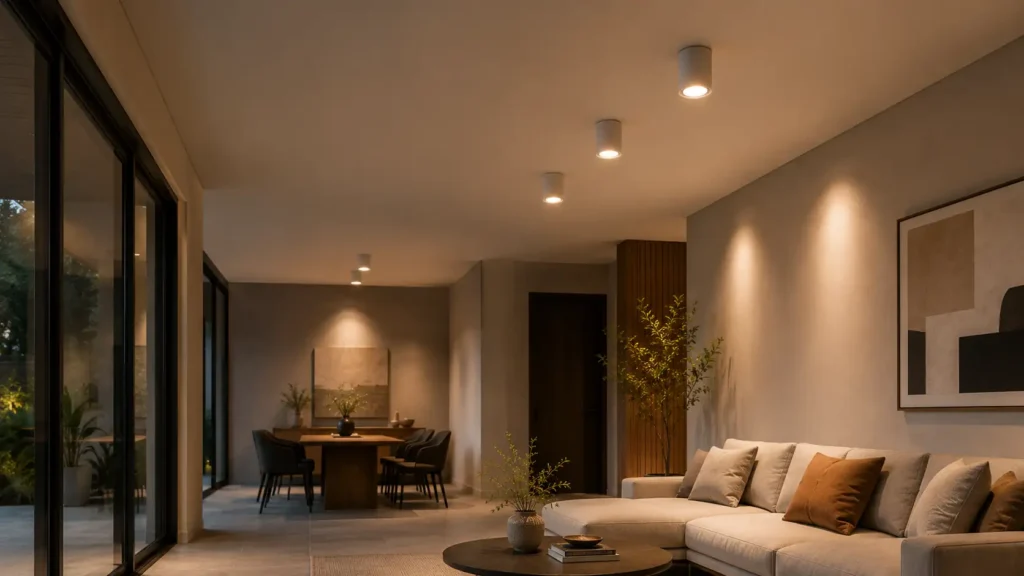
A surface mount cylinder downlight is a soffit-fixed, downward-aimed luminaire whose body reads as a short can — not a flat disc and not a recessed aperture in the ceiling plane.
You use it when you want exposed cylinder fixture design (visible height + controlled beam) and the ceiling cannot take a cut-out — or when a flush recess is allowed but the cylinder language is the design intent.
This guide freezes cuando that form fits. It is not the full surface-family catalogue (disc / COB / multi-head) and not a wiring tutorial.
For recessed vs surface vs adjustable routing, start here:
→ Métodos de instalación de focos LED empotrables: empotrados vs. montaje en superficie vs. ajustables
For the five surface form factors at overview depth, use:
→ Surface-Mounted LED Downlights for No-Recess Ceilings
Conclusiones clave
– Surface cylinder = soffit mount + cylindrical body + downward optic — a cylinder light fixture ceiling choice, not a recessed trim.
– Prefer it for accent / task beams and deliberate soffit presence; prefer a flat disc for wide ambient fill.
– Freeze surface mount cylinder beam angle and body height before wattage; height will read in photos.
– Cylinder downlight surface mounting still needs a listed box / plate path — “no recess” is not “no enclosure rules.”
Antes de comenzar
Ten esto a mano:
- Written reason for surface (no void, heritage, fire membrane, or deliberate exposed look)
- Ceiling height, target plane, and accent vs ambient layer
- Rough throw distance and desired spot size
- Product sheet: diameter, height, beam, Ta, driver location
- Sightline / photo approval for the cylinder silhouette
Dificultad: intermedia (especificador/diseñador).
Time: one planning pass before RCP (reflected ceiling plan) freeze — not a DIY wiring class.
1. What is a surface mount cylinder downlight?
A surface mounted cylindrical downlight locks three things together:
- Montar — body on the finished soffit (cylinder downlight surface mounting), not in a housing void
- Form — a cylindrical can with visible height below the plane
- Aim — light thrown downward (fixed nadir or adjustable head)
Es un cylinder light fixture ceiling member of the downlight family.
It is not a pendant on a stem, not a wall sconce, and not a flush recessed aperture with only a trim ring visible.
Flush mount cylinder downlight language on sheets usually means the canopy sits tight to the soffit with minimal gap — still a surface can, not a plaster-in recess.
Typical commercial height bands (planning only — confirm the sheet):
| Diameter class | Body height (typical) | Usual job |
|---|---|---|
| ~50 mm | ~70 mm | Close task / soft accent |
| ~75 mm | ~110 mm | Retail / feature accent |
| ~95 mm | ~162 mm | Higher throw / stronger presence |
Those bands match the live surface form-factor overview; override with the SKU drawing.
🎯 What defines a surface mount cylinder?
A soffit-fixed cylindrical can that throws light down — visible height on the ceiling, no recessed housing void.
2. When should you use one (and when not)?
Utilice un surface mount cylinder downlight cuando both are true:
- You need a directional or semi-directional pool (accent / task), y
- Surface mount is required or preferred (no cut-out, shallow void, or exposed-can design brief)
| Situation | Prefer surface cylinder | Prefer another path |
|---|---|---|
| Hormigón / sin huecos | Sí | Recess only if you build a false ceiling |
| Heritage / no cut-outs | Sí | Recess usually blocked |
| Flush architectural plane mandatory | No | Recessed / trimless family |
| Wide office ambient, low visual height | No | Surface disc (wide beam, short body) |
| Accent on display / counter / art | Sí | Recessed gimbal if void + flush required |
| Outdoor eave / wet soffit | Only if wet-listed cylinder | Outdoor soffit / IP-rated recess path |
Ceiling-type constraints:
→ Cómo elegir focos empotrables para diferentes tipos de techo
Mount fork still open?
🎯 When does a surface cylinder win?
When you need a controlled downward pool and a visible can — and recess is blocked or the exposed form is intentional.
3. Cylinder vs disc vs flush recess
Do not treat “surface mount” as one product.
| Dimensión | Surface cylinder | Surface disc | Flush recess |
|---|---|---|---|
| Visual | Tall can on soffit | Low puck / disc | Aperture in plane |
| Typical beam habit | ~15–60° accent/task | ~60–120° ambient | Wide to narrow by optic |
| Best layer | Accent / task | General fill | Ambient or accent in void |
| Instalar | Surface plate / listed box | Same family | Cut-out + void depth |
Exposed cylinder fixture design is an acceptance item.
A 110–160 mm body will show in every corridor photo — get finish and silhouette signed off before bulk order.
If the brief only said “surface” and the room needs soft fill, start with the disc path on that no-recess form-factor overview (linked above).
Do not line the soffit with narrow cylinders for ambient fill.
For deep-set glare control inside a recess (not this mount), use the deep recessed vs flush guide when that article is live — do not specify a surface can as a substitute for a deep cup.
Three ceiling mount silhouettes: tall surface cylinder, low surface disc, and flush recessed aperture.
Form at a glance
Surface cylinder
Surface disc
Flush recess
🎯 Cylinder or disc on a no-recess soffit?
Cylinder for directional accent/task with accepted height; disc for wide ambient with a low profile.
4. Freeze surface mount cylinder beam angle
Surface mount cylinder beam angle decides whether the can paints a tight ellipse or a soft pool.
Planning bands inside accent/task use (confirm IES / sheet):
| Necesidad | Starting beam class |
|---|---|
| Small object / long throw | Narrow (~15–24°) |
| Mid display / table | Medium (~25–38°) |
| Soft feature pool | Wider accent (~40–60°) |
Wider than ~60° on a cylinder often still reads “can on ceiling,” but behaves closer to ambient — check whether a disc would do the fill job with less visual height.
Aiming:
- Fixed nadir for centred accents
- Adjustable / gimbal surface heads when the target sits off-axis
→ Downlights direccionales para iluminación de acento y de trabajo.
→ ¿Cuál es la diferencia entre los focos empotrables ajustables y los fijos?
COB-in-cylinder packages: use the surface COB guide for source-package and heat checks — this page stays on form and when-to-use.
🎯 What beam check comes first?
Match throw and spot size on the sheet, then accept glare to primary views — never wattage before beam class.
5. Surface mount cylinder downlight installation — what to lock before craft
Surface mount cylinder downlight installation y cylinder downlight installation share the same surface-family craft path: listed enclosure or base plate, dead-circuit splice, seated body, torque that keeps the can plumb.
Cylinder-specific freezes before the electrician opens the box:
- [ ] Mount plate / J-box pattern matches the cylinder canopy
- [ ] Body height clears doors, sprinklers, and camera sightlines
- [ ] Free air around the can — do not bury in insulation or a sealed niche
- [ ] Driver in head vs remote decided (remote needs a legal cavity)
- [ ] Finish and diameter approved on a sample soffit photo
- [ ] Wet / IP listing only if the soffit is outdoor or damp-rated
Step-by-step craft lives here:
→ How to Install a Surface-Mount LED Downlight Without Recessing the Ceiling
Outdoor eave cans are a different weather story — use the LED soffit suitability / exterior checklists when those guides are live; do not copy indoor dry listings outdoors.
🎯 What must be frozen before install day?
Canopy pattern, body height clearance, airflow, and driver location — then follow the surface-mount install sequence.
6. When-to-use criteria table
Run this pass once before SKU freeze:
| Controlar | Use surface cylinder | Change path |
|---|---|---|
| Capa | Accent or focused task | Whole-room ambient only → disc / linear |
| Techo | Surface allowed or required | Flush recess required + void OK |
| Form | Exposed can accepted | Height rejected → disc or recess |
| Haz | Controlled pool matches throw | Soft wide fill → disc |
| Deslumbramiento | Shielding / louvre path OK | Bare source in mirrors / seating |
| Heat / Ta | Sheet ambient and clearances clear | Hot pocket above rating |
| Exterior | Wet-listed cylinder only | Indoor SKU on an eave |
🎯 ¿Cuál es el orden de congelación?
Ceiling and layer first, then silhouette height, then beam and glare — leave wattage until those locks hold.
¿Qué hacer a continuación?
- Confirm surface vs recess on the Descripción general de los métodos de instalación.
- If several surface shapes are still open, skim Surface-Mounted LED Downlights for No-Recess Ceilings for disc / COB / multi-head contrast.
- Lock beam and aiming with the directional / adjustable guides above.
- Hand the frozen SKU to the surface-mount install sequence.
XHLUX can shortlist commercial surface cylinder packages (fixed or adjustable) once height, beam, and Ta are on the same issue set — treat that as a fit check, not a catalogue dump.
Preguntas frecuentes
Notas sobre las pruebas
Height / diameter planning bands and disc-vs-cylinder beam habits align with the live XHLUX surface form-factor overview (disc ~60–120°; cylinder accent/task commonly ~15–60°; example heights ~70–162 mm).
Accent beam ladder (~15–24° / ~25–38° / ~40–60°) matches the directional guide’s accent scale — confirm every SKU with the photometric file.
Spacing for ambient grids (often ~1.6–2.0× mounting height; tighter for narrow cylinders) stays on the no-recess overview; this guide does not re-run a full layout calculator.
Always override planning bands with the product sheet, rated ambient, and project lux targets.