 XHLUX
XHLUX

Tabla de contenido
- How to Choose a Partner Who Delivers the Project—Not Just a Batch of Lights
- Why Choosing the Right Lighting Project Partner Matters
- Product Reliability Is Only the Starting Point
- Project Understanding and Application Knowledge
- Design and Technical Support Capability
- Comunicación y capacidad de respuesta
- Lead Time Control and Supply Stability
- Quality Control and Documentation
- After-Sales Support and Long-Term Commitment
- Red Flags That Indicate a Weak Lighting Project Partner
- How to Evaluate a Commercial Lighting Project Partner
- Comparison Table: Supplier vs Project Partner
- FAQ About commercial lighting project partner
- Conclusión
How to Choose a Partner Who Delivers the Project—Not Just a Batch of Lights
Commercial lighting projects rarely fail because “the fixtures didn’t turn on.” They fail because of missed deadlines, inconsistent specifications, unclear communication, weak documentation, and poor after-sales follow-through—all of which are partner problems, not product problems.
That’s why high-intent buyers searching commercial lighting project partner are usually asking one core question:
Who can stay with me from design decisions to delivery and long-term support—rather than simply quoting a price and shipping cartons?
This guide defines Partner ≠ Supplier using a full project lifecycle view. It explains what truly matters before you sign off on a commercial lighting partner—especially if you’re managing risk in retail, hospitality, offices, or multi-site rollouts.
Why Choosing the Right Lighting Project Partner Matters

Commercial lighting is not a “single product” purchase. It’s a system decision that impacts multiple stakeholders:
- Designers care about visual comfort, beam control, consistency, and the intended atmosphere
- Contractors care about installation clarity, wiring stability, and coordination
- Owners care about timelines, maintenance, warranty, and lifecycle costs
- Procurement cares about repeatability, documentation, and risk control
When the partner is weak, lighting becomes a project bottleneck. A single delay in driver components or inconsistent color between batches can cascade into schedule changes, rework, and reputation damage.
A reliable partner reduces risk by delivering:
- spec consistency across batches
- technical support during design and aiming
- documentation that aligns with site execution
- stable lead times and predictable logistics
- after-sales support that protects project uptime
🎯 Why is a lighting project partner important?
A reliable lighting project partner helps manage risk, ensure consistency, and support successful project delivery.
Product Reliability Is Only the Starting Point
Many suppliers can offer “good quality.” A real project partner proves repeatable performance—across timelines, across batches, and across sites.
Reliability in commercial lighting means “system stability”
A partner should be able to answer questions like:
- Will the next batch match the first batch in CCT and chromaticity?
- Are there controls in place to keep SDCM stable across production?
- Can the optics maintain consistent beam shapes and cut-off behavior across shipments?
- Can documentation and labeling prevent on-site confusion during installation?
Spec-first benchmarks that reduce project risk
In many commercial environments, reliable partners design around proven engineering thresholds such as:
- CRI > 90 (Ra90+) / premium Ra97 options for retail and hospitality color quality
- SDCM < 3 for batch-to-batch color consistency
- UGR control (for office-like visual comfort targets where applicable; background reference: Clasificación Unificada de Deslumbramiento (UGR))
- Driver stability, e.g., Power Factor ≥ 0.9, compatible dimming where required
- Thermal management using die-cast aluminum heatsinks to stabilize lumen maintenance
- Optical materials like PMMA lenses + refined reflector systems to control glare and beam edges
- Lifetime targets like L70/B50 50.000 horas to protect maintenance cycles
If a partner can’t speak clearly about consistency, lifetime, and documentation, the risk isn’t “maybe the lights are bad.” The risk is the project becomes unpredictable.
🎯 Is product quality enough when choosing a lighting partner?
No. Product quality is essential, but project success depends on repeatability, consistency, and lifecycle support.
For buyers who want to see product families and spec ranges before discussing project support, start with a structured catalog:👉 Product catalog
Project Understanding and Application Knowledge
A supplier sells products. A partner understands applications.
Commercial lighting performance depends on behavior and context:
- In retail, product vertical surfaces drive perceived brightness
- In hospitality, seated eye level and mood control drive comfort
- In offices, glare discipline and uniformity matter for sustained viewing
A partner should proactively raise project-specific risks such as:
- “Seated diners will see this downlight aperture directly—glare risk.”
- “Narrow beams aimed too low may create discomfort and hotspots.”
- “Batch consistency matters for multi-zone rollouts—SDCM control required.”
- “Future layout changes suggest modular/track solutions rather than fixed positions.”
If your project includes accent lighting or evolving layouts, a partner should be able to propose adaptable systems and aiming discipline—not just product SKUs.
Examples of product families commonly used in commercial projects:
- Accent and flexible focus: 👉 Iluminación LED de carril
- Controlled ambient base: 👉 Spot Downlight
- Architectural ambient / coves / lines: 👉 Luz lineal LED
Design and Technical Support Capability
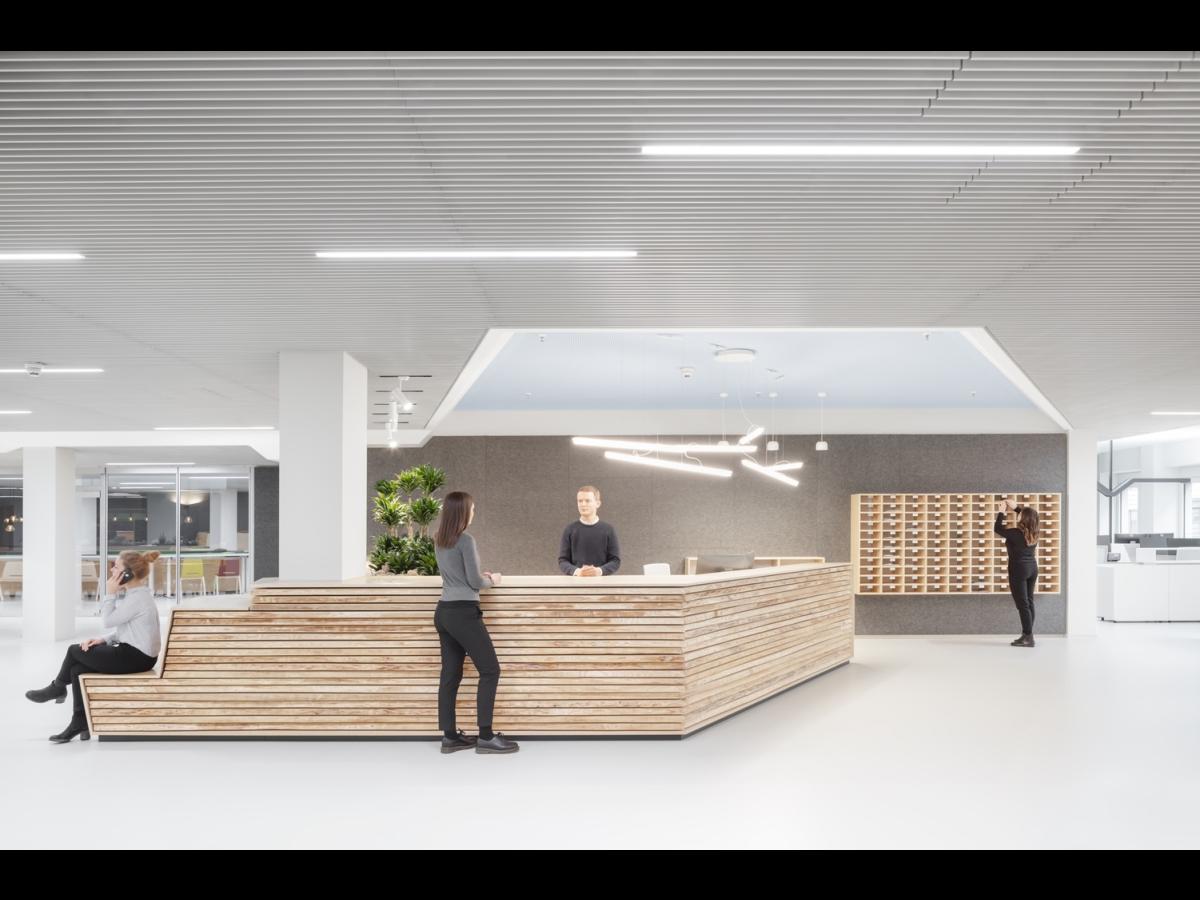
A real project partner helps you avoid mistakes before they become change orders. This is where many “suppliers” fail: they can quote quickly, but they don’t support design decisions.
What reliable design/technical support looks like
At minimum, expect a partner to provide:
1) Selection guidance aligned to space behavior
- Beam angles, cut-off behavior, glare control strategy
- Recommended layering: ambient + accent + decorative
- Color temperature guidance that matches brand atmosphere
2) Layout and aiming principles
- Where to place fixtures to avoid direct view glare
- How to aim track heads to keep light on surfaces, not in eyes
- How to structure brightness hierarchy without over-lighting the ceiling
3) Controls and integration readiness
- Dimming methods aligned with project requirements
- Scene strategies for hospitality and multi-mode spaces
- When appropriate, compatibility with professional protocols (background reference: Alianza DALI)
🎯 Do project buyers expect design support from lighting partners?
Yes. Reliable partners actively support design decisions to reduce project risk.
If you want a partner that works from design to delivery rather than just quoting products, use a solution-first entry:👉 Service & Solution
Comunicación y capacidad de respuesta
In project execution, communication is safety.
What buyers usually mean by “good communication” is:
- fast response on technical questions
- consistent answers (no contradictions between sales and engineering)
- clear English that avoids ambiguous promises
- proactive confirmation of critical details (CCT, dimming, beam, cut-out, driver, lead time)
A reliable partner also documents decisions. If specs live only in chat messages, you’re building risk into the project.
Practical signs of strong responsiveness:
- Replies include tables, drawings, or clearly structured bullets
- Technical questions are answered with parameters, not marketing phrases
- The partner confirms changes with revision control (Version A / Version B)
- You always know who owns the next action
Lead Time Control and Supply Stability
Commercial lighting projects don’t run on “average lead times.” They run on critical path schedules.
A dependable partner manages:
- realistic production windows (not optimistic promises)
- component planning (drivers, chips, optics)
- batch allocation for multi-phase projects
- packaging and labeling that supports site installation
If a partner misses one batch delivery, the cost is often not shipping fees—it’s:
- construction delay
- rebooking labor
- opening date impact
- revenue loss due to downtime
🎯 Why is lead time reliability critical in lighting projects?
Reliable lead times prevent construction delays and costly schedule disruptions.
For project inquiries where schedule and stability matter, route communication through a dedicated quote/support channel:👉 Contact / Quote
Quality Control and Documentation
Commercial projects require batch consistency, not “sample quality.”
What QC should cover in project deliveries
A project partner should be able to provide or confirm:
- CCT and chromaticity stability targets (e.g., SDCM control)
- Electrical safety and driver stability (PF, dimming behavior)
- Optical consistency (beam shape and cut-off)
- Traceability (model codes, batch identifiers, date codes)
Documentation that reduces installation risk
Expect:
- clear specification sheets
- wiring / installation guidance
- labeling and packing lists that match site zones
- warranty terms and support workflows
When documentation is weak, contractors improvise—and improvisation is one of the biggest sources of rework.
After-Sales Support and Long-Term Commitment
Commercial lighting does not end at commissioning.
A partner is defined by what happens when:
- a driver fails during the warranty period
- a site needs matching replacements months later
- an owner asks for a lighting scene adjustment
- a multi-site rollout needs consistent replenishment
Strong after-sales support includes:
- clearly defined warranty scope
- fast response and practical troubleshooting steps
- replacement availability planning (especially for repeat projects)
- commitment to continuity (not “this model is discontinued” surprises)
🎯 What after-sales support defines a reliable lighting partner?
Clear warranties, fast response, and long-term technical support define a reliable partner.
If you want to evaluate a partner’s stability and continuity mindset, reviewing their company positioning and capacity can help:👉 Sobre nosotros
Red Flags That Indicate a Weak Lighting Project Partner
Here are warning signs that usually predict project friction:
- Only talks about price; avoids discussing project stages and risk
- Cannot provide clear specs or repeatedly changes claims
- Avoids sharing documentation or consistent naming conventions
- Has no relevant project references or avoids discussing past delivery challenges
- Slow or vague responses (“should be fine,” “no problem,” “we can do”)
- Doesn’t ask clarification questions about application, controls, viewing angles
- Treats changes as annoyance rather than normal project reality
🎯 What are warning signs of an unreliable lighting partner?
Red flags include poor communication, unclear specifications, lack of documentation, and weak project support.
To see what real implementation looks like, project case studies help buyers evaluate credibility:👉 Casos prácticos de proyectos
How to Evaluate a Commercial Lighting Project Partner
Below is a practical evaluation checklist you can use before you finalize a partner—especially when you’re in “decision + risk avoidance” mode.
The 5 questions that reveal Partner vs Supplier
- Have you delivered similar commercial lighting projects?
- Can you identify risks before production (glare, consistency, aiming, dimming)?
- Can you guarantee repeatability (SDCM control, batch consistency, documentation)?
- Are lead times and supply planning reliable and realistic?
- Is after-sales support clearly defined with a process—not just a promise?
What to request during evaluation
- A structured quote with key specs (CCT, CRI, beam, dimming, driver)
- Batch consistency statement (how you manage color deviation)
- Documentation sample pack (datasheet + installation notes + labels)
- Timeline plan and change management approach
- Warranty terms and response time expectations
“In commercial projects, we support clients from selection and glare-control planning to batch consistency management and after-sales continuity, helping reduce rework and prevent schedule disruption.”
If you want buyers to evaluate you using these standards (and you should), invite them to engage through a project-focused entry point:👉 Request project support
Comparison Table: Supplier vs Project Partner
| Capability | Supplier (Product-Focused) | Project Partner (Lifecycle-Focused) |
|---|---|---|
| Primary goal | Ship products | Deliver project success |
| Risk management | Bajo | Alto |
| Spec consistency | “Sample is OK” | Batch & multi-phase repeatability |
| Design support | Minimal | Selection + optics + aiming guidance |
| Lead time discipline | Best effort | Schedule-driven planning |
| Documentation | Básico | Project-ready, installation-aligned |
| After-sales | Reactive | Process-based, continuity-oriented |
| Long-term value | Bajo | Alto |
FAQ About commercial lighting project partner
Conclusión
Elegir un commercial lighting project partner is fundamentally a risk decision.
If you want predictable delivery, consistent appearance, smooth coordination, and long-term support, you need a partner who can operate across the full project lifecycle—from design decisions to after-sales continuity.
If you’re evaluating partners for a retail, hospitality, office, or multi-site project and want structured support (selection guidance, documentation, lead time planning, and continuity), start here:👉 Talk to a commercial lighting project team
External References
- Visual discomfort and glare terminology (background): IES – Glare IES – Discomfort Glare
- Controls protocol background: Alianza DALI
- Metric background (UGR concept overview): Wikipedia – UGR