 XHLUX
XHLUX
![What is Modular Dimmable Track Light: Best Guide [2025]](https://xhlux.com/wp-content/uploads/2024/05/news.webp)
Tabla de contenido
- What is a Modular Dimmable Track Light System?
- Why Modularity is the Future of Lighting Design
- A Note on Magnetic Systems: Modularity Perfected
- Making It Dimmable: Integrating Control into Your Custom System
- Designing Your System: A Practical Guide to Getting Started
- Market Trends & The Demand for Personalization
- Is a Modular System Your Path to Perfect Lighting?
For too long, we’ve thought of lighting in straight lines. A single track here, a row of downlights there. But what if you could treat your ceiling like a canvas? What if you could draw with light, creating geometric patterns, following architectural curves, and building a lighting system that is as unique as your space itself?
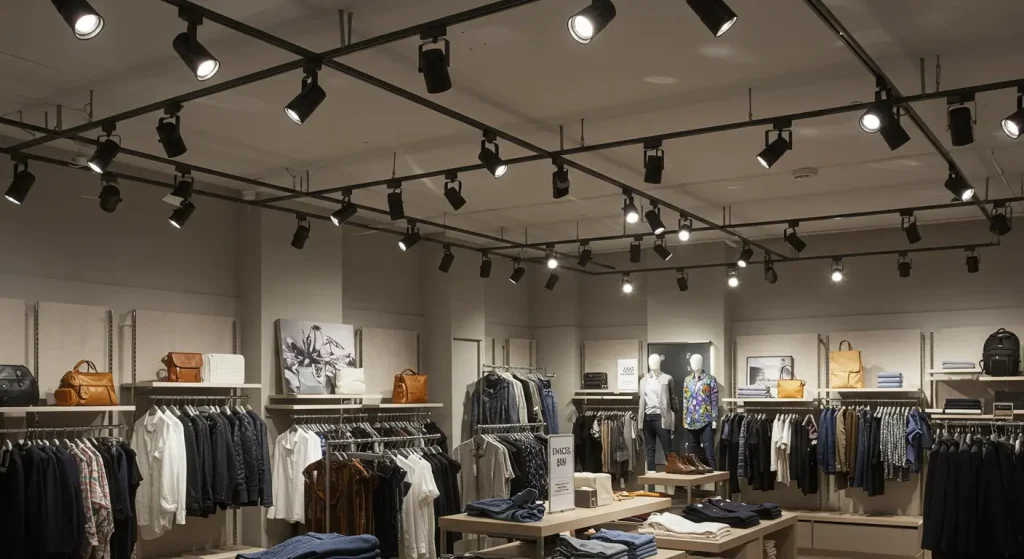
This isn’t a futuristic dream; it’s the reality of the Modular Dimmable Track Light system. This is where lighting breaks free from its constraints, offering a level of customization and creative control that was once the exclusive domain of high-end commercial projects. It’s a system built on a simple yet revolutionary idea: you are the architect of your own illumination.
What is a Modular Dimmable Track Light System?
At its heart, a Modular Dimmable Track Light system is a lighting platform comprised of individual, interconnecting components that allow you to design and build a custom lighting infrastructure. Instead of buying a single, fixed-length track, you select from a toolkit of parts to create a layout that perfectly fits your architectural needs and design ambitions.
It’s about moving from “one size fits all” to “a perfect fit for you.” This approach fundamentally changes how we think about track lighting, turning it from a simple utility into a core architectural element.
The Building Blocks: Understanding the Components
To master modular lighting, you first need to know your toolkit. A complete system is assembled from these key components:
- The Tracks (The Foundation): These are the straight sections of the track, typically available in various lengths (e.g., 1m, 2m, 3m). They can be cut to size for a perfect fit. They are the “bones” of your layout.
- The Connectors (The Creative Joints): This is where the magic of modularity truly happens. Connectors allow you to join track sections together to create custom patterns. Common types include:
- L-Connectors: For creating sharp 90-degree corners.
- T-Connectors: For creating a three-way junction.
- X-Connectors (or Cross Connectors): For creating a four-way intersection.
- Flexible Connectors: For joining tracks at custom angles or navigating non-standard corners.
- Internal Connectors: For joining two straight tracks to create a longer, seamless run.
- The Power Feeds (The Heartbeat): This component connects your home’s electrical wiring to the track system, providing it with power. You can have end feeds (at the start of a run) or floating feeds (connecting anywhere along the track via a canopy).
- The Light Modules (The Personality): This is the fun part! Once your track layout is built, you populate it with a variety of light modules. Because it’s a unified platform, you can mix and match different types of lights on the same track, such as:
- Adjustable Spotlights for accent and task lighting.
- Linear Lights or Wall Washers for broad, ambient illumination.
- Decorative Pendants to create focal points over tables and islands.
- The Control System (The Brains): This is the “dimmable” part of the equation. It includes your chosen dimmers, drivers, and any smart hubs or gateways needed to control the light modules on your custom track network.
Why Modularity is the Future of Lighting Design
Choosing a modular system is about embracing a philosophy of flexibility and personalization. The benefits are profound.
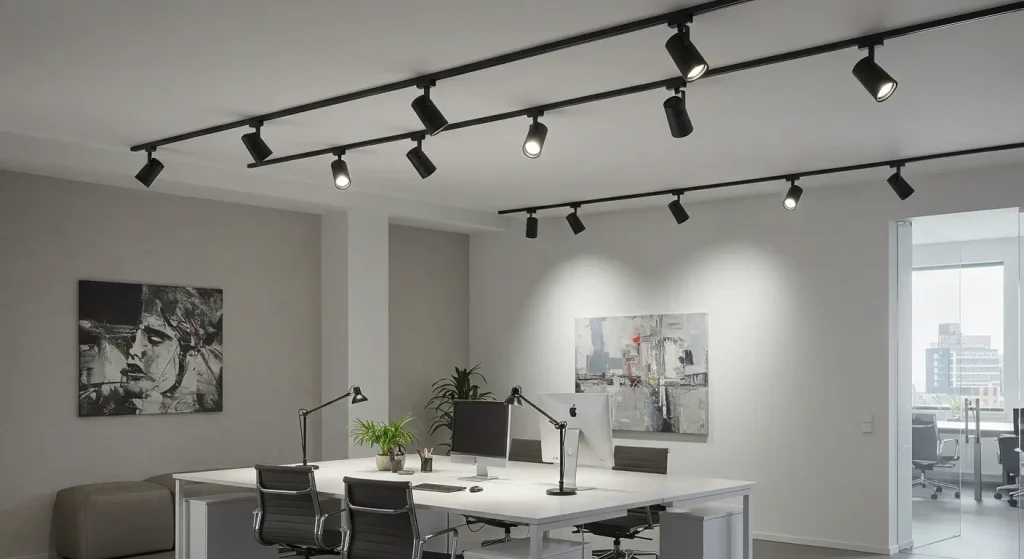
Ultimate Creative Freedom: Design Your Own Layout
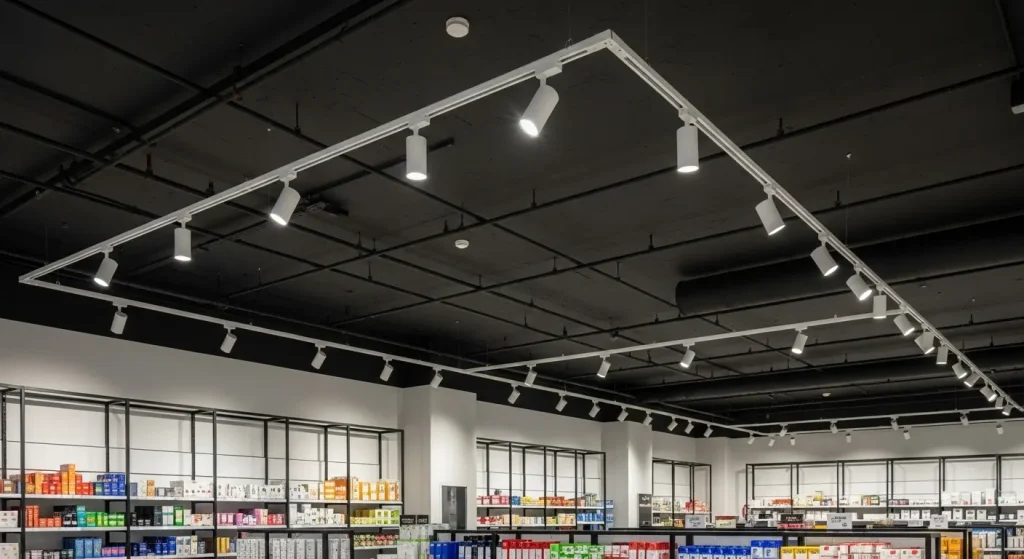
You are no longer bound by a single straight line. With a customizable track lighting system, you can create a square or rectangular layout in a living room, a U-shape around a kitchen workspace, or a zigzag pattern down a long corridor. The track itself becomes a graphic element, perfectly integrated with your design intent.
Unmatched Adaptability: A System That Evolves with Your Space
Your space isn’t static, so why should your lighting be? A modular system is inherently adaptable. If you renovate or change your furniture layout, you can often reconfigure your track system by adding or changing connectors and track sections. It’s a long-term investment in a flexible infrastructure.
Tailored Functionality: Mixing and Matching Light Types
This is a huge advantage. On a single, cohesive track system, you can place bright task spotlights over a workbench, soft linear lights for general ambiance, and a beautiful dimmable pendant over a seating area. This ability to combine different light functions on one platform is the key to creating sophisticated, layered lighting designs.
A Cohesive, Integrated Aesthetic
Because all the components—tracks, connectors, and light modules—are designed to work together as a single system, the result is a clean, cohesive, and professional look. There are no mismatched parts or awkward transitions, just a beautifully integrated lighting solution.
A Note on Magnetic Systems: Modularity Perfected
It’s impossible to talk about modern modular lighting without highlighting modular magnetic track lighting. These systems, typically low-voltage (48V), are the pinnacle of the modular concept. They offer two layers of modularity:
- Track Modularity: You build the track layout with connectors, just like any other modular system.
- Fixture Modularity: The light fixtures themselves attach magnetically. This means you can add, remove, and reposition them instantly, by hand, without any tools.
This combination of a custom-built track infrastructure and effortlessly interchangeable light modules represents the ultimate in lighting flexibility and user control.
Making It Dimmable: Integrating Control into Your Custom System
A custom-built track layout deserves a sophisticated control strategy. The “dimmable” aspect of your Modular Dimmable Track Light system is planned at the system level. Your main choices are between simple zonal dimming and more advanced individual or smart control.
| Control Strategy | How It Works in a Modular System | Level of Control | Best Suited For |
|---|---|---|---|
| Zonal (Circuit) Dimming | You use a multi-circuit track (e.g., 3-circuit) and assign different sections or fixture types to different circuits, each controlled by its own wall dimmer (Phase-Cut or 0-10V). | Good (control over 1-3 large zones). | Applications where simple, reliable group control is sufficient. |
| Smart Wireless Control | The track provides constant power. Each light module has its own smart chip (e.g., Zigbee) and is controlled individually or grouped digitally via an app/hub. | Excellent (individual fixture control and digital grouping). | Smart homes and spaces wanting flexible app/voice control without extra data wiring. |
| Digital Wired Control | The modular track includes a data bus (e.g., 4-circuit DALI track). Each fixture is addressed and controlled digitally with pinpoint precision. | Ultimate (professional-grade individual control, feedback, and integration). | High-end commercial, galleries, and architectural projects. |
The key is to decide on your control strategy before you finalize your parts list, as it will determine whether you need a single-circuit or multi-circuit track, and if that track needs to include a data bus.
Designing Your System: A Practical Guide to Getting Started
Feeling inspired? Here’s a simple framework to start planning your own modular dimmable track light system.
Step 1: Sketch Your Vision and Define Your Needs
- Draw Your Layout: Get a floor plan of your space and sketch out the desired shape and path of your track lighting. Do you need a simple ‘L’ shape, a large rectangle, or something more custom?
- Identify Lighting Tasks: Where do you need bright, focused light (task)? Where do you need soft, general light (ambient)? What features do you want to highlight (accent)? This will inform your choice of light modules.
Step 2: Choose Your Track System and Mounting Type
- Select a System: Choose a reputable modular track system that offers all the components you need (tracks, connectors, a good range of light modules).
- Choose a Mounting Type: Decide if your track will be surface-mounted (great for concrete ceilings/retrofits), recessed (for a seamless look in new builds), or suspended (for high ceilings).
Step 3: Select Your Components and Light Modules
- Map it Out: Based on your sketch, create a “bill of materials.” List the lengths of track you need, and the number and type of connectors (L, T, X, etc.). Don’t forget end caps and the power feed.
- Pick Your Lights: Choose the specific spotlights, linear lights, and pendants that will accomplish the lighting tasks you identified in Step 1.
Step 4: Plan Your Power and Control Strategy
- Calculate the Load: Add up the total wattage of all your planned light modules to ensure you choose a power supply (driver) with enough capacity.
- Choose Your Dimming Method: Decide how you want to control your lights. Will you use a simple wall dimmer controlling the whole system? A multi-circuit setup with several dimmers? Or a smart system with a hub? This decision will finalize your wiring plan with your electrician.
Market Trends & The Demand for Personalization
The rise of modular lighting is not a fluke; it’s a direct response to a major cultural and design shift. We have moved into an era of mass personalization. Consumers no longer want off-the-shelf products; they want solutions tailored to their unique lives and spaces. Market reports on everything from furniture to technology highlight this trend.

In architecture and interior design, this translates to a demand for flexible, multi-functional spaces that can adapt to different needs. The Modular Dimmable Track Light is the perfect lighting equivalent—an infrastructure that provides structure but celebrates individuality and change. Experts see this move towards customizable, user-centric systems as a dominant force that will shape the lighting industry for years to come.
Is a Modular System Your Path to Perfect Lighting?
So, is a Modular Dimmable Track Light system the right choice for you?
It is the ideal solution if:
- You refuse to be limited by standard, straight-line lighting and want full creative control over your layout.
- Your space is multi-functional or likely to evolve, and you need a lighting system that can adapt with you.
- You want to create sophisticated, layered lighting effects by mixing different types of lights on a single, cohesive track.
- You are planning a new build or major renovation and can design your lighting infrastructure from the ground up.
- You appreciate a clean, integrated aesthetic where every component is part of a unified system.
It might be more than you need if:
- A simple, straight run of track lighting meets all your current and future needs.
- You are on a very tight budget and looking for the most basic lighting solution.
A modular dimmable track light system is for the creator, the designer, the homeowner who wants to take an active role in shaping their environment. It’s an investment in unparalleled flexibility and a tool for ultimate personalization. It’s your chance to stop just lighting a room, and start designing with light.
Ready to build the lighting system you’ve always envisioned?
Your unique space deserves a custom solution. If you’re ready to explore the creative possibilities of modular track lighting, our team of lighting specialists is here to help you design a system that’s perfectly tailored to your vision.
Contact us today for a professional consultation, and let’s start building your brilliant idea.