 XHLUX
XHLUX

Tabla de contenido
- 1. Why Commercial Lighting Matters
- 2. What Is Commercial Linear Pendant Lighting?
- 3. Benefits of Using Linear Pendant Lighting in Commercial Spaces
- 4. Types of Linear Pendant Lights
- 5. Common Applications of Linear Pendant Lighting
- 6. How to Choose the Right Linear Pendant Light
- 7. Why Work With a Reliable Manufacturer or Supplier?
- 8. FAQ About Commercial Linear Pendant Lighting
- 9. Summarize
Lighting is more than a utility—it is a design tool that influences how people work, shop, dine, and relax. In commercial settings such as offices, restaurants, hotels, and retail stores, the right lighting can improve productivity, elevate customer experience, and even drive revenue.
Among the many lighting solutions available today, commercial linear pendant lighting has gained significant popularity. Its sleek design, flexibility, and energy efficiency make it a preferred choice for architects, interior designers, and contractors worldwide.
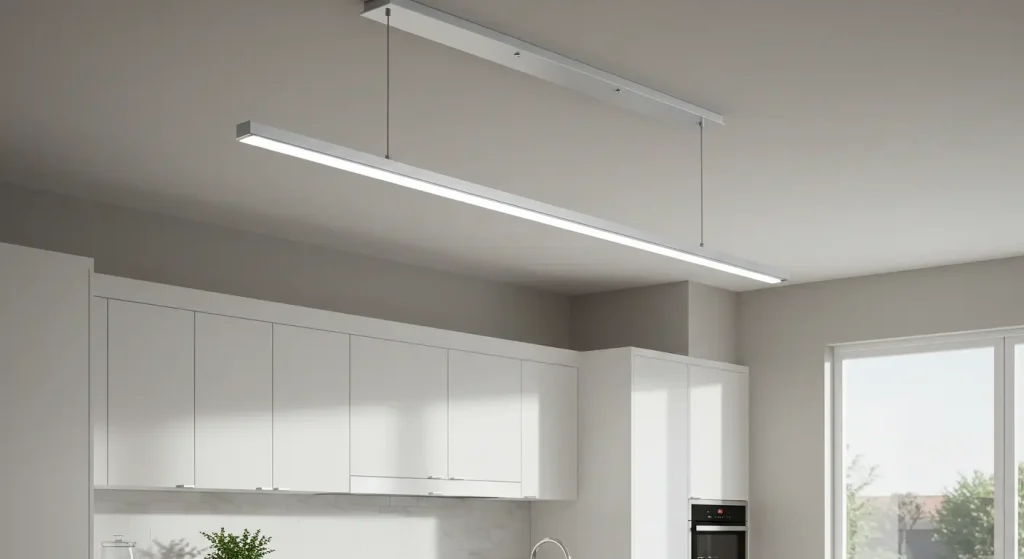
This complete beginner’s guide will walk you through what linear pendant lighting is, why it matters, the different types available, how to choose the right fixture, and why working with a reliable manufacturer is essential.
1. Why Commercial Lighting Matters
Lighting in commercial environments isn’t just about brightness. It plays a multidimensional role in shaping both aesthetics and functionality:
- Atmosphere Creation – A well-lit hotel lobby feels inviting; a warmly lit restaurant feels intimate; a brightly lit retail store feels energizing.
- Productivity Support – In offices and schools, lighting impacts concentration, reduces fatigue, and creates a healthy working environment.
- Brand Identity Reinforcement – Many brands use lighting to reflect their identity. For example, high-end retail often employs architectural linear lighting to emphasize sophistication and minimalism.
👉 Trend Insight: As businesses move toward sustainable design and minimalistic aesthetics, linear pendant lights have emerged as a central feature in modern commercial lighting projects.
2. What Is Commercial Linear Pendant Lighting?
A linear pendant light is a long, narrow light fixture suspended from the ceiling using cables, rods, or adjustable mounts. Unlike traditional circular downlights or chandeliers, linear pendants distribute light in a straight, uniform line.
Defining Characteristics:
- Form: Long rectangular profile, typically slim and unobtrusive.
- Installation: Suspended to create a floating appearance.
- Light Quality: Even illumination across large surfaces.
- Design: Minimalist, modern, and highly adaptable.
Where They Fit In:
- Office pendant lights above workstations or conference tables.
- Restaurant and bar lighting for ambiance and task illumination.
- Hotel lobbies and corridors for elegance and functionality.
- tiendas minoristas to highlight displays while maintaining a clean look.
Linear pendants are the perfect mix of form and function, which is why they are now considered a staple in architectural lighting design.
3. Benefits of Using Linear Pendant Lighting in Commercial Spaces
Why is commercial linear pendant lighting so widely adopted? Let’s break down the advantages:
- Uniform Illumination – Distributes light evenly, reducing shadows and dark spots.
- Eficiencia energética – With modern LED linear lights for commercial spaces, businesses save up to 60–80% compared to traditional fluorescent fixtures.
- Flexible Layouts – Install individually or connect in long rows for large open spaces.
- Design Appeal – Their clean, minimalist lines enhance modern interiors.
- Longevity & Low Maintenance – LED lifespans often exceed 50,000 hours, reducing service costs.
- Sustainability – Many models comply with LEED or WELL building standards.
📌 Case Example: In an open-plan office, linear pendants installed in continuous rows provide uniform light, minimizing glare and supporting worker comfort.
4. Types of Linear Pendant Lights
Choosing the right type depends on both function and design intent. Here are the main categories:
By Installation
- Direct Suspension – Standard cables or rods hang the fixture.
- T-bar Ceiling Integration – Built directly into grid ceilings for a seamless look.
- Adjustable Suspension – Allows flexibility in hanging height for design customization.
By Light Distribution
- Direct Lighting – Focused downward for task lighting (ideal for offices).
- Indirect Lighting – Illuminates upward, creating a soft ambient glow.
- Direct/Indirect Combo – Balanced option for both functionality and aesthetics.
By Light Source
- Integrated LED – Slim design, longer lifespan, no bulb replacement.
- Replaceable Tubes – Easier maintenance for some applications.
By Controls
- Regulable – Adjust brightness levels as needed.
- Smart Systems – Integrates with building management systems.
- Tunable White – Adjusts color temperature (warm to cool) to suit time of day.
📊 Comparison Table – Light Distribution Options
| Tipo | Lo mejor para | Ventajas | Desventajas |
|---|---|---|---|
| Direct | Offices, classrooms | Bright, task-focused | Can create glare if misused |
| Indirect | Hotels, lounges | Soft, ambient, elegant | Less effective as task light |
| Direct/Indirect | Multifunctional commercial spaces | Balanced, versatile | Slightly higher cost |
5. Common Applications of Linear Pendant Lighting
Linear pendants are versatile across industries:
- Offices & Meeting Rooms – Provides glare-free, consistent light for productivity.
- Restaurants & Bars – Enhances dining atmosphere while ensuring tables are well lit.
- Tiendas minoristas – Spotlights merchandise with minimal visual clutter.
- Educational Spaces – Improves visibility and comfort in classrooms and libraries.
- Hotels & Hospitality – Adds luxury to lobbies, corridors, and ballrooms.
📌 Design Note: In restaurants, placing linear pendants above dining tables creates a zoned lighting effect, making each seating area feel cozy and intimate.
6. How to Choose the Right Linear Pendant Light
When selecting commercial linear pendant lighting, consider the following:
Key Factors
- Room Dimensions – Large rooms may require longer fixtures or connected rows.
- Ceiling Height – Adjustable cables are ideal for spaces with varying ceiling heights.
Color Temperature:
- 2700K–3000K → warm, cozy (restaurants, lounges)
- 3500K–4000K → neutral, balanced (offices, schools)
- 5000K+ → crisp, bright (retail, healthcare)
- Length & Size – Match fixture length to furniture (e.g., tables, workstations).
- Control Options – Decide if dimming or smart integration is needed.
- Finish & Material – Aluminum, matte black, or white finishes are most common.
✅ Quick Checklist for Designers & Buyers:
- Does it meet certification standards (UL, CE, DLC)?
- Is it energy-efficient with high lumen output?
- Can it integrate with smart systems?
- Does it align with the project’s design theme?
7. Why Work With a Reliable Manufacturer or Supplier?
For large-scale projects, the supplier you choose makes all the difference. A trusted commercial lighting manufacturer provides:
- Calidad certificada – Ensures compliance with safety and efficiency standards.
- ODM/OEM Capabilities – Custom lengths, finishes, and controls for unique projects.
- Technical Support – Lighting layouts, photometric data, and installation guidance.
- Warranty & Service – Reliable after-sales support.
📌 Pro Tip: Always request IES files o lighting simulations from manufacturers to ensure the fixture meets your project’s illumination requirements.
8. FAQ About Commercial Linear Pendant Lighting
Q1. Are linear pendant lights only for modern spaces?
Not necessarily. While they complement modern interiors, they can also be integrated into transitional or industrial-style designs with the right finish.
Q2. How do they compare to recessed lighting?
Recessed lighting is subtle and flush with the ceiling, while pendants are more visible and decorative. Use linear pendants when you want lighting to be a design feature.
Q3. Can I use linear pendant lights in residential projects?
Yes, especially in open kitchens, dining areas, or loft-style living rooms. However, most models are designed for commercial-grade performance.
Q4. Do linear pendants support smart controls?
Many modern models integrate seamlessly with DALI, 0-10V dimming, or wireless smart systems.
9. Summarize
Commercial linear pendant lighting is more than just a fixture—it’s a design statement that merges aesthetics, performance, and efficiency. From offices to restaurants, hotels to retail, these lights offer unmatched flexibility and elegance.
If you are an architect, designer, or project manager, now is the time to consider linear pendant lighting for your next commercial project.
👉 Next Steps:
- Request a free lighting layout tailored to your space.
- Download our commercial lighting catalog.
- Contact us for custom solutions and bulk pricing.
Lighting has the power to transform spaces—and linear pendants might be the solution you’ve been searching for.