 XHLUX
XHLUX
![How to Remove Downlight Fixture: Step-by-Step Guide [2025]](https://xhlux.com/wp-content/uploads/2024/05/news.webp)
Tabla de contenido
- The Essential Prerequisite: A Serious Note on Safety
- The First Step: Identify Your Downlight Fixture Type
- Part 1: How to Remove a “Remodel” Downlight Fixture (The Pro’s Process)
- After the Removal: What Are Your Next Steps?
- Knowledge for Planning, A Professional for Execution
- FAQ About How to Remove Downlight Fixture
Whether you’re planning a major renovation, upgrading to a sleek new lighting system, or simply want to reclaim a smooth, uninterrupted ceiling, there comes a time when an old downlight fixture has to come out.
Unlike changing a bulb, this job involves removing the entire housing and dealing with the electrical wiring concealed in your ceiling. It’s a project where knowing exactly what you’re dealing with is more than half the battle, and where a safe, methodical approach is not just recommended—it’s essential.
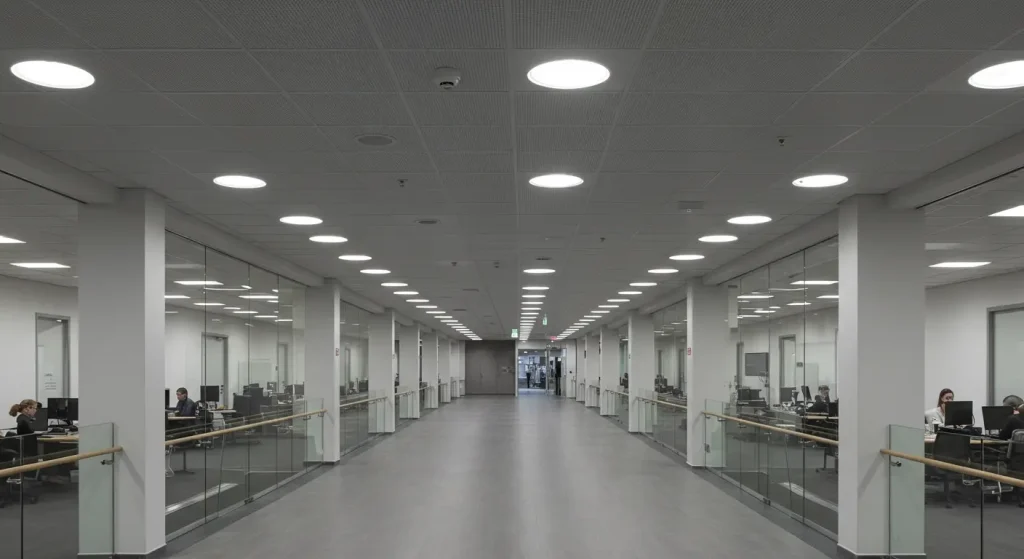
This is your complete, expert guide to removing a recessed downlight fixture. We will walk you through the professional process, helping you first identify the type of fixture you have and then understand the precise steps for its removal.
The Essential Prerequisite: A Serious Note on Safety
ADVERTENCIA DE SEGURIDAD CRÍTICA:
This guide details a professional process that involves handling mains voltage electrical wiring. This work is inherently dangerous and can result in severe electric shock, fire, injury, or death if performed incorrectly.
This guide is for informational and educational purposes ONLY. We strongly recommend that all electrical work, including the disconnection and termination of wires, be performed by a qualified, licensed, and insured electrician who is familiar with your local and national electrical codes (e.g., the NEC in the US, BS 7671 in the UK).
Your safety is the only thing that matters. When in doubt, call a professional.
The First Step: Identify Your Downlight Fixture Type
Before you can plan the removal, you need to do some detective work. How your fixture was installed determines how it must be removed. There are two main types.
Type 1: The “Remodel” Downlight Fixture
This is the most common type found in existing homes or renovation projects. It is designed to be installed from below the ceiling, through the hole it will occupy.
- How to Identify: After removing the bulb and trim, you will see spring-loaded clips or friction clips inside the metal housing (“can”). These clips press against the top side of the ceiling drywall to hold the fixture in place. There is no large frame attached to the joists.
Type 2: The “New Construction” Downlight Fixture
This type is installed before the ceiling drywall goes up, typically during a new build or a major down-to-the-studs renovation.
- How to Identify: The fixture consists of a housing attached to a larger metal frame with long “hanger bars.” These bars are nailed or screwed directly onto the ceiling joists. This type is much more difficult to remove and almost always requires access from the attic above or cutting a large section of your ceiling.
| Característica | “Remodel” Fixture | “New Construction” Fixture |
|---|---|---|
| Installation | From below the ceiling, through the cut hole. | From above, before the ceiling is installed. |
| Mounting | Held in place by spring clips inside the housing. | Housing is attached to a frame and hanger bars that are fastened to the ceiling joists. |
| Removal | Can be removed from below the ceiling. | Requires access from above (attic) or cutting a large portion of the ceiling to access the frame. |
| Difficulty to Remove | Straightforward. | Difficult and often destructive to the ceiling. |
This guide will focus primarily on removing the much more common “Remodel” fixture. If you identify that you have a “New Construction” fixture, we strongly advise consulting a professional contractor, as its removal is a significant renovation task.
Part 1: How to Remove a “Remodel” Downlight Fixture (The Pro’s Process)
This is a methodical process. Do not rush any of the steps.
Step 1: SAFETY – Kill the Power Completely
Go to your main circuit breaker panel. Find the breaker that controls the lights for the room you are working in and switch it to the OFF position. To be certain, use a piece of tape to secure the breaker in the off position to prevent anyone from accidentally turning it back on. Test the light switch in the room to confirm there is no power.
Step 2: Prepare the Area & Gather Tools
- Lay down a drop cloth to catch any dust or debris.
- Position a sturdy stepladder on a stable, level surface.
- Tools Needed: Safety glasses, a reliable non-contact voltage tester, screwdrivers (Phillips and flathead), wire strippers/cutters, and pliers.
Step 3: Remove the Bulb and Trim (Bezel)
First, you need to get inside the fixture.
- Remove the downlight bulb (typically a GU10 or an older R-bulb).
- Remove the outer trim or bezel. This may twist off or simply pull straight down. This will expose the interior of the metal housing.
Step 4: Locate and Release the Retention Clips
This is the key mechanical step. Look inside the housing. You will see several (usually 3 or 4) metal clips pressing against the inner wall of the can. These are the springs holding the entire fixture to your ceiling.
- The Technique: Using pliers or your fingers, release the tension on these clips. Some need to be pushed inwards, others may need to be pried out of a slot. The goal is to disengage them from their tensioned position. You will feel the fixture loosen significantly as you release each clip.
Step 5: Carefully Lower the Housing
With all the clips released, the fixture is now free.
- Gently pull the entire downlight housing down through the hole in the ceiling.
- It will still be attached by the electrical cable. Do not let it hang by the cable; support it with one hand.
- Pull the attached junction box down through the hole as well.
Step 6: The Electrical Disconnection (The Pro’s Job)
This is the point where a qualified electrician’s expertise is essential for safety and code compliance.
- Confirm No Power: The electrician will use a voltage tester to triple-check that the wires inside the junction box are not live.
- Open the Junction Box: They will remove the cover from the fixture’s junction box.
- Disconnect the Wires: Inside, they will see the building’s electrical cable connected to the fixture’s wires with wire connectors (e.g., Wago clips or wire nuts). They will carefully remove these connectors to separate the three wires:
- Vivir (Black in the US / Brown in the UK)
- Neutral (White in the US / Blue in the UK)
- Earth/Ground (Bare copper or Green in the US / Green & Yellow in the UK)
- The old fixture is now completely free and can be set aside.
After the Removal: What Are Your Next Steps?
With the old fixture gone, you are left with a hole in the ceiling and a live electrical cable (once the power is restored). This situation must be addressed safely.
Option A: Installing a New Fixture
This is the most common next step.
- Match the Hole Size: Ensure your new downlight is designed for the same size hole.
- Choose Modern Features: This is your chance to upgrade to a high-performance ICAT-rated (Insulation Contact Airtight) LED downlight for maximum safety and energy efficiency.
- Installation: The installation of a new remodel fixture is essentially the reverse of the removal process. A qualified electrician will connect the new fixture’s wiring and securely clip it into place.
Option B: Patching the Hole Permanently
If you no longer want a light in that location, you cannot simply push the wire back into the ceiling and patch the hole. This is both dangerous and against electrical code.
- The Wiring: An electrician must safely terminate the unused electrical cable inside a code-compliant, accessible junction box. This box may be in the attic or, if access is unavailable, it may require a blank plate cover on the ceiling.
- The Patch: Once the wiring is made safe, you can proceed to patch the drywall hole for a flawless finish.
Knowledge for Planning, A Professional for Execution
Understanding how to remove a downlight fixture is about knowing the difference between the fixture types and appreciating the methodical, safety-first process that professionals follow. This knowledge is invaluable for planning your renovation, as it helps you understand the true scope of the work involved.
For a common “remodel” fixture, the mechanical removal is straightforward. For a “new construction” fixture, it’s a major undertaking. But for both, the electrical disconnection and subsequent re-connection or termination is a job that carries significant risks.
Empower yourself with a solid plan, and then partner with a qualified electrician to execute that plan safely. This is the formula for a successful project and lasting peace of mind.
Ready to plan your new lighting layout after removing your old fixtures?
That’s where we can help. Our team of lighting specialists can guide you in choosing the perfect new fixtures, designing a layout that enhances your space, and ensuring you have all the right components for a modern, safe, and beautiful lighting system.
Contact us today for a professional consultation and let’s begin the next phase of your project.