 XHLUX
XHLUX

Tabla de contenido
- Why Beam Angle Is the Most Misunderstood Parameter in Retail Lighting
- What Is Beam Angle in Retail Track Lighting?
- Why Beam Angle Matters in Retail Lighting Design
- Common Beam Angles Used in Retail Track Lighting
- Best Beam Angle for Different Retail Store Types
- Common Beam Angle Mistakes in Retail Track Lighting
- How to Choose the Right Beam Angle for Your Retail Project
- FAQ About Beam Angle For Retail Track Lighting
- Bienvenidos a conversar sobre cooperación empresarial.
Why Beam Angle Is the Most Misunderstood Parameter in Retail Lighting
Choosing the wrong beam angle para retail track lighting can make products look flat, overly harsh, or poorly highlighted—even when you are using high-quality Focos LED para riel.
Many retailers and project buyers unknowingly use one single beam angle across the entire store. The result is predictable: weak visual impact, poor visual merchandising, uncomfortable glare, and missed sales opportunities.
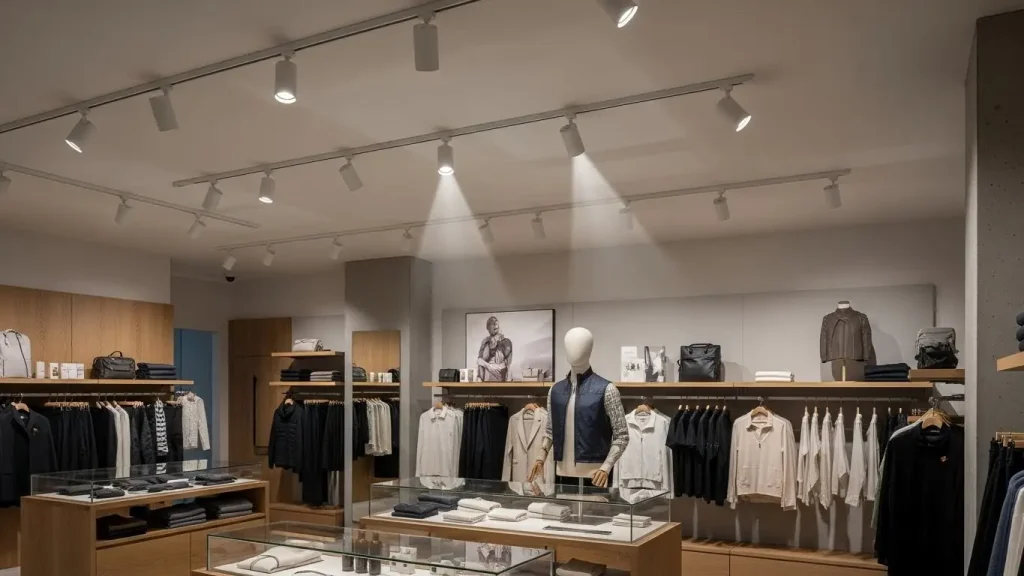
This guide explains how to select the right beam angle for retail track lighting based on store type, product category, and professional retail lighting design principles. You’ll learn why beam angle is not just a technical parameter, but a product presentation tool—and how professionals combine multiple angles to drive attention and sales.
If you are already comparing fixtures, you can explore professional-grade options in the LED Track Lighting collection or flexible optics via Luces de riel con zoom.
What Is Beam Angle in Retail Track Lighting?
What is beam angle in retail track lighting?
Beam angle refers to the spread of light emitted from a track light. In retail lighting, it determines how focused or wide the illumination is on products and displays.
In simple terms:
- Beam angle controls where the light goes, not just how bright the light is.
- Two track lights with the same wattage and lumen output can create completely different visual effects if their beam angles differ.
A narrow beam concentrates light into a small area, creating strong emphasis.A wide beam spreads light over a larger area, improving visibility and light uniformity.
In Iluminación LED comercial, beam angle is one of the most powerful tools for shaping customer attention—yet it’s also one of the most frequently misused.
Why Beam Angle Matters in Retail Lighting Design
Why is beam angle important for retail track lighting?Beam angle controls product emphasis and visual hierarchy, directly affecting how customers perceive and notice merchandise.
Beam Angle = Visual Hierarchy
In retail, customers rarely look at everything equally. Lighting must:
- Create visual focus
- Establish layers
- Guide the eye from hero products to secondary displays
Beam angle directly influences:
- Spotlighting products vs background illumination
- Perceived depth and three-dimensionality
- Contrast between key items and surroundings
Wrong vs Right Beam Angle (Real Impact)
Wrong beam angle
- Products look flat
- Displays blend together
- Shoppers don’t know where to look
Correct beam angle combination
- Clear focal points
- Strong accent lighting
- Better visual storytelling and merchandising flow
This is why professional retail lighting design never relies on a single beam angle.
Common Beam Angles Used in Retail Track Lighting
Different beam angles serve different merchandising purposes. Below is how professionals typically categorize them.
Narrow Beam (10°–24°) – Strong Product Highlighting
Ideal para:
- Jewelry and watches
- Luxury items
- Mannequins
- Feature or hero products
Visual effect:
- High contrast
- Strong focal point
- Premium, dramatic presentation
Design notes:
- Narrow beams create intensity, but also increase glare risk
- Proper control del deslumbramiento (deep reflectors, honeycomb, precise aiming) is critical
- Best used selectively, not everywhere
Narrow beam track lights are often the “attention magnets” in accent lighting strategies.
Medium Beam (24°–36°) – Balanced Accent Lighting
Most commonly used beam range in retail
Ideal para:
- Clothing racks and shelves
- Exhibiciones de pared
- Mid-size product groupings
Visual effect:
- Balanced focus + coverage
- Clear product visibility without harsh contrast
Why designers love it:
- Works well at typical retail ceiling heights
- Safer for glare than very narrow beams
- Easy to integrate with iluminación ambiental
For many stores, medium beams form the backbone of retail track lighting systems.
Wide Beam (36°–60°) – Soft and Uniform Lighting
Ideal para:
- Aisles and circulation areas
- Large display tables
- Background illumination
Visual effect:
- Soft, even lighting
- Alto light uniformity
- Comfortable browsing environment
Limitations:
- Weak for highlighting hero products
- Overuse makes stores look flat and “department-store-like”
Wide beams are excellent companions to narrow and medium beams—but poor substitutes for them.
What beam angle is best for retail track lighting?There is no single best beam angle. Most retail stores use a combination of narrow, medium, and wide beams to create layered lighting effects.
Best Beam Angle for Different Retail Store Types
Google strongly favors content that differentiates by industry. In practice, beam angle selection changes significantly by retail format.
Clothing Stores
Recommended approach:
- 24°–36° as the main beam angle
- 15°–24° for mannequins, new arrivals, feature walls
Why it works:
- Medium beams provide balanced coverage for browsing
- Narrow accents add hierarchy and guide attention
- High CRI ensures accurate fabric colors
Clothing retail typically benefits from adjustable track lights that can be re-aimed when displays change.
Jewelry & Luxury Retail
Recommended approach:
- 10°–15° primary beam angle
- Very selective use of light
Why it works:
- Creates sparkle and contrast
- Enhances perceived value
- Emphasizes materials and craftsmanship
Critical requirements:
- High CRI (often Ra97)
- Tight beam control
- Excellent glare control
Luxury retail treats beam angle as a precision instrument, not a general setting.
Supermercados y tiendas de conveniencia
Recommended approach:
- 36°–60° for general shelving and aisles
- Narrower beams only for promotional endcaps
Why it works:
- Prioritizes visibility and comfort
- Supports fast browsing and wayfinding
- Reduces harsh shadows and fatigue
In these environments, lighting distribution and uniformity matter more than dramatic contrast.
Electronics Retail
Recommended approach:
- 24°–36° for most displays
- Controlled accents for feature products
Why it works:
- Clean, precise look matches tech branding
- Avoids glare on screens and glossy surfaces
- Maintains a modern, high-tech atmosphere
Electronics stores must balance focus with glare control more carefully than many other formats.
Common Beam Angle Mistakes in Retail Track Lighting
What are common beam angle mistakes in retail lighting?Common mistakes include using one beam angle for all areas, choosing overly wide beams, and ignoring glare control and product height.
Mistake 1: Using One Beam Angle for the Entire Store
Retail lighting is layered by nature. One angle cannot serve:
- A mannequin
- A shelf
- An aisle
equally well.
Mistake 2: Choosing Only Wide Beams
This improves uniformity but kills contrast. The store feels bright—but visually boring.
Mistake 3: Ignoring Product Height and Distance
Beam angle must match:
- Altura del techo
- Mounting distance
- Product size
The same 24° beam behaves very differently at 3m vs 6m ceilings.
Mistake 4: Ignoring Glare
Narrow beams without proper optics or aiming create discomfort and shorten dwell time.
How to Choose the Right Beam Angle for Your Retail Project
Instead of guessing, professionals ask a structured set of questions:
- What product category are you lighting?
(fashion, jewelry, food, electronics) - What is the display height and size?
(small items vs large shelving) - Do you need strong product emphasis or soft coverage?
- Is this track lighting combined with downlights or linear ambient lighting?
- Do you need flexibility for future display changes?
Real Project Practice
In real retail projects, we rarely recommend a single beam angle. Instead, we propose a beam angle mix—for example:
- Narrow beams for hero products
- Medium beams for general displays
- Wide beams for circulation
This approach reduces glare, improves merchandising clarity, and avoids costly rework later.
👉 This is also why many buyers choose adjustable or zoomable track lights, which allow beam angle changes without replacing fixtures.
Next step:If you want support selecting the right beam angle combination for your project, you can request guidance via Contacto y presupuesto or review flexible options in Luces de riel con zoom.
FAQ About Beam Angle For Retail Track Lighting
What beam angle is best for retail lighting?
There is no single best beam angle. Most retail projects use a combination of narrow, medium, and wide beams to create layered lighting and visual hierarchy.
Is narrow beam better for track lighting?
Narrow beams are better for spotlighting products and creating strong focus, but they should be used selectively to avoid glare and harsh contrast.
How many beam angles should a retail store use?
Typically two to three beam angle types are used in one store, depending on product categories and ceiling height.
Does beam angle affect glare?
Yes. Narrower beams increase glare risk if optics and aiming are not properly controlled.
Can adjustable track lights change beam angle?
Sí. Adjustable or zoomable track lights allow beam angle changes, making them ideal for stores with frequently changing displays.
Bienvenidos a conversar sobre cooperación empresarial.
In retail, beam angle is not just a parameter—it’s a presentation strategy.
By selecting and combining the right beam angles, you can:
- Highlight products effectively
- Create clear visual hierarchy
- Improve customer attention and dwell time
- Support professional retail lighting design outcomes
For practical next steps:
- Explore professional LED Track Lighting
- Reduce risk with flexible Luces de riel con zoom
- Get project-specific advice via Contacto y presupuesto
Choosing the right beam angle is one of the simplest ways to turn lighting into a true sales tool in commercial retail environments.