 XHLUX
XHLUX

Inhaltsverzeichnis
- What Are Lumens? The Modern Measure of Brightness
- The Core Question: How Many Lumens Do You Need?
- Room-by-Room Lumens Guide (Lumens Per Square Foot)
- Beyond the Formula: 4 Factors That Influence Your Lumen Needs
- The Golden Rule of Lumens: When in Doubt, Go Brighter (and Add a Dimmer)
- Final Word: Plan with Lumens, Design with Confidence
- FAQ About Recessed Lighting Lumens
You’re planning a project. You’re standing in the lighting aisle or Browse online, faced with a wall of options for recessed lighting. You see numbers on the boxes—600, 800, 1100—but what do they actually mean? How do you choose the right brightness to create a kitchen that’s functional and vibrant, or a living room that’s cozy and relaxing?
The key to unlocking this confidence and ensuring your project is a brilliant success is a single word: Lumen.
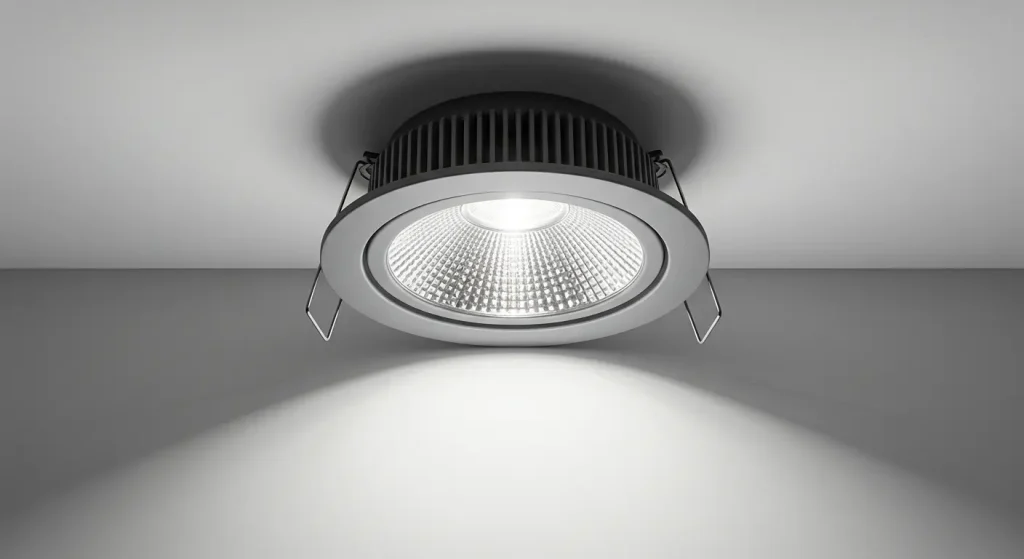
For decades, we were taught to think about brightness in terms of watts. But in the age of hyper-efficient LED lighting, watts are a measure of the past. This guide will demystify lumens once and for all. We will not only give you a crystal-clear definition but, more importantly, we will provide you with the simple, professional method for calculating exactly how many recessed lighting lumens you need for any room in your home.
What Are Lumens? The Modern Measure of Brightness
Let’s start with a clear, simple definition.
Lumens (lm) are the measure of the total amount of visible light emitted by a source.
In short: Lumens equal brightness. The higher the lumen number, the brighter the light will be. It’s a direct, honest measure of light output.
The End of the Wattage Era: A Critical Mindset Shift
For nearly a century, we bought light bulbs based on watts (40W, 60W, 100W). We learned to associate a certain wattage with a certain level of brightness. However, a watt is a measure of energy consumption, not light output.
With old incandescent bulbs, this worked because they were all similarly inefficient. But a modern 9-watt LED can produce the same amount of light as a 60-watt incandescent bulb. Comparing them by watts is meaningless. Shopping for light by lumens is the only way to accurately compare brightness between different types of bulbs and fixtures.
The Core Question: How Many Lumens Do You Need?
This is the real reason you’re here. The secret to a well-lit room isn’t guesswork; it’s simple math. Professionals use a standard method to determine the right amount of light for a space, and you can too.
The Professional Method: Lumens Per Square Foot
The standard way to calculate light levels is to determine the required lumens per square foot of your room. In the lighting industry, this is also known as foot-candles (1 foot-candle = 1 lumen per square foot). Different activities and rooms require different levels of brightness. A kitchen where you’re working with knives needs more light than a living room where you’re watching a movie.
A Simple 3-Step Calculation to Determine Your Needs
Calculate Your Room’s Square Footage: This is simple geometry. Multiply the length of your room by its width.
- Example: A kitchen that is 12 feet long and 10 feet wide has a square footage of 12 x 10 = 120 square feet.
Determine the Recommended Lumens Per Square Foot (from our chart below): Find your room type in the chart below to get the recommended brightness level for its primary function.
- Example: For a kitchen, the recommended level is 70-80 lumens per square foot for task areas.
Multiply to Find Your Total Lumen Target: Multiply your room’s square footage by the recommended lumens per square foot.
- Example: 120 sq ft (kitchen size) x 75 lumens/sq ft (mid-range recommendation) = 9,000 total lumens needed.
This 9,000-lumen value is your target for all the light sources in that kitchen. If you plan to use 10 recessed lights, you would look for downlights that produce around 900 lumens each (9,000 lumens / 10 lights).
Room-by-Room Lumens Guide (Lumens Per Square Foot)
Use this chart, based on recommendations from lighting design authorities like the Illuminating Engineering Society (IES), as your guide.
| Room / Area | Recommended Lumens/Sq. Ft. | Primary Function & Notes |
|---|---|---|
| Kitchen (Task Areas) | 70 – 80 | Over countertops, sinks, and islands. Bright, focused light is critical for safety and tasks. |
| Kitchen (General) | 30 – 40 | For overall ambient light in the walkways and general space. |
| Bathroom (Vanity) | 70 – 80 | For grooming tasks like makeup application and shaving. Requires bright, high-quality light. |
| Bathroom (General/Shower) | 30 – 40 | General ambient lighting. Shower lights should be wet-rated. |
| Living Room / Family Room | 20 – 40 | This space is flexible. Lower end for relaxing ambiance, higher end for reading or game nights. Dimming is essential. |
| Bedroom (General) | 10 – 20 | Primarily for relaxation. Ambient light should be soft and comfortable. |
| Bedroom (Task Areas) | 50 – 60 | For reading nooks or dressing areas. Use adjustable accent lights. |
| Hallway / Entryway | 10 – 20 | For safe navigation. Does not need to be overly bright. |
| Home Office / Workspace | 60 – 70 | For sustained focus and reducing eye strain. Bright, high-quality light is key to productivity. |
| Laundry Room / Utility | 50 – 60 | For tasks like sorting clothes and spotting stains. |
Beyond the Formula: 4 Factors That Influence Your Lumen Needs
The calculation above gives you an excellent baseline, but a true lighting expert considers other factors that affect how bright a room feels.
- Ceiling Height: The formula above works perfectly for standard 8-9 foot ceilings. For higher ceilings (10 feet or more), you will need more lumens to deliver the same amount of light to the floor or task surface. As a rule of thumb, increase your total lumen target by 20-30% for ceilings between 10-14 feet.
- Room Colors and Finishes: Dark walls, floors, and furniture absorb light, while light colors reflect it. If you are lighting a room with dark navy walls and a walnut floor, you will need more lumens to achieve the same perceived brightness as a room with white walls and a light oak floor.
- The Importance of Layering: Our formula helps you calculate the total light needed, but a great lighting plan uses layers. You might get 50% of your lumens from ambient recessed lighting, 30% from focused task downlights, and 20% from accent lights or decorative pendants. Distributing your lumens across these layers creates a richer, more functional space.
- Personal Preference and Age: As we age, our eyes require more light to see with the same clarity. A lighting plan for a 65-year-old may require 50-100% more lumens than one for a 25-year-old to achieve the same level of visual comfort. Personal preference also plays a huge role; some people simply prefer brighter spaces.
The Golden Rule of Lumens: When in Doubt, Go Brighter (and Add a Dimmer)
This is the single most important piece of practical advice for residential lighting: It is always better to have too many lumens than not enough.
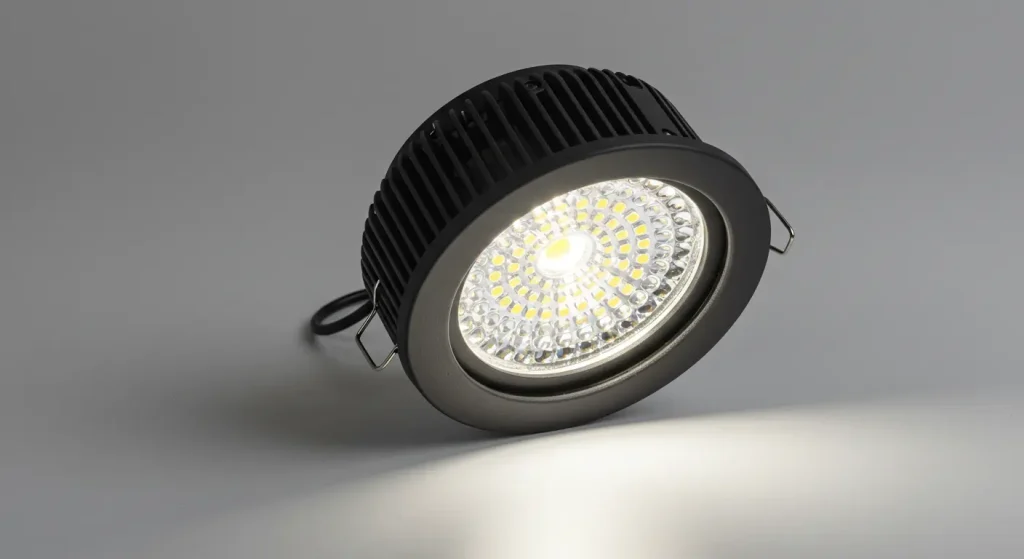
You can always dim a light that is too bright, but you can never make a dim light brighter.
Installing high-quality dimmer switches for all your recessed lighting is not a luxury; it is an essential component of a successful lighting plan. A dimmer gives you the power to transform a room from a bright, functional workspace to a soft, relaxing retreat with the touch of a button. It allows you to have all the lumens you need for any task, while also providing the control to create the perfect ambiance for any mood.
Final Word: Plan with Lumens, Design with Confidence
Understanding recessed lighting lumens is the key to moving past guesswork and into the realm of intentional design. By abandoning the outdated metric of watts and embracing the simple calculation of lumens per square foot, you can create a plan with confidence.
You now have the professional framework to determine exactly how much light your space needs. This knowledge empowers you to select the right fixtures, create the perfect atmosphere, and ensure that every room in your home is not just adequately lit, but beautifully and functionally illuminated for years to come.
Ready to create a professional lighting plan for your home?
Calculating your lumen needs is the first step. Our team of lighting specialists can help you take your plan to the next level, assisting with layout design, fixture selection, and integrating the perfect dimming controls to bring your vision to life.
Contact us today for a professional consultation and let’s design your ideal space together.