 XHLUX
XHLUX

Inhaltsverzeichnis
Lighting has a huge impact on how a space feels and functions. For homeowners, renters, or even small businesses, one of the most flexible options is plug-in track lighting with remote control. Unlike hardwired systems, these lights don’t require complicated electrical work, making them appealing for anyone looking for a quick upgrade. But like all lighting solutions, they come with both advantages and disadvantages.
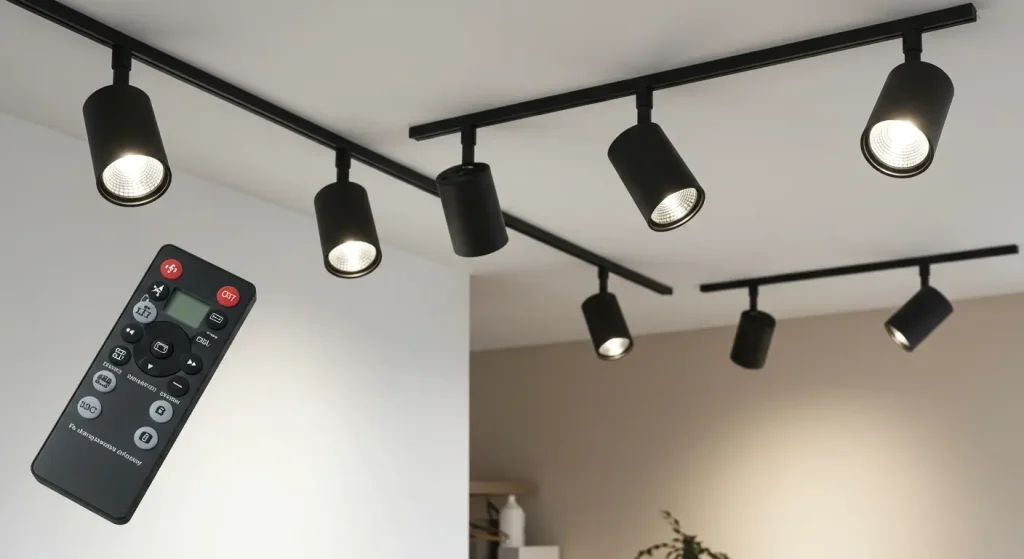
In this article, we’ll explore what plug-in track lighting with remote is, its pros and cons, real-world applications, and whether it might be the right choice for your space.
🔎 What Is Plug-In Track Lighting with Remote?
Plug-in track lighting is a system where multiple light fixtures (track heads) are mounted on a track and powered by plugging into a standard wall outlet rather than being wired into your ceiling. When paired with a remote control, it allows you to adjust brightness, direction, and sometimes even color temperature—without needing to touch the fixtures.
Key features include:
- No permanent wiring required (ideal for rentals)
- Adjustable track heads for directional lighting
- Remote control for dimming, on/off, or scene-setting
- Plug-and-play installation
✅ Pros of Plug-In Track Lighting with Remote
1. Easy Installation
Unlike hardwired track lighting, you don’t need an electrician. Simply mount the track, plug it into an outlet, and it’s ready to use. This makes it renter-friendly and cost-effective.
2. Remote Convenience
The remote adds modern comfort—control brightness or switch lights on/off without needing wall switches. Some models even include timers or smartphone compatibility.
3. Flexibility in Design
Track lights are versatile. You can direct light onto artwork, a reading nook, or a kitchen counter. The ability to adjust angles makes them suitable for task lighting and accent lighting.
4. Portability
Because the system is plug-in, you can uninstall and move it when you relocate—something impossible with wired lights.
5. Energieeffizienz
Most plug-in track lighting now uses LED technology, which consumes up to 80% less energy than halogen or incandescent bulbs.
📊 Industry Insight: According to the U.S. Department of Energy, LEDs can cut lighting energy use in commercial and residential buildings by up to 75% compared to traditional sources.
❌ Cons of Plug-In Track Lighting with Remote
1. Visible Cords
Since it plugs into an outlet, you’ll likely have visible cords along the wall or floor unless you invest in cable covers. This can affect aesthetics.
2. Limited Power Capacity
Plug-in systems typically support fewer fixtures compared to hardwired options. Large commercial spaces may find them underpowered.
3. Remote Dependency
Lose the remote, and control becomes inconvenient. Battery replacements or interference from other devices can also cause issues.
4. Less Permanent Solution
For homeowners wanting a long-term, polished lighting system, plug-in models may feel temporary compared to wired track lighting systems.
5. Price Variations
While basic models are affordable, advanced versions with dimming, smart control, and color-changing features can be more expensive than traditional lighting.
📊 Comparison Table
| Besonderheit | Plug-In Track Lighting with Remote | Hardwired Track Lighting |
|---|---|---|
| Installation | DIY, no electrician needed | Requires electrician |
| Portability | Can be removed & moved | Permanent |
| Leistung | Limited by outlet capacity | Higher capacity |
| Aesthetics | Visible cords | Cleaner look |
| Kosten | Lower upfront | Higher installation cost |
🏠 Best Applications
Plug-in track lighting with remote is ideal for:
- Apartments & rentals – where permanent wiring isn’t allowed
- Home offices – adjustable lighting for workspaces
- Art displays – highlight paintings or décor easily
- Retail pop-ups – temporary setups needing quick installation
- Workshops & studios – where flexibility and direction matter
🛠️ Expert Tips for Choosing Plug-In Track Lighting
- Check Wattage & Compatibility – Ensure the track can handle the number of fixtures you need.
- Opt for Dimmable LEDs – Better energy savings and ambiance control.
- Look for Remote Features – Some remotes include grouping, timers, or smart integration with Alexa/Google Home.
- Manage Cables Smartly – Use cord covers to make your setup neat and professional.
- Plan for Expansion – If you’ll need more lighting, consider whether plug-in is enough or if a wired system is better long-term.
🎯 Final Verdict: Is It Worth It?
Plug-in track lighting with remote is a practical, stylish, and budget-friendly choice for those who want flexible lighting without the hassle of hardwiring. It’s especially beneficial for renters, small businesses, or homeowners seeking a temporary but functional lighting upgrade.
However, if you’re planning a long-term lighting investment—especially in larger commercial spaces—wired track lighting or a commercial-grade lighting system may be a more reliable choice.
👉 In short:
- Ja if you want convenience, flexibility, and portability.
- NEIN if you need a permanent, high-capacity, or sleek aesthetic solution.