 XHLUX
XHLUX

Inhaltsverzeichnis
- 1. The Evolution of Commercial Track Lighting
- 2. What Is a Magnetic Track Lighting System?
- 3. What Is Traditional Track Lighting?
- 4. Magnetic Track Light vs Traditional Track Light: A Direct Comparison
- 5. Key Advantages of Magnetic Track Lighting Systems
- 6. Traditional Track Lighting: Strengths and Limitations
- 7. Application Recommendations for Different Commercial Environments
- 8. Cost and ROI (Return on Investment) Analysis
- 9. How to Choose the Right Track Lighting Supplier
- 10. Recommended Supplier: XHLUX Lighting (China)
- 11. FAQ About Magnetic Track Light
- 12. Conclusion
Lighting technology is rapidly evolving, and with it, the way commercial and architectural spaces are illuminated. Among modern innovations, magnetic track lighting has emerged as a sophisticated alternative to the traditional LED track lighting system.
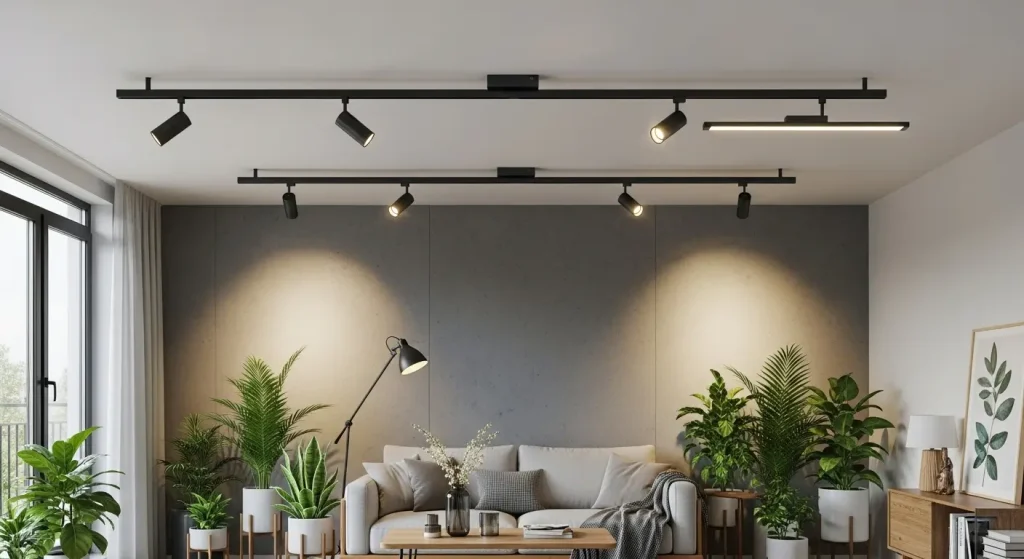
Für lighting designers, distributors, project contractors, and architects, choosing between these two systems involves balancing aesthetic performance, installation flexibility, safety, and long-term ROI.
This article provides a detailed, side-by-side comparison of magnetic track lights vs traditional track lights, examining their structure, working principles, advantages, applications, and overall business value — helping buyers make informed decisions.
1. The Evolution of Commercial Track Lighting
Track lighting has been the backbone of commercial and retail lighting design for decades. Its adaptability and directional illumination made it a preferred choice for stores, offices, galleries, and hotels.
However, traditional track lighting systems — while reliable — have limitations in aesthetics, installation speed, and integration with smart controls. As modern architecture embraces minimalism and modularity, magnetic track lighting systems are becoming the new standard for next-generation commercial interiors.
Magnetic systems combine low-voltage power delivery, modular design, and tool-free installation, creating lighting solutions that are not only beautiful but also practical for ever-changing commercial layouts.
💡 In short: Traditional track lighting is dependable and cost-effective, while magnetic track lighting is flexible, design-forward, and future-ready.
2. What Is a Magnetic Track Lighting System?
A magnetic track light system uses magnetic attraction and low-voltage power rails (typically 48V) to secure light modules along the track. Instead of screws and connectors, fixtures simply snap into place magnetically, allowing instant installation, removal, or repositioning.
2.1 System Components
A complete magnetic track lighting system includes:
- Magnetic Track: The aluminum channel that carries 48V DC current.
- LED Light Modules: Linear, spotlight, grille, or pendant fixtures designed with magnetic mounts.
- Power Supply: Converts AC to DC voltage for safe operation.
- Connectors and Accessories: Enable corner joints, recessed or surface mounting.
2.2 Key Features
- Modular and customizable configurations (recessed, surface, or suspended).
- Safe low-voltage system ideal for public and retail use.
- Quick, tool-free maintenance.
- Sleek trimless design, blending with modern architecture.
📊 Illustration Tip: For web publishing, include a labeled diagram showing magnetic track structure vs traditional track structure — improves SEO dwell time and reader engagement.
3. What Is Traditional Track Lighting?
Before magnetic systems, standard track lights dominated commercial lighting setups. They operate on high-voltage AC (110V–220V) through a metal or plastic track that delivers power via conductive copper strips.
3.1 System Structure
- Track Rail: Houses conductors that supply power.
- Track Head / Fixture: Contains an LED or halogen light source (GU10/COB module).
- Connector and Adaptor: Mechanically attaches the head to the track.
3.2 Typical Applications
Traditional systems are common in:
- Retail stores with fixed layouts.
- Industrial or warehouse spaces.
- Basic commercial interiors where design minimalism isn’t a priority.
3.3 Advantages
- Proven and mature technology.
- Affordable and widely available components.
- Compatible with multiple fixture types and light sources.
However, they often lack flexibility, safety, and integration options compared to modern magnetic systems.
4. Magnetic Track Light vs Traditional Track Light: A Direct Comparison
The table below summarizes the core differences between these two systems — a must-read for procurement and specification teams.
| Comparison Factor | Magnetische Schienenleuchte | Traditional Track Light |
|---|---|---|
| Installation Method | Magnetic snap-on, tool-free | Screw mounting, mechanical contact |
| System Voltage | 48V DC (safe low voltage) | 110–220V AC (high voltage) |
| Design Aesthetics | Frameless, minimalist integration | Visible body, exposed fittings |
| Lighting Flexibility | Modules can be moved/replaced freely | Fixed once installed |
| Wartung | Easy — plug & play replacement | Requires disassembly and rewiring |
| Smart Control Compatibility | Supports DALI, Bluetooth, and app control | Limited dimming options |
| Energieeffizienz | Up to 110 lm/W | 90–100 lm/W |
| Cost Structure | Higher initial cost, lower maintenance | Lower initial, higher long-term cost |
| Application Scope | High-end retail, hotel, office, showroom | Standard retail, warehouse, basic store |
| Safety | Low voltage, touch-safe | Risk of electric shock under exposure |
💡 Quick Insight:
Magnetic track lighting offers a 20–30% higher initial investment, but long-term benefits like faster installation, reduced labor cost, modular flexibility, and smart control compatibility make it a superior choice for modern projects.
4.1 Performance Perspective
In terms of Sehkomfort, magnetic track lights typically feature deep anti-glare optics (UGR < 19), offering superior beam control compared to older track heads.
Example: In a retail upgrade project, replacing traditional 220V track lights with 48V magnetic systems reduced glare complaints by 45% and improved perceived brightness by 25%, according to customer feedback.
4.2 Design and Brand Perception
From a design standpoint, magnetic track lighting aligns with current architectural and minimalist trends. Brands that use such lighting systems often project a premium and technologically advanced image — a key differentiator in competitive retail or hospitality environments.
🧠 For buyers:
Upgrading to magnetic systems not only improves lighting performance but also enhances your client’s perception of innovation and quality, increasing your project’s commercial value.
5. Key Advantages of Magnetic Track Lighting Systems
Magnetic track lights have redefined what “flexibility” means in modern lighting design. They combine advanced engineering with elegant aesthetics — ideal for clients who value both functionality and visual appeal.
5.1 Modular Design for Flexible Layouts
The biggest advantage is modularity. Each magnetic light module — whether a spotlight, linear bar, or pendant — can be easily moved, replaced, or reconfigured in seconds.
For commercial users, this means:
- No rewiring or drilling when layouts change.
- Fast adaptation to new display setups or seasonal campaigns.
- Reduced installation labor cost and downtime.
💡 Example: A 200m² retail store using magnetic track lighting can completely reconfigure its lighting plan within one hour — something that takes a full day with traditional track lights.
5.2 Seamless Aesthetic Integration
Magnetic systems are designed for architectural minimalism. With frameless recessed or surface-mounted tracks, fixtures blend into the ceiling, giving the impression of light emerging directly from architecture itself.
This makes them perfect for high-end retail, luxury hotels, galleries, and modern offices where ceiling clutter is unacceptable.
Design Note: Magnetic systems support combinations of spotlights, linear lights, and wall washers within a single track, achieving a multi-layered yet harmonious lighting composition.
5.3 Safety and Energy Efficiency
Unlike high-voltage track systems (220V), magnetic lighting operates on safe 48V DC power.
This not only minimizes electric hazards but also improves energy conversion efficiency and reduces heat generation.
Performance Highlights:
- Luminous efficiency: ≥110 lm/W
- Power factor: >0.9
- Lifetime: >50,000 hours
Low-voltage systems also prevent flicker and voltage instability — critical for sensitive environments like galleries or showrooms.
5.4 Intelligent Lighting Compatibility
Magnetic track lights easily integrate with modern smart lighting controls wie zum Beispiel:
- DALI systems for professional lighting management
- Bluetooth Mesh oder Wi-Fi app control for dynamic ambience control
- Motion and daylight sensors for automatic dimming
This makes them highly suitable for energy-saving projects Und IoT-connected buildings.
📈 According to a 2024 Lighting Industry Report, over 68% of new commercial lighting projects in Asia and Europe include smart-ready features — and magnetic systems dominate this segment.
5.5 Low Maintenance and Long-Term Cost Savings
Since modules attach magnetically, replacing or upgrading fixtures takes seconds — no need to shut down power or hire electricians.
Business benefits:
- Lower long-term maintenance costs
- Minimized business disruption
- Future-proof investment
While the initial cost is about 20–30% higher than standard systems, the total cost of ownership (TCO) over 5 years is typically 30–40% lower thanks to reduced labor and energy costs.
6. Traditional Track Lighting: Strengths and Limitations
Traditional LED track lights still play an important role in many commercial projects — especially where budgets are tight or layouts are fixed. However, understanding their pros and cons helps buyers make smarter investment decisions.
6.1 Advantages of Traditional Track Lighting
- Lower upfront cost: Ideal for small or budget-sensitive projects.
- Mature technology: Readily available components and accessories.
- Versatile product range: Works with GU10, PAR30, or COB modules.
- Easy sourcing: Widely supported across global lighting supply chains.
6.2 Limitations of Traditional Track Lighting
Despite these strengths, traditional systems lag behind in several key aspects:
- Visible fixtures and wiring reduce the visual cleanliness of ceiling design.
- Limited flexibility: Fixed rails restrict future reconfiguration.
- Higher operating voltage (AC 220V) increases safety and maintenance risks.
- Minimal smart control options: Often limited to simple on/off or TRIAC dimming.
Ergebnis: While traditional systems are dependable, they lack the aesthetic refinement, modular adaptability, and smart connectivity that modern clients increasingly demand.
7. Application Recommendations for Different Commercial Environments
Both systems have their place — but the ideal choice depends on the project type, design requirements, and budget priorities.
7.1 Retail Stores and Showrooms
Magnetic track lighting is ideal for dynamic retail displays.
- Precise beam control enhances product visibility.
- Easily reposition modules during layout updates.
- CRI ≥ 90 ensures accurate color reproduction for fashion and cosmetics.
Traditional lighting, by contrast, suits fixed installations such as supermarket aisles or warehouse-style stores.
🛍️ Case Study: A luxury boutique that switched to a magnetic system reported 15% higher visual engagement and faster visual merchandising updates.
7.2 Hotels and Restaurants
Hospitality design prioritizes ambience and comfort.
- Magnetic track lights deliver soft, customizable illumination.
- Integration with smart controls enables mood transitions from dining to evening settings.
- Clean recessed design complements premium interiors.
Traditional track lights, while functional, often appear bulky and out of place in luxury environments.
7.3 Offices and Meeting Spaces
In modern workplaces, lighting impacts productivity and brand perception.
Magnetic systems allow designers to combine Arbeitsbeleuchtung, linear illumination, Und accent beams on a single track.
Key Specs for Offices:
- 4000K neutral white
- UGR < 19
- 0–10V or DALI dimming
Traditional lighting can still be used in corridors or utility areas where aesthetics are secondary.
7.4 Showrooms, Galleries, and Museums
Artistic environments require precise and controllable lighting.
Magnetic systems excel here due to:
- Adjustable beam angles (15°–60°).
- Stable, flicker-free illumination.
- No UV or IR radiation — safe for artwork preservation.
🎨 Pro Insight: Galleries using magnetic systems save 30% energy compared to halogen-based track systems while achieving museum-grade light quality.
8. Cost and ROI (Return on Investment) Analysis
For clients, procurement decisions often hinge on long-term value — not just upfront pricing. Let’s evaluate both systems financially.
8.1 Cost Comparison Table
| Kategorie | Magnetische Schienenbeleuchtung | Traditionelle Schienenbeleuchtung |
|---|---|---|
| Initial Purchase Cost | +20–30% higher | Lower |
| Installation Labor | 50% faster, minimal tools | Slower, skilled labor required |
| Maintenance Cost | Very low (plug & play) | Higher (rewiring, electrician needed) |
| Energieeffizienz | Up to 110 lm/W | 90–100 lm/W |
| Lebensdauer | Mehr als 50.000 Stunden | ~30,000 hours |
| Smart Control Compatibility | Yes (DALI/Bluetooth) | Limited |
| ROI Period | 18–24 months | 36+ months |
8.2 Key Takeaway
While magnetic track systems require a higher initial investment, their modularity, energy efficiency, and low maintenance reduce the total ownership cost significantly.
For long-term projects — such as retail chains, hotels, and office developments — magnetic lighting delivers up to 35% higher ROI over a five-year period.
9. How to Choose the Right Track Lighting Supplier
For any buyer, choosing the right supplier can determine the long-term success of a lighting project. A reliable partner ensures consistent quality, on-time delivery, and professional after-sales support — all vital for maintaining your reputation and customer satisfaction.
9.1 Evaluate R&D and Manufacturing Capabilities
Select a manufacturer that controls the entire production chain, from design and die-casting to final assembly.
Key questions to ask:
- Do they own independent molding and optical-design equipment?
- Can they develop customized beam angles, housings, and drivers?
- Do they provide 3D design files and photometric reports (IES / LDT)?
Suppliers with strong OEM/ODM capabilities can help you create your own branded lighting line.
9.2 Check Certifications and Compliance
Professional lighting projects require internationally recognized certifications such as:
- CE / RoHS / ETL / CB for electrical safety and environmental compliance.
- ISO 9001 for quality management.
- Optional DLC or SAA if exporting to North America or Australia.
Ask suppliers to share test reports and warranty terms (3–5 years) — these documents reflect genuine production quality.
9.3 Evaluate Supply Stability and Lead Time
Ask about:
- Monthly production capacity and average lead time.
- Material supply chain (drivers, chips, aluminum extrusion).
- Flexibilität for small-batch orders or urgent projects.
A supplier with stable logistics and raw-material sourcing can deliver consistently — avoiding costly project delays.
9.4 Technical & After-Sales Support
Reliable suppliers don’t disappear after delivery. Choose partners who:
- Offer installation guidance and wiring diagrams.
- Provide quick replacement for defective modules.
- Support remote technical troubleshooting via video or documentation.
10. Recommended Supplier: XHLUX Lighting (China)
When searching for a trusted OEM magnetic track lighting manufacturer, XHLUX Beleuchtung stands out for its engineering strength, manufacturing reliability, and deep industry experience.
10.1 Company Overview
XHLUX Beleuchtung is a professional indoor LED commercial lighting manufacturer based in Shenzhen, China, integrating R&D, manufacturing, sales, and service for more than 15 years.
The factory covers 3,000 m², equipped with advanced CNC machines, optical test labs, and automated SMT lines.
10.2 Core Strengths
| Fähigkeit | Details |
|---|---|
| OEM/ODM Design | 3D modeling, rapid prototyping, custom optics |
| Product Portfolio | Magnetic track lights, downlights, linear & smart lighting |
| Quality Assurance | CE / RoHS / ETL certified, 100% aging test |
| R&D Team | Experienced optical & mechanical engineers |
| Global Markets | Europe, Middle East, Southeast Asia, and Oceania |
With its own design and tooling departments, XHLUX helps global brands transform lighting ideas into high-performance products quickly and efficiently.
10.3 Why Buyers Choose XHLUX
- Tailor-Made Solutions: Custom finishes, beam angles, and smart controls.
- One-Stop Service: From concept and sampling to mass production.
- Quality + Speed: Reliable lead time with consistent optical standards.
- Professional Communication: English-speaking sales engineers familiar with overseas project needs.
💬 “With over 15 years of experience, XHLUX Lighting provides complete OEM magnetic lighting solutions for global commercial projects.”
11. FAQ About Magnetic Track Light
Q1: Are magnetic track lights safe for commercial environments?
Yes. They operate on 48 V DC low voltage, making them touch-safe and compliant with modern building safety codes.
Q2: Do magnetic systems support smart control?
Absolutely. They are compatible with DALI, 0–10 V, Bluetooth Mesh, Und app-based control, enabling flexible, energy-saving automation.
Q3: Is installation complicated?
Not at all. The modular snap-in design requires no tools — lights can be added or replaced within seconds, minimizing labor time.
Q4: Why do magnetic systems cost more initially?
While the purchase price is 20–30 % higher, the overall maintenance and operating cost are lower, offering ROI within 18–24 months.
Q5: Can I customize magnetic track lights for my brand?
Yes. XHLUX Lighting offers full OEM/ODM-Anpassung, including logo printing, packaging design, optical configurations, and control protocols.
12. Conclusion
The debate between magnetic track light vs traditional track light ultimately comes down to priorities.
For projects valuing aesthetics, flexibility, safety, and smart integration, magnetic systems clearly lead the way.
They provide a future-proof platform that adapts to new layouts, technologies, and energy-efficiency standards — a decisive advantage for modern commercial environments.
If you’re seeking a long-term OEM partner who combines technical innovation with reliable delivery, XHLUX Beleuchtung is the name professionals trust.
📩 Take the Next Step
👉 Request a Free Quote for Magnetic Track Lighting Systems
Let XHLUX Lighting design a custom lighting solution for your retail, hotel, or office project.
📞 Contact Us Today
Website: www.xhlux.com
Email: [email protected]