 XHLUX
XHLUX


Why do you need to calculate the load of LED track lighting
LED track lighting is becoming more and more popular among home users due to its flexibility and energy-saving features, and it is also shining in commercial displays and industrial spaces. Whether you want to install a set of stylish track lights in your living room or plan a lighting system for a store or factory, it is important to know how to calculate the load.
Imagine that you have just installed a set of LED track lights, and the lights are on, and the atmosphere in your home is perfect. But if the load is not calculated properly, the circuit may be overloaded, and not only the lights may go out, but also safety may become a problem. Load calculation sounds professional, but it is actually not that complicated. It can help you plan the lighting in your home reasonably to meet your needs and ensure safety.
For home users, load calculation can avoid soaring electricity bills or wiring hazards; for commercial and industrial customers, it can also optimize large-scale lighting designs. No matter what your scenario is, this article will teach you to calculate it in a simple way. Let’s start with the basics.
What is load, power and circuit
1. Load (Load)
Definition: Load refers to the equipment or components that consume electrical energy in the circuit, such as light bulbs, motors, resistors, etc.
Funktion: Load converts electrical energy into other forms of energy, such as light energy, heat energy or mechanical energy.
Typ: It is divided into resistive load (such as electric heater), inductive load (such as motor) and capacitive load (such as capacitor).
2. Power (Power)
Definition: Power is a physical quantity that measures the rate of electrical energy conversion, indicating the energy consumed or generated per unit time.
Formula: Power (P) = Voltage (V) × Current (I), the unit is watt (W).
Typ: includes active power (actual work), reactive power (used to establish electromagnetic field) and apparent power (total power).
3. Circuit
Definition: A circuit is a closed path composed of power supply, wire, load and control elements, used for the flow of current.
Composition: includes power supply (such as battery), load (such as light bulb), switch and wire.
Typ: divided into series circuit (same current), parallel circuit (same voltage) and mixed circuit.
Relationship between load, power and circuit
The load determines the current and power consumption in the circuit. Power is a direct reflection of the working state of the load, affecting the efficiency and stability of the circuit. Circuit design requires selecting appropriate power supply and components according to load characteristics and power requirements.
Don’t worry, we explain it in plain language:
Load: It is the power consumed by the electrical equipment, expressed in “watts” (W). For example, a 10W LED lamp uses 10 watts of electricity per second.
Power formula: Power (P) = Voltage (V) × Current (I). In Chinese homes, the voltage is usually 220V; in North America, it is 110V. Knowing this, you can calculate how much the circuit can withstand.
Circuit: Each line in the home is connected to a circuit breaker, which limits the total current, such as 15 amperes (A) or 20 amperes.
The advantage of LED lights is that they have low power. For example, an old 60W incandescent lamp may be replaced by a 10W LED, which will light just as bright but use much less electricity. Knowing this, the calculation is simple.
Steps to calculate the load of LED track lights
There are actually three steps to calculate the load of LED track lighting. Take a pen and try:
Check the power of a single lamp head: Look at the lamp head packaging or manual. The power will be written on it, usually 5W, 10W, 15W, etc. Assume that you use a 10W lamp head.
Count the number of lamp heads: How many lamp heads are installed on a track? For example, 5 lamps are used in the living room, 10 in the store display area, and more in the factory. Write down the total number.
Calculate the total power: Use the formula: Total power = single lamp power × number of lamp heads.
For example: 5 10W lamp heads, total power = 10 × 5 = 50W.
Try it again: 10 15W lamps, total power = 15 × 10 = 150W.
Simple, right? 50W is almost no power consumption for home use, but if it is a large industrial scene, it may be over kilowatts. Not sure about the lamp power? Contact our sales manager, they can help you confirm quickly.
Consider circuit capacity and safety margin
After calculating the total power, you have to see if your circuit can handle it. Residential circuits usually have fixed capacities, such as:
15A circuit breaker: 220V × 15A = 3300W (maximum load).
20A circuit breaker: 220V × 20A = 4400W.
But don’t use up the capacity! Electricians recommend leaving some margin, and the load should not exceed 80% of the circuit capacity. Take 15A as an example:Safe load = 3300W × 80% = 2640W.
Looking back at the example, 50W or 150W is far lower than 2640W, which is completely fine. But if a commercial space uses 20 50W lamp heads with a total power of 1000W, which is close to half the capacity, you have to plan carefully. Industrial scenes may also need to be divided into multiple lines.
Usually one line is enough for home, but if you also connect an air conditioner or a refrigerator, it is best to calculate the total. Don’t know how to calculate? Don’t worry, contact our sales manager, they will help you evaluate the circuit situation.
Other factors affecting load calculation
Load calculation is not just about the lamp head, there are some additional factors:
Dimmer: If a dimmer is installed, it may increase the power consumption a little (usually a few watts), depending on the model. There will be a mark in the manual, remember to add it.
Power adapter or driver: LED lamp heads usually need a driver to convert household AC power to DC power. The driver itself uses some power, but it is generally included in the lamp head power. If it is listed separately (for example, a 20W driver with 5 5W lamp heads), the total power is 25W+20W=45W.
These factors will not change the result significantly, but they must be considered for accuracy. If you use complex systems in a store or factory, such as intelligent control or multi-circuit tracks, it may be difficult to calculate. Don’t figure it out yourself, contact our sales manager directly, XHLUX has professional tools to help you calculate accurately.
Zusammenfassung dieses Artikels
It is not difficult to calculate the load of LED-Schienenbeleuchtung: check the power of the lamp head, count the number, calculate the total, and then compare it with the circuit capacity, leaving some margin. Mastering this method, you can install it with confidence without worrying about tripping or burning the line. It is simple and safe to use a small system of dozens of watts at home, and you can also have a good idea of the high power for commercial and industrial use.
More importantly, calculating the load can also help you optimize the lighting layout. For example, 50W is warm enough for the living room, 150W is enough to highlight the goods in the store, and 1000W is enough to illuminate every corner in the factory. The low power consumption of LED makes all this practical and cost-effective.
Want to try to calculate it yourself, but don’t know the circuit capacity? Or are you afraid of making mistakes when installing a large system? Don’t hesitate, contact XHLUX sales manager now! Send an email to [email protected] oder folgen Sie der offiziellen Website www.xhlux.com for more details, so that your lighting is safe and efficient!


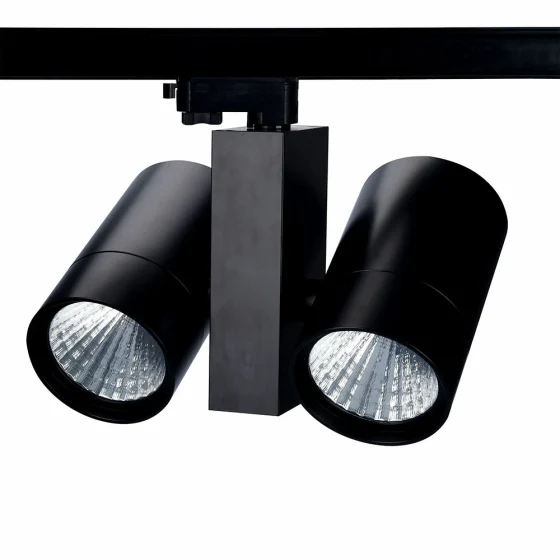

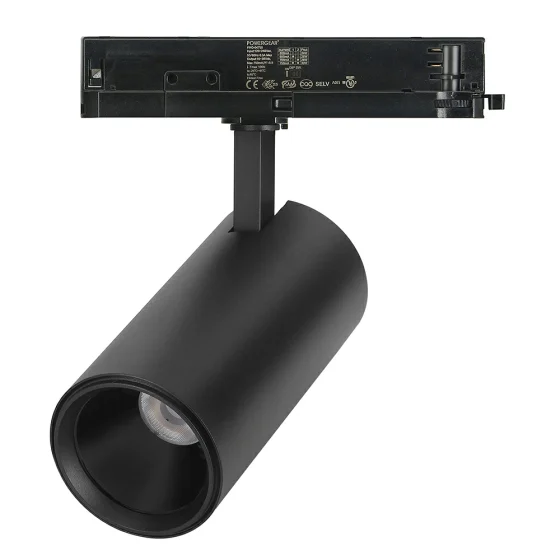


Was ist 48V-Magnetschienenbeleuchtung?
Ein Niederspannungssystem, bei dem Leuchten magnetisch befestigt werden, sich in Sekundenschnelle neu positionieren lassen und sicher unterhalb der SELV-Grenze betrieben werden. Was bedeutet das für gewerbliche Projekte?.

Was zeichnet einen zuverlässigen Partner für gewerbliche Beleuchtungsprojekte aus?
Erfahren Sie, was einen zuverlässigen Partner für gewerbliche Beleuchtungsprojekte ausmacht und welche Faktoren bei langfristigen Beleuchtungsprojekten am wichtigsten sind.

Wie man Helligkeit und Komfort in der gewerblichen Beleuchtung in Einklang bringt
Dieser Artikel erklärt, wie man Helligkeit und Sehkomfort bei der gewerblichen Beleuchtung in Einklang bringt, um sowohl funktionale als auch komfortable Umgebungen zu schaffen.