XHLUX
XHLUX
Ein a rated downlight label is an energy-efficiency class on the applicable energy rating scale for downlight products — not a fire stamp, not an IP code, and not a lumen promise by itself.
Use this page when a tender or carton shows A (or A+/A++) and you need to know what the energy label recessed lighting line actually covers.
Skip it if you need lumen sizing, a build-quality audit, or a full fire/IP install manual — those are separate jobs.
If recessed vs surface vs adjustable is still open, start here:
→ Installationsmethoden für LED-Einbauleuchten: Einbau vs. Aufbaumontage vs. Verstellbar
For power-use context after the class is clear:
→ How LED Ceiling Downlights Affect Your Power Bill vs Halogen
TL;DR: Treat A as a top-band downlight energy consumption rating under the named scheme on the datasheet. Prove a-rated led efficacy with lm/W and declared input power. Keep fire-rated / IP / IC marks on separate checklist lines.
A vs other “rated” marks (quick map)
Search results for “A rated” often mix energy labels with fire-rated and IP65 language. Keep them apart:
Three bars comparing what an energy A class, a fire rating, and an IP code each control for downlights.
What the mark governs (not interchangeable)
Energy A class → efficiency / declared power vs light
Fire-rated → ceiling penetration / compartmentation
IP / IP65 → dust and water ingress
IC mark → insulation contact (where used)
🎯 Is an A energy class the same as fire-rated or IP65?
No — energy class scores efficiency; fire and IP are safety/ingress marks on separate lines of the schedule.
What the energy label is telling you
A (or the top letter on your market’s scale) signals strong a-rated downlight efficiency relative to other luminaires in that labelling scheme.
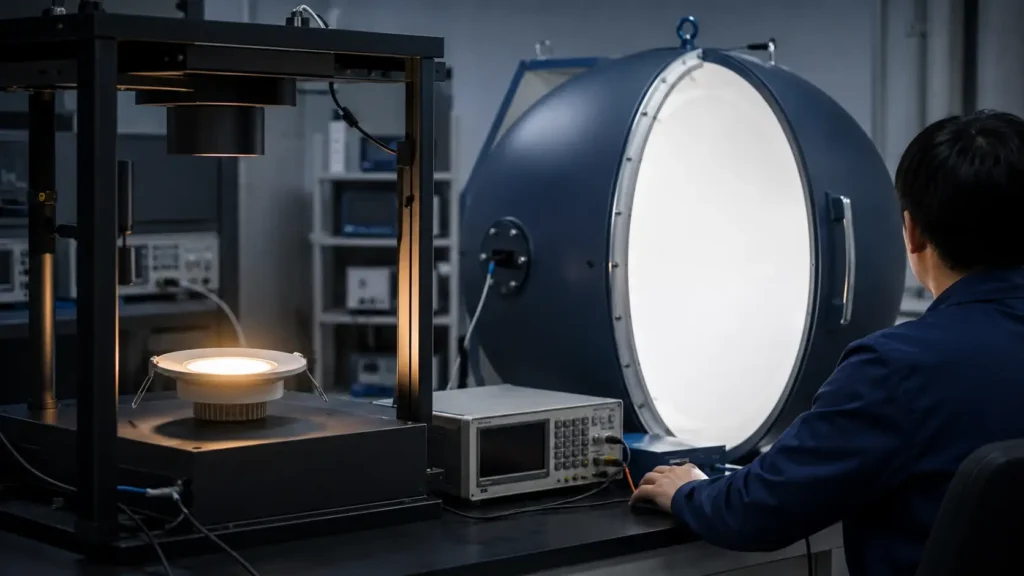
It sits on a letter energy rating scale for downlight SKUs that maps declared light output against electrical input under the test method named on the label file.
Ja nicht by itself fix cut-out size, glare class, CCT, CRI, or whether the head is fire-rated.
Ein a rated led downlight can still fail the project if lm/W looks good but beam, flicker, or documents do not match the code you ordered.
How efficacy connects to the letter
a-rated led efficacy is the useful bridge: lumens per watt under the declared photometric path.
High class grades are hard to reach without competitive efficacy and honest power numbers.
A downlight energy rating comparison between two quotes is only fair when both cite the same scheme, the same product code, and delivered lumens — not chip marketing lumens alone.
If one sheet shows an old A++ sticker and another uses a rescaled EU-style A–G band, do not treat the letters as identical.
What compliance actually means on a quote
energy label compliance downlight paperwork should name the regulation / scheme, the declared power, the useful luminous flux, and the resulting class for that exact SKU.
energy-compliant recessed lighting for a tender usually means: label class meets the client floor Und the declaration file matches the shipped model number.
Ask for the label file or declaration of conformity — a brochure letter with no code match is not compliance.
🎯 What proves energy label compliance on recessed lighting?
Scheme name + product-code match + declared power/flux that produce the stated class — not a floating “A” on a catalogue page.
What the A class does not buy you
- Higher lux on the desk (see lumen planning on the brightness companion draft — not linked until live)
- Better driver/housing durability (build-quality checklist — separate draft)
- Cheaper whole-life cost if the fixture fails early
- Permission to ignore fire strategy or wet-zone IP
Use live companions when price or aluminium path matter:
→ What Actually Affects LED Downlight Pricing
→ Warum Aluminiumgehäuse für die Lebensdauer von LED-Einbauleuchten wichtig sind
Checklist before you accept “A” on the PO
- Name the labelling scheme on the datasheet (market / regulation string).
- Confirm the letter belongs to Das product code, not a sister SKU.
- Cross-check declared W and lm against the downlight energy consumption rating.
- Record efficacy so later downlight energy rating comparison sheets use the same basis.
- Keep fire-rated, IP, and IC as separate tick boxes — never merge them into “A-rated.”
Was ist als Nächstes zu tun?
- Freeze mount path on the installation methods overview linked in the intro.
- Write the energy-class requirement as scheme + minimum letter + code-matched evidence.
- Use the power-bill companion (linked above) when clients ask “will A cut my kWh?”
- Keep lumen sizing and build audits on their own checklists (separate guides).
- Prefer suppliers that can attach label declarations to commercial families — XHLUX can support CE / energy-declaration packs on suitable codes; still verify each file against the shipped model.
Häufig gestellte Fragen
Anmerkungen & Quellen
- Energy labels are scheme-specific; rescaled EU lighting labels and older A+/A++ stickers are not letter-for-letter comparable — cite the scheme on the file.
- Serper “a rated downlight” PAAs often surface fire/IP/IC questions; FAQ answers above use user-supplied 2026-08-04 rewrites, scoped to disambiguation.
- Live XHLUX companions used for boundaries: installation methods overview; power bill vs halogen; pricing factors; aluminium housing lifespan.