 XHLUX
XHLUX
![What is Surface Dimmable Track Light: Best Guide [2025]](https://xhlux.com/wp-content/uploads/2024/05/news.webp)
Table of contents
- What Exactly is a Surface Dimmable Track Light? The Straight Answer
- The Core Decision: Why Choose Surface Mount Over Other Options?
- Making It Dimmable: Control Strategies for Your Surface Track System
- Design & Aesthetics: Turning a Practical Choice into a Stunning Feature
- Surface Mount vs. Recessed vs. Suspended: A Quick Comparison
- Where Surface Dimmable Track Lighting Excels: Ideal Applications
- Installation Insights: A Few Pro Tips
- Market Trends and the Enduring Value of Surface Mounting
- The Final Verdict: Is Surface Dimmable Track Light Your Solution?
You have a vision for perfect, flexible track lighting. You can picture it now: adjustable spotlights highlighting your favorite art, sleek pendants over the kitchen island, a smooth wash of light across the room. But then you look up, and reality hits. Your ceiling is solid concrete, graced with beautiful historic wood beams, or maybe it’s just pristine plaster you’d rather not disturb.
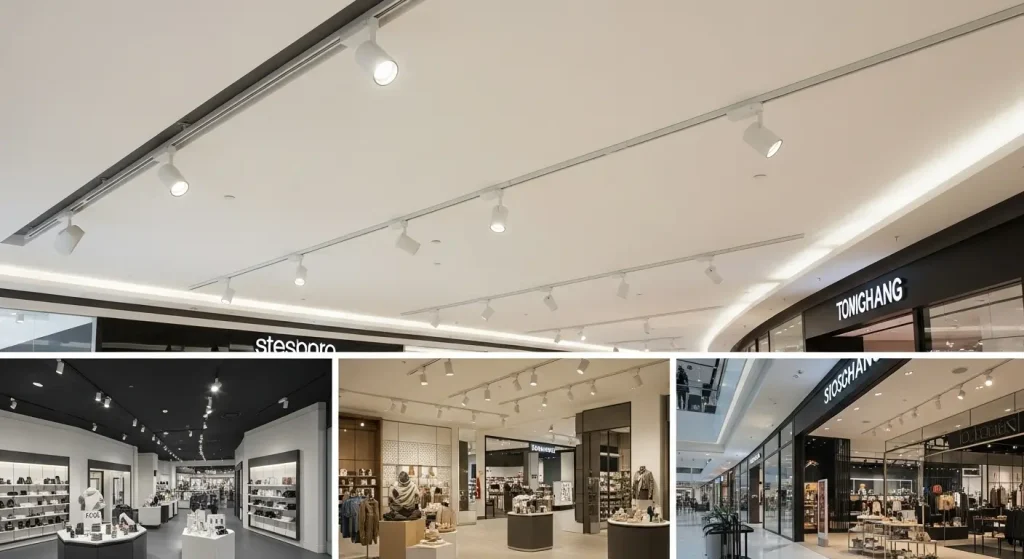
So, is the track lighting dream over? Absolutely not. This is precisely where the Surface Dimmable Track Light system steps in, not as a second-best option, but as a powerful, elegant, and often preferred solution for modern design challenges.
What Exactly is a Surface Dimmable Track Light? The Straight Answer
Simply put, a surface mounted track light system is one where the track itself is mounted directly onto the finished surface of a ceiling or, in some cases, a wall. Unlike recessed track lighting, which is hidden within a channel in the ceiling for a flush, seamless look, the surface mount track is intentionally visible.
The “dimmable” part of the name refers to the entire system’s capability to be dimmed. The mounting style (surface) and the control capability (dimmable) work together to create a complete solution. The track delivers the power, and the dimming is handled by your choice of dimmer switch and compatible LED track fixtures.
The Core Decision: Why Choose Surface Mount Over Other Options?
This is the most important question, and the answer usually comes down to one of four key reasons. If you recognize your situation here, then surface mount is likely the right path for you.
1. The Unyielding Ceiling: Concrete, Wood Beams, and Historic Plaster
This is the number one reason people seek out surface dimmable track light solutions.
- Solid Ceilings: In modern lofts, industrial conversions, or many commercial buildings, ceilings are often made of solid concrete. Cutting a channel for recessed track is simply not feasible or is prohibitively expensive. Surface mounting is the only practical option.
- Exposed Beams & Wood Paneling: You wouldn’t want to cut into beautiful wooden beams or tongue-and-groove ceilings. Surface mounting allows you to work with these architectural features, running the track neatly along or between them.
- Historic or Fragile Surfaces: In older homes with delicate plasterwork, cutting into the ceiling can be risky and messy. Surface mounting preserves the integrity of the original ceiling.
2. The Practical Retrofit: Avoiding Major Ceiling Surgery
Even if your ceiling is standard drywall, you might not want to undertake the mess, dust, and cost of cutting, patching, and repainting required for a recessed installation. Surface mounting is a far less invasive procedure, making it an ideal choice for retrofit projects or for homeowners who want a high-impact upgrade with less disruption.
3. The Deliberate Aesthetic: Embracing the Industrial, Modern, and Graphic Look
Don’t think of surface mounting as just a compromise; for many designers, it’s a deliberate aesthetic choice.

- Industrial & Loft Style: Exposed conduits and track lighting are hallmarks of this style. A clean, black surface mount track on a concrete or high white ceiling looks intentional and powerful.
- Graphic Element: The track itself can become a design feature. You can create bold lines, sharp angles, or geometric patterns on the ceiling that define a space or guide the eye. A modern surface mounted track lighting system is a statement.
- Minimalist but Present: It acknowledges the function of the lighting system in an honest, clean way.
4. Simplicity of Installation (Relatively Speaking)
While any electrical work requires care (and often a professional), installing a surface track is mechanically simpler than a recessed one. It involves securing the track to the ceiling surface and connecting it to a power feed, without the need for precision cutting of drywall or complex framing.
Making It Dimmable: Control Strategies for Your Surface Track System
Great news: choosing a surface mount track does not limit your dimming options. The principles are the same as with any other track system; the main consideration is how you run the wiring to the track’s power feed. Here are your primary choices for dimming your surface dimmable track light setup:
| Control Method | How It Works with Surface Track | Pros | Cons |
|---|---|---|---|
| Phase-Cut (TRIAC/ELV) | A standard wall dimmer controls the power feed to the surface track. All lights on that circuit dim together. | Simple wiring (2-wire + ground) to the track feed. Easy retrofit. | Relies heavily on dimmer and LED driver compatibility to avoid flicker/buzz. |
| 0-10V Dimming | A 0-10V dimmer controls compatible drivers in the track heads via a separate low-voltage wire pair run to the track feed. | Excellent, smooth dimming performance. | Requires running extra low-voltage control wires to the track’s power source. |
| Smart Controls (Wireless) | A smart dimmer switch replaces the standard wall switch, or smart fixtures (Zigbee, etc.) are used on a constantly powered track. | Adds app/voice/automation. Can offer individual control with smart fixtures. | Smart switch option still dims the whole track as one zone. Smart fixtures require a hub (often). |
| Digital Data Bus (DALI) | For 4-circuit (3+Data) surface tracks. A data bus is run alongside the power to the track feed. | Ultimate individual control, feedback, and precision. | Most complex and costly, requiring specialized track, fixtures, and controllers. |
The key takeaway is that your choice of dimming protocol will dictate the wiring you need to bring to the track’s power feed location on the ceiling. This is a critical point to discuss with your electrician during the planning phase.
Design & Aesthetics: Turning a Practical Choice into a Stunning Feature
A surface dimmable track light system is an opportunity to make a design statement. You have a wealth of options to integrate it beautifully into your space.
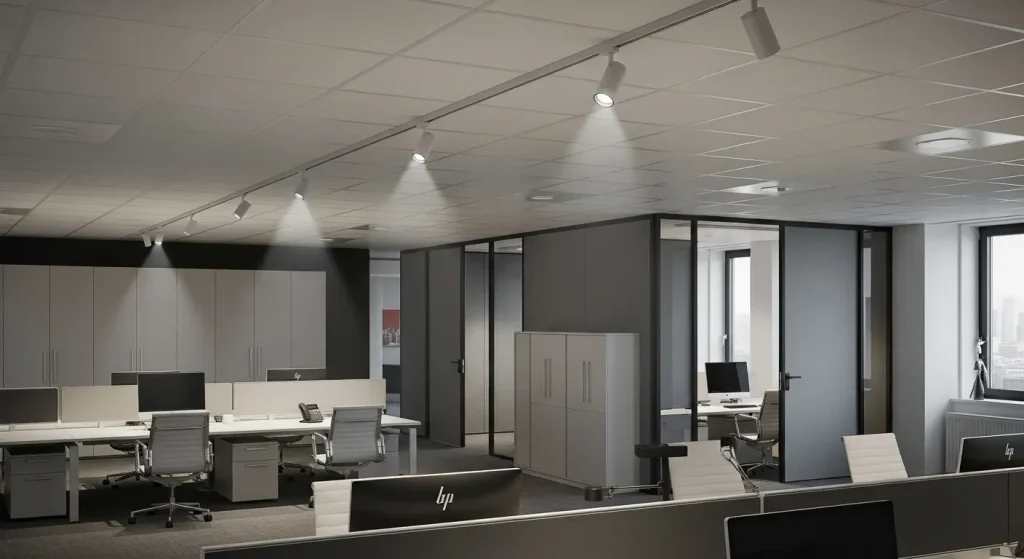
Choosing Your Profile: From Minimalist Strips to Bold Statements
Track systems are no longer just bulky, utilitarian rails. Modern options come in a variety of profiles:
- Low-Profile & Slim Tracks: These are incredibly discreet, offering a minimalist line that doesn’t dominate the ceiling. They are perfect for residential settings or spaces with lower ceilings.
- Standard & Heavy-Duty Tracks: These offer a more robust, industrial look and are often used for commercial applications or to support heavier pendant fixtures.
- Magnetic Track Systems: Many 48V magnetic track lighting systems are designed for surface mounting, offering the ultimate combination of a sleek profile and flexible, snap-in fixtures.
Color and Finish: Black, White, and Beyond
- White Surface Mount Track: Choosing a white track on a white ceiling is a classic way to make the system blend in as much as possible, letting the light fixtures themselves be the main focus.
- Black Surface Mount Track: A black surface mount track light system creates a bold, graphic contrast against a white or light-colored ceiling. It’s a powerful choice for modern, industrial, and contemporary designs.
- Other Finishes: Some systems are available in silver, grey, or other finishes to match specific design palettes.
Creating Patterns: Lines, Squares, and Custom Layouts
Because you are mounting directly to the surface, you are not limited to straight runs. Using L-connectors, T-connectors, and X-connectors, you can create squares, rectangles, U-shapes, or zigzag patterns on your ceiling. This allows the track itself to become a dynamic architectural element that defines zones and adds visual interest.
Surface Mount vs. Recessed vs. Suspended: A Quick Comparison
To help solidify your decision, here’s a quick look at how surface mounting stacks up against the other installation methods.
| Feature | Surface Mounted | Recessed (Trimless) | Suspended (Pendant) |
|---|---|---|---|
| Best For | Solid ceilings, retrofits, industrial look | New builds, drywall ceilings, minimalist look | High ceilings, task lighting over surfaces |
| Aesthetic | Visible, graphic, architectural | Invisible track, seamless, “disappears” | Decorative, creates a focal point |
| Installation | Simpler, less mess | Most complex, requires drywall work | Moderate, requires secure ceiling anchors |
| Ceiling Impact | Minimal (only screw holes) | Significant (requires cutting a channel) | Moderate (requires anchor points) |
| Flexibility | Excellent | Excellent | Excellent |
Where Surface Dimmable Track Lighting Excels: Ideal Applications
The combination of practicality and style makes surface mount a versatile solution for many environments in 2025.
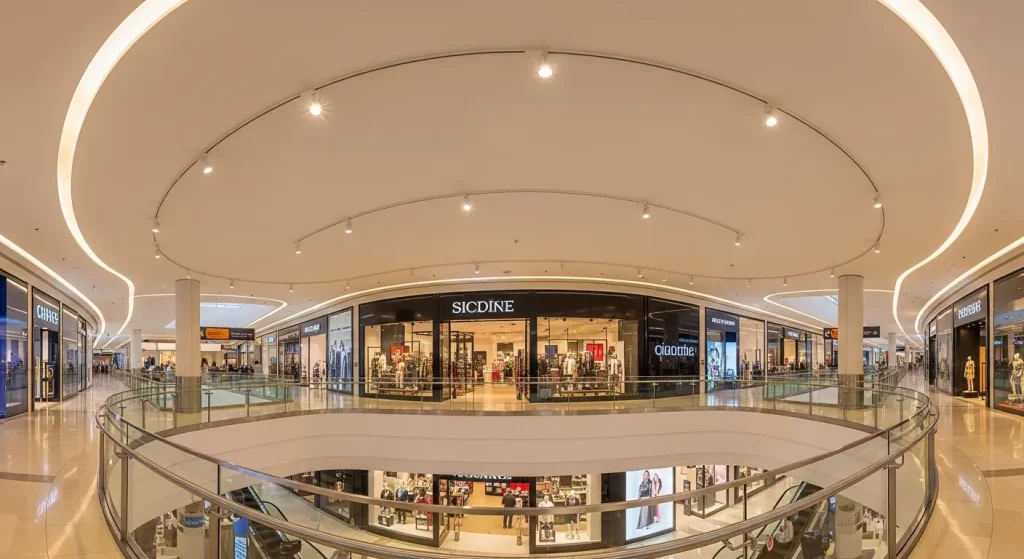
- Urban Lofts and Apartments: The perfect solution for dealing with concrete ceilings while leaning into a modern, industrial aesthetic.
- Historic Homes and Character Properties: Allows for the addition of modern, flexible lighting without damaging original architectural features like ornate plaster, tin ceilings, or wood beams.
- Retail and Hospitality: Provides a robust and adaptable lighting platform that can be installed quickly and changed easily to suit new layouts or promotions, even in buildings with challenging ceiling structures.
- Basements and Garages: An easy way to get flexible, powerful lighting in spaces that often have exposed joists or solid overhead structures.
- Any Room Seeking a Bold Design Statement: Use it to create a strong visual line that draws the eye and complements a contemporary or minimalist interior design.
Installation Insights: A Few Pro Tips
If you’ve decided on a surface dimmable track light system, keep these points in mind:
- Power Feed Location: The biggest decision is where to bring power to the track. You can use an end feed, a floating canopy feed that connects anywhere along the track, or connect to an existing junction box. Plan this with your electrician.
- Ceiling Anchors: Ensure you use the correct type of anchors and screws for your ceiling material (e.g., concrete anchors for concrete, toggle bolts for drywall if not hitting a joist). A securely mounted track is a safe track.
- Layout Planning: Use a chalk line or laser level to ensure your track runs are perfectly straight or your angles are perfectly square. A clean installation is key to a professional look.
- Consider the System: Remember that the track, power feeds, connectors, and light fixtures are all part of a system. For best results, stick to a single manufacturer’s ecosystem (e.g., H, J, L, or a specific proprietary system) to ensure perfect compatibility.
Market Trends and the Enduring Value of Surface Mounting
In the broader architectural lighting market, trends continue to favor solutions that are either completely invisible (recessed) or intentionally and beautifully visible. Surface mounted track lighting fits perfectly into the latter category. As urban renewal projects and adaptive reuse of industrial buildings continue, the need for high-performance lighting solutions that work with existing solid structures is growing. Market analyses of lighting fixtures often point to the increasing demand for modular and flexible systems—a niche where surface track excels.
Furthermore, the “honest materials” and industrial-chic design movements show no signs of slowing down. This ensures that a well-chosen surface dimmable track light system is not just a practical solution, but a timeless design choice.
The Final Verdict: Is Surface Dimmable Track Light Your Solution?
So, is a Surface Dimmable Track Light system the right answer for you?
It is an absolutely fantastic and often necessary choice if:
- You have a solid ceiling (concrete, wood, etc.) where recessing is not an option.
- You’re undertaking a retrofit and want to avoid the cost and mess of cutting into your existing ceiling.
- You are specifically aiming for a modern, industrial, or graphic aesthetic where the track itself is a design element.
- You need the flexibility of track lighting but require a straightforward installation method.
It might not be your first choice if:
- You are building from scratch and your primary goal is a completely seamless, invisible lighting source (in which case, recessed would be your goal).
The surface dimmable track light is the ultimate problem-solver. It brings high-performance, flexible, and beautifully controlled lighting to spaces that other systems simply can’t handle. By embracing it as a design feature, you can create a space that is not only perfectly illuminated but also architecturally distinct and intelligently designed.
Ready to plan your surface track lighting project? A discussion with your designer or a lighting professional can help you choose the perfect system and layout to make your ceiling a canvas for brilliant light.