 XHLUX
XHLUX


In modern lighting design, LED track lighting is widely popular for its flexibility, energy efficiency and aesthetic design. Advances in dimming technology have further enhanced the functionality and application of LED track lights, allowing users to adjust the brightness and ambience of the light to suit specific needs. In this article, we’ll take an in-depth look at the advantages, applications and selection guides for various LED track light dimming technologies

Overview Of Dimming Technology For LED Track Lighting
Dimming technology offers users the possibility of personalized lighting. By adjusting the current or voltage of the light source, users can realize different brightness and light effects. Different scenes and activities require different lighting, so dimming technology not only improves comfort, but also saves energy without the need for full brightness, thus reducing electricity bills. With the popularity of LED technology, dimming technology has become an integral part of lighting solutions
Common LED Track Light Dimming Techniques
Analog Dimming
Analog dimming is used to control the brightness of LEDs by adjusting the voltage or current. This technology is simple to use and low cost, but the disadvantage is that flickering or unstable brightness may occur. In addition, analog dimming can not be integrated with the smart home system, the scope of application is more limited.
Digital Dimming
Digital dimming controls the brightness of LEDs through signal modulation, including common DMX and DALI technologies. DMX dimming is suitable for complex lighting scenes, such as stage and architectural lighting, and can accurately control the brightness and color temperature of multiple fixtures. DALI technology is more suitable for commercial and office environments, and can be flexibly controlled by the lighting area. The advantage of digital dimming is its accuracy and scalability, but the installation cost is relatively high.
Wireless Dimming
Wireless dimming technologies such as Zigbee and Bluetooth provide users with a convenient way to control their lighting. No wiring is required and users can adjust the lights via mobile devices or voice assistants. Suitable for both domestic and commercial environments, this technology supports integration with other smart home devices to provide a smarter lighting experience.
The Latest Trends In LED Track Light Dimming Technology
The rise of the smart home has driven the rapid development of dimming technology. Today’s dimming systems not only automatically adjust to time, weather and user habits, but also work in concert with other home devices to create an ideal living environment. In addition, programmable dimming scenarios allow users to preset lighting schemes based on the needs of different activities, such as reading, dining or entertaining.
Comparison of Major Dimming Technologies for LED Track Lights
| Technology Types | Advantages | Cons |
| Analog dimming | Affordable and easy to install | May flicker and cannot be integrated with intelligent systems |
| Digital dimming | Precise control for complex scenes | Higher cost, requires professional installation |
| Wireless dimming | Flexible and convenient, supports smart home integration | May be subject to interference, need to stabilize the signal |





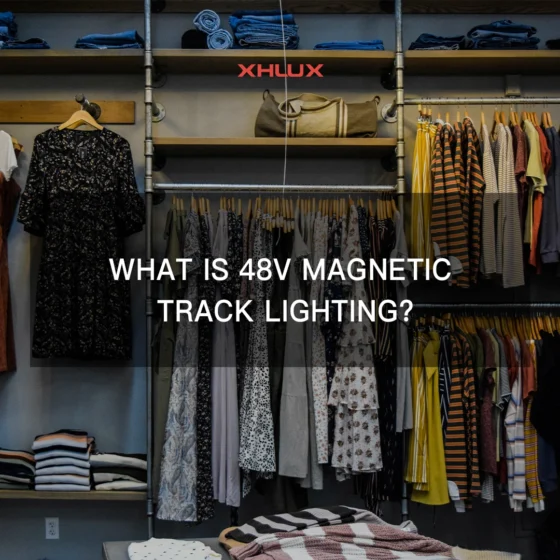
What is 48V Magnetic Track Lighting?
A low-voltage system where fixtures attach magnetically, reposition in seconds, and operate safely below the SELV threshold. Here is what that means for commercial projects.

What Makes a Reliable Commercial Lighting Project Partner
Learn what makes a reliable commercial lighting project partner and which factors matter most when working on long-term lighting projects.
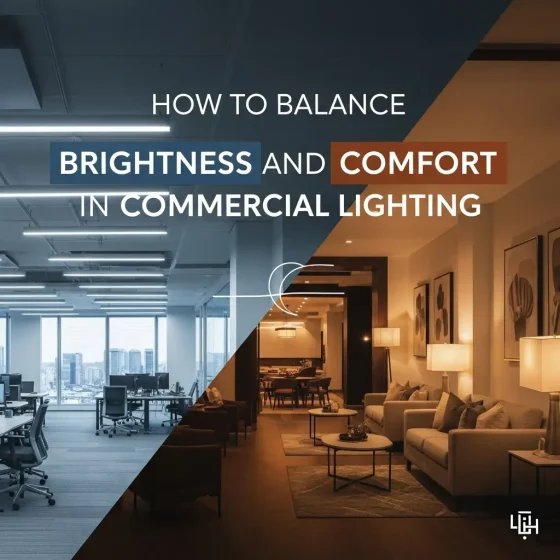
How to Balance Brightness and Comfort in Commercial Lighting
This article explains how to balance brightness and visual comfort in commercial lighting to achieve both functional and comfortable environments.