 XHLUX
XHLUX

Table of contents
- What Is a Recessed Spotlight and Why It Matters in Interior Design
- Different Types of Recessed Spotlights
- Key Factors to Consider When Choosing Recessed Spotlights
- Installation Options for Recessed Spotlights
- How to Match Lighting Design with Interior Style
- Common Mistakes to Avoid When Choosing Spotlights
- Recommended Recessed Spotlight Solutions for Professionals
- FAQ About Recessed Spotlight
- Conclusion
- Get Expert Advice for Your Lighting Project
Modern interior design is no longer only about furniture and materials — it’s about how light shapes space. Lighting determines atmosphere, highlights textures, and guides how people experience an environment. Among the many fixture types available today, recessed spotlights (also known as LED downlights) have become an essential tool for architects and lighting professionals who value both function and aesthetics.
This comprehensive guide explains how to choose the right recessed spotlight for different projects. It blends design considerations, technical performance factors, and B2B purchasing insights so that contractors, designers, and distributors can make informed, profitable decisions.
What Is a Recessed Spotlight and Why It Matters in Interior Design
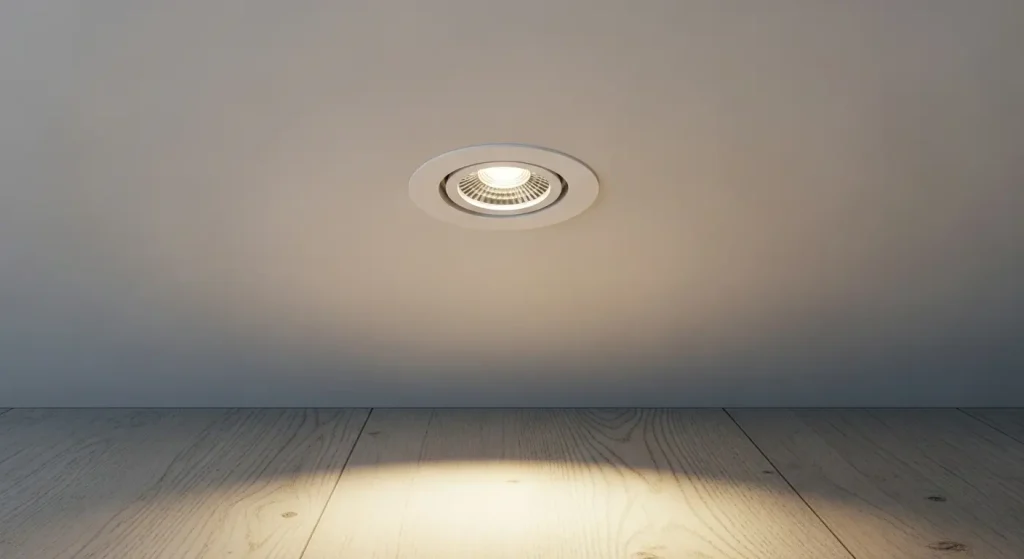
A recessed spotlight is a luminaire installed inside the ceiling so that the body of the fixture is hidden and only the light aperture is visible. It projects controlled, directional light without visual clutter. The main components are:
- Housing – the metal enclosure inside the ceiling
- Trim or frame – the visible edge that defines style
- Light module – usually a high-efficiency COB or SMD LED
Why designers prefer recessed lights
Recessed spotlights create a seamless, elegant appearance and offer flexibility. Designers can highlight artwork, define walkways, or accent textures — all without visible fittings.
Typical applications include residences, hotels, offices, galleries, and retail stores where both comfort and sophistication matter.
| Fixture Type | Visual Style | Flexibility | Common Use |
|---|---|---|---|
| Recessed Spotlight | Hidden & clean | Medium | Architectural, premium spaces |
| Трековый светильник | Visible, adjustable | High | Retail, exhibition |
| Pendant Light | Decorative | Medium | Dining, hospitality |
Different Types of Recessed Spotlights
Choosing the right type depends on the project’s functional and design goals.
1. Fixed vs Adjustable Models
- Fixed recessed spotlights provide vertical illumination, ideal for corridors and general lighting.
- Adjustable gimbal types allow tilt and rotation up to 30–45°, perfect for accent lighting.
2. Deep Anti-Glare vs Surface Trim
- Deep anti-glare lights reduce visual discomfort (UGR < 19) and improve focus comfort.
- Surface-trim models are easier to install and provide a cleaner flush finish.
3. Single, Double, and Multiple-Head Units
Multi-head recessed fixtures integrate two or more light modules, reducing installation time and offering multi-directional lighting for showrooms or display walls.
4. Magnetic Recessed Systems
The latest trend, 48 V magnetic recessed systems, feature tool-free modular installation and sleek design, suitable for premium offices and art spaces.
5. Reflector and Beam Angle Options
Beam angles range from 15° spot for focused highlights to 60° flood for uniform ambient illumination. Combining different angles in a space creates visual depth.
| Type | Beam Angle | Typical Wattage | Ideal Use | Advantage |
|---|---|---|---|---|
| Fixed downlight | 40°–60° | 8–15 W | Corridors, meeting rooms | Uniform brightness |
| Adjustable gimbal | 15°–36° | 10–25 W | Art walls, boutiques | Flexible focus |
| Deep anti-glare | 24°–36° | 10–20 W | Homes, hotels | Comfortable vision |
| Multi-head | 15°–30° × n | 15–40 W | Showrooms | Multi-directional |
| Magnetic recessed | 24°–60° | 10–35 W | Modern office | Modular installation |
Key Factors to Consider When Choosing Recessed Spotlights
Lighting quality depends on both design and performance. Below are the parameters that professionals should evaluate:
| Factor | Recommended Range / Value | Purpose |
|---|---|---|
| Wattage & Lumens | 8 W – 30 W (500 – 2500 lm) | Match illumination level to room size |
| Color Temperature (CCT) | 2700 K – 4000 K | Warmer for homes, neutral for offices |
| Color Rendering Index (CRI) | ≥ 90 | True color reproduction |
| Beam Angle | 15° – 60° | Spot or flood as needed |
| UGR (Glare Rating) | < 19 | Comfortable lighting |
| Adjustability | Tilt 30° / Rotate 355° | Directional flexibility |
| Trim Design | Trimless / Baffle | Aesthetic coordination |
Detailed Considerations
- Power and Brightness – Match brightness to function. Retail shelves may need 1000–1500 lux, while corridors only 300–500 lux.
- Color Temperature – 2700 K creates warmth, 4000 K feels clean and professional.
- CRI ≥ 90 – Essential in retail and hospitality to show true material colors.
- Beam Angle – Narrow for focus, wide for diffusion; use both for layered lighting.
- UGR and Anti-Glare – Deep reflectors and honeycomb lenses minimize glare.
- Aesthetic Integration – Trimless designs blend perfectly with modern ceilings.
Installation Options for Recessed Spotlights
Proper installation is just as important as the choice of luminaire. Even the most advanced LED recessed light will fail to perform well if it’s installed incorrectly or paired with the wrong driver.
1. Recessed Mount Installation
This is the most common method. The fixture housing is inserted into a ceiling cut-out, with clips or springs securing it in place.
- Advantages: Clean finish, invisible hardware.
- Requirements: Minimum ceiling depth of 80–120 mm, safe thermal insulation, and adequate ventilation for heat dissipation.
2. Surface-Mounted Recessed Lights
Used when ceiling depth is limited or in retrofit projects. The luminaire base attaches directly to the surface and simulates a recessed effect.
- Ideal for renovations, cafés, or rental spaces where cutting ceilings is not possible.
3. Adjustable or Gimbal Installation
These require additional space for rotation mechanisms. Make sure to keep at least 15 mm of clearance around the housing to allow full tilt range and prevent overheating.
4. Driver and Wiring Placement
Every recessed spotlight uses an external or built-in LED driver. For long-life performance:
- Keep the driver accessible for maintenance.
- Use constant-current drivers matched to the LED module’s voltage and current.
- Group circuits logically (e.g., accent, ambient, display) to simplify control.
5. Ceiling Cut-Out Size and Alignment
Each product has a specific cut-out diameter—for example, 75 mm, 90 mm, or 125 mm. Precise measurement ensures the trim fits flush.
- For multi-head fixtures, use a template board to maintain straight alignment.
- Uneven spacing causes shadow bands and visual imbalance.
How to Match Lighting Design with Interior Style
Lighting is a design language. The right recessed spotlight can elevate any interior concept.
Minimalist Style
- Choose trimless deep anti-glare designs with matte white or black finish.
- Space fixtures evenly to create quiet ceilings and soft visual rhythm.
- Recommended: 2700 K–3000 K warm light for a calm environment.
Luxury or Modern Classic Style
- Opt for metallic bezels (gold, champagne, gunmetal).
- Combine narrow 24° accent lights with wider 40° ambient ones for contrast.
- Highlight decorative elements like marble walls or art panels.
Commercial and Retail Spaces
- Use COB high-CRI spotlights (CRI ≥ 90) to enhance product colors.
- Adjustable heads aim at mannequins, shelves, or brand signage.
- Integrate smart control systems to dim or switch between scenes.
Gallery or Museum Applications
- Prioritize flicker-free drivers, narrow beams (15°–20°), and color consistency (SDCM < 3).
- Adjustable tilt allows precise focus on artworks without glare.
| Interior Style | Recommended Spotlight Type | CCT (K) | Beam Angle | Notes |
|---|---|---|---|---|
| Minimalist Home | Trimless deep anti-glare | 2700–3000 | 36–60° | Soft warm tone |
| Luxury Hotel | Metal-trim COB | 3000 | 24–36° | Highlight texture |
| Retail Boutique | Adjustable multi-head | 3500–4000 | 24–40° | Dynamic display |
| Gallery / Museum | Narrow beam adjustable | 3000–3500 | 15–20° | Focused illumination |
| Office / Showroom | Magnetic recessed system | 4000 | 40–60° | Uniform task lighting |
Common Mistakes to Avoid When Choosing Spotlights
Even experienced professionals can make errors when specifying or installing recessed lighting. Avoid these pitfalls to ensure optimal results.
1. Over-Illumination or Uneven Layout
Too many fixtures create glare and waste energy. Too few cause dark spots.
✅ Tip: Follow 1 fixture per 1.2–1.5 m² for general lighting, then add accent layers.
2. Inconsistent Color Temperature
Mixing 2700 K and 4000 K in the same area ruins harmony.
✅ Tip: Standardize CCT by function—warm for comfort zones, neutral for workspaces.
3. Ignoring Glare Control
Shallow or exposed LEDs can cause discomfort.
✅ Tip: Select deep anti-glare or honeycomb louver designs.
4. Wrong Driver Selection
Underrated drivers cause flicker or shorten LED life.
✅ Tip: Match driver output current exactly to LED requirements; choose flicker-free (≤ 1% ripple).
5. Lack of Maintenance Access
Buried drivers or sealed ceilings increase service cost.
✅ Tip: Provide inspection openings or detachable panels.
Recommended Recessed Spotlight Solutions for Professionals
Selecting the right fixture is not just about light — it’s about reliability, efficiency, and business value.
For professional buyers and distributors, the following categories represent today’s most demanded recessed spotlight solutions in the global market.
1. COB LED Recessed Spotlights
- Power Range: 10–40 W
- Advantages: High brightness, stable output, CRI ≥ 90
- Applications: Retail, hotels, residential projects
- Features: Deep anti-glare design, 24°–60° beam options
2. Deep Anti-Glare Series
- Focus: Eye comfort and luxury aesthetic
- UGR: < 19
- Housing: Aluminum with powder coating for long life
- Ideal for: Premium homes, galleries, and office boardrooms
3. Adjustable Multi-Head Spotlights
- Configuration: 2–4 adjustable modules per frame
- Flexibility: 30°–45° tilt, 355° rotation
- Installation: Easy maintenance via modular design
- Use Cases: Showrooms, retail displays, commercial centers
4. Magnetic Recessed Lighting Systems
- Voltage: 48V low-voltage system
- Mounting: Tool-free magnetic snap-in
- Modular Fixtures: Spotlights, linear lights, wall washers
- Best For: High-end offices, hotels, and custom-designed spaces
5. Smart Control Ready Spotlights
- Protocols: DALI / 0-10V / Bluetooth / Zigbee
- Benefits: Scene control, energy management, and automation
- Added Value: Ideal for lighting integrators or smart-building contractors
| Type | Power (W) | Beam Angle | КРИ | Application | Feature |
|---|---|---|---|---|---|
| COB Anti-Glare | 10–30 | 24°–60° | ≥90 | Retail, hotel | Visual comfort |
| Multi-Head Adjustable | 20–40 | 15°–36° | ≥90 | Showroom | Multi-direction |
| Magnetic Recessed | 10–35 | 24°–60° | ≥90 | Office, gallery | Modular system |
| Smart-Control Downlight | 15–40 | 24°–60° | ≥90 | Building projects | Intelligent control |
Why Work with a Professional Supplier
Partnering with a specialized LED manufacturer ensures consistent quality and technical support:
- ODM/OEM service: Custom dimensions, wattages, and finishes.
- Compliance: CE, RoHS, CB, and ETL certificates for international projects.
- Lead time: 15–25 days with flexible order quantities.
- Support: Free lighting layout design and catalog materials for distributors.
FAQ About Recessed Spotlight
1. What is the difference between a downlight and a recessed spotlight?
A точечный светильник typically provides general lighting with wide beam angles, while a recessed spotlight offers adjustable or narrower beams for accenting specific areas or objects.
2. How many recessed spotlights do I need for a room?
As a rule of thumb, use 1 fixture per 1.2–1.5 m² for general lighting. For retail or galleries, increase density near display areas for stronger visual focus.
3. What color temperature is best for interior design?
- 2700K–3000K: Cozy, warm atmosphere (residential, hotels)
- 3500K–4000K: Neutral, professional tone (offices, retail spaces)
4. How long do LED recessed spotlights last?
A good-quality LED module offers 50,000+ hours of life (about 10–12 years in normal use). Ensure proper heat dissipation and use high-quality drivers.
5. Can recessed spotlights be dimmed?
Yes. Most professional fixtures support Triac, 0–10V, or DALI dimming, allowing full control of ambiance and energy usage.
Conclusion
The right recessed spotlight doesn’t just brighten a room — it defines the character of your space. By carefully balancing aesthetic design, lighting performance, and installation quality, you can achieve stunning interiors that delight both clients and customers.
For B2B professionals, investing in high-quality recessed lighting delivers:
- Enhanced project value and visual appeal
- Reduced maintenance and energy costs
- Stronger customer satisfaction and repeat business
Get Expert Advice for Your Lighting Project
Whether you’re planning a retail chain, hotel renovation, or office upgrade, our expert team can help you design the perfect lighting system.
👉 Получить ценовое предложение
👉 Download Lighting Catalog
👉 Request Free Lighting Layout Design
Let us provide tailored recessed spotlight solutions for your next project — combining design excellence, energy efficiency, and reliable supply.