 XHLUX
XHLUX


Outdoor lighting not only makes your home glow at night, but also improves safety, adds beauty, and brings more convenience to family life. Whether it is lighting up the porch, decorating the garden, or providing efficient lighting for commercial and industrial scenes, LED lamps are the ideal choice with their excellent performance. But how to choose the best outdoor LED lighting for your needs? This article will provide you with a comprehensive guide to help you make an informed decision.
1. What are the advantages of outdoor LED lighting?
Before choosing outdoor LED lighting, it is important to understand its core advantages. First of all, durability and weather resistance are the highlights of LED lamps. High-quality outdoor LEDs usually have an IP65 or higher protection level, which can withstand water, dust, and even high temperatures or storms, and adapt to all kinds of weather. Secondly, energy saving and environmental protection are the hallmark features of LED.
Compared with traditional halogen lamps or incandescent lamps, LEDs reduce energy consumption by 50%-70%, significantly reduce carbon emissions, and contribute to environmental protection. Finally, long life makes LED stand out. The average lifespan is as high as 25,000-50,000 hours, which means you can use it worry-free for many years, reducing replacement and maintenance costs. These advantages are not only applicable to homes, but also attract procurement experts in the commercial (such as parking lots) and industrial (such as warehouses) fields to provide reliable lighting for diverse scenarios.
2. How to determine the functional requirements of outdoor lighting?
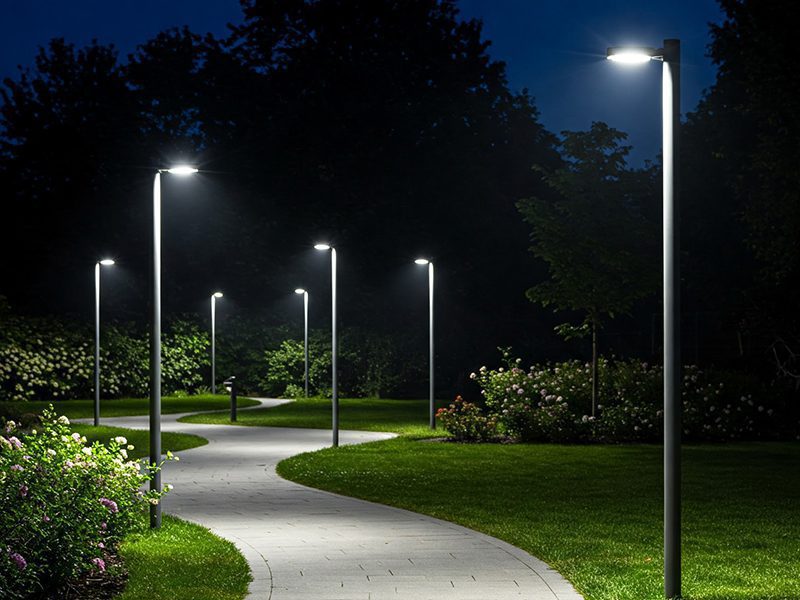
Outdoor park LED downlight lighting example picture
Clearing the needs is the first step in choosing. Safety lighting is the top priority for many families – entrances, driveways or stairs need bright light to ensure worry-free walking at night and prevent accidents. Decorative lighting adds points to beauty, lighting up the garden or courtyard through landscape lights or wall lights to make the home more attractive.
Activity lighting is suitable for outdoor entertainment, such as patio dining or pool parties, which requires sufficient and comfortable light to support nighttime activities. If you are a procurement expert, similar needs also apply to commercial and industrial scenarios: store exteriors need to take into account safety and decoration, and factory campuses require functional lighting to cover a large area. List your specific uses and clarify the goals of each area to choose the most suitable lamps.
3. How to choose the right type of lamp?
There are many types of outdoor LED lamps, suitable for different scenarios. Wall lamps and porch lights are installed at the door or on the wall. They are both practical and can enhance the appearance. They are classic choices for homes and commercial places. Underground lamps and path lights perfectly illuminate garden paths or driveways, taking into account navigation and aesthetics. They are often used in courtyards or industrial park passages.
Floodlights and floodlights are suitable for large-scale lighting, such as backyards, parking lots or factory perimeters, providing strong light coverage. Solar LED lights do not require wiring and rely on solar power. They are particularly suitable for remote areas or courtyards without power supply. They are environmentally friendly and worry-free. Choose the right type according to the installation location and power supply conditions to ensure that the lamp is both practical and easy to deploy.
4. How to consider color temperature and brightness?
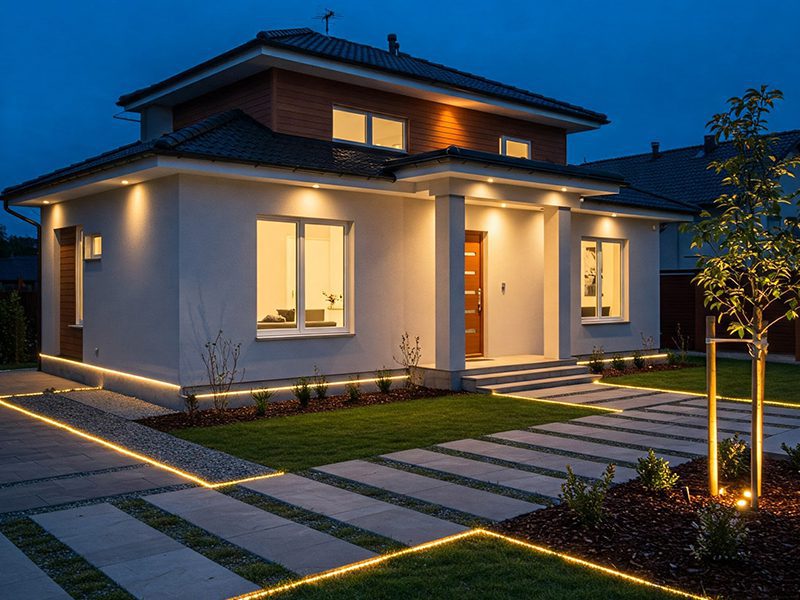
Example diagram of villa LED lighting scheme
The “feel” and intensity of light directly affect the user experience. Color temperature is key: warm white light (2700K-3000K) exudes a warm atmosphere and is suitable for relaxing scenes in the garden or terrace; cool white light (4000K-5000K) is brighter and clearer, perfect for security lighting or industrial functional areas. The brightness required depends on the size and purpose of the area.
A small porch may only need 200-400 lumens, while a courtyard or commercial parking lot may need 800-1200 lumens. Over-lighting wastes energy, while insufficient light affects the effect. Finding a balance is key. In addition, anti-glare design cannot be ignored. Luminaires with shading or diffusers can avoid glare, especially suitable for commercial places near seating areas or with high traffic.
5. What is smart control and energy saving function?
Modern outdoor LED lighting makes control smarter and more energy-saving. Smart lighting systems allow you to adjust brightness, switch on and off, and even manage lights remotely through mobile phone apps or voice assistants such as Alexa – whether you are at home or away, you can easily control it. Motion sensors and timers are energy-saving tools.
Lamps only light up when they detect people or vehicles, which is suitable for driveways or industrial areas, reducing unnecessary power consumption. Dimming functions allow you to adjust the brightness according to the scene, such as softer at dinner and brighter during activities. These features not only improve home convenience, but also save operating costs for commercial and industrial users, which is a highlight of procurement experts.
6. How to choose design and style?
Lamps are not only tools, but also decorations. Matching with the architectural style can enhance the overall effect—modern homes match simple wall lamps, classical houses choose retro lanterns, and rural styles use wood or copper designs.
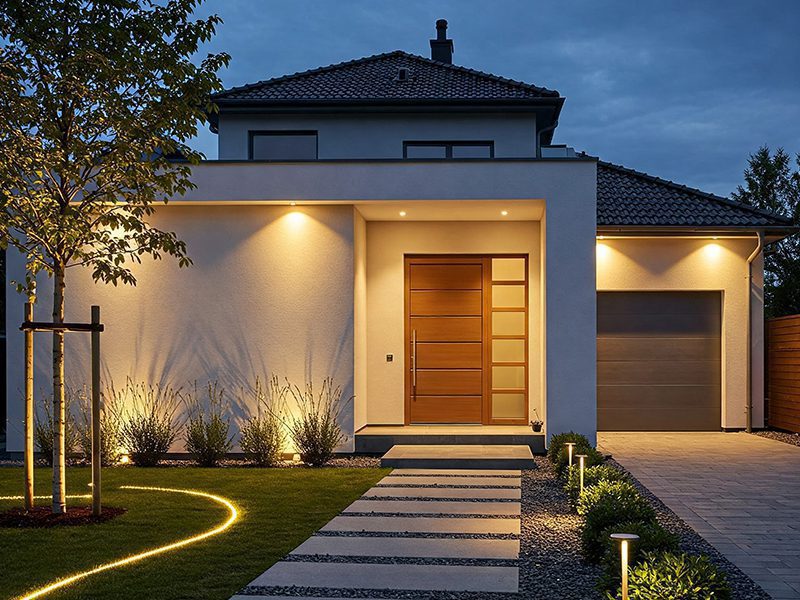
Example diagram of house LED lighting scheme
Materials and colors are also important: stainless steel or aluminum alloys are corrosion-resistant, and black, silver or bronze colors are harmonious with outdoor environments. For gardens or commercial landscapes, hidden installation is a clever choice, embedding lamps in the ground or plants, which is both beautiful and not obtrusive. Whether for home or commercial use, coordinated design can make lighting the highlight of the space, rather than an inconvenient existence.
In Summary
Choosing the perfect Outdoor LED lighting solution provider for your home doesn’t have to be complicated. Start by understanding the benefits of durability, energy efficiency, and longevity, and then identify the right fixture type, color temperature, and brightness for your safety, decorative, or event needs. Add smart controls for added convenience, and make sure the design matches your home style, and you’ll create an outdoor space that’s both functional and beautiful. These principles also apply to commercial and industrial lighting, which can meet a variety of needs.
Still wondering where to get started? Our professional team is ready to provide you with customized outdoor LED lighting solutions, whether it’s a home garden or a commercial facility, we can help you light up the future. Contact us today: send an email to [email protected], or visit www.xhlux.com for more details. Don’t let the choice delay—act now to make your home and project shine!


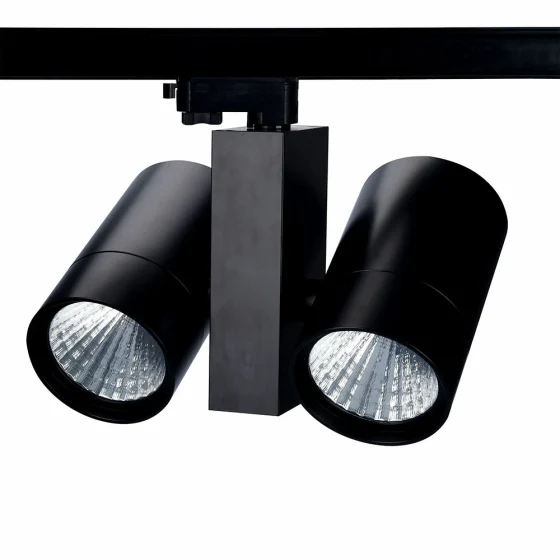

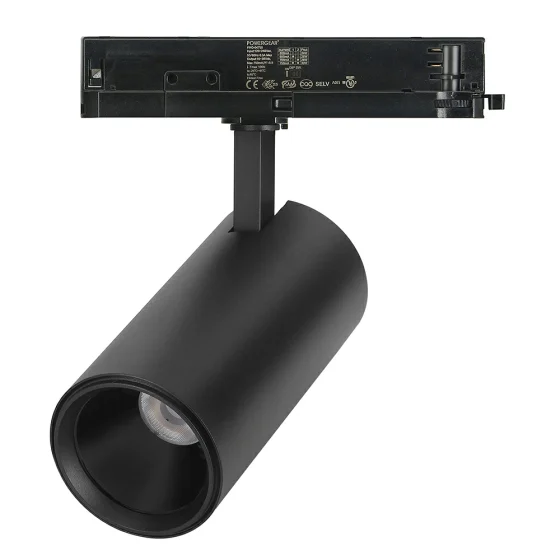


What is 48V Magnetic Track Lighting?
A low-voltage system where fixtures attach magnetically, reposition in seconds, and operate safely below the SELV threshold. Here is what that means for commercial projects.
What Makes a Reliable Commercial Lighting Project Partner
Learn what makes a reliable commercial lighting project partner and which factors matter most when working on long-term lighting projects.
How to Balance Brightness and Comfort in Commercial Lighting
This article explains how to balance brightness and visual comfort in commercial lighting to achieve both functional and comfortable environments.